春天Chūntiān来lái了le,村子cūnzi里lǐ开满kāimǎn了le花huā。/Ha llegado la primavera y el pueblo está lleno de flores./Spring has come and the village is full of flowers.
· 汽车Qìchē有yǒu四个sìgè轮子lúnzi。/El coche tiene cuatro ruedas./The car has four wheels.
军人Jūnrén/soldado/soldier
· 爷爷Yéyé以前yǐqián是shì军人jūnrén。/El abuelo antes era soldado./Grandad used to be a soldier.
蚊子Wénzi/mosquito/mosquito
· 夏天Xiàtiān蚊子wénzi很多hěnduō。/En verano hay muchos mosquitos./There are lots of mosquitoes in summer.
** 想一想, 说一说/Xiǎng yi xiǎng, shuō yi shuō/Piensa y responde/Think and answer the following questions **
(1)读一读Dú yi dú“un”“ün”,再zài读一读dú yi dú“jun”“qun”“xun”“yun”,说shuō说shuō你nǐ发现fāxiàn了le什么shénme。/Lee un y ün, y luego jun, qun, xun, yun: ¿qué descubres?/Read un and ün, then jun, qun, xun, yun: what do you notice?
(2)说一说Shuō yi shuō:春天chūntiān天上tiānshàng的de云yún是shì什么样shénmeyàng的de?/Di: ¿cómo son las nubes del cielo en primavera?/Say: what are the clouds like in the sky in spring?
(3)读一读Dú yi dú,说一说shuō yi shuō带dài这些zhèxiē音yīn的de词语cíyǔ。/Lee y di palabras con estos sonidos: un, ün./Read and say words with these sounds: un, ün.
(4)朗读Lǎngdú儿歌érgē,背诵bèisòng儿歌érgē。/Lee la canción infantil en voz alta y apréndela de memoria./Read the nursery rhyme aloud and learn it by heart.
** 家庭/Jiātíng/FAMILIA/FAMILY **
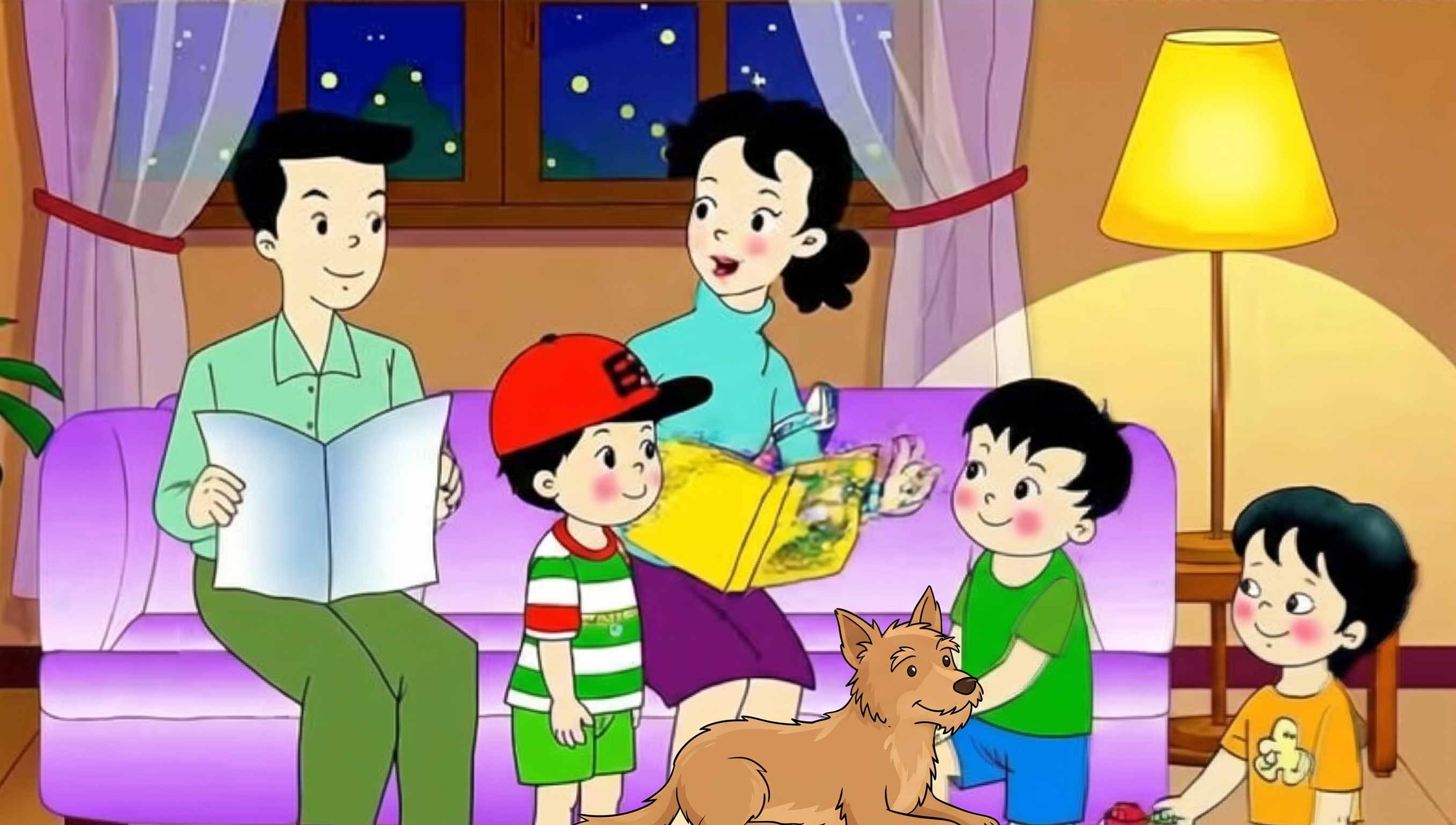
宝宝Bǎobao一yī家jiā/La familia de Baobao/Baobao's family
爸爸Bàba/Papá, padre/Dad, father
妈妈Māma/Mamá, madre/Mum, mother
宝宝Bǎobao/Baobao/Baobao
婷婷Tíngtíng/Tíngting/Tíngting
嘟嘟Dūdū/Dudú/Dudú
洛基Luòjī/Rocky/Rocky
** 对话/Duìhuà/Diálogo/Dialogue **
嘟嘟Dūdū:春天Chūntiān来lái了le,我们wǒmen去qù村子cūnzi里lǐ玩吧wánba!/Dudú: Ha llegado la primavera, ¡vamos a jugar al pueblo!/Dudú: Spring has come – let's go and play in the village!
爸爸Bàba:好Hǎo!村里cūnlǐ有yǒu位wèi爷爷yéyé以前yǐqián是shì军人jūnrén,我们wǒmen去qù看kàn他tā。/Papá: ¡Vale! En el pueblo hay un abuelo que antes era soldado; vamos a verlo./Dad: OK! There's an old man in the village who used to be a soldier – let's go and see him.
婷婷Tíngtíng:我Wǒ要yào穿chuān新xīn裙子qúnzi去qù!自行车zìxíngchē的de轮子lúnzi修xiū好了吗hǎolema?/Tíngting: ¡Voy a ponerme la falda nueva! ¿Ya está arreglada la rueda de la bici?/Tíngting: I'm going to wear my new skirt! Is the bike wheel fixed?
宝宝Bǎobǎo:天上Tiānshàng的de白云báiyún像xiàng棉花糖miánhuatáng!/Baobao: ¡Las nubes blancas del cielo parecen algodón de azúcar!/Baobao: The white clouds in the sky look like candyfloss!
妈妈Māma:草Cǎo地上dìshang蚊子wénzi多duō,要yào小心xiǎoxīn哦ó。/Mamá: En el prado hay muchos mosquitos, tened cuidado./Mum: There are lots of mosquitoes on the grass – be careful.
Comentario Pedagógico: un y ün: 1. Pronunciación: «un» es la forma abreviada de «uen», con una ligera «e» en medio. 2. Los puntos de la ü: Con «j», «q», «x» e «y», «ün» se escribe «un»: jun, qun, xun, yun. 3. Sílaba entera: «yun» se lee de golpe.
Pedagogical Commentary: un and ün: 1. Pronunciation: “un” is short for “uen”, with a light “e” in the middle. 2. The dots on ü: With “j”, “q”, “x” and “y”, “ün” is written “un”: jun, qun, xun, yun. 3. Whole syllable: “yun” is read as a whole.
@ Pinyin 资料 (PDF, MP3 等) 的版权归属于:中国华文教育网 - Overseas Chinese Language and Culture Education Online。
@ Los materiales Pinyin (PDF, MP3, etc.) son propiedad de: 中国华文教育网 - Overseas Chinese Language and Culture Education Online.
@ The materials Pinyin (PDF, MP3, etc.) are the property of: 中国华文教育网 - Overseas Chinese Language and Culture Education Online.