
MT
L01
L02
L03
L04
L05
EL1
P01
P02
P13
P03
P04
P07
P08
P09
P10
P11
P12
EP1
P05
P06
P15
P16
P17
P18
EP2
T01
T02
T03
T04
ET1
L06
L07
L08
L09
L10
EL2
T05
T06
T07
T08
ET2
T09
T10
T11
ET3
T12
T13
T14
ET4
PRIMARIA_C1_N1_17_P17

Practica aquí · 在这里练习
--------------------------------------------------------------------------------
拼音Pīnyīn中zhōng的de“un”是shì“uen”的de简写jiǎnxiě,由yóu“u”和hé“n”组成zǔchéng,中间zhōngjiān带dài一点儿yìdiǎnr“e”的de音yīn。/El sonido «un» en pinyin es una forma abreviada de «uen»: combina la «u» con la «n», con una ligera «e» en medio./The sound “un” in pinyin is a shortened spelling of “uen”: it combines “u” with “n”, with a light “e” in between.
--------------------------------------------------------------------------------

--------------------------------------------------------------------------------
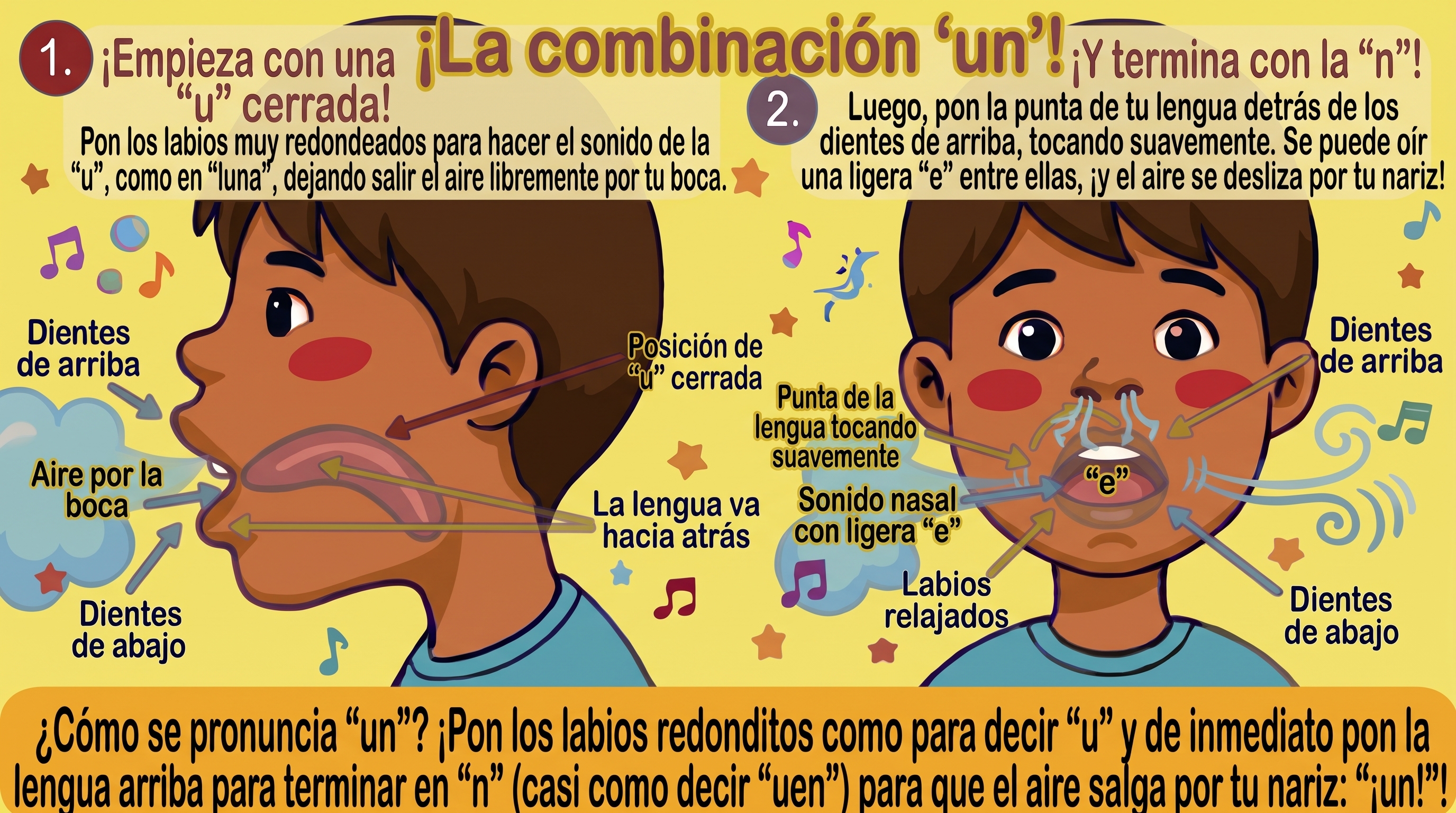
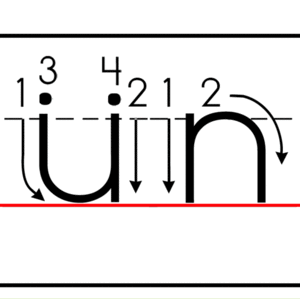
• 先Xiān发fā“u”,像xiàng“luna”中zhōng的de“u”。/Empieza con una «u» cerrada, como en «luna»./It begins with a closed “u”, as in “luna”.
• 再Zài发fā“n”,中间zhōngjiān可以kěyǐ听到tīngdào一点儿yìdiǎnr“e”。/Luego viene la «n», y en medio se oye una ligera «e»./Then comes the “n”, and a light “e” can be heard in between.
• 前面Qiánmiàn没有méiyǒu声母shēngmǔ时shí写成xiěchéng“wen”;在zài“j”“q”“x”“y”后面hòumiàn,“un”其实qíshí是shì“ün”。/Sin consonante delante se escribe «wen»; después de «j», «q», «x» e «y», «un» es en realidad «ün»./With no consonant before it, it is written “wen”; after “j”, “q”, “x” and “y”, “un” is really “ün”.
1) 轮lún/rueda/wheel
2) 吞tūn/tragar/to swallow
3) 顿dùn/pausa/pause
4) 困kùn/cansado, con sueño/sleepy, tired
5) 浑hún/turbio/muddy
6) 春chūn/primavera/spring (season)
7) 孙sūn/nieto/grandson
8) 村cūn/pueblo, aldea/village
9) 准zhǔn/exacto/accurate
10) 蚊wén/mosquito (se escribe «wen»)/mosquito (written “wen”)
11) 论lùn/discutir/to discuss
12) 滚gǔn/rodar/to roll
13) 顺shùn/fluido, seguido/smooth
14) 吨dūn/tonelada/tonne
15) 文wén/escritura, idioma (se escribe «wen»)/writing, language (written “wen”)
--------------------------------------------------------------------------------
声调Shēngdiào能néng区分qūfēn意思yìsi,比如bǐrú轮lún(车轮chēlún)和hé论lùn(讨论tǎolùn)。/El tono distingue significados, como en lún (rueda) y lùn (discutir)./The tone tells meanings apart, as in lún (wheel) and lùn (to discuss).

Practica aquí · 在这里练习
--------------------------------------------------------------------------------
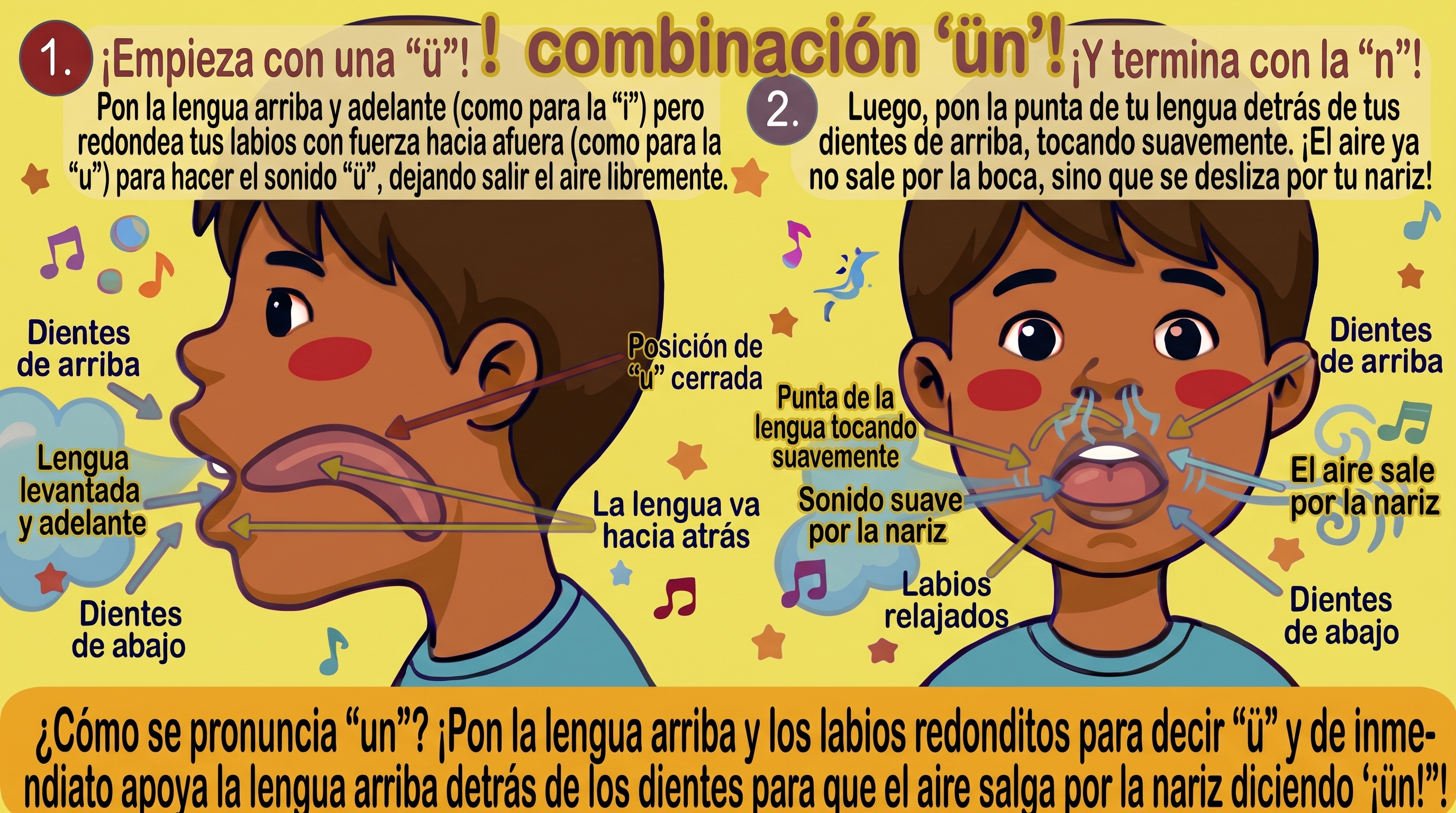
拼音Pīnyīn中zhōng的de“ün”由yóu“ü”和hé“n”组成zǔchéng;因为yīnwèi西班牙语Xībānyáyǔ里lǐ没有méiyǒu“ü”,开始kāishǐ可能kěnéng有点儿yǒudiǎnr难nán。/El sonido «ün» en pinyin combina la «ü» con la «n»; como la «ü» no existe en español, puede costar un poco al principio./The sound “ün” in pinyin combines “ü” with “n”; as “ü” does not exist in Spanish, it can be a little difficult at first.
--------------------------------------------------------------------------------

--------------------------------------------------------------------------------
• 先Xiān发fā“ü”:舌头shétou像xiàng发fā“i”,嘴唇zuǐchún像xiàng发fā“u”。/Empieza con la «ü»: lengua como para la «i» y labios como para la «u»./It begins with “ü”: tongue as for “i” and lips as for “u”.
• 再Zài发fā“n”,和hé西班牙语Xībānyáyǔ的de“n”一样yíyàng。/Después viene la «n», como en español./Then comes the “n”, as in Spanish.
• 在Zài“j”“q”“x”“y”后面hòumiàn写成xiěchéng“un”;前面qiánmiàn没有méiyǒu声母shēngmǔ时shí写成xiěchéng“yun”。/Después de «j», «q», «x» e «y» se escribe «un» (jun, qun, xun, yun); sin consonante delante se escribe «yun»./After “j”, “q”, “x” and “y” it is written “un” (jun, qun, xun, yun); with no consonant before it, it is written “yun”.
1) 云yún/nube/cloud
2) 运yùn/transportar/to move, to transport
3) 军jūn/ejército/army
4) 俊jùn/guapo/handsome
5) 群qún/grupo, multitud/group, crowd
6) 裙子qúnzi/falda/skirt
7) 训xùn/entrenar, instruir/to train
8) 寻xún/buscar/to look for
9) 晕yūn/mareado/dizzy
10) 平均píngjūn/media, promedio/average
11) 迅速xùnsù/rápido/rapid
12) 允许yǔnxǔ/permitir/to allow
13) 韵母yùnmǔ/final (del pinyin)/final (in pinyin)
14) 熏xūn/ahumar/to smoke (food)
15) 菌jūn/hongo, bacteria/fungus, germ
--------------------------------------------------------------------------------
“ün”在zài整个zhěnggè普通话pǔtōnghuà里lǐ都dōu用yòng,声调shēngdiào也yě很hěn重要zhòngyào,比如bǐrú云yún(白云báiyún)和hé运yùn(运动yùndòng)。/La «ün» se usa en todo el chino estándar, y el tono es importante, como en yún (nube) y yùn (transportar)./The “ün” is used throughout standard Chinese, and the tone matters, as in yún (cloud) and yùn (to transport).
ūn ún ǔn ùn
ūn
ún
ǔn
ùn
ǖn ǘn ǚn ǜn
ǖn
ǘn
ǚn
ǜn

![]()




