· 月亮Yuèliang圆圆的yuányuánde。/La luna está redonda./The moon is round.
椰子Yēzi/coco/coconut
· 椰子树Yēzishù很hěn高gāo。/Las palmeras cocoteras son muy altas./Coconut palms are very tall.
耳朵Ěrduo/oreja/ear
· 小Xiǎo兔子tùzi的de耳朵ěrduo很hěn长cháng。/El conejito tiene las orejas muy largas./The bunny's ears are very long.
** 想一想, 说一说/Xiǎng yi xiǎng, shuō yi shuō/Piensa y responde/Think and answer the following questions **
(1)读一读Dú yi dú“ie”“üe”“er”,说shuō说shuō“er”和hé别的biéde韵母yùnmǔ有yǒu什么shénme不同bùtóng。/Lee ie, üe y er: ¿en qué se diferencia «er» de las demás finales?/Read ie, üe and er: how is “er” different from the other finals?
(2)读一读Dú yi dú“yue”“jue”“que”“xue”,说shuō说shuō“ü”上shàng的de两点liǎngdiǎn为什么wèishénme不见bújiàn了le。/Lee yue, jue, que y xue: ¿por qué han desaparecido los dos puntos de la ü?/Read yue, jue, que and xue: why have the dots on ü disappeared?
(3)读一读Dú yi dú,说一说shuō yi shuō带dài这些zhèxiē音yīn的de词语cíyǔ。/Lee y di palabras con estos sonidos: ie, üe, er./Read and say words with these sounds: ie, üe, er.
(4)朗读Lǎngdú儿歌érgē,背诵bèisòng儿歌érgē。/Lee la canción infantil en voz alta y apréndela de memoria./Read the nursery rhyme aloud and learn it by heart.
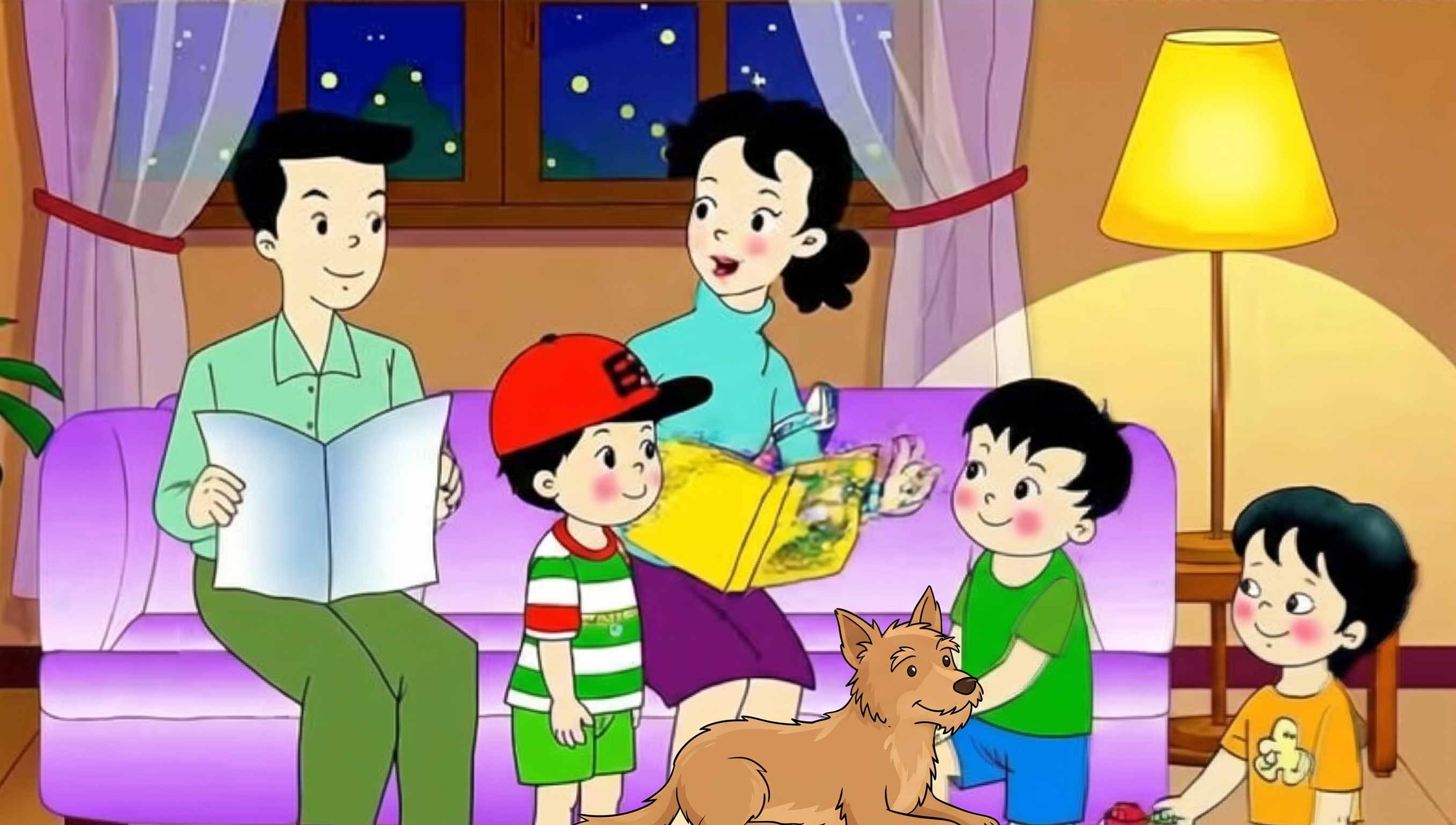
** 家庭/Jiātíng/FAMILIA/FAMILY **
宝宝Bǎobao一yī家jiā/La familia de Baobao/Baobao's family
爸爸Bàba/Papá, padre/Dad, father
妈妈Māma/Mamá, madre/Mum, mother
宝宝Bǎobao/Baobao/Baobao
婷婷Tíngtíng/Tíngting/Tíngting
嘟嘟Dūdū/Dudú/Dudú
洛基Luòjī/Rocky/Rocky
** 对话/Duìhuà/Diálogo/Dialogue **
嘟嘟Dūdū:爷爷Yéye,你nǐ看kàn,花huā上shàng有yǒu一只yìzhī蝴蝶húdié!/Dudú: Abuelo, mira, ¡hay una mariposa en la flor!/Dudú: Grandad, look, there's a butterfly on the flower!
爸爸Bàba:今天Jīntiān晚上wǎnshang的de月亮yuèliang又yòu大又圆dàyòuyuán。/Papá: Esta noche la luna está grande y redonda./Dad: Tonight the moon is big and round.
婷婷Tíngtíng:下雨Xiàyǔ了le,快kuài穿chuān上shàng雨靴yǔxuē!/Tíngting: ¡Está lloviendo, ponte las botas de agua!/Tíngting: It's raining – put your wellies on, quick!
宝宝Bǎobǎo:姐姐Jiějie,我wǒ要yào喝hē椰子yēzi水shuǐ!/Baobao: Hermana, ¡quiero agua de coco!/Baobao: Sis, I want some coconut water!
妈妈Māma:戴Dài上shàng帽子màozi,别bié冻dòng着zhe耳朵ěrduo;晚饭wǎnfàn我wǒ做zuò茄子qiézi。/Mamá: Ponte el gorro para que no se te enfríen las orejas; para cenar hago berenjenas./Mum: Put your hat on so your ears don't get cold – I'm making aubergines for dinner.
Comentario Pedagógico: ie, üe y er: 1. Diptongos: En «ie» y «üe» se pasa a una «e» parecida a la española. 2. Final especial: «er» forma sílaba sola y no se une a ninguna consonante. 3. Sílabas enteras: «ye» y «yue» se leen de golpe.
Pedagogical Commentary: ie, üe and er: 1. Diphthongs: In “ie” and “üe” you glide to an “e” similar to the Spanish one. 2. Special final: “er” forms a syllable on its own and never combines with an initial. 3. Whole syllables: “ye” and “yue” are read as a whole.
@ Pinyin 资料 (PDF, MP3 等) 的版权归属于:中国华文教育网 - Overseas Chinese Language and Culture Education Online。
@ Los materiales Pinyin (PDF, MP3, etc.) son propiedad de: 中国华文教育网 - Overseas Chinese Language and Culture Education Online.
@ The materials Pinyin (PDF, MP3, etc.) are the property of: 中国华文教育网 - Overseas Chinese Language and Culture Education Online.