Saltar al contenido
Home » LECCION_PRIMARIA_P » Página 2

LECCION_PRIMARIA_P


PRIMARIA_C1_N1_16_P15

ie
Practica aquí · 在这里练习
--------------------------------------------------------------------------------
拼音Pīnyīn中zhōng的de“ie”是shì一个yígè复韵母fùyùnmǔ,由yóu“i”和hé“e”组成zǔchéng;这里zhèlǐ的de“e”和hé西班牙语Xībānyáyǔ的de“e”很hěn像xiàng,所以suǒyǐ“ie”的de发音fāyīn和hé西班牙语Xībānyáyǔ单词dāncí“pie”“bien”中zhōng的de“ie”相似xiāngsì。/El sonido «ie» en pinyin es un diptongo formado por «i» y «e»; aquí la «e» se parece mucho a la española, así que suena como «ie» en las palabras «pie» o «bien»./The sound “ie” in pinyin is a diphthong made up of “i” and “e”; here the “e” is very like the Spanish one, so it sounds like the “ie” in the Spanish words “pie” or “bien”.
--------------------------------------------------------------------------------
--------------------------------------------------------------------------------
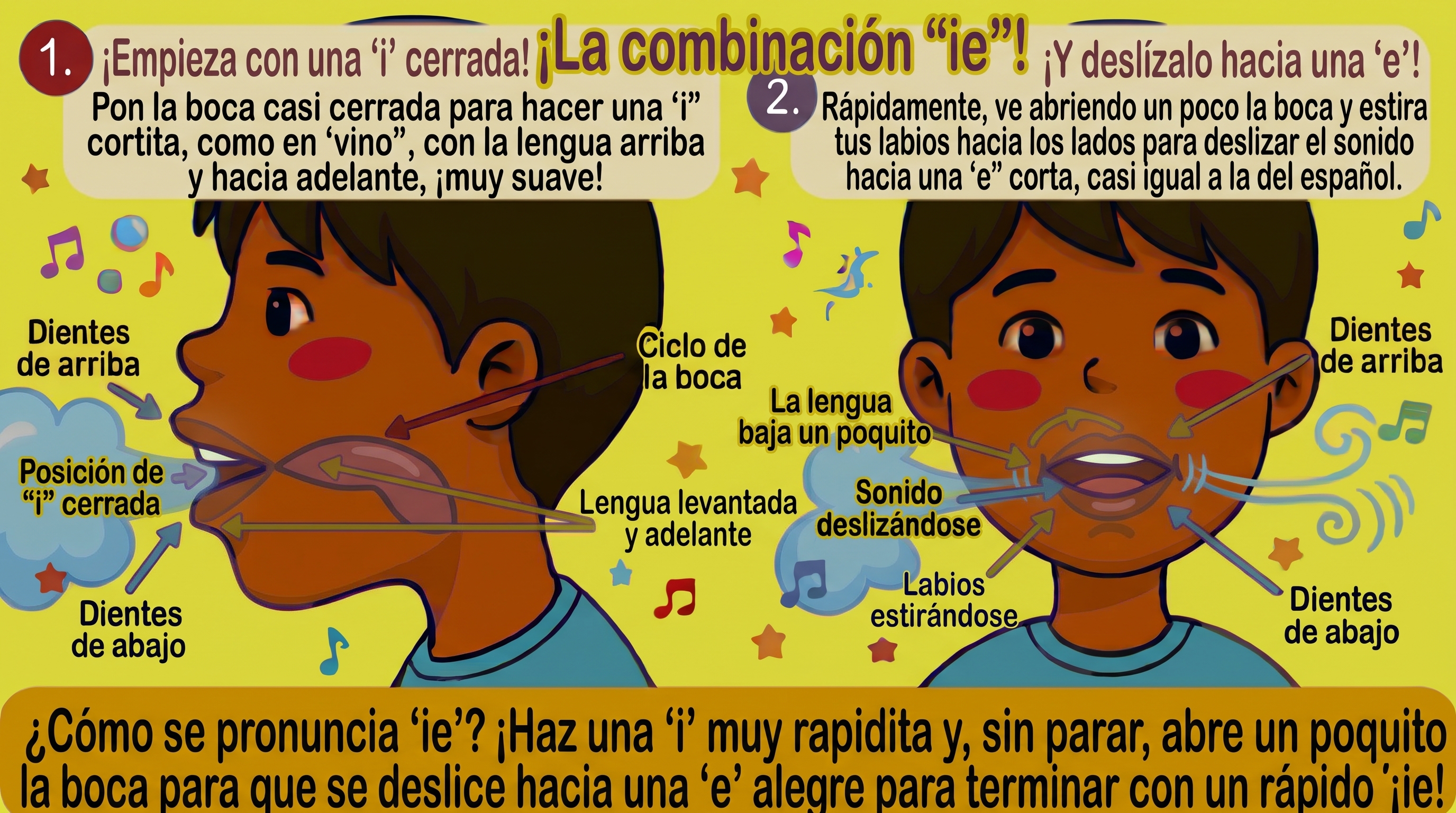
• 先Xiān发fā“i”,像xiàng“vino”中zhōng的de“i”。/Empieza con una «i» cerrada, como en «vino»./It begins with a closed “i”, as in “vino”.
• 再Zài滑向huáxiàng一个yígè短duǎn的de“e”,和hé西班牙语Xībānyáyǔ的de“e”差不多chàbuduō。/Luego se desliza hacia una «e» breve, casi igual que la española./It then glides towards a short “e”, almost the same as the Spanish one.
• 两个Liǎnggè音yīn连在一起liánzàiyìqǐ,中间zhōngjiān没有méiyǒu停顿tíngdùn;前面qiánmiàn没有méiyǒu声母shēngmǔ时shí写成xiěchéng“ye”。/Se pronuncia de forma fluida, sin pausas; sin consonante delante se escribe «ye»./It is pronounced smoothly, with no pauses; with no consonant before it, it is written “ye”.
1) 鞋xié/zapato/shoe
2) 接jiē/recibir, recoger/to receive, to meet
3) 撇piě/desechar/to cast aside
4) 跌diē/caer/to fall
5) 烈liè/fuerte, intenso/strong, intense
6) 贴tiē/pegar/to stick
7) 灭miè/apagar, extinguir/to extinguish
8) 孽niè/maldad/sin, evil
9) 别bié/no (hagas); separar/don't; to separate
10) 切qiē/cortar/to cut
11) 椰子yēzi/coco/coconut
12) 姐jiě/hermana mayor/elder sister
13) 写xiě/escribir/to write
14) 叶yè/hoja/leaf
15) 铁tiě/hierro/iron
--------------------------------------------------------------------------------
前面Qiánmiàn是shì“y”时shí,比如bǐrú也yě,写法xiěfǎ不变búbiàn,只是zhǐshì用yòng“y”代替dàitì“i”;声调shēngdiào会huì改变gǎibiàn意思yìsi,比如bǐrú接jiē(接jiē人rén)和hé节jié(节日jiérì)。/Con «y» (como en yě, también), «ie» se mantiene, pero la «y» sustituye a la «i»; además, el tono cambia el significado, como en jiē (recibir) y jié (fiesta)./With “y” (as in yě, also), “ie” stays the same, but “y” replaces the “i”; the tone also changes the meaning, as in jiē (to receive) and jié (festival).

üe
Practica aquí · 在这里练习
--------------------------------------------------------------------------------
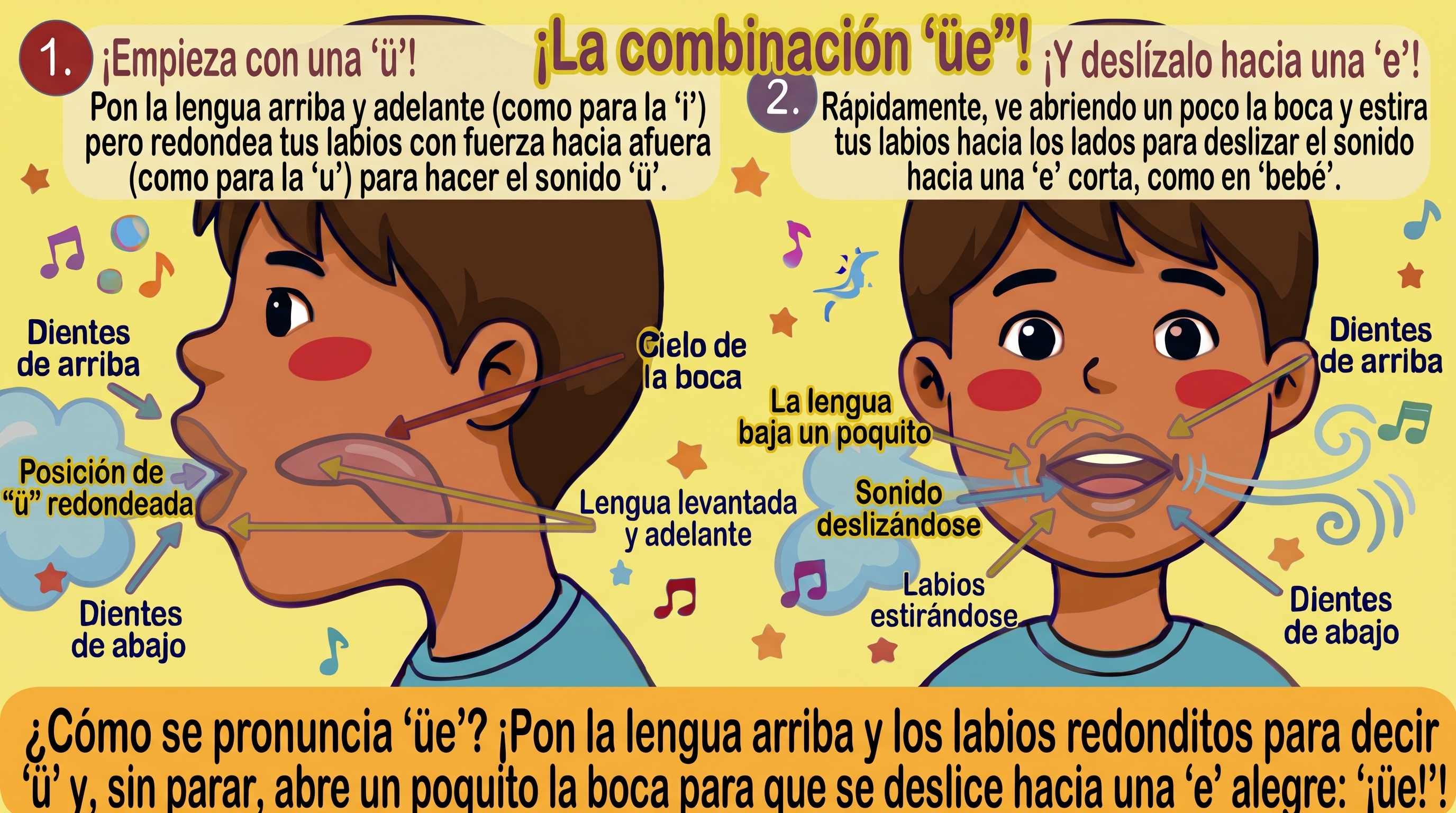
拼音Pīnyīn中zhōng的de“üe”由yóu“ü”和hé“e”组成zǔchéng:“ü”是shì嘴唇zuǐchún拢圆lǒngyuán的de“i”,“e”和hé西班牙语Xībānyáyǔ的de“e”差不多chàbuduō。/El sonido «üe» en pinyin es un diptongo formado por la «ü» (una «i» con los labios redondeados) y la «e», casi como la española./The sound “üe” in pinyin is a diphthong made up of “ü” (an “i” with rounded lips) and “e”, almost like the Spanish one.
--------------------------------------------------------------------------------
--------------------------------------------------------------------------------
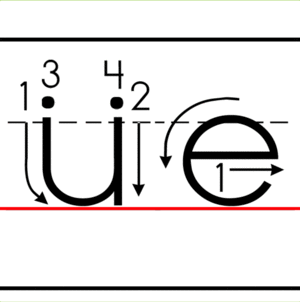
• 先Xiān发fā“ü”:舌头shétou像xiàng发fā“i”,嘴唇zuǐchún像xiàng发fā“u”,和hé德语Déyǔ的de“ü”很hěn像xiàng。/Empieza con la «ü»: lengua como para la «i» y labios como para la «u», muy parecida a la «ü» alemana./It begins with “ü”: tongue as for “i” and lips as for “u”, very like the German “ü”.
• 再Zài滑向huáxiàng“e”,像xiàng西班牙语Xībānyáyǔ单词dāncí“bebé”中zhōng的de“e”。/Luego se desliza hacia la «e», como en «bebé»./It then glides towards “e”, as in “bebé”.
• 在Zài“j”“q”“x”“y”后面hòumiàn写成xiěchéng“ue”,但dàn还是háishì读dú“üe”。/Después de «j», «q», «x» e «y» se escribe «ue» (jue, que, xue, yue), pero sigue sonando «üe»./After “j”, “q”, “x” and “y” it is written “ue” (jue, que, xue, yue), but it still sounds like “üe”.
1) 略lüè/breve, resumir/brief; to summarise
2) 虐nüè/maltratar/to abuse, to mistreat
3) 月yuè/mes, luna/month, moon
4) 血xuè/sangre (se escribe con «u», suena «üe»)/blood (written with “u”, pronounced “üe”)
5) 学xué/estudiar/to study
6) 缺quē/faltar/to lack
7) 雪xuě/nieve/snow
8) 靴子xuēzi/botas/boots
9) 觉得juéde/pensar, sentir/to think, to feel
10) 决定juédìng/decidir/to decide
11) 却què/sin embargo/however
12) 越yuè/cuanto más… más/the more… the more
13) 约yuē/quedar, citarse/to arrange to meet
14) 音乐yīnyuè/música/music
15) 麻雀máquè/gorrión/sparrow
--------------------------------------------------------------------------------
声调Shēngdiào会huì改变gǎibiàn意思yìsi,比如bǐrú学xué(学习xuéxí)和hé雪xuě(下雪xiàxuě);“ü”和hé它tā的de组合zǔhé开始kāishǐ可能kěnéng有点儿yǒudiǎnr难nán,但dàn对duì普通话pǔtōnghuà的de发音fāyīn非常fēicháng重要zhòngyào。/El tono cambia el significado, como en xué (estudiar) y xuě (nieve); la «ü» y sus combinaciones pueden costar al principio, pero son fundamentales para pronunciar bien el mandarín./The tone changes the meaning, as in xué (to study) and xuě (snow); “ü” and its combinations can be hard at first, but they are essential for good Mandarin pronunciation.

er
Practica aquí · 在这里练习
--------------------------------------------------------------------------------
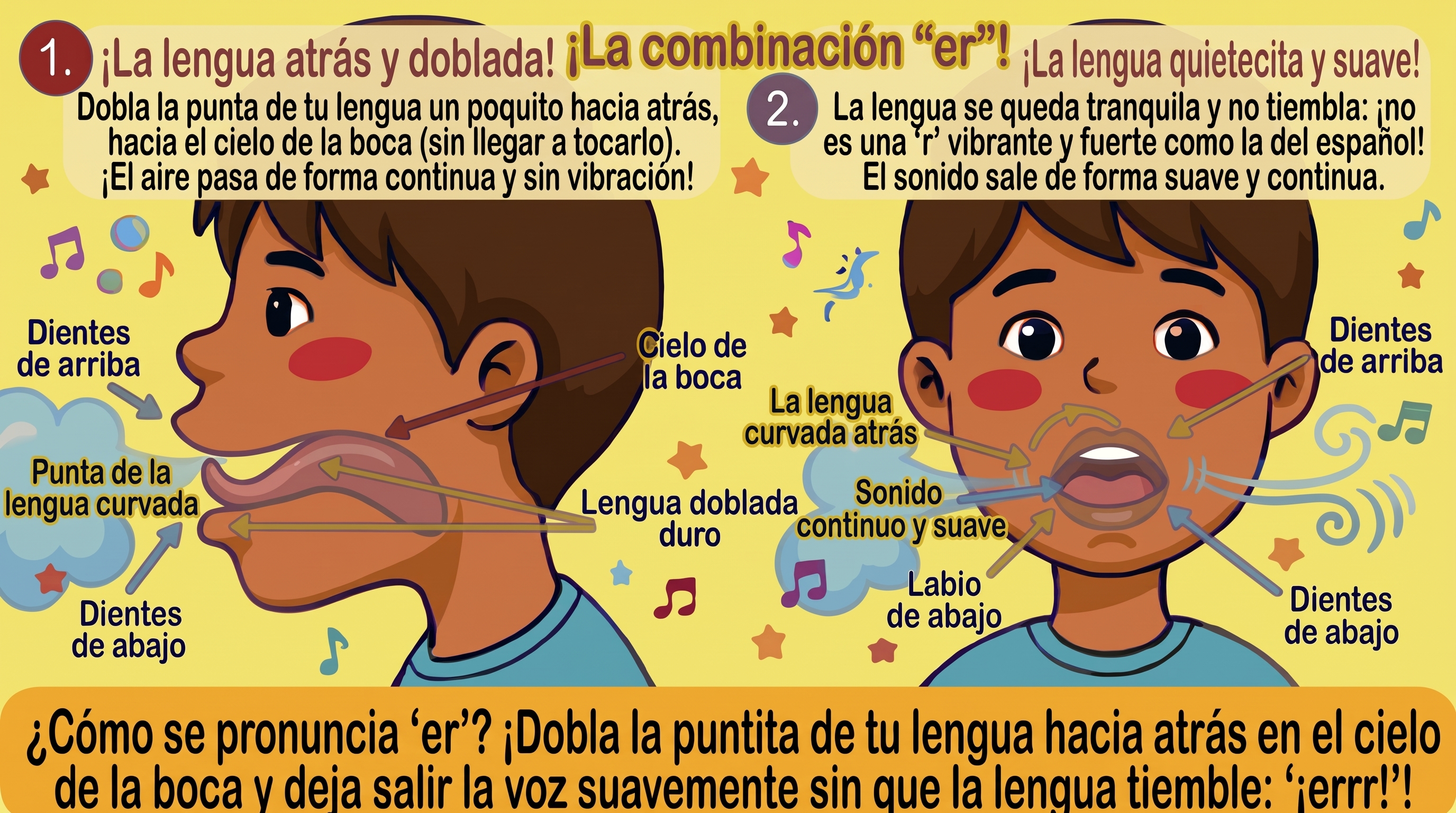
拼音Pīnyīn中zhōng的de“er”是shì一个yígè特殊tèshū的de韵母yùnmǔ,发音fāyīn时shí舌尖shéjiān往上wǎngshàng卷juǎn,是shì一个yígè卷舌juǎnshé元音yuányīn,和hé西班牙语Xībānyáyǔ的de“r”完全wánquán不同bùtóng。/El sonido «er» en pinyin es una final especial: una vocal retrofleja que se pronuncia con la punta de la lengua doblada hacia atrás, y no se parece a la «r» española./The sound “er” in pinyin is a special final: a retroflex vowel pronounced with the tip of the tongue curled back, and it is not like the Spanish “r”.
--------------------------------------------------------------------------------
--------------------------------------------------------------------------------
• 发音Fāyīn时shí,舌尖shéjiān往上wǎngshàng卷juǎn,向xiàng硬腭yìng'è靠近kàojìn。/Se pronuncia con la lengua ligeramente doblada hacia atrás, hacia el paladar./It is pronounced with the tongue curled slightly back, towards the palate.
• 舌头Shétou不bú颤动chàndòng,这zhè不是búshì西班牙语Xībānyáyǔ那样nàyàng的de颤音chànyīn“r”。/La lengua no vibra: no es una «r» vibrante como la española./The tongue does not trill: it is not a rolled “r” like the Spanish one.
• 在Zài中国Zhōngguó北方běifāng,尤其yóuqí是shì北京Běijīng,很多hěnduō词cí后面hòumiàn会huì加上jiāshàng“儿ér”音yīn,这zhè叫jiào“儿化érhuà”。/En el norte de China, sobre todo en Pekín, se añade este sonido al final de muchas palabras para darles un tono coloquial: es el «erhua» (儿化)./In northern China, especially Beijing, this sound is added to the end of many words to give them a colloquial touch: this is called “erhua” (儿化).
1) 儿ér/niño, hijo/child, son
2) 耳ěr/oreja/ear
3) 二èr/dos/two
4) 儿子érzi/hijo/son
5) 耳朵ěrduo/oreja/ear
6) 女儿nǚ'ér/hija/daughter
7) 花儿huār/flor (coloquial, con erhua)/flower (colloquial, with erhua)
8) 玩儿wánr/jugar, divertirse (coloquial, con erhua)/to play, to have fun (colloquial, with erhua)
9) 而且érqiě/además/moreover
10) 儿童értóng/niño/child
11) 二十èrshí/veinte/twenty
12) 耳机ěrjī/auriculares/headphones
13) 偶尔ǒu'ěr/de vez en cuando/occasionally
14) 这儿zhèr/aquí (coloquial, con erhua)/here (colloquial, with erhua)
15) 一点儿yìdiǎnr/un poco (con erhua)/a little (with erhua)
--------------------------------------------------------------------------------
“儿化Érhuà”主要zhǔyào出现chūxiàn在zài北方běifāng,尤其yóuqí是shì北京Běijīng;“er”这个zhège音节yīnjié本身běnshēn哪里nǎlǐ都dōu用yòng,声调shēngdiào会huì改变gǎibiàn意思yìsi:儿ér、耳ěr、二èr。/El erhua es típico del norte de China, sobre todo de Pekín; la sílaba «er» se usa en todas partes y su tono cambia el significado: ér (niño), ěr (oreja), èr (dos)./Erhua is typical of northern China, especially Beijing; the syllable “er” is used everywhere, and its tone changes the meaning: ér (child), ěr (ear), èr (two).

iē ié iě iè
iē
ié
iě
iè
üē üé üě üè
üē
üé
üě
üè
ēr ér ěr èr
ēr
ér
ěr
èr



主题/Zhǔtí/Tema/Theme

主题 2/Zhǔtí 2/Tema/Theme 2

词汇 Cíhuì/Vocabulario/Vocabulary

PDF与视频/PDF,videos Y Quiz/PDF, Videos and Quiz

PDF与视频/PDF,videos Y Quiz/PDF, Videos and Quiz

Loading

Páginas: 1 2 3 4