我家Wǒjiā有yǒu九只jiǔ zhī小鸡xiǎojī,每天měitiān早上zǎoshang我wǒ去qù喂wèi它们tāmen。/En casa tenemos nueve pollitos y cada mañana voy a darles de comer./We have nine chicks at home, and every morning I go and feed them.
· 我们Wǒmen学xué拼音pīnyīn。/Aprendemos pinyin./We are learning pinyin.
洗Xǐ/lavar/to wash
· 我Wǒ洗手xǐshǒu。/Me lavo las manos./I wash my hands.
家Jiā/casa, familia/home, family
· 我Wǒ爱ài我家wǒjiā。/Quiero a mi familia./I love my family.
** 想一想, 说一说/Xiǎng yi xiǎng, shuō yi shuō/Piensa y responde/Think and answer the following questions **
(1)读一读Dú yi dú“ju”“qu”“xu”,说shuō说shuō“ü”上shàng的de两点liǎngdiǎn到dào哪里nǎlǐ去qù了le。/Lee ju, qu y xu: ¿dónde han ido los dos puntos de la ü?/Read ju, qu and xu: where have the two dots on ü gone?
(2)说一说Shuō yi shuō:你家nǐjiā有yǒu几口jǐkǒu人rén?/Di: ¿cuántas personas hay en tu familia?/Say: how many people are there in your family?
(3)读一读Dú yi dú,说一说shuō yi shuō带dài这些zhèxiē音yīn的de词语cíyǔ。/Lee y di palabras con estos sonidos: j, q, x./Read and say words with these sounds: j, q, x.
(4)朗读Lǎngdú儿歌érgē,背诵bèisòng儿歌érgē。/Lee la canción infantil en voz alta y apréndela de memoria./Read the nursery rhyme aloud and learn it by heart.
** 家庭/Jiātíng/FAMILIA/FAMILY **
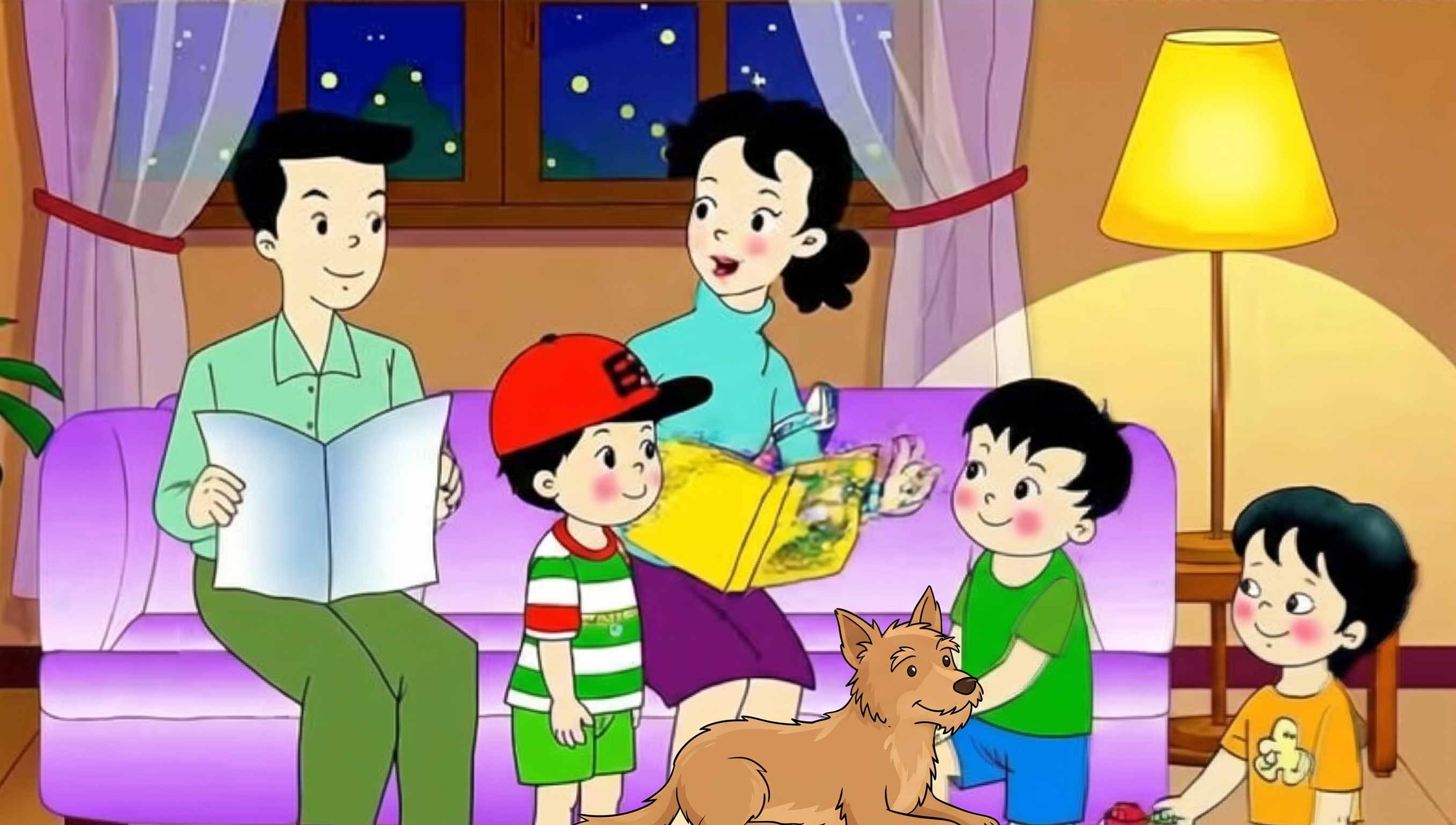
宝宝Bǎobao一yī家jiā/La familia de Baobao/Baobao's family
爸爸Bàba/Papá, padre/Dad, father
妈妈Māma/Mamá, madre/Mum, mother
宝宝Bǎobao/Baobao/Baobao
婷婷Tíngtíng/Tíngting/Tíngting
嘟嘟Dūdū/Dudú/Dudú
洛基Luòjī/Rocky/Rocky
** 对话/Duìhuà/Diálogo/Dialogue **
嘟嘟Dūdū:今天Jīntiān我wǒ九岁jiǔsuì了le,我wǒ想要xiǎngyào七个qīgè气球qìqiú!/Dudú: Hoy cumplo nueve años: ¡quiero siete globos!/Dudú: It's my ninth birthday today – I want seven balloons!
爸爸Bàba:好Hǎo!我们wǒmen回家huíjiā吃chī西瓜xīguā。/Papá: ¡Vale! Vamos a casa a comer sandía./Dad: OK! Let's go home and eat watermelon.
婷婷Tíngtíng:吃Chī西瓜xīguā前qián要yào先xiān洗手xǐshǒu。/Tíngting: Antes de comer sandía hay que lavarse las manos./Tíngting: We have to wash our hands before eating watermelon.
宝宝Bǎobǎo:小鸡Xiǎojī也yě想xiǎng吃chī西瓜xīguā!/Baobao: ¡Los pollitos también quieren sandía!/Baobao: The chicks want some watermelon too!
妈妈Māma:吃Chī完wán了le,我们wǒmen一起yìqǐ学xué拼音pīnyīn。/Mamá: Cuando terminemos, aprendemos pinyin juntos./Mum: When we've finished, we'll learn some pinyin together.
Comentario Pedagógico: j, q y x: 1. Pronunciación: Para «j», «q» y «x» el dorso de la lengua sube al paladar y la punta toca los dientes de abajo; la «q» lleva aire. 2. Rima: «La pequeña ü ve a j, q, x: se quita los puntos y sigue sonando ü». 3. Aviso para hispanohablantes: La «j» no se lee como la española ni la «x» como «ks».
Pedagogical Commentary: j, q and x: 1. Pronunciation: For “j”, “q” and “x” the front of the tongue rises to the palate with the tip behind the lower teeth; “q” has a puff of air. 2. Rhyme: “Little ü meets j, q, x: it takes off its dots but still sounds ü.” 3. Note for Spanish speakers: “j” isn't the Spanish “j”, and “x” isn't “ks”.
@ Pinyin 资料 (PDF, MP3 等) 的版权归属于:中国华文教育网 - Overseas Chinese Language and Culture Education Online。
@ Los materiales Pinyin (PDF, MP3, etc.) son propiedad de: 中国华文教育网 - Overseas Chinese Language and Culture Education Online.
@ The materials Pinyin (PDF, MP3, etc.) are the property of: 中国华文教育网 - Overseas Chinese Language and Culture Education Online.