MT
L01
L02
L03
L04
L05
EL1
P01
P02
P13
P03
P04
P07
P08
P09
P10
P11
P12
EP1
P05
P06
P15
P16
P17
P18
EP2
T01
T02
T03
T04
ET1
L06
L07
L08
L09
L10
EL2
T05
T06
T07
T08
ET2
T09
T10
T11
ET3
T12
T13
T14
ET4
PRIMARIA_C1_N1_11_P10

Practica aquí · 在这里练习
--------------------------------------------------------------------------------
拼音Pīnyīn中zhōng的de“j”和hé西班牙语Xībānyáyǔ的de“j”完全wánquán不同bùtóng,它tā更gèng像xiàng一个yígè轻qīng的de、不bú送气sòngqì的de“ch”,舌面shémiàn贴近tiējìn硬腭yìng'è。/El sonido «j» en pinyin no tiene nada que ver con la «j» española: se parece a una «ch» suave y sin aire, pronunciada con el dorso de la lengua contra el paladar./The sound “j” in pinyin has nothing to do with the Spanish “j”: it is like a soft “ch” without a puff of air, made with the front of the tongue against the hard palate.
--------------------------------------------------------------------------------

--------------------------------------------------------------------------------
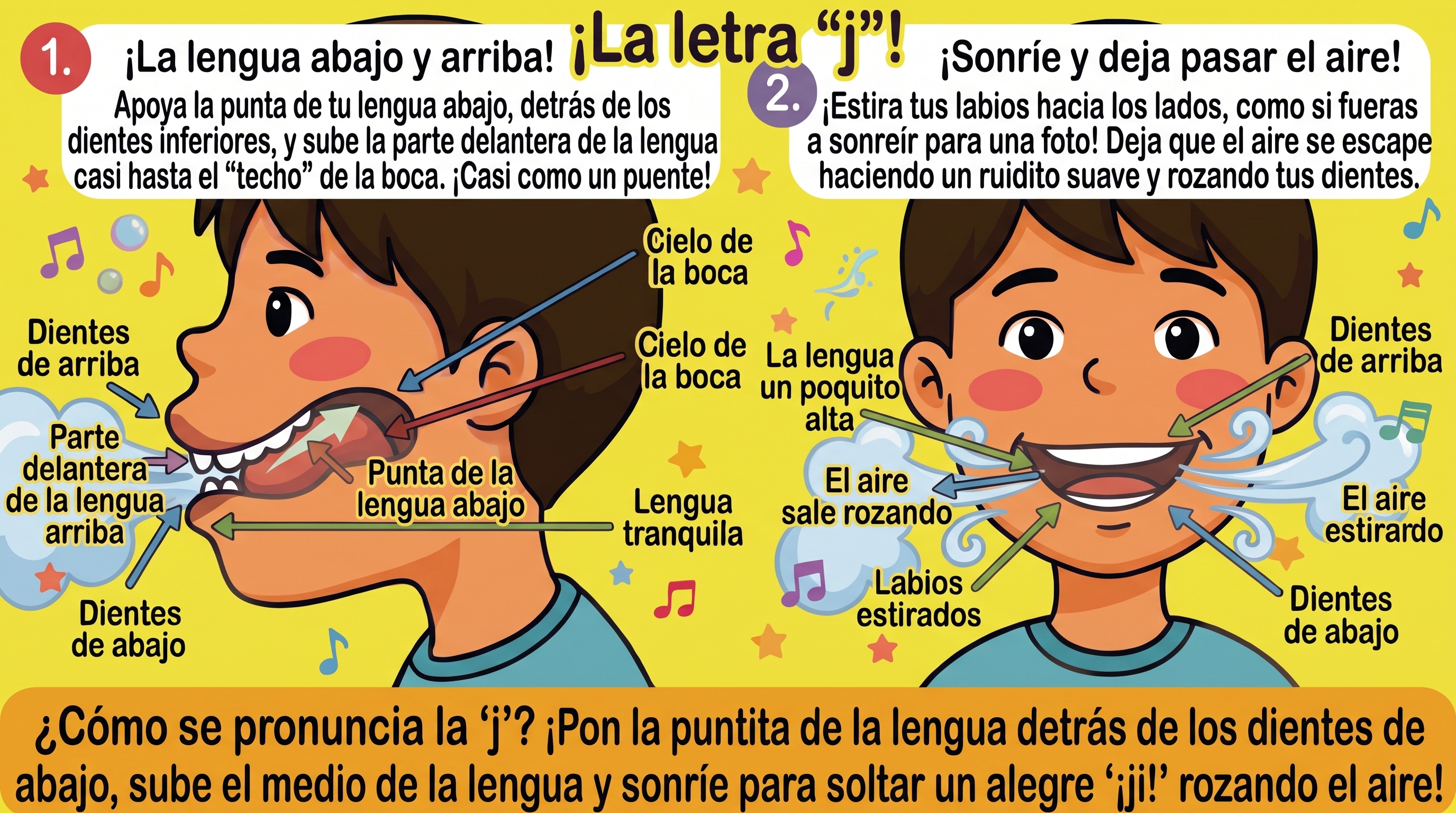
• 舌尖Shéjiān抵住dǐzhù下xià齿chǐ,舌面shémiàn贴近tiējìn硬腭yìng'è,形成xíngchéng轻微qīngwēi的de摩擦mócā。/La punta de la lengua se apoya detrás de los dientes inferiores y el dorso se acerca al paladar, creando una ligera fricción./The tip of the tongue rests behind the lower teeth and the front of the tongue rises to the palate, creating slight friction.
• 它Tā不bú送气sòngqì,和hé送气sòngqì的de“q”不同bùtóng。/No es aspirada, a diferencia de la «q»./It is unaspirated, unlike “q”.
• 嘴角Zuǐjiǎo向xiàng两边liǎngbiān展开zhǎnkāi,不要búyào拢圆lǒngyuán嘴唇zuǐchún。/Los labios se estiran hacia los lados, sin redondearse./The lips are spread to the sides, not rounded.
1) 家jiā/casa, hogar/home, family
2) 鸡jī/pollo/chicken
3) 几jǐ/cuántos/how many
4) 剧jù/drama, obra/drama, play
5) 见jiàn/ver/to see
6) 交jiāo/intercambiar/to exchange
7) 京jīng/capital (Pekín)/capital (Beijing)
8) 精jīng/esencia/essence, spirit
9) 叫jiào/llamar, gritar/to call, to shout
10) 金jīn/oro, metal/gold, metal
11) 九jiǔ/nueve/nine
12) 姐jiě/hermana mayor/elder sister
13) 脚jiǎo/pie/foot
14) 今天jīntiān/hoy/today
15) 举jǔ/levantar/to lift, to raise
--------------------------------------------------------------------------------
发Fā好hǎo“j”的de关键guānjiàn是shì不要búyào读dú成chéng西班牙语Xībānyáyǔ的de“j”,而ér要yào发fā得de轻qīng、舌头shétou平píng,没有méiyǒu气流qìliú冲chōng出来chūlái。/La clave para pronunciar bien la «j» es no hacerla como la «j» española, sino suave, con la lengua plana y sin soltar aire./The key to pronouncing “j” well is not to say it like the Spanish “j”, but softly, with the tongue flat and no puff of air.

Practica aquí · 在这里练习
--------------------------------------------------------------------------------
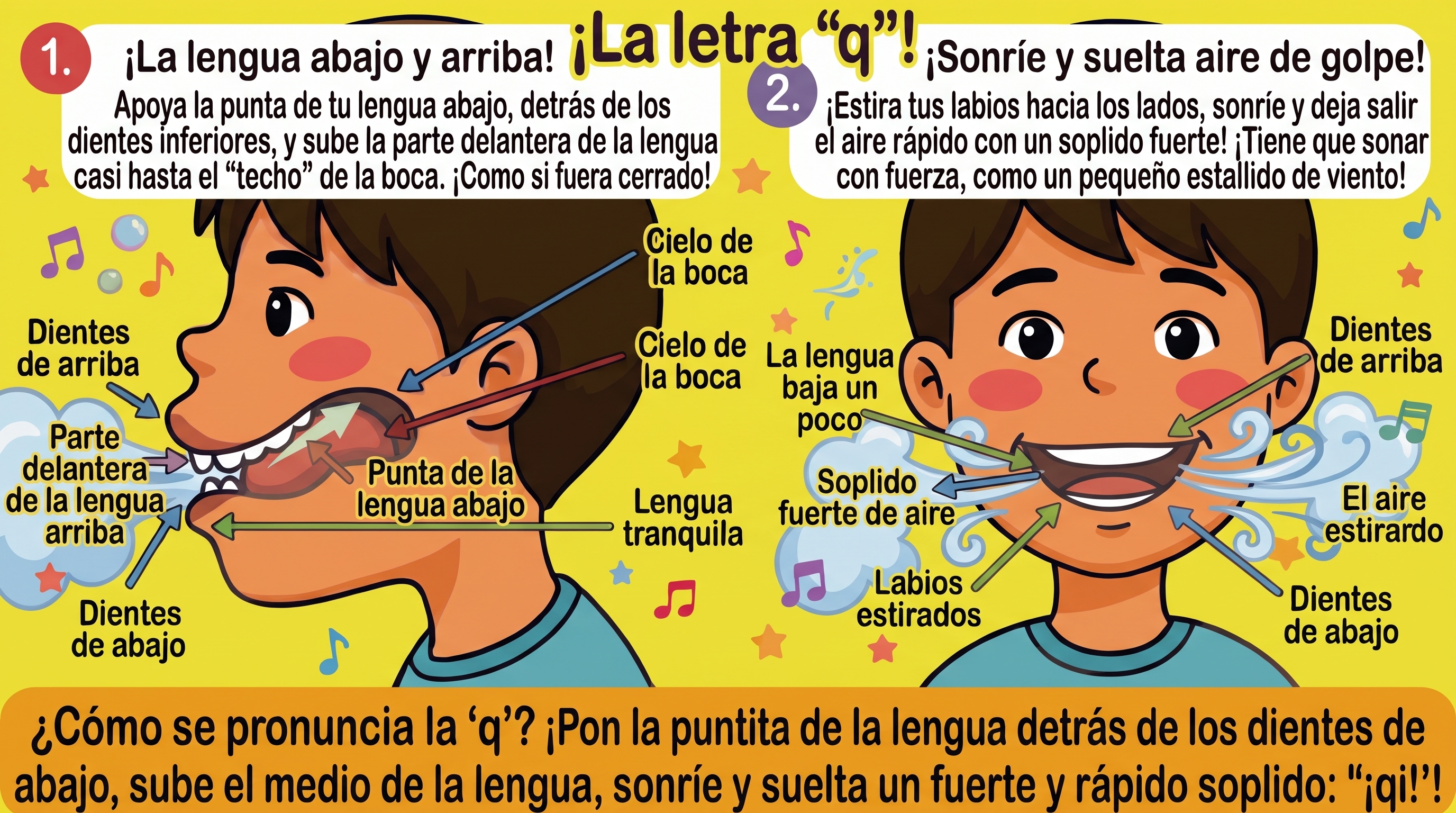
拼音Pīnyīn中zhōng的de“q”和hé西班牙语Xībānyáyǔ的de“ch”相似xiāngsì,但dàn舌面shémiàn贴近tiējìn硬腭yìng'è,而且érqiě是shì送气音sòngqìyīn,会huì冲出chōngchū一股yìgǔ气流qìliú。/El sonido «q» en pinyin se parece a la «ch» española, pero con el dorso de la lengua contra el paladar y con un golpe de aire: es una consonante aspirada./The sound “q” in pinyin is similar to the Spanish “ch”, but with the front of the tongue against the palate and a puff of air: it is aspirated.
--------------------------------------------------------------------------------

--------------------------------------------------------------------------------
• 舌头Shétou和hé发fā“j”时shí一样yíyàng,舌尖shéjiān抵住dǐzhù下xià齿chǐ。/La lengua se coloca igual que para la «j», con la punta detrás de los dientes inferiores./The tongue is placed as for “j”, with the tip behind the lower teeth.
• 它Tā是shì送气音sòngqìyīn,比bǐ“j”多duō一股yìgǔ气流qìliú。/Es aspirada: sale más aire que con la «j»./It is aspirated: more air comes out than with “j”.
• 它Tā比bǐ西班牙语Xībānyáyǔ的de“ch”更gèng轻qīng,嘴唇zuǐchún不要búyào拢圆lǒngyuán。/Es más suave que la «ch» española, y los labios no se redondean./It is softer than the Spanish “ch”, and the lips are not rounded.
1) 敲qiāo/golpear, llamar/to knock
2) 七qī/siete/seven
3) 气qì/aire, gas/air, gas
4) 前qián/delante/in front, forward
5) 球qiú/pelota/ball
6) 青qīng/verde; joven/green; young
7) 钱qián/dinero/money
8) 起qǐ/levantarse, empezar/to get up, to start
9) 千qiān/mil/thousand
10) 轻qīng/ligero/light (in weight)
11) 去qù/ir/to go
12) 秋qiū/otoño/autumn
13) 桥qiáo/puente/bridge
14) 汽车qìchē/coche/car
15) 请qǐng/por favor; invitar/please; to invite
--------------------------------------------------------------------------------
用Yòng“q”“j”还是háishì“ch”,意思yìsi会huì完全wánquán不同bùtóng;声调shēngdiào也yě一样yíyàng重要zhòngyào,比如bǐrú七qī(数字shùzì七qī)和hé气qì(空气kōngqì)。/Usar «q», «j» o «ch» cambia por completo el significado de la palabra, y el tono también influye, como en qī (siete) y qì (aire)./Using “q”, “j” or “ch” completely changes the meaning of a word, and the tone matters too, as in qī (seven) and qì (air).

Practica aquí · 在这里练习
--------------------------------------------------------------------------------
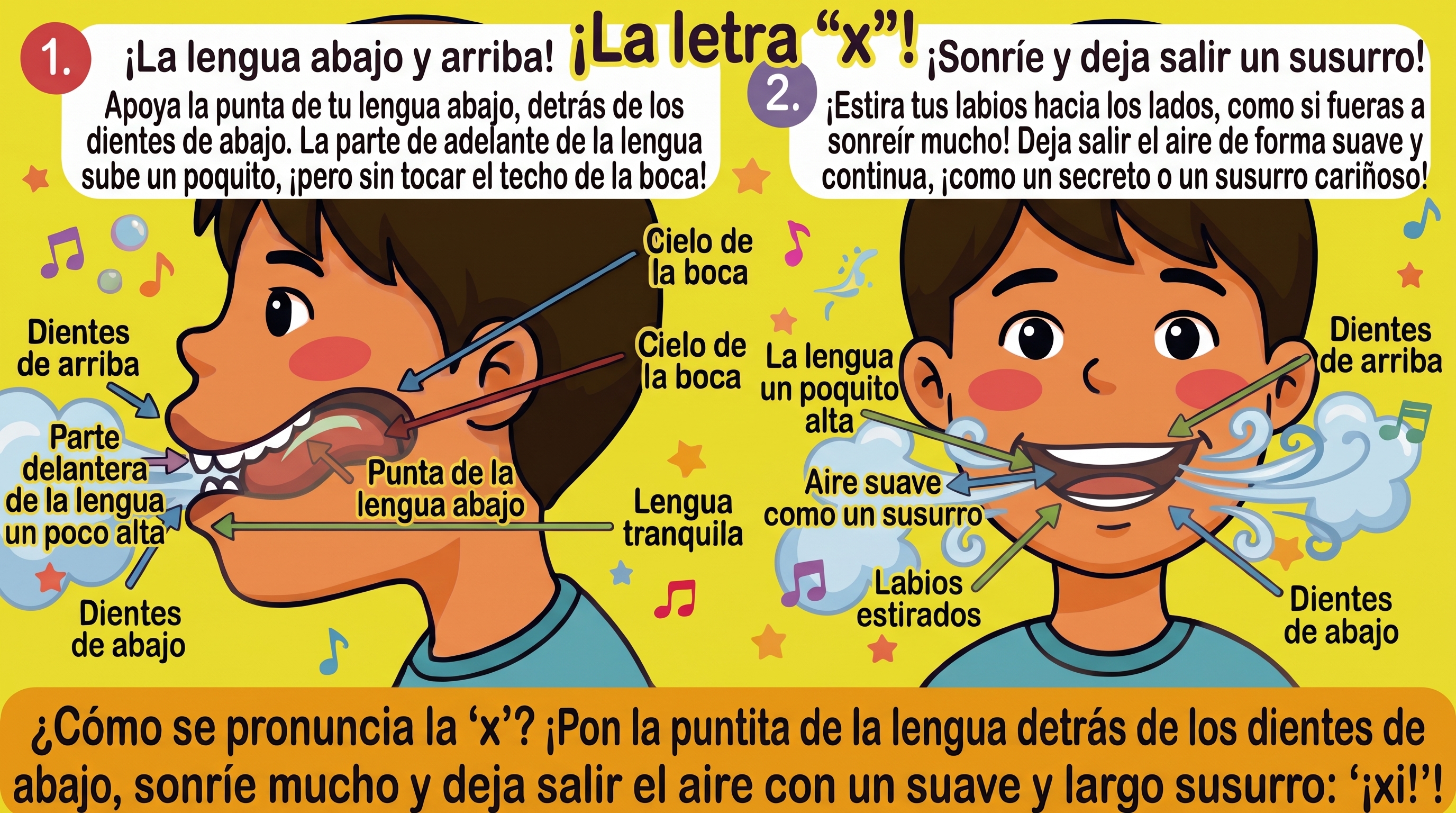
拼音Pīnyīn中zhōng的de“x”在zài西班牙语Xībānyáyǔ里lǐ没有méiyǒu,它tā在zài“s”和hé英语Yīngyǔ的de“sh”之间zhījiān,舌面shémiàn靠近kàojìn硬腭yìng'è,声音shēngyīn比较bǐjiào轻qīng。/El sonido «x» en pinyin no existe en español: está entre la «s» y la «sh» inglesa, con el dorso de la lengua cerca del paladar, y es suave./The sound “x” in pinyin does not exist in Spanish: it lies between “s” and the English “sh”, with the front of the tongue close to the palate, and it is soft.
--------------------------------------------------------------------------------

--------------------------------------------------------------------------------
• 舌尖Shéjiān抵住dǐzhù下xià齿chǐ,舌面shémiàn靠近kàojìn硬腭yìng'è,但dàn不bú碰到pèngdào。/La punta de la lengua se apoya detrás de los dientes inferiores y el dorso se acerca al paladar sin tocarlo./The tip of the tongue rests behind the lower teeth, and the front of the tongue approaches the palate without touching it.
• 气流Qìliú从cóng中间zhōngjiān摩擦mócā出来chūlái,声音shēngyīn轻qīng而ér柔和róuhé。/El aire sale rozando y produce un sonido suave, como un susurro./The air comes out with friction and makes a soft, whispering sound.
• 嘴角Zuǐjiǎo稍微shāowēi向xiàng两边liǎngbiān展开zhǎnkāi,像xiàng微笑wēixiào一样yíyàng。/Ayuda estirar un poco los labios, como sonriendo./It helps to spread the lips slightly, as if smiling.
1) 香xiāng/aromático/fragrant
2) 学xué/estudiar/to study
3) 谢xiè/agradecer/to thank
4) 新xīn/nuevo/new
5) 下xià/abajo; siguiente/below; next
6) 西xī/oeste/west
7) 消xiāo/eliminar/to eliminate
8) 小xiǎo/pequeño/small
9) 系xì/departamento (universidad)/department (at university)
10) 星xīng/estrella/star
11) 雪xuě/nieve/snow
12) 鞋xié/zapato/shoe
13) 写xiě/escribir/to write
14) 洗xǐ/lavar/to wash
15) 熊xióng/oso/bear
--------------------------------------------------------------------------------
“x”很hěn常用chángyòng,发fā不准bùzhǔn会huì改变gǎibiàn意思yìsi;声调shēngdiào也yě一样yíyàng,比如bǐrú小xiǎo(大小dàxiǎo)和hé笑xiào(微笑wēixiào)。/La «x» es muy común y, si no se pronuncia bien, el significado puede cambiar; lo mismo ocurre con el tono, como en xiǎo (pequeño) y xiào (reír)./The “x” is very common and, if it is not pronounced properly, the meaning can change; the same happens with the tone, as in xiǎo (small) and xiào (to laugh).
jī jí jǐ jì
jī
jí
jǐ
jì
qī qí qǐ qì
qī
qí
qǐ
qì
xī xí xǐ xì
xī
xí
xǐ
xì

![]()