MT
L01
L02
L03
L04
L05
EL1
P01
P02
P13
P03
P04
P07
P08
P09
P10
P11
P12
EP1
P05
P06
P15
P16
P17
P18
EP2
T01
T02
T03
T04
ET1
L06
L07
L08
L09
L10
EL2
T05
T06
T07
T08
ET2
T09
T10
T11
ET3
T12
T13
T14
ET4
PRIMARIA_C1_N1_17_P16

Practica aquí · 在这里练习
--------------------------------------------------------------------------------
拼音Pīnyīn中zhōng的de“an”是shì一个yígè前鼻韵母qiánbíyùnmǔ,由yóu“a”和hé“n”组成zǔchéng,发音fāyīn和hé西班牙语Xībānyáyǔ单词dāncí“pan”中zhōng的de“an”相似xiāngsì。/El sonido «an» en pinyin es una final nasal formada por «a» y «n», y se pronuncia de manera parecida a «an» en la palabra española «pan»./The sound “an” in pinyin is a nasal final made up of “a” and “n”, pronounced much like the “an” in the Spanish word “pan”.
--------------------------------------------------------------------------------

--------------------------------------------------------------------------------
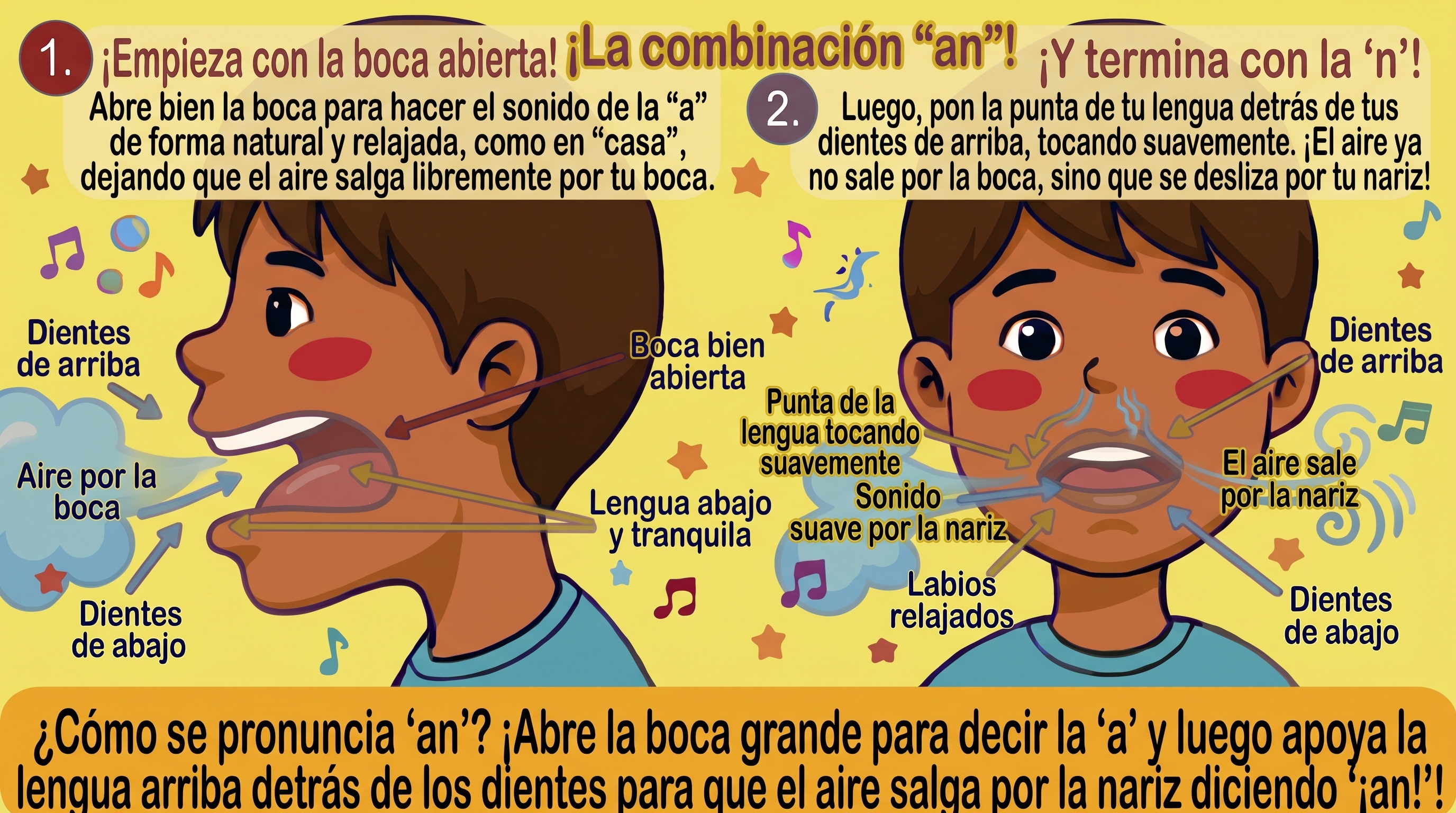
• 先Xiān发fā开口kāikǒu大dà的de“a”,像xiàng“casa”中zhōng的de“a”。/Empieza con una «a» abierta, como en «casa»./It begins with an open “a”, as in “casa”.
• 再Zài发fā“n”:舌尖shéjiān轻轻qīngqīng抵住dǐzhù上齿龈shàngchǐyín,和hé西班牙语Xībānyáyǔ的de“n”一样yíyàng。/Después viene la «n»: la punta de la lengua toca suavemente detrás de los dientes superiores, como en español./Then comes the “n”: the tip of the tongue lightly touches behind the upper teeth, as in Spanish.
• 发音Fāyīn清楚qīngchu、干脆gāncuì,元音yuányīn和hé“n”之间zhījiān没有méiyǒu停顿tíngdùn。/Es un sonido claro y directo, sin pausa entre la vocal y la «n»./It is a clear, direct sound, with no pause between the vowel and the “n”.
1) 暗àn/oscuro/dark
2) 办bàn/hacer, gestionar/to do, to handle
3) 探tàn/explorar/to explore
4) 慢màn/lento/slow
5) 山shān/montaña/mountain
6) 男nán/masculino/male
7) 看kàn/ver, mirar/to see, to look
8) 蝉chán/cigarra/cicada
9) 关guān/cerrar/to close
10) 安ān/paz, seguro/peace, safe
11) 蓝lán/azul/blue
12) 饭fàn/comida/meal
13) 三sān/tres/three
14) 半bàn/mitad/half
15) 伞sǎn/paraguas/umbrella
--------------------------------------------------------------------------------
“an”在zài普通话pǔtōnghuà里lǐ很hěn常见chángjiàn,声调shēngdiào对duì区分qūfēn意思yìsi非常fēicháng重要zhòngyào,比如bǐrú看kàn(看书kànshū)和hé砍kǎn(砍树kǎnshù)。/El sonido «an» es muy común en chino mandarín, y el tono es clave para distinguir significados, como en kàn (mirar) y kǎn (cortar con hacha)./The “an” sound is very common in Mandarin Chinese, and the tone is key to telling meanings apart, as in kàn (to look) and kǎn (to chop).

Practica aquí · 在这里练习
--------------------------------------------------------------------------------
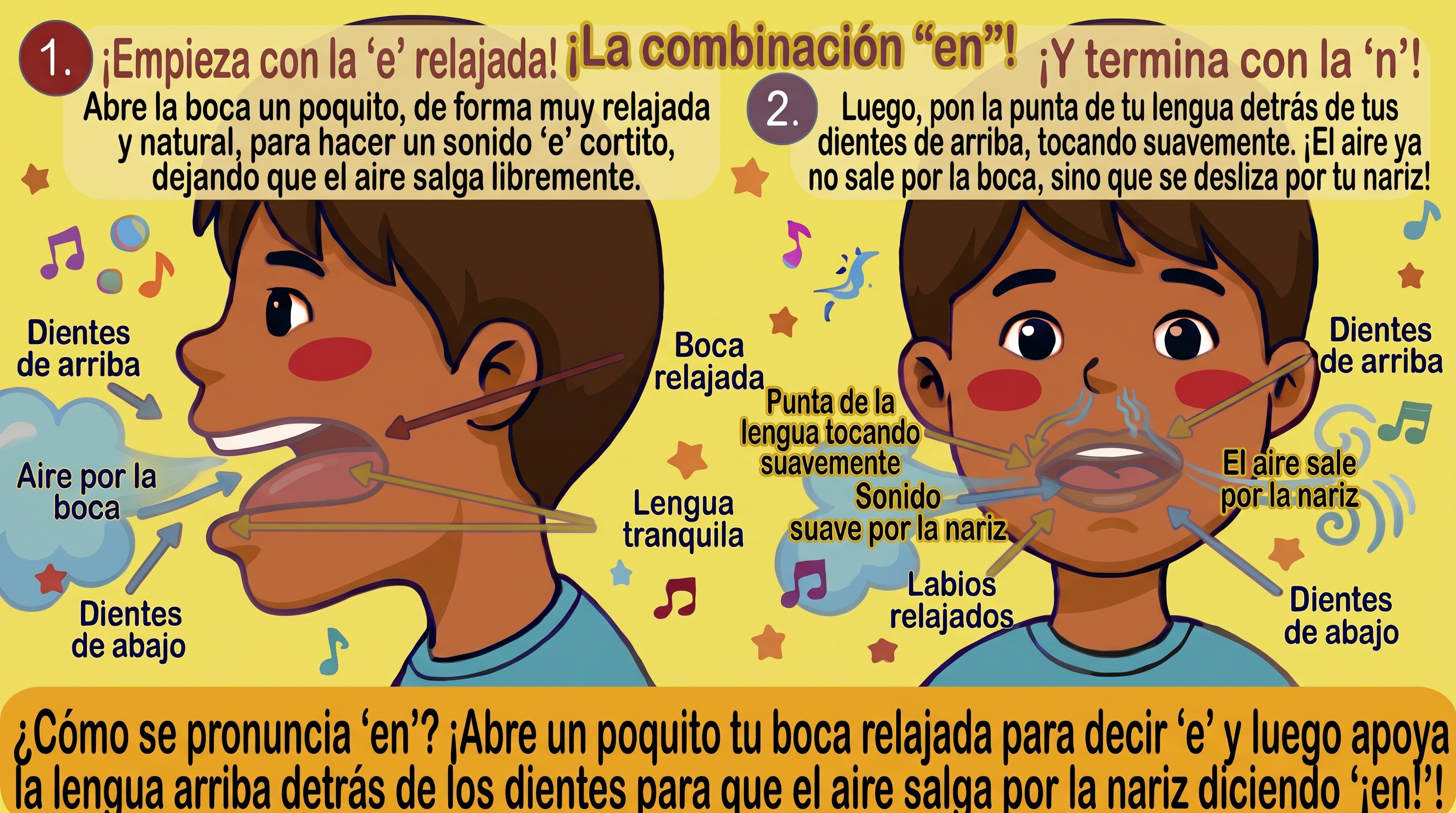
拼音Pīnyīn中zhōng的de“en”由yóu“e”和hé“n”组成zǔchéng;这里zhèlǐ的de“e”是shì一个yígè短duǎn而ér轻qīng的de央元音yāngyuányīn,所以suǒyǐ“en”和hé西班牙语Xībānyáyǔ的de“en”不bú太tài一样yíyàng,更gèng像xiàng英语Yīngyǔ单词dāncí“taken”结尾jiéwěi的de音yīn。/El sonido «en» en pinyin combina la «e» con la «n»; aquí la «e» es una vocal breve y neutra, así que no suena como el «en» español, sino más bien como el final de la palabra inglesa «taken»./The sound “en” in pinyin combines “e” with “n”; here the “e” is a short, neutral vowel, so it does not sound like the Spanish “en”, but rather like the end of the English word “taken”.
--------------------------------------------------------------------------------

--------------------------------------------------------------------------------
• 先Xiān发fā一个yígè短duǎn而ér轻qīng的de“e”,像xiàng英语Yīngyǔ单词dāncí“about”开头kāitóu的de“a”。/Empieza con una «e» breve y relajada, como la «a» del inglés «about»./It begins with a short, relaxed “e”, like the “a” in “about”.
• 再Zài发fā“n”,和hé西班牙语Xībānyáyǔ的de“n”一样yíyàng。/Después viene la «n», como en español./Then comes the “n”, as in Spanish.
• “en”短duǎn而ér直接zhíjiē,从cóng元音yuányīn到dào“n”的de变化biànhuà很快hěnkuài。/Es un sonido corto y directo, con un paso rápido de la vocal a la «n»./It is a short, direct sound, with a quick change from the vowel to the “n”.
1) 恩ēn/favor, gratitud/favour, kindness
2) 门mén/puerta/door
3) 肯kěn/estar dispuesto/willing; to agree
4) 人rén/persona/person
5) 神shén/dios, espíritu/god, spirit
6) 问wèn/preguntar/to ask
7) 笨bèn/torpe/stupid, clumsy
8) 跟gēn/seguir; con/to follow; with
9) 分fēn/dividir; minuto/to divide; minute
10) 真zhēn/verdadero/true, real
11) 摁èn/apretar (con el dedo)/to press (with a finger)
12) 本běn/cuaderno/notebook
13) 很hěn/muy/very
14) 深shēn/profundo/deep
15) 粉fěn/polvo; rosa (color)/powder; pink
--------------------------------------------------------------------------------
声调Shēngdiào可以kěyǐ区分qūfēn意思yìsi,比如bǐrú人rén(人们rénmen)和hé认rèn(认识rènshi)只是zhǐshì声调shēngdiào不同bùtóng。/El tono distingue significados: rén (persona) y rèn (reconocer) solo se diferencian en el tono./The tone tells meanings apart: rén (person) and rèn (to recognise) differ only in tone.

Practica aquí · 在这里练习
--------------------------------------------------------------------------------
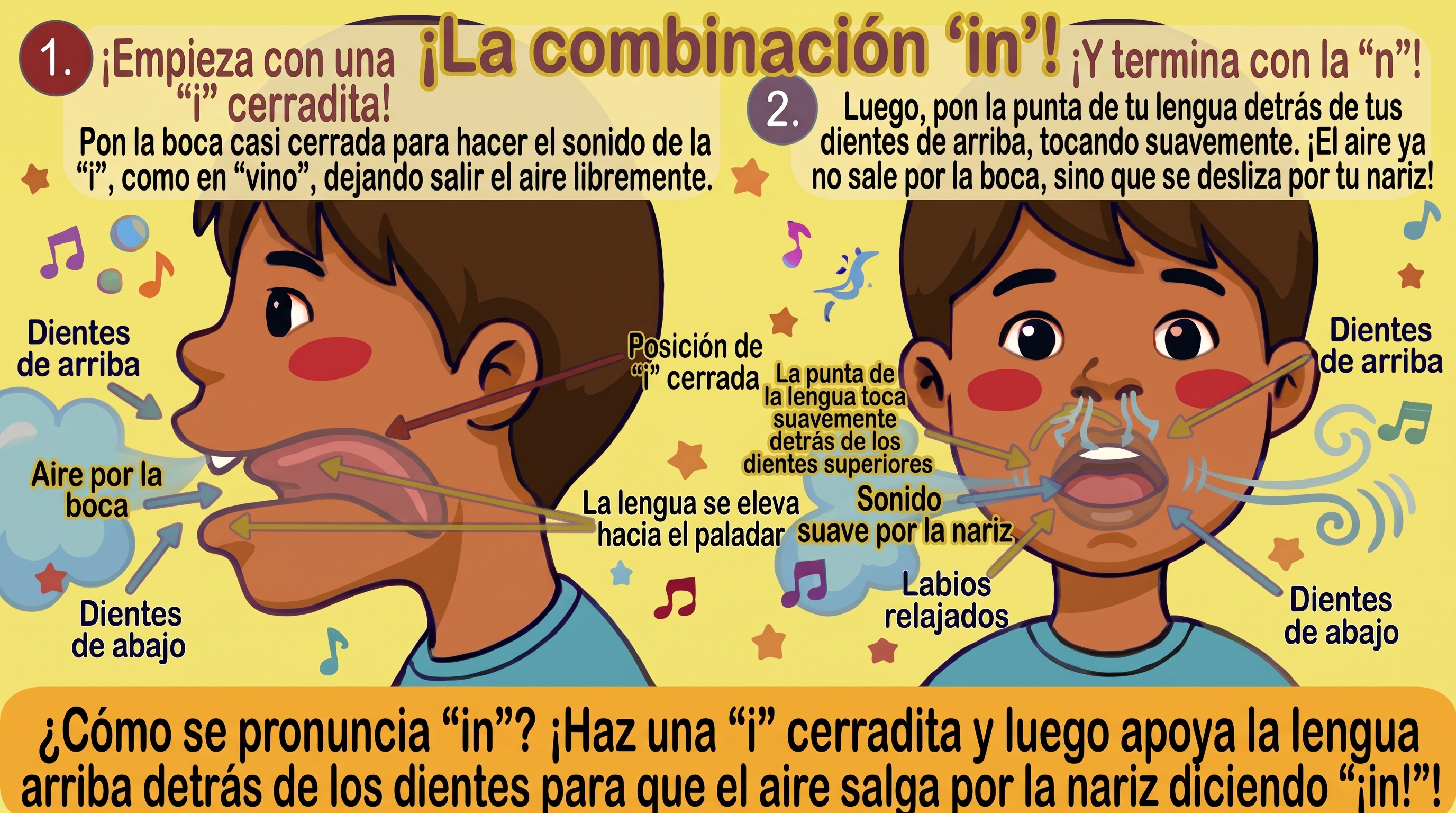
拼音Pīnyīn中zhōng的de“in”由yóu“i”和hé“n”组成zǔchéng,发音fāyīn和hé西班牙语Xībānyáyǔ单词dāncí“fin”中zhōng的de“in”相似xiāngsì。/El sonido «in» en pinyin combina la «i» con la «n» y se pronuncia de manera parecida a «in» en la palabra española «fin»./The sound “in” in pinyin combines “i” with “n” and is pronounced much like the “in” in the Spanish word “fin”.
--------------------------------------------------------------------------------

--------------------------------------------------------------------------------
• 先Xiān发fā“i”,像xiàng“vino”中zhōng的de“i”。/Empieza con una «i» cerrada, como en «vino»./It begins with a closed “i”, as in “vino”.
• 再Zài发fā“n”,和hé西班牙语Xībānyáyǔ的de“n”一样yíyàng。/Después viene la «n», como en español./Then comes the “n”, as in Spanish.
• 发音Fāyīn又yòu快kuài又yòu顺shùn,中间zhōngjiān没有méiyǒu停顿tíngdùn。/Se pronuncia de forma rápida y fluida, sin pausa entre la vocal y la consonante./It is pronounced quickly and smoothly, with no pause between the vowel and the consonant.
1) 新xīn/nuevo/new
2) 金jīn/oro/gold
3) 林lín/bosque/forest
4) 宾bīn/invitado/guest
5) 心xīn/corazón/heart
6) 音yīn/sonido/sound
7) 五金wǔjīn/ferretería, metales/hardware, metals
8) 近jìn/cerca/near
9) 民mín/pueblo/people
10) 亲qīn/cercano; pariente/close; relative
11) 印yìn/imprimir/to print
12) 进jìn/entrar/to enter
13) 银yín/plata/silver
14) 拼pīn/juntar, deletrear/to put together, to spell
15) 信xìn/carta/letter
--------------------------------------------------------------------------------
声调Shēngdiào会huì改变gǎibiàn意思yìsi,比如bǐrú音yīn(声音shēngyīn)和hé印yìn(印刷yìnshuā)。/El tono cambia el significado, como en yīn (sonido) y yìn (imprimir)./The tone changes the meaning, as in yīn (sound) and yìn (to print).
ān án ǎn àn
ān
án
ǎn
àn
ēn én ěn èn
ēn
én
ěn
èn
īn ín ǐn ìn
īn
ín
ǐn
ìn

![]()