海上Hǎishàng有yǒu一只yìzhī帆船fānchuán,船上chuánshàng有yǒu三个sāngè人rén。/En el mar hay un velero con tres personas a bordo./There's a sailing boat on the sea with three people on board.
· 妈妈Māma在zài校门口xiàoménkǒu等děng我wǒ。/Mamá me espera en la puerta del colegio./Mum waits for me at the school gate.
人Rén/persona/person
· 公园Gōngyuán里lǐ人rén很多hěnduō。/En el parque hay mucha gente./There are lots of people in the park.
** 想一想, 说一说/Xiǎng yi xiǎng, shuō yi shuō/Piensa y responde/Think and answer the following questions **
(1)读一读Dú yi dú“an”“en”“in”,说shuō说shuō它们tāmen最后zuìhòu都dōu是shì哪个nǎge字母zìmǔ。/Lee an, en e in: ¿qué letra tienen todas al final?/Read an, en and in: which letter do they all end in?
(2)读一读Dú yi dú“yin”“yuan”,说shuō说shuō它们tāmen为什么wèishénme整体zhěngtǐ认读rèndú。/Lee yin y yuan: ¿por qué se leen enteras?/Read yin and yuan: why are they read as a whole?
(3)读一读Dú yi dú,说一说shuō yi shuō带dài这些zhèxiē音yīn的de词语cíyǔ。/Lee y di palabras con estos sonidos: an, en, in./Read and say words with these sounds: an, en, in.
(4)朗读Lǎngdú儿歌érgē,背诵bèisòng儿歌érgē。/Lee la canción infantil en voz alta y apréndela de memoria./Read the nursery rhyme aloud and learn it by heart.
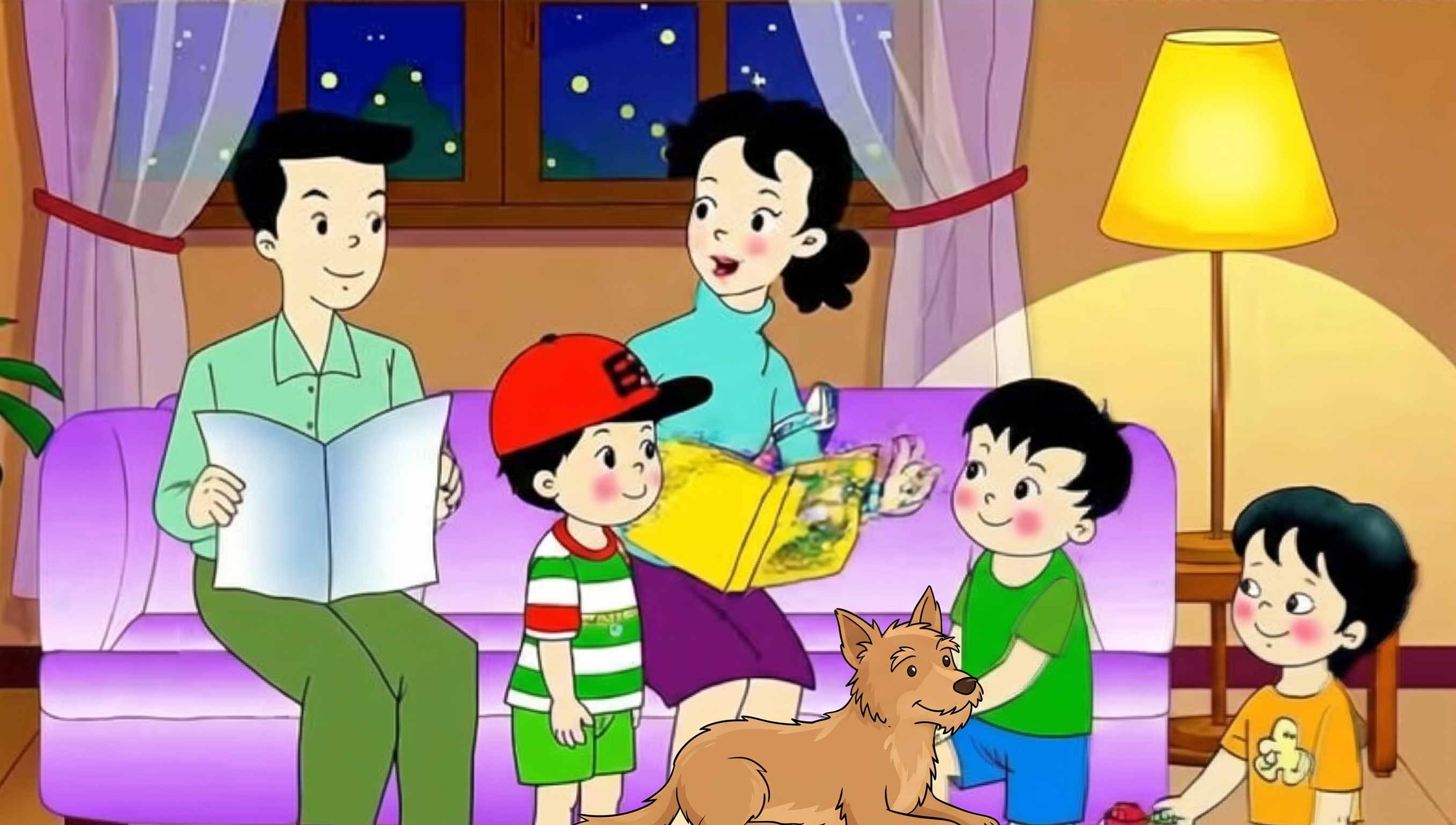
** 家庭/Jiātíng/FAMILIA/FAMILY **
宝宝Bǎobao一yī家jiā/La familia de Baobao/Baobao's family
爸爸Bàba/Papá, padre/Dad, father
妈妈Māma/Mamá, madre/Mum, mother
宝宝Bǎobao/Baobao/Baobao
婷婷Tíngtíng/Tíngting/Tíngting
嘟嘟Dūdū/Dudú/Dudú
洛基Luòjī/Rocky/Rocky
** 对话/Duìhuà/Diálogo/Dialogue **
嘟嘟Dūdū:爸爸Bàba,今天jīntiān老师lǎoshī说shuō我wǒ学xué拼音pīnyīn很hěn认真rènzhēn!/Dudú: Papá, ¡hoy la profesora ha dicho que aprendo pinyin con mucha atención!/Dudú: Dad, today the teacher said I'm learning pinyin really carefully!
爸爸Bàba:真棒Zhēnbàng!我wǒ在zài校门口xiàoménkǒu等děng你nǐ半天bàntiān了le。/Papá: ¡Genial! Llevo un buen rato esperándote en la puerta del colegio./Dad: Brilliant! I've been waiting for you at the school gate for ages.
婷婷Tíngtíng:周末Zhōumò我们wǒmen去qù海边hǎibiān看kàn帆船fānchuán吧ba。/Tíngting: El fin de semana vamos a la playa a ver veleros./Tíngting: Let's go to the seaside at the weekend to see the sailing boats.
宝宝Bǎobǎo:我Wǒ想xiǎng去qù爬山páshān,我们wǒmen三个sāngè人rén一起yìqǐ去qù!/Baobao: ¡Quiero subir a la montaña, vamos los tres juntos!/Baobao: I want to climb the mountain – let's all three of us go together!
妈妈Māma:好Hǎo啊a,那个nàge男孩nánhái也yě想xiǎng跟gēn你们nǐmen去qù。/Mamá: Vale, aquel niño también quiere ir con vosotros./Mum: OK, that boy wants to go with you too.
拼音第十六课:an en in 前鼻韵母: 1. 前鼻音: “an”“en”“in”最后舌尖抵住上齿龈,发出“n”。 2. 西语提醒: “en”里的“e”很短很轻,不像西班牙语的“en”。 3. 整体认读: “yin”“yuan”整体认读。
Comentario Pedagógico: an, en, in: finales con n: 1. Final con n: En «an», «en» e «in» la lengua termina tocando detrás de los dientes de arriba para la «n». 2. Aviso para hispanohablantes: La «e» de «en» es breve y neutra, distinta del «en» español. 3. Sílabas enteras: «yin» y «yuan» se leen de golpe.
Pedagogical Commentary: an, en, in: nasal finals: 1. Ending in n: In “an”, “en” and “in” the tongue ends behind the upper teeth to make the “n”. 2. Note for Spanish speakers: The “e” in “en” is short and neutral, unlike the Spanish “en”. 3. Whole syllables: “yin” and “yuan” are read as a whole.
@ Pinyin 资料 (PDF, MP3 等) 的版权归属于:中国华文教育网 - Overseas Chinese Language and Culture Education Online。
@ Los materiales Pinyin (PDF, MP3, etc.) son propiedad de: 中国华文教育网 - Overseas Chinese Language and Culture Education Online.
@ The materials Pinyin (PDF, MP3, etc.) are the property of: 中国华文教育网 - Overseas Chinese Language and Culture Education Online.