
PRIMARIA_C2_N1_18_T14
** 18_T14_我要的是葫芦/Wǒ yào de shì húlu/Lo que yo quiero son calabazas/What I Want Is Gourds **
** 额外内容/Contenido adicional/Additional Content **
** 扩大和替换/Kuòdà hé tìhuàn/Ampliar y sustituir/Expand and substitute. **
虫子/bichos/bugs
有几个虫子怕什么/¡por unos bichos, qué más da!/what's a few bugs!
有几个虫子不可怕/unos bichos no dan miedo/a few bugs aren't scary
他心里想,有几个虫子怕什么!/Pensó: «¡Por unos cuantos bichos, qué más da!»./He thought: what's a few bugs!
虫/bicho/bug
叶子上的虫还用治/¿hay que tratar los bichos de las hojas?/do the bugs on the leaves need treating?
叶子上的虫不用治/no hace falta tratar los bichos de las hojas/the bugs on the leaves don't need treating
什么?叶子上的虫还用治?/¿Qué? ¿Hay que tratar los bichos de las hojas?/What? Do the bugs on the leaves need treating?
--------------------------------------------------------------------------------
我的小葫芦,快长啊,快长啊!长得赛过大南瓜才好呢!/¡Calabacitas mías, creced, creced! ¡Ojalá os hagáis más grandes que una calabaza gigante!/My little gourds, grow, grow! I hope you grow bigger than a giant pumpkin!
--------------------------------------------------------------------------------
叶子/las hojas/the leaves
· 生了蚜虫/tienen pulgones./have greenfly.
他/él/he
· 不治蚜虫,只盯着葫芦/no trata los pulgones y solo mira las calabazas./doesn't treat the greenfly and only stares at the gourds.
蚜虫/los pulgones/the greenfly
· 越来越多/son cada vez más./get more and more.
小葫芦/las calabacitas/the little gourds
· 变黄了,都落了/se ponen amarillas y se caen./turn yellow and fall off.
** 想一想, 说一说/Xiǎng yi xiǎng, shuō yi shuō/Piensa y responde/Think and answer the following questions **
--------------------------------------------------------------------------------
种葫芦的人想要葫芦,为什么最后却一个也没得到?/El hombre quería calabazas; ¿por qué al final no consiguió ninguna?/The man wanted gourds; why didn't he get a single one in the end?
叶子和葫芦有什么关系?/¿Qué relación hay entre las hojas y las calabazas?/What is the connection between the leaves and the gourds?
** 家庭/Jiātíng/FAMILIA/FAMILY **
--------------------------------------------------------------------------------
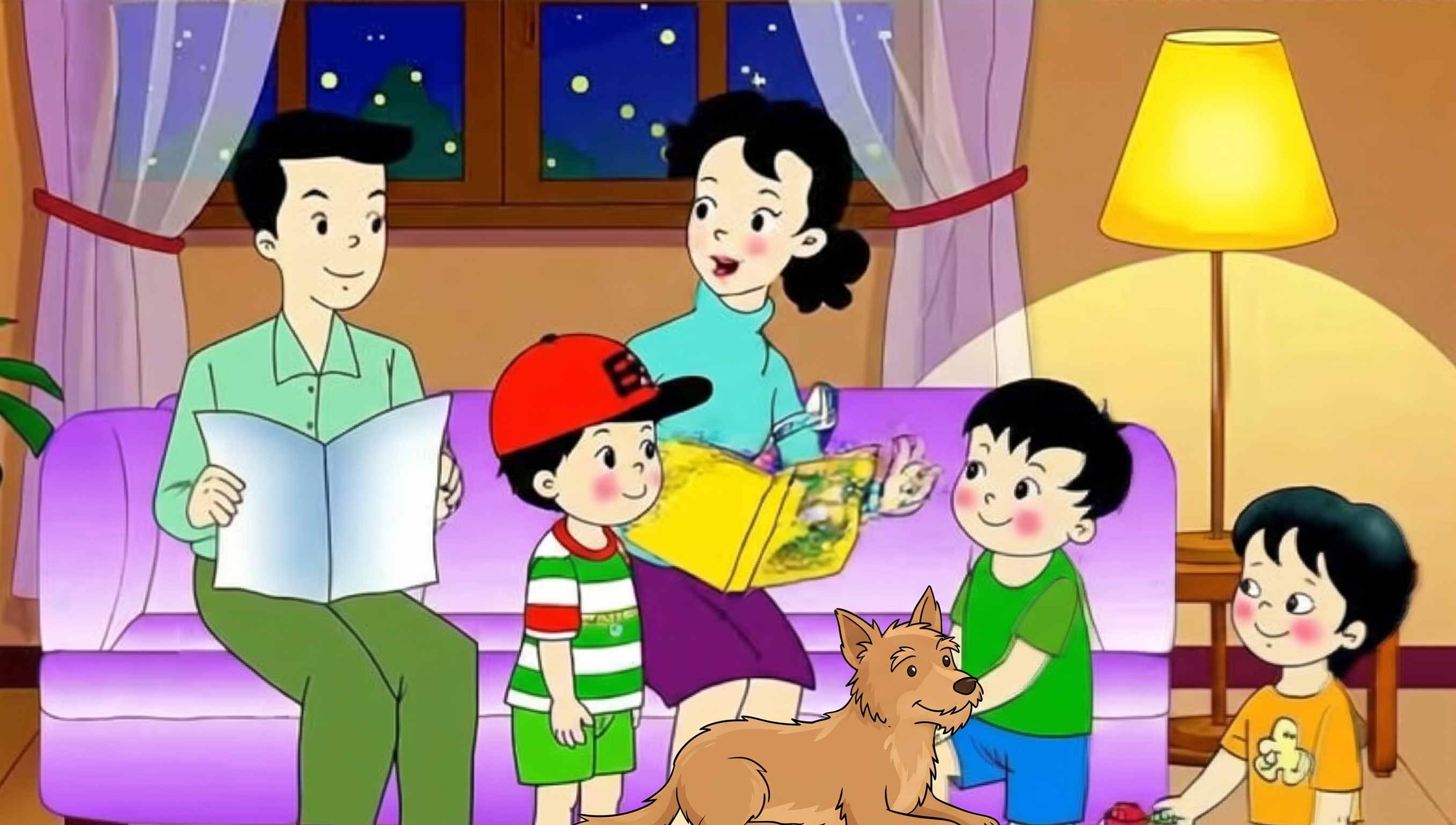
宝宝一家/La familia de Baobao/Baobao's family
爸爸/Papá, padre/Dad, father
妈妈/Mamá, madre/Mum, mother
宝宝/Baobao/Baobao
婷婷/Tíngting/Tíngting
嘟嘟/Dudú/Dudú
洛基/Rocky/Rocky
** 对话/Duìhuà/Diálogo/Dialogue **
--------------------------------------------------------------------------------
婷婷爸爸,我种的花叶子上有小虫子。/Tíngting: Papá, en las hojas de la planta que he plantado hay bichitos./Tíngting: Dad, there are little bugs on the leaves of the plant I planted.
嘟嘟有几个虫子怕什么!我们要的是花。/Dudú: ¡Por unos bichos, qué más da! Lo que queremos son las flores./Dudú: What's a few bugs! What we want is the flowers.
爸爸嘟嘟,你像种葫芦的那个人了。/Papá: Dudú, hablas como el hombre de las calabazas./Dad: Dudú, you sound like the man who grew the gourds.
妈妈叶子生了病,花就开不好。要快治一治。/Mamá: Si las hojas enferman, las flores no salen bien. Hay que tratarlas enseguida./Mum: If the leaves get ill, the flowers won't grow well. We must treat them quickly.
宝宝那个人不治蚜虫,最后小葫芦都落了。/Baobao: Aquel hombre no trató los pulgones y al final se le cayeron todas las calabacitas./Baobao: That man didn't treat the greenfly, and in the end all the little gourds fell off.
嘟嘟我明白了,叶子和花是连在一起的。/Dudú: Ya lo entiendo: las hojas y las flores van unidas./Dudú: I get it: the leaves and the flowers are connected.
婷婷我马上去治虫子!/Tíngting: ¡Voy ahora mismo a quitarle los bichos!/Tíngting: I'll go and get rid of the bugs right now!
洛基汪汪!/Rocky: ¡Guau!/Rocky: Woof!
▶ 📝 评论 / Comentarios / Comments
我要的是葫芦:事物之间是有联系的:
1. 抓住人物的话: 种葫芦的人说“有几个虫子怕什么 (yǒu jǐ gè chóngzi pà shénme) ”“叶子上的虫还用治 (yèzi shang de chóng hái yòng zhì) ?我要的是葫芦”。让学生读出他满不在乎的语气,再和“有几个虫子不可怕”“叶子上的虫不用治”比较。
2. 前后对比: 课文开头的小葫芦“多么可爱”,结尾却“慢慢地变黄了,一个一个都落了”。引导学生找出原因:叶子生了蚜虫没有及时治。
3. 明白道理: 叶子和葫芦是有联系的,叶子好,葫芦才能长好。可以让学生想一想:生活中还有哪些事情是有联系的?
1. 抓住人物的话: 种葫芦的人说“有几个虫子怕什么 (yǒu jǐ gè chóngzi pà shénme) ”“叶子上的虫还用治 (yèzi shang de chóng hái yòng zhì) ?我要的是葫芦”。让学生读出他满不在乎的语气,再和“有几个虫子不可怕”“叶子上的虫不用治”比较。
2. 前后对比: 课文开头的小葫芦“多么可爱”,结尾却“慢慢地变黄了,一个一个都落了”。引导学生找出原因:叶子生了蚜虫没有及时治。
3. 明白道理: 叶子和葫芦是有联系的,叶子好,葫芦才能长好。可以让学生想一想:生活中还有哪些事情是有联系的?
Comentario Pedagógico: Lo que yo quiero son calabazas: las cosas están relacionadas:
1. Las palabras del personaje: El hombre dice “有几个虫子怕什么 (yǒu jǐ gè chóngzi pà shénme) ” y “叶子上的虫还用治 (yèzi shang de chóng hái yòng zhì) ?我要的是葫芦”. Los alumnos leen con su tono despreocupado y lo comparan con “有几个虫子不可怕” y “叶子上的虫不用治”.
2. Principio y final: Al principio las calabacitas son “preciosas”; al final “se ponen amarillas y se caen una tras otra”. Los alumnos buscan la causa: no se trataron a tiempo los pulgones de las hojas.
3. La moraleja: Las hojas y las calabazas están relacionadas: si las hojas están sanas, las calabazas crecen bien. Los alumnos piensan en otras cosas de la vida que estén relacionadas.
Pedagogical Commentary: What I Want Is Gourds: things are connected:
1. The character's words: The man says “有几个虫子怕什么 (yǒu jǐ gè chóngzi pà shénme) ” and “叶子上的虫还用治 (yèzi shang de chóng hái yòng zhì) ?我要的是葫芦”. Students read them in his careless tone and compare them with “有几个虫子不可怕” and “叶子上的虫不用治”.
2. Beginning and end: At first the little gourds are “so lovely”; at the end they “slowly turn yellow and fall off one by one”. Students find the cause: the greenfly on the leaves wasn't treated in time.
3. The moral: The leaves and the gourds are connected: only healthy leaves give good gourds. Students think of other things in life that are connected.

主题/Zhǔtí/Tema/Theme

其他/Qítā/Otros/Others.

词汇 Cíhuì/Vocabulario/Vocabulary

PDF与视频/PDF,videos Y Quiz/PDF, Videos and Quiz
