
PRIMARIA_C2_N1_15_T11
** 15_T11_葡萄沟/Pútao Gōu/El valle de las uvas/Grape Valley **
** 额外内容/Contenido adicional/Additional Content **
** 扩大和替换/Kuòdà hé tìhuàn/Ampliar y sustituir/Expand and substitute. **
凉棚/toldo/awning
绿色的凉棚/un toldo verde/a green awning
搭起了一个个绿色的凉棚/montar muchos toldos verdes/put up lots of green awnings
茂密的枝叶就像搭起了一个个绿色的凉棚。/Las espesas ramas parecen muchos toldos verdes./The thick branches and leaves look like lots of green awnings.
颜色/colores/colours
五光十色/de mil colores/multicoloured
公园里的花都开了,有桃花、杏花、迎春花,五颜六色,美丽极了。/En el parque han florecido melocotoneros, albaricoqueros y jazmines de invierno: de mil colores, preciosos./All the flowers in the park are out: peach, apricot and winter jasmine, all different colours and absolutely beautiful.
--------------------------------------------------------------------------------
葡萄一大串一大串地挂在绿叶底下,有红的、白的、紫的、暗红的、淡绿的,五光十色,美丽极了。/Los racimos cuelgan bajo las hojas: rojos, blancos, morados, granates y verde claro, de mil colores y preciosos./Big bunches of grapes hang under the leaves: red, white, purple, dark red and pale green – a riot of colour, absolutely beautiful.
--------------------------------------------------------------------------------
种/plantar (zhòng)/plant (zhòng)
· 种葡萄/cultivar uvas./grow grapes.
好/gustar (hào)/like (hào)
· 好客/hospitalario./hospitable.
干/seco (gān)/dry (gān)
· 葡萄干/pasas./raisins.
分/componente (fèn)/component (fèn)
· 水分/agua contenida, humedad./moisture.
** 想一想, 说一说/Xiǎng yi xiǎng, shuō yi shuō/Piensa y responde/Think and answer the following questions **
--------------------------------------------------------------------------------
你喜欢葡萄沟吗?说说理由。/¿Te gusta el valle de las uvas? Explica por qué./Do you like Grape Valley? Give your reasons.
葡萄干是怎样制成的?/¿Cómo se hacen las pasas?/How are raisins made?
** 家庭/Jiātíng/FAMILIA/FAMILY **
--------------------------------------------------------------------------------
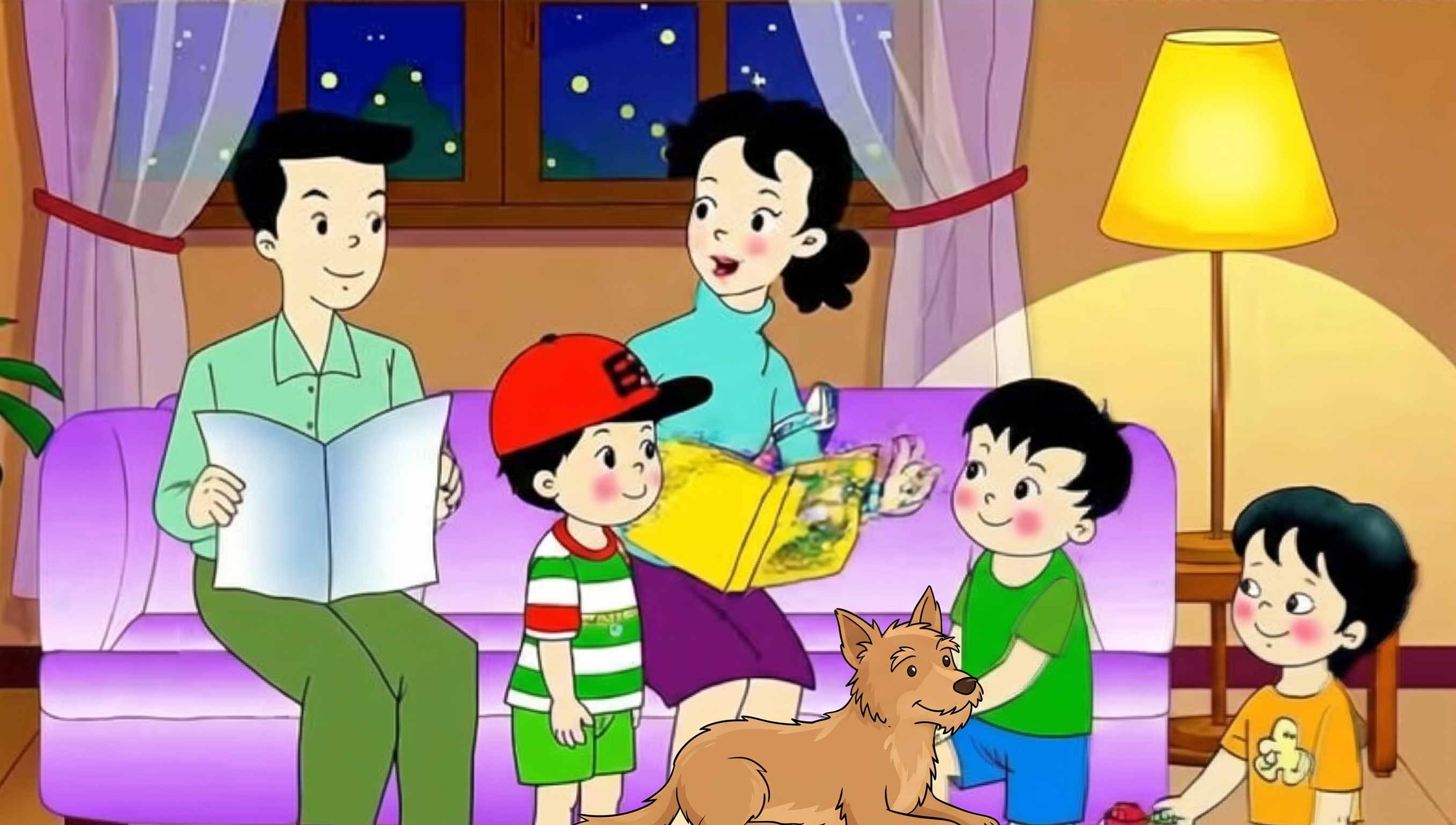
宝宝一家/La familia de Baobao/Baobao's family
爸爸/Papá, padre/Dad, father
妈妈/Mamá, madre/Mum, mother
宝宝/Baobao/Baobao
婷婷/Tíngting/Tíngting
嘟嘟/Dudú/Dudú
洛基/Rocky/Rocky
** 对话/Duìhuà/Diálogo/Dialogue **
--------------------------------------------------------------------------------
嘟嘟妈妈,葡萄干是怎么做的?/Dudú: Mamá, ¿cómo se hacen las pasas?/Dudú: Mum, how are raisins made?
妈妈在新疆的葡萄沟,人们把葡萄挂在阴房里。/Mamá: En el valle de las uvas, en Xinjiang, la gente cuelga las uvas en casas de secado./Mum: In Grape Valley in Xinjiang, people hang the grapes in drying houses.
爸爸热空气把水分蒸发掉,就成了葡萄干。/Papá: El aire caliente evapora el agua y así se hacen las pasas./Dad: The hot air evaporates the water, and they become raisins.
婷婷葡萄沟的葡萄有红的、紫的、淡绿的,五光十色。/Tíngting: Las uvas del valle son rojas, moradas, verde claro… de mil colores./Tíngting: The grapes in Grape Valley are red, purple, pale green – all sorts of colours.
宝宝听说那里的维吾尔族老乡热情好客。/Baobao: Dicen que los campesinos uigures de allí son muy hospitalarios./Baobao: I've heard the Uygur villagers there are very hospitable.
妈妈对,他们会摘下最甜的葡萄,让你吃个够。/Mamá: Sí, te cogen las uvas más dulces para que comas todas las que quieras./Mum: Yes, they'll pick the sweetest grapes and let you eat your fill.
嘟嘟我也想去葡萄沟!/Dudú: ¡Yo también quiero ir al valle de las uvas!/Dudú: I want to go to Grape Valley too!
洛基汪汪!/Rocky: ¡Guau!/Rocky: Woof!
▶ 📝 评论 / Comentarios / Comments
葡萄沟:新疆一个出产水果的好地方:
1. 抓住中心句: 课文最后一句“葡萄沟真是个好地方 (Pútao Gōu zhēn shì gè hǎo dìfang) ”总结全文。可以让学生从水果多、葡萄美、老乡好客、葡萄干有名几个方面,说说为什么葡萄沟是个好地方。
2. 多音字: 种葡萄 (zhòng pútao) 、好客 (hàokè) 、葡萄干 (pútaogān) 、水分 (shuǐfèn) 中的“种”“好”“干”“分”都是多音字。让学生读准字音,再组一组别的词。
3. 学写句子: “有红的、白的、紫的、暗红的、淡绿的,五光十色 (wǔguāng-shísè) ,美丽极了”。可以仿照这样的句子,写一写公园里的花或者操场上的活动。
Comentario Pedagógico: El valle de las uvas: un lugar de Xinjiang rico en fruta:
1. La idea principal: La última frase, “葡萄沟真是个好地方 (Pútao Gōu zhēn shì gè hǎo dìfang) ”, resume el texto. Los alumnos explican por qué es un buen lugar: mucha fruta, uvas preciosas, gente hospitalaria y pasas famosas.
2. Caracteres con varias lecturas: En 种葡萄 (zhòng pútao) , 好客 (hàokè) , 葡萄干 (pútaogān) y 水分 (shuǐfèn) , “种”, “好”, “干” y “分” tienen más de una pronunciación. Los alumnos las leen bien y forman otras palabras.
3. Escribir frases: “有红的、白的、紫的、暗红的、淡绿的,五光十色 (wǔguāng-shísè) ,美丽极了”. Los alumnos pueden imitarla para describir las flores del parque o las actividades del patio.
Pedagogical Commentary: Grape Valley: a fruit-rich place in Xinjiang:
1. The key sentence: The last line, “葡萄沟真是个好地方 (Pútao Gōu zhēn shì gè hǎo dìfang) ”, sums up the text. Students explain why it's a good place: lots of fruit, beautiful grapes, hospitable people and famous raisins.
2. Characters with several readings: In 种葡萄 (zhòng pútao) , 好客 (hàokè) , 葡萄干 (pútaogān) and 水分 (shuǐfèn) , “种”, “好”, “干” and “分” have more than one pronunciation. Students read them correctly and make other words.
3. Writing sentences: “有红的、白的、紫的、暗红的、淡绿的,五光十色 (wǔguāng-shísè) ,美丽极了”. Students can copy it to describe flowers in the park or activities in the playground.

主题/Zhǔtí/Tema/Theme

其他/Qítā/Otros/Others.

词汇 Cíhuì/Vocabulario/Vocabulary

PDF与视频/PDF,videos Y Quiz/PDF, Videos and Quiz
