
PRIMARIA_C2_N1_09_T05B
** 09_T05B_红马的故事/Hóng mǎ de gùshi/La historia del caballo rojo/The Story of the Red Horses **
** 额外内容/Contenido adicional/Additional Content **
** 扩大和替换/Kuòdà hé tìhuàn/Ampliar y sustituir/Expand and substitute. **
百合/lirio/lily
一朵百合/un lirio/a lily
一朵含苞欲放的百合/un lirio a punto de abrirse/a lily about to bloom
花瓶里有一朵含苞欲放的百合。/En el jarrón hay un lirio a punto de abrirse./In the vase there is a lily about to bloom.
画/dibujar/draw
自由地画/dibujar libremente/draw freely
高兴画什么就画什么/dibujar lo que apetezca/draw whatever you like
老师说高兴画什么就画什么。/El profesor dijo: «Dibujad lo que os apetezca»./The teacher said: “Draw whatever you feel like.”
--------------------------------------------------------------------------------
花瓶里有三朵百合一朵盛开,一朵含苞欲放,一朵掉了一片花瓣在桌面上。/En el jarrón había tres lirios: uno abierto, otro a punto de abrirse y otro que había dejado caer un pétalo sobre la mesa./In the vase there were three lilies: one in full bloom, one about to open and one that had dropped a petal on the table.
--------------------------------------------------------------------------------
板/tabla/board
· 黑板、地板、板报/pizarra, suelo, periódico mural./blackboard, floor, wall newspaper.
粉/polvo/powder
· 粉笔、面粉、粉末/tiza, harina, polvo./chalk, flour, powder.
术/arte, técnica/art, skill
· 美术、手术、算术/plástica, operación, aritmética./art, surgery, arithmetic.
级/nivel/level
· 年级、高级、等级/curso, superior, categoría./school year, advanced, grade.
** 想一想, 说一说/Xiǎng yi xiǎng, shuō yi shuō/Piensa y responde/Think and answer the following questions **
--------------------------------------------------------------------------------
我觉得自己画的是两个怪物,老师却说很好,这是为什么?/El niño cree que ha dibujado «dos monstruos», pero el profesor dice «muy bien». ¿Por qué?/The boy thinks he has drawn “two monsters”, but the teacher says “very good”. Why?
你喜欢身边的哪位老师?说说他的小故事。/¿Qué profesor de los que conoces te gusta? Cuenta una pequeña historia suya./Which of your teachers do you like? Tell a little story about them.
** 家庭/Jiātíng/FAMILIA/FAMILY **
--------------------------------------------------------------------------------
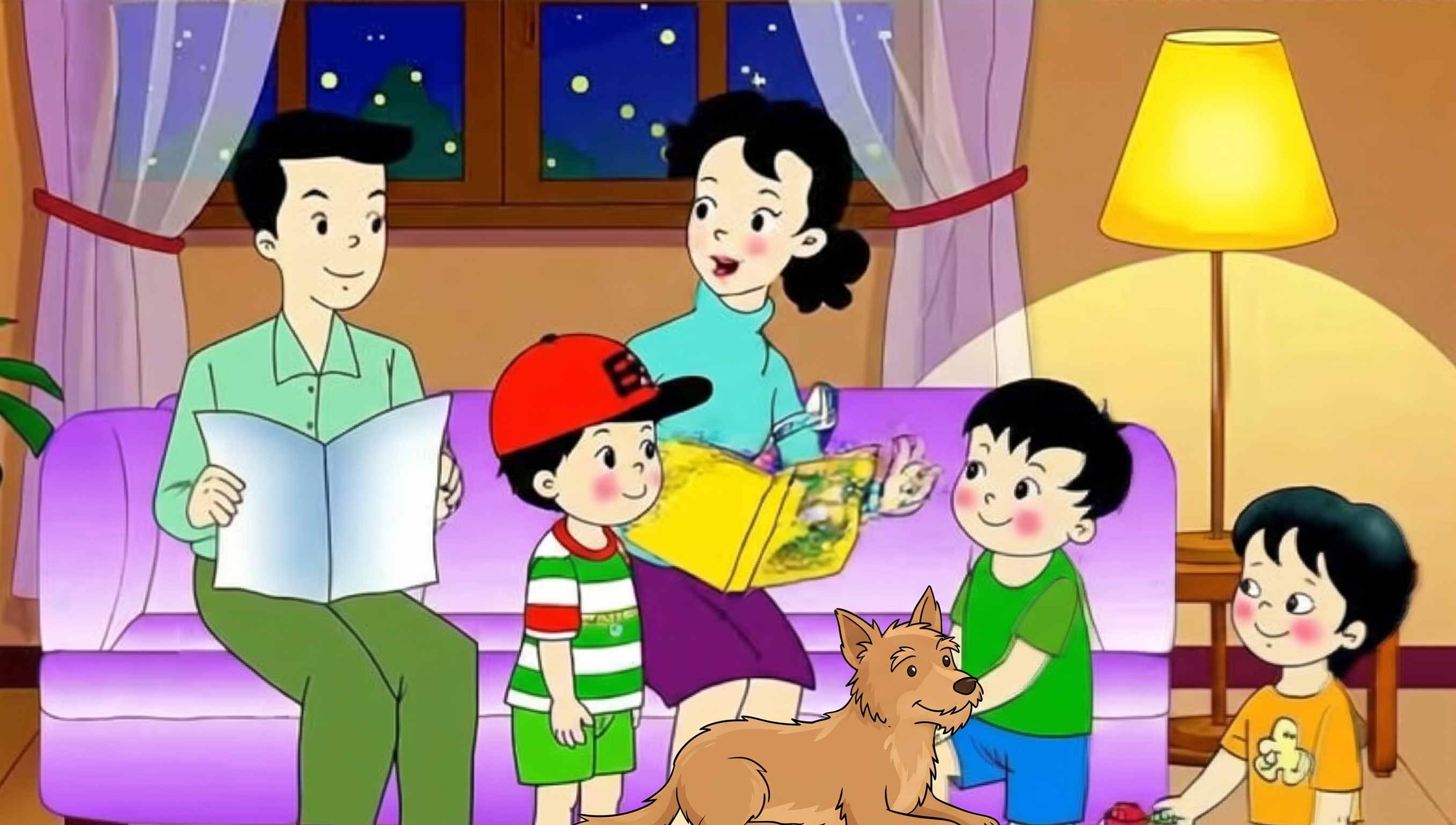
宝宝一家/La familia de Baobao/Baobao's family
爸爸/Papá, padre/Dad, father
妈妈/Mamá, madre/Mum, mother
宝宝/Baobao/Baobao
婷婷/Tíngting/Tíngting
嘟嘟/Dudú/Dudú
洛基/Rocky/Rocky
** 对话/Duìhuà/Diálogo/Dialogue **
--------------------------------------------------------------------------------
婷婷妈妈,今天美术老师让我们自由画画!/Tíngting: ¡Mamá, hoy el profesor de plástica nos ha dejado dibujar libremente!/Tíngting: Mum, today our art teacher let us draw whatever we liked!
妈妈你画了什么?/Mamá: ¿Y qué has dibujado?/Mum: What did you draw?
婷婷我画了一个花瓶,里面有三朵百合。/Tíngting: Un jarrón con tres lirios./Tíngting: I drew a vase with three lilies in it.
嘟嘟我画了一个滑稽的小丑,同学们都笑了。/Dudú: Yo he dibujado un payaso gracioso y todos los compañeros se han reído./Dudú: I drew a funny clown, and all my classmates laughed.
宝宝我画了两匹红马,因为赛跑很热嘛!/Baobao: ¡Yo he dibujado dos caballos rojos, porque correr da mucho calor!/Baobao: I drew two red horses, because racing makes you hot!
爸爸哈哈,真有想象力!老师怎么说?/Papá: ¡Ja, ja, qué imaginación! ¿Y qué ha dicho el profesor?/Dad: Ha ha, what imagination! What did the teacher say?
宝宝老师放声大笑,说很好,就是要这样画!/Baobao: Se ha reído a carcajadas y ha dicho: «¡Muy bien, así es como hay que dibujar!»./Baobao: He burst out laughing and said: “Very good, that's exactly how to draw!”
妈妈动脑筋想,用眼睛看,大家都能画得很好。/Mamá: Si pensáis con la cabeza y miráis con los ojos, todos podéis dibujar muy bien./Mum: If you think with your heads and look with your eyes, you can all draw really well.
洛基汪汪!/Rocky: ¡Guau!/Rocky: Woof!
▶ 📝 评论 / Comentarios / Comments
红马的故事:一位鼓励学生的好老师:
1. 理解人物: 老师让学生“自由画画 (zìyóu huàhuà) ”,“高兴画什么就画什么 (gāoxìng huà shénme jiù huà shénme) ”,还鼓励大家“动脑筋想,用眼睛看”。引导学生说说这是一位怎样的老师。
2. 想一想: “我”觉得自己画的是“两个怪物”,老师却说“很好”。让学生体会老师喜欢的是孩子的想象力,而不是画得像不像。
3. 一字组多词: “读一读,记一记”中,板 (bǎn) 、粉 (fěn) 、术 (shù) 、级 (jí) 都能组成好几个词,如“黑板、地板、板报”。可以让学生再找一找别的词。
1. 理解人物: 老师让学生“自由画画 (zìyóu huàhuà) ”,“高兴画什么就画什么 (gāoxìng huà shénme jiù huà shénme) ”,还鼓励大家“动脑筋想,用眼睛看”。引导学生说说这是一位怎样的老师。
2. 想一想: “我”觉得自己画的是“两个怪物”,老师却说“很好”。让学生体会老师喜欢的是孩子的想象力,而不是画得像不像。
3. 一字组多词: “读一读,记一记”中,板 (bǎn) 、粉 (fěn) 、术 (shù) 、级 (jí) 都能组成好几个词,如“黑板、地板、板报”。可以让学生再找一找别的词。
Comentario Pedagógico: La historia del caballo rojo: un profesor que anima a sus alumnos:
1. Comprender al personaje: El profesor deja que los alumnos dibujen “自由画画 (zìyóu huàhuà) ” y “高兴画什么就画什么 (gāoxìng huà shénme jiù huà shénme) ”, y los anima a “pensar con la cabeza y mirar con los ojos”. Los alumnos pueden decir cómo es este profesor.
2. Reflexionar: El niño cree que ha dibujado “dos monstruos”, pero el profesor dice “muy bien”. Los alumnos descubren que lo que el profesor valora es la imaginación, no que el dibujo sea exacto.
3. Un carácter, muchas palabras: En “读一读,记一记”, 板 (bǎn) , 粉 (fěn) , 术 (shù) y 级 (jí) forman varias palabras, como “黑板、地板、板报”. Los alumnos pueden buscar más.
Pedagogical Commentary: The Story of the Red Horses: a teacher who encourages his pupils:
1. Understanding the character: The teacher lets the pupils draw “自由画画 (zìyóu huàhuà) ” and “高兴画什么就画什么 (gāoxìng huà shénme jiù huà shénme) ”, and encourages them to “think with their heads and look with their eyes”. Students can describe what kind of teacher he is.
2. Thinking it over: The boy thinks he has drawn “two monsters”, yet the teacher says “very good”. Students realise the teacher values imagination, not an exact likeness.
3. One character, many words: In “读一读,记一记”, 板 (bǎn) , 粉 (fěn) , 术 (shù) and 级 (jí) each form several words, such as “黑板、地板、板报”. Students can look for more.

主题/Zhǔtí/Tema/Theme

其他/Qítā/Otros/Others.

词汇 Cíhuì/Vocabulario/Vocabulary

PDF与视频/PDF,videos Y Quiz/PDF, Videos and Quiz
