
PRIMARIA_C2_N1_09_T05
** 09_T05_玲玲的画/Língling de huà/El dibujo de Lingling/Lingling's Picture **
** 额外内容/Contenido adicional/Additional Content **
** 扩大和替换/Kuòdà hé tìhuàn/Ampliar y sustituir/Expand and substitute. **
画/dibujo/picture
这幅画/este dibujo/this picture
参加评奖的画/un dibujo que se presenta a un concurso/a picture entered in a competition
这幅画明天就要参加评奖了。/Mañana el dibujo va a participar en un concurso./Tomorrow the picture is going to be entered in a competition.
弄脏/manchar/make dirty
把画弄脏了/ha manchado el dibujo/has made the picture dirty
水彩笔啪的一声掉到了纸上,把画弄脏了。/Un rotulador cae ¡plaf! sobre el papel y mancha el dibujo./A felt-tip pen falls onto the paper with a plop and makes the picture dirty.
--------------------------------------------------------------------------------
只要肯动脑筋,坏事有时也能变成好事。/Si estamos dispuestos a pensar, a veces lo malo también puede volverse bueno./As long as we're willing to use our heads, a bad thing can sometimes turn into a good one.
--------------------------------------------------------------------------------
玲玲先/Lingling primero/first Lingling
· 得意地端详着画/contempla orgullosa su dibujo./proudly studies her picture.
画弄脏了,玲玲/se mancha el dibujo y Lingling/the picture gets dirty, and Lingling
· 伤心地哭了/llora desconsolada./cries miserably.
画上小花狗以后,玲玲/tras dibujar el perrito, Lingling/after drawing the little dog, Lingling
· 满意地笑了/sonríe satisfecha./smiles, satisfied.
** 想一想, 说一说/Xiǎng yi xiǎng, shuō yi shuō/Piensa y responde/Think and answer the following questions **
--------------------------------------------------------------------------------
试着用上得意伤心满意这三个词语,讲讲这个故事。/Intenta contar la historia usando las palabras «orgullosa», «triste» y «satisfecha»./Try to retell the story using the words “proud”, “sad” and “satisfied”.
只要肯动脑筋,坏事有时也能变成好事。联系生活说说你的体会。/«Si estamos dispuestos a pensar, a veces lo malo puede volverse bueno». Relaciónalo con tu vida./“As long as we use our heads, a bad thing can sometimes turn into a good one.” Relate this to your own life.
** 家庭/Jiātíng/FAMILIA/FAMILY **
--------------------------------------------------------------------------------
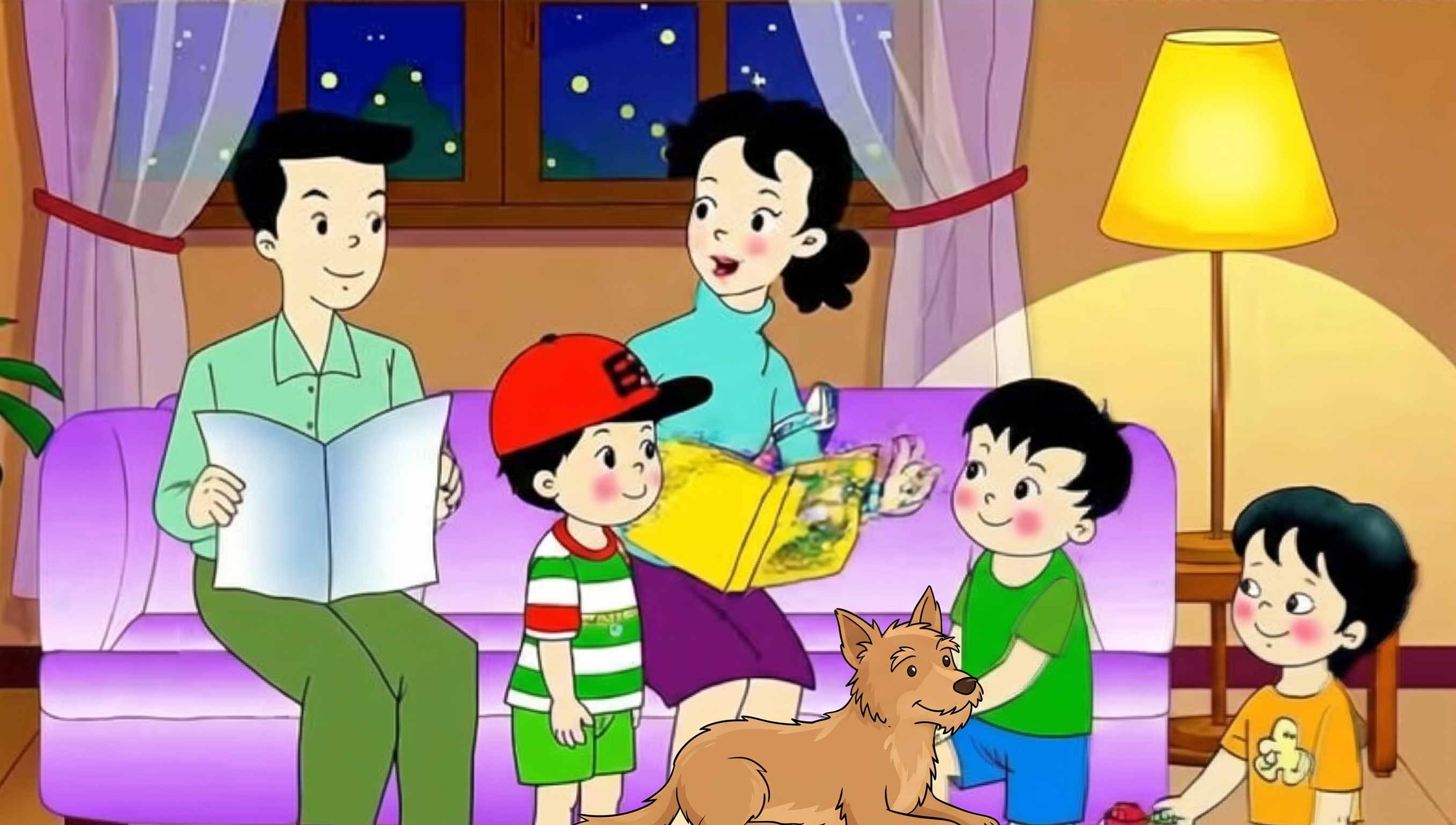
宝宝一家/La familia de Baobao/Baobao's family
爸爸/Papá, padre/Dad, father
妈妈/Mamá, madre/Mum, mother
宝宝/Baobao/Baobao
婷婷/Tíngting/Tíngting
嘟嘟/Dudú/Dudú
洛基/Rocky/Rocky
** 对话/Duìhuà/Diálogo/Dialogue **
--------------------------------------------------------------------------------
婷婷糟糕!我的画弄脏了,明天就要参加评奖。/Tíngting: ¡Qué desastre! Se me ha manchado el dibujo y mañana es el concurso./Tíngting: Oh no! My picture's got dirty, and the competition is tomorrow.
嘟嘟另画一张吧!/Dudú: ¡Haz otro!/Dudú: Draw another one!
婷婷来不及了,时间不早了。/Tíngting: No me da tiempo, ya es tarde./Tíngting: There's no time, it's getting late.
爸爸别哭。你仔细看看,在这儿画点儿什么,不是很好吗?/Papá: No llores. Míralo bien: ¿y si dibujas algo aquí?/Dad: Don't cry. Look carefully – why not draw something here?
婷婷我可以画一只小花狗!/Tíngting: ¡Puedo dibujar un perrito manchado!/Tíngting: I could draw a little spotted dog!
宝宝像洛基一样,懒洋洋地趴着。/Baobao: Como Rocky, tumbado a la bartola./Baobao: Like Rocky, lying there lazily.
妈妈只要肯动脑筋,坏事有时也能变成好事。/Mamá: Si se piensa un poco, a veces lo malo también puede volverse bueno./Mum: As long as you use your head, a bad thing can sometimes turn into a good one.
洛基汪汪!/Rocky: ¡Guau!/Rocky: Woof!
▶ 📝 评论 / Comentarios / Comments
玲玲的画:动脑筋,坏事也能变成好事:
1. 体会心情的变化: 玲玲先是“得意 (déyì) 地端详着”自己的画,画弄脏后“伤心 (shāngxīn) 地哭了起来”,最后“满意 (mǎnyì) 地笑了”。让学生找出表示心情的词语,读出玲玲心情的变化。
2. 读好对话: 爸爸说:“别哭,孩子。在这儿画点儿什么,不是很好吗?”让学生分角色读,体会爸爸的耐心和鼓励。
3. 明白道理: 遇到问题不要着急,要冷静地想办法。引导学生说说自己有没有把“坏事”变成“好事”的经历。
1. 体会心情的变化: 玲玲先是“得意 (déyì) 地端详着”自己的画,画弄脏后“伤心 (shāngxīn) 地哭了起来”,最后“满意 (mǎnyì) 地笑了”。让学生找出表示心情的词语,读出玲玲心情的变化。
2. 读好对话: 爸爸说:“别哭,孩子。在这儿画点儿什么,不是很好吗?”让学生分角色读,体会爸爸的耐心和鼓励。
3. 明白道理: 遇到问题不要着急,要冷静地想办法。引导学生说说自己有没有把“坏事”变成“好事”的经历。
Comentario Pedagógico: El dibujo de Lingling: pensando, lo malo puede volverse bueno:
1. Los cambios de ánimo: Lingling primero mira su dibujo “得意 (déyì) ”; cuando se mancha, llora “伤心 (shāngxīn) ”; al final sonríe “满意 (mǎnyì) ”. Los alumnos buscan las palabras de sentimientos y leen reflejando esos cambios.
2. Leer el diálogo: Papá dice: “别哭,孩子。在这儿画点儿什么,不是很好吗?”. Los alumnos leen por papeles y perciben la paciencia y el ánimo del padre.
3. La enseñanza: Ante un problema, no hay que ponerse nervioso, sino pensar con calma. Los alumnos cuentan si alguna vez han convertido algo malo en algo bueno.
Pedagogical Commentary: Lingling's Picture: use your head and a bad thing can turn good:
1. Changing feelings: Lingling first studies her picture “得意 (déyì) ”; when it gets dirty she cries “伤心 (shāngxīn) ”; in the end she smiles “满意 (mǎnyì) ”. Students find the feeling words and read with the changes in mood.
2. Reading the dialogue: Dad says: “别哭,孩子。在这儿画点儿什么,不是很好吗?”. Students read in roles and sense Dad's patience and encouragement.
3. The lesson: When something goes wrong, don't panic – think calmly. Students share times when they turned a “bad thing” into a “good thing”.

主题/Zhǔtí/Tema/Theme

其他/Qítā/Otros/Others.

词汇 Cíhuì/Vocabulario/Vocabulary

PDF与视频/PDF,videos Y Quiz/PDF, Videos and Quiz
