
PRIMARIA_C2_N1_07_L04
** 07_L04_田家四季歌/Tiánjiā sìjì gē/Canción de las cuatro estaciones del campesino/Farmers' Song of the Four Seasons **
** 额外内容/Contenido adicional/Additional Content **
** 扩大和替换/Kuòdà hé tìhuàn/Ampliar y sustituir/Expand and substitute. **
秧/plantón de arroz/rice seedling
插秧/trasplantar el arroz/plant out rice
采了蚕桑又插秧/recoger morera y luego trasplantar el arroz/pick mulberry leaves and then plant out rice
夏季里,农事忙,采了蚕桑又插秧。/En verano hay mucho trabajo: se recoge la morera y se trasplanta el arroz./In summer farm work is busy: we pick mulberry leaves and plant out the rice.
黄金/oro/gold
谷像黄金/el grano parece oro/the grain looks like gold
秋季里,谷像黄金粒粒香。/En otoño el grano parece oro y cada granito huele bien./In autumn the grain looks like gold and every grain smells sweet.
--------------------------------------------------------------------------------
身体虽辛苦,心里喜洋洋。/Aunque el cuerpo está cansado, el corazón rebosa de alegría./Though our bodies are tired, our hearts are full of joy.
--------------------------------------------------------------------------------
播种/sembrar/sow
· 春天/en primavera./in spring.
插秧/trasplantar el arroz/plant out rice
· 夏天/en verano./in summer.
打谷/trillar el grano/thresh grain
· 秋天/en otoño./in autumn.
制棉衣/hacer ropa acolchada/make padded clothes
· 冬天/en invierno./in winter.
** 想一想, 说一说/Xiǎng yi xiǎng, shuō yi shuō/Piensa y responde/Think and answer the following questions **
--------------------------------------------------------------------------------
一年四季,农民都在忙些什么?/¿Qué hacen los campesinos en cada estación del año?/What are the farmers busy with in each season?
农民虽然很辛苦,为什么心里喜洋洋?/Aunque trabajan mucho, ¿por qué están tan contentos los campesinos?/Though the farmers work hard, why are they so happy?
** 家庭/Jiātíng/FAMILIA/FAMILY **
--------------------------------------------------------------------------------
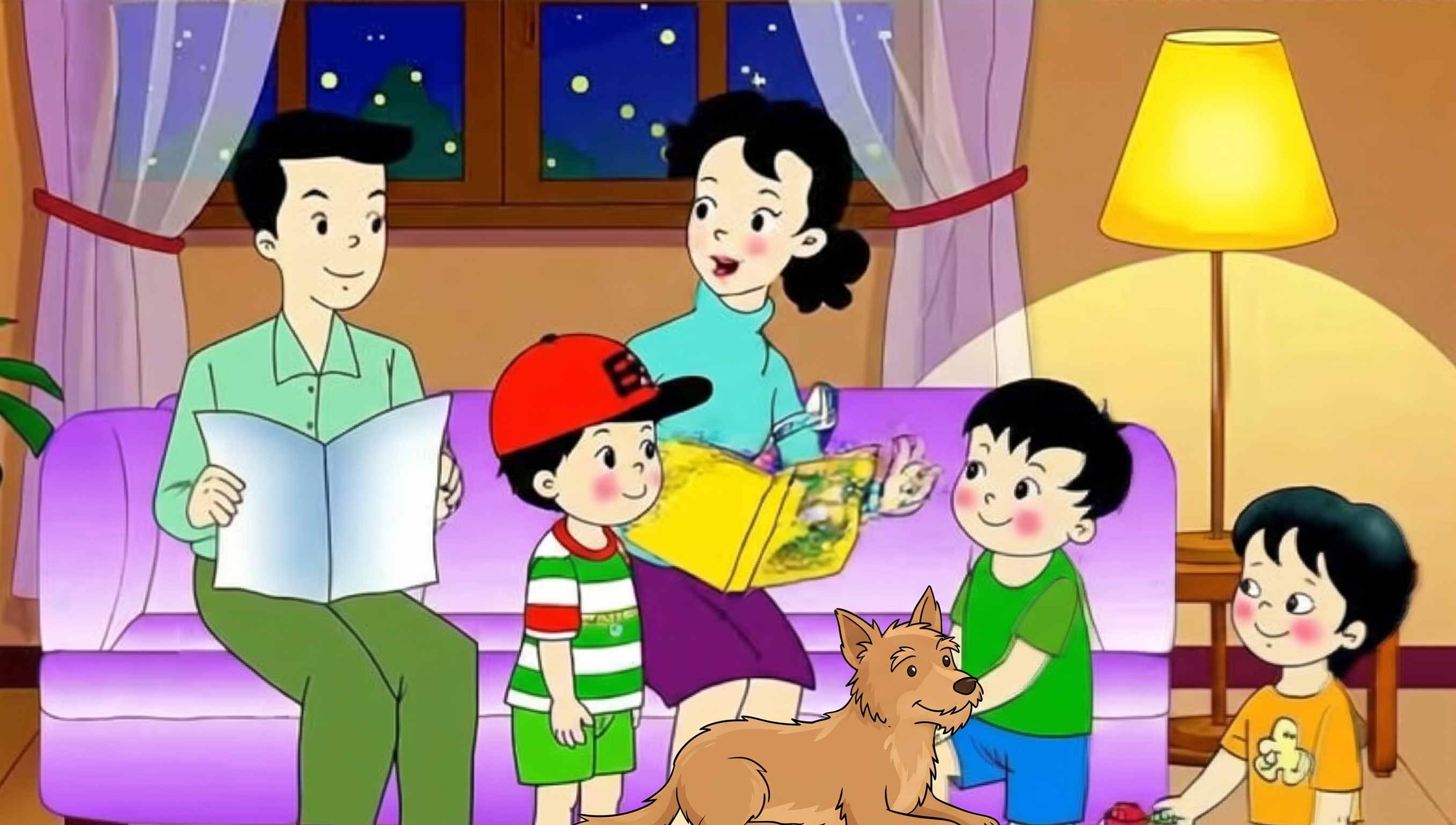
宝宝一家/La familia de Baobao/Baobao's family
爸爸/Papá, padre/Dad, father
妈妈/Mamá, madre/Mum, mother
宝宝/Baobao/Baobao
婷婷/Tíngting/Tíngting
嘟嘟/Dudú/Dudú
洛基/Rocky/Rocky
** 对话/Duìhuà/Diálogo/Dialogue **
--------------------------------------------------------------------------------
嘟嘟爷爷,春天你在田里做什么?/Dudú: Abuelo, ¿qué haces en el campo en primavera?/Dudú: Grandad, what do you do in the fields in spring?
爸爸爷爷春天播种,你看,麦苗儿多嫩啊!/Papá: En primavera el abuelo siembra. ¡Mira qué tiernos están los brotes de trigo!/Dad: In spring Grandad sows the seeds. Look how tender the young wheat is!
婷婷夏天呢?/Tíngting: ¿Y en verano?/Tíngting: And in summer?
妈妈夏天农事忙,要插秧,还要采桑叶。/Mamá: En verano hay mucho trabajo: hay que trasplantar el arroz y recoger hojas de morera./Mum: In summer farm work is busy: there's rice to plant out and mulberry leaves to pick.
宝宝我知道!秋天稻谷像黄金一样。/Baobao: ¡Ya sé! En otoño el arroz es como el oro./Baobao: I know! In autumn the rice is just like gold.
爸爸对,大家都很辛苦,可是心里喜洋洋。/Papá: Eso es. Todos trabajan mucho, pero están muy contentos./Dad: That's right. Everyone works hard, but they're full of joy.
嘟嘟冬天爷爷就可以休息了吧?/Dudú: Y en invierno, ¿el abuelo ya puede descansar?/Dudú: And in winter Grandad can rest, can't he?
妈妈是啊,一年农事了,大家笑盈盈。/Mamá: Sí: terminadas las faenas del año, todos sonríen felices./Mum: Yes: the year's farm work is done, and everyone is all smiles.
洛基汪汪!/Rocky: ¡Guau!/Rocky: Woof!
▶ 📝 评论 / Comentarios / Comments
田家四季歌:农民一年四季的生活:
1. 按季节组织: 课文分春、夏、秋、冬四节,每节都用“……季里”开头,写出了不同季节的农事。可以让学生说说每个季节农民在做什么。
2. 农事词语: 插秧 (chāyāng) 、耕作 (gēngzuò) 、播种 (bōzhǒng) 、施肥 (shīféi) 、除草 (chúcǎo) 、打谷 (dǎgǔ) 等词语,帮助学生了解农村生活,积累劳动的词语。
3. 体会感情: “身体虽辛苦,心里喜洋洋”写出了农民劳动的快乐。引导学生体会劳动的辛苦和收获的喜悦,懂得爱惜粮食。
1. 按季节组织: 课文分春、夏、秋、冬四节,每节都用“……季里”开头,写出了不同季节的农事。可以让学生说说每个季节农民在做什么。
2. 农事词语: 插秧 (chāyāng) 、耕作 (gēngzuò) 、播种 (bōzhǒng) 、施肥 (shīféi) 、除草 (chúcǎo) 、打谷 (dǎgǔ) 等词语,帮助学生了解农村生活,积累劳动的词语。
3. 体会感情: “身体虽辛苦,心里喜洋洋”写出了农民劳动的快乐。引导学生体会劳动的辛苦和收获的喜悦,懂得爱惜粮食。
Comentario Pedagógico: Canción de las cuatro estaciones del campesino: la vida en el campo durante el año:
1. Organizado por estaciones: El texto tiene cuatro estrofas —primavera, verano, otoño e invierno—, todas empiezan con “……季里” y describen las faenas de cada estación. Los alumnos pueden contar qué hacen los campesinos en cada una.
2. Vocabulario del campo: Palabras como 插秧 (chāyāng) , 耕作 (gēngzuò) , 播种 (bōzhǒng) , 施肥 (shīféi) , 除草 (chúcǎo) y 打谷 (dǎgǔ) acercan la vida rural y enriquecen el vocabulario del trabajo.
3. Los sentimientos: “身体虽辛苦,心里喜洋洋” expresa la alegría del trabajo en el campo. Los alumnos comprenden el esfuerzo del trabajo y la alegría de la cosecha, y aprenden a valorar la comida.
Pedagogical Commentary: Farmers' Song of the Four Seasons: country life throughout the year:
1. Organised by season: The text has four verses —spring, summer, autumn and winter—, each starting with “……季里” and describing the farm work of that season. Students can say what farmers do in each one.
2. Farming words: Words such as 插秧 (chāyāng) , 耕作 (gēngzuò) , 播种 (bōzhǒng) , 施肥 (shīféi) , 除草 (chúcǎo) and 打谷 (dǎgǔ) introduce country life and build vocabulary about work.
3. Feelings: “身体虽辛苦,心里喜洋洋” shows the farmers' joy in their work. Students appreciate both the hard work and the happiness of the harvest, and learn to value food.

主题/Zhǔtí/Tema/Theme

其他/Qítā/Otros/Others.

词汇 Cíhuì/Vocabulario/Vocabulary

PDF与视频/PDF,videos Y Quiz/PDF, Videos and Quiz
