长城Chángchéng上shàng挂guà着zhe红灯笼hóngdēnglóng,远处yuǎnchù有yǒu一棵yì kē青松qīngsōng。/En la Gran Muralla cuelgan farolillos rojos y a lo lejos hay un pino verde./Red lanterns hang on the Great Wall, and in the distance there's a green pine.
· 熊猫Xióngmāo爱ài吃chī竹子zhúzi。/Al oso panda le encanta comer bambú./Pandas love eating bamboo.
大象Dàxiàng/elefante/elephant
· 大象Dàxiàng的de鼻子bízi很hěn长cháng。/El elefante tiene la trompa muy larga./The elephant's trunk is very long.
老鹰Lǎoyīng/águila/eagle
· 老鹰Lǎoyīng飞fēi得de很hěn高gāo。/El águila vuela muy alto./The eagle flies very high.
** 想一想, 说一说/Xiǎng yi xiǎng, shuō yi shuō/Piensa y responde/Think and answer the following questions **
(1)读一读Dú yi dú“ang”“eng”“ing”“ong”,再zài和hé“an”“en”“in”比一比bǐ yi bǐ。/Lee ang, eng, ing, ong y compáralas con an, en, in./Read ang, eng, ing, ong and compare them with an, en, in.
(2)说一说Shuō yi shuō:你nǐ在zài动物园dòngwùyuán见jiàn过guò哪些nǎxiē动物dòngwù?/Di: ¿qué animales has visto en el zoo?/Say: which animals have you seen at the zoo?
(3)读一读Dú yi dú,说一说shuō yi shuō带dài这些zhèxiē音yīn的de词语cíyǔ。/Lee y di palabras con estos sonidos: ang, eng, ing, ong./Read and say words with these sounds: ang, eng, ing, ong.
(4)朗读Lǎngdú儿歌érgē,背诵bèisòng儿歌érgē。/Lee la canción infantil en voz alta y apréndela de memoria./Read the nursery rhyme aloud and learn it by heart.
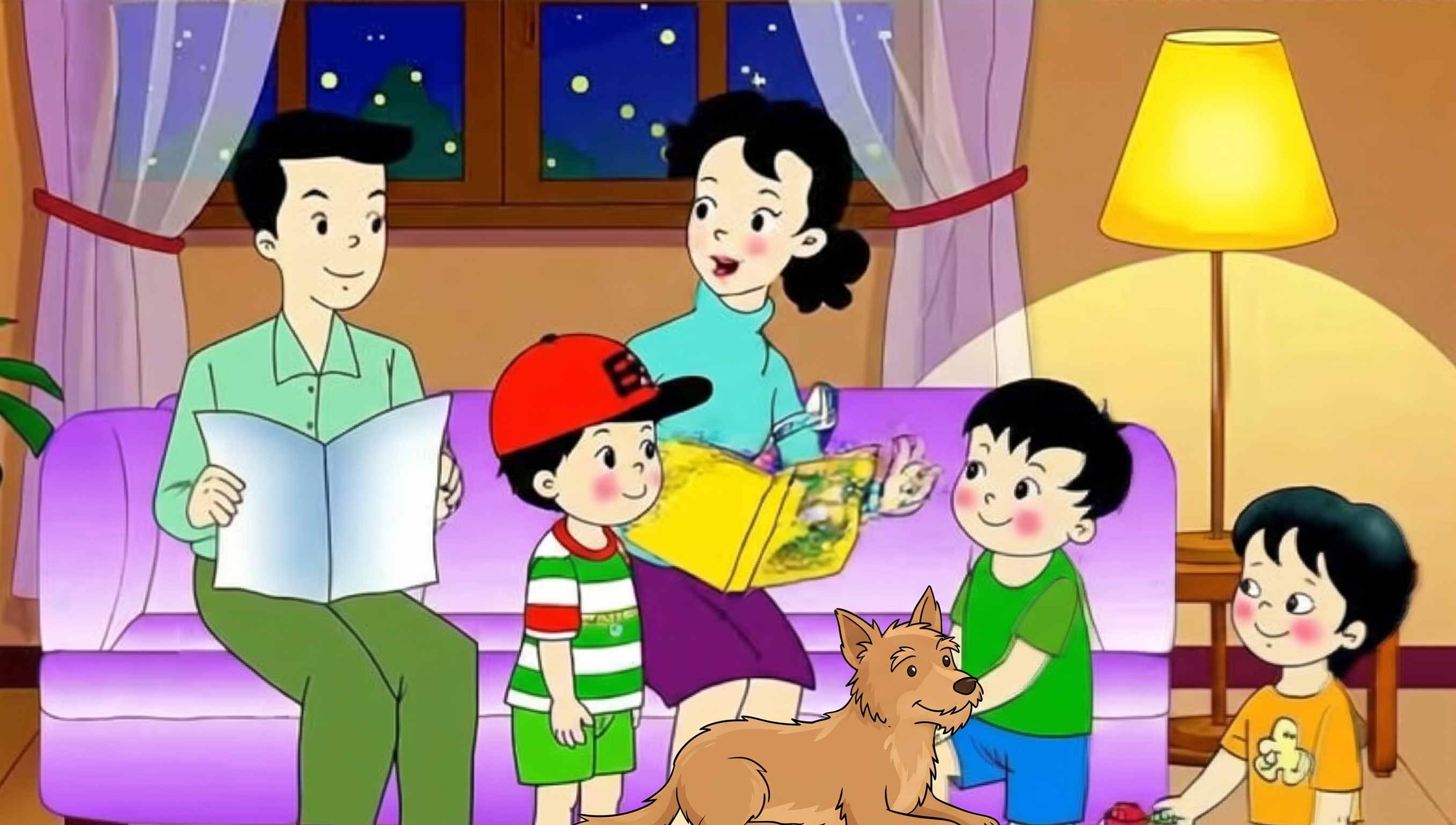
** 家庭/Jiātíng/FAMILIA/FAMILY **
宝宝Bǎobao一yī家jiā/La familia de Baobao/Baobao's family
爸爸Bàba/Papá, padre/Dad, father
妈妈Māma/Mamá, madre/Mum, mother
宝宝Bǎobao/Baobao/Baobao
婷婷Tíngtíng/Tíngting/Tíngting
嘟嘟Dūdū/Dudú/Dudú
洛基Luòjī/Rocky/Rocky
** 对话/Duìhuà/Diálogo/Dialogue **
嘟嘟Dūdū:爸爸Bàba,我wǒ想xiǎng去qù北京Běijīng看kàn长城Chángchéng!/Dudú: Papá, ¡quiero ir a Pekín a ver la Gran Muralla!/Dudú: Dad, I want to go to Beijing to see the Great Wall!
爸爸Bàba:好Hǎo!长城Chángchéng边上biānshàng有yǒu很多hěnduō青松qīngsōng。/Papá: ¡Vale! Junto a la Gran Muralla hay muchos pinos verdes./Dad: OK! There are lots of green pines by the Great Wall.
婷婷Tíngtíng:我Wǒ还hái想xiǎng去qù动物园dòngwùyuán看kàn熊猫xióngmāo和hé大象dàxiàng。/Tíngting: Yo también quiero ir al zoo a ver osos panda y elefantes./Tíngting: I'd also like to go to the zoo to see pandas and elephants.
宝宝Bǎobǎo:我Wǒ要yào放fàng一只yìzhī老鹰lǎoyīng风筝fēngzheng!/Baobao: ¡Quiero volar una cometa con forma de águila!/Baobao: I want to fly an eagle kite!
妈妈Māma:晚上Wǎnshang我们wǒmen挂guà上shàng红灯笼hóngdēnglóng,一起yìqǐ看kàn星星xīngxing。/Mamá: Por la noche colgamos farolillos rojos y miramos las estrellas juntos./Mum: In the evening we'll hang up red lanterns and look at the stars together.
拼音第十八课:ang eng ing ong 后鼻韵母: 1. 后鼻音: 舌根抬起抵住软腭,气从鼻子出来,发出“ng”。 2. 前后鼻音对比: 对比“an—ang”“en—eng”“in—ing”,听清区别。 3. 整体认读: “ying”整体认读。
Comentario Pedagógico: ang, eng, ing, ong: finales con ng: 1. Final con ng: Para la «ng», la parte posterior de la lengua sube al paladar blando y el aire sale por la nariz. 2. n o ng: Se comparan an—ang, en—eng e in—ing para oír la diferencia. 3. Sílaba entera: «ying» se lee de golpe.
Pedagogical Commentary: ang, eng, ing, ong: finals ending in ng: 1. Ending in ng: For “ng” the back of the tongue rises to the soft palate and the air comes out through the nose. 2. n or ng: Compare an—ang, en—eng and in—ing to hear the difference. 3. Whole syllable: “ying” is read as a whole.
@ Pinyin 资料 (PDF, MP3 等) 的版权归属于:中国华文教育网 - Overseas Chinese Language and Culture Education Online。
@ Los materiales Pinyin (PDF, MP3, etc.) son propiedad de: 中国华文教育网 - Overseas Chinese Language and Culture Education Online.
@ The materials Pinyin (PDF, MP3, etc.) are the property of: 中国华文教育网 - Overseas Chinese Language and Culture Education Online.