
MT
L01
L02
L03
L04
L05
EL1
P01
P02
P13
P03
P04
P07
P08
P09
P10
P11
P12
EP1
P05
P06
P15
P16
P17
P18
EP2
T01
T02
T03
T04
ET1
L06
L07
L08
L09
L10
EL2
T05
T06
T07
T08
ET2
T09
T10
T11
ET3
T12
T13
T14
ET4
PRIMARIA_C1_N1_18_P18

Practica aquí · 在这里练习
--------------------------------------------------------------------------------
拼音Pīnyīn中zhōng的de“ang”是shì一个yígè后鼻韵母hòubíyùnmǔ,由yóu“a”和hé“ng”组成zǔchéng,“ng”像xiàng英语Yīngyǔ单词dāncí“song”结尾jiéwěi的de音yīn。/El sonido «ang» en pinyin es una final nasal formada por la «a» y el sonido «ng», como el final de la palabra inglesa «song»./The sound “ang” in pinyin is a nasal final made up of “a” and the sound “ng”, like the end of the English word “song”.
--------------------------------------------------------------------------------

--------------------------------------------------------------------------------
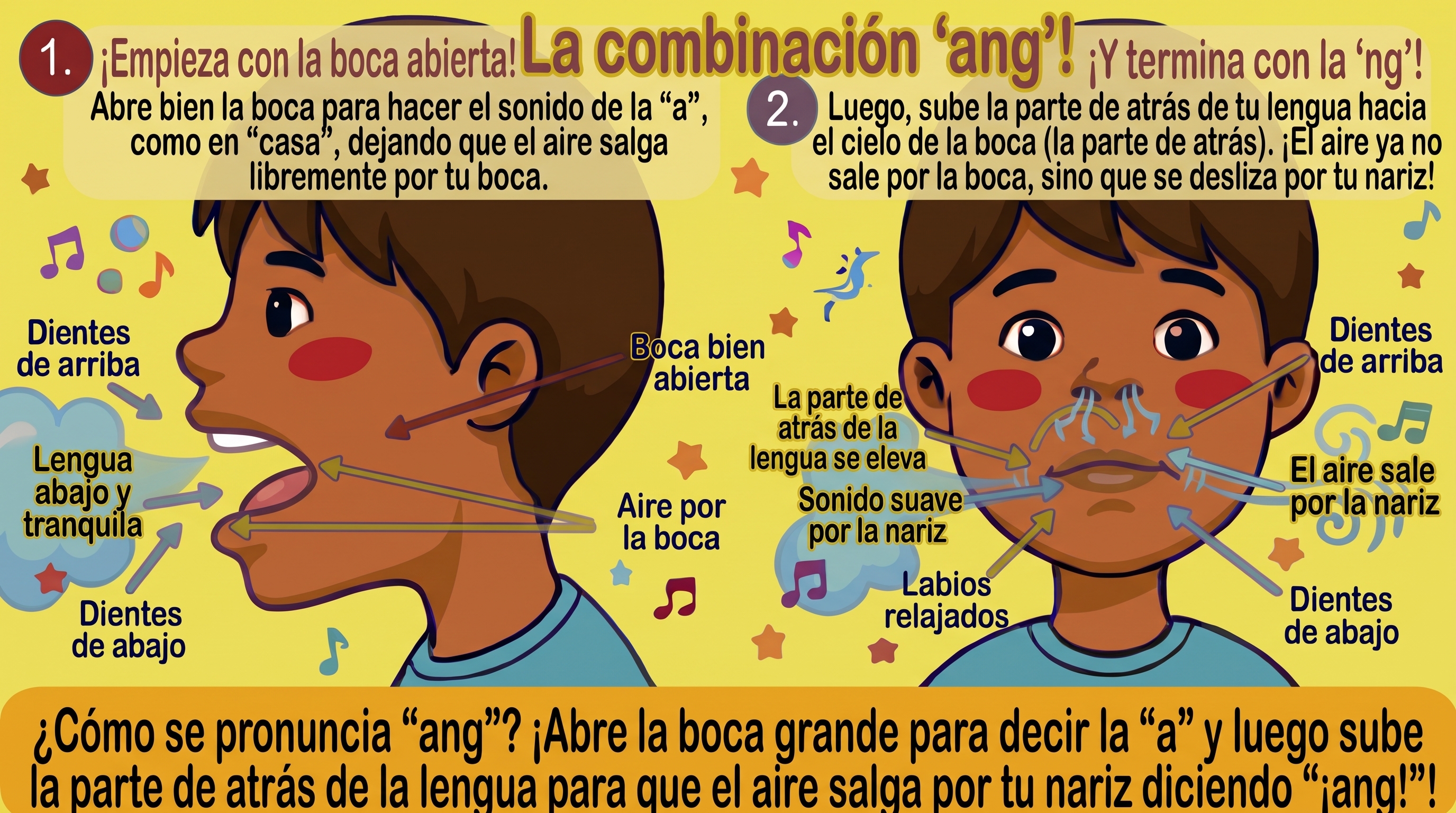
• 先Xiān发fā开口kāikǒu大dà的de“a”,像xiàng“casa”中zhōng的de“a”。/Empieza con una «a» abierta, como en «casa»./It begins with an open “a”, as in “casa”.
• 再Zài发fā“ng”:舌根shégēn往上wǎngshàng抬tái,抵住dǐzhù软腭ruǎn'è,气流qìliú从cóng鼻子bízi出来chūlái。/Luego viene la «ng»: la parte posterior de la lengua sube hasta el paladar blando y el aire sale por la nariz./Then comes the “ng”: the back of the tongue rises to the soft palate and the air comes out through the nose.
• 不要Búyào读dú成chéng“a”加jiā一个yígè单独dāndú的de“n”,两liǎng部分bùfèn要yào合成héchéng一个yígè音yīn。/No se pronuncia como una «a» más una «n» separada: las dos partes forman un solo sonido./It is not an “a” plus a separate “n”: both parts form a single sound.
1) 帮bāng/ayudar/to help
2) 忙máng/ocupado/busy
3) 房fáng/casa, habitación/house, room
4) 刚gāng/justo, recién/just, a moment ago
5) 长cháng/largo/long
6) 忘wàng/olvidar/to forget
7) 堂táng/salón, aula/hall
8) 狼láng/lobo/wolf
9) 商shāng/comercio/trade, business
10) 阳yáng/sol; yang/sun; yang
11) 羊yáng/oveja/sheep
12) 胖pàng/gordo/fat
13) 唱chàng/cantar/to sing
14) 汤tāng/sopa/soup
15) 上shàng/arriba/up, above
--------------------------------------------------------------------------------
声调Shēngdiào会huì改变gǎibiàn意思yìsi,比如bǐrú帮bāng(帮助bāngzhù)和hé棒bàng(木棒mùbàng)。/El tono cambia el significado, como en bāng (ayudar) y bàng (palo, bastón)./The tone changes the meaning, as in bāng (to help) and bàng (stick).

Practica aquí · 在这里练习
--------------------------------------------------------------------------------
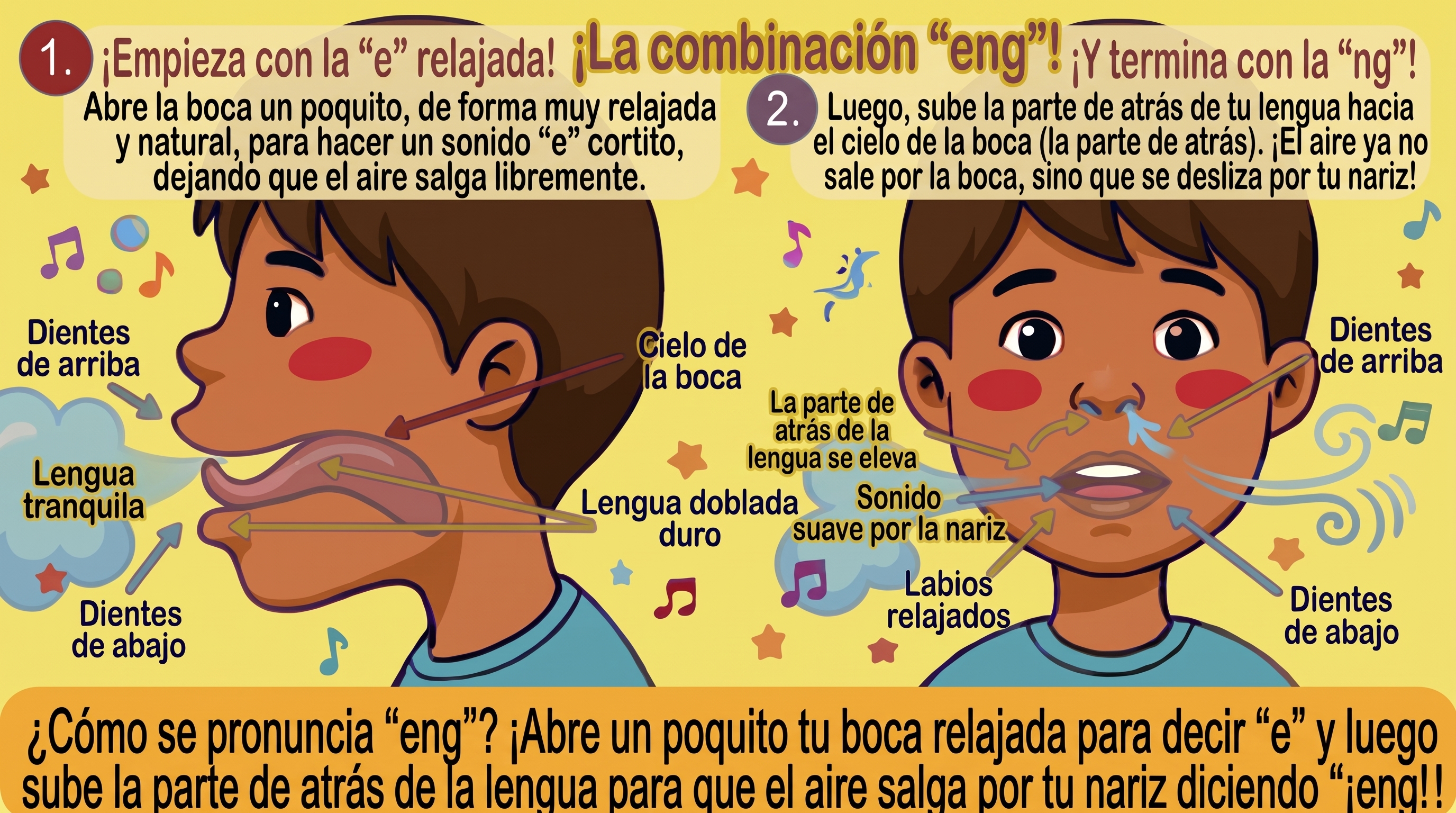
拼音Pīnyīn中zhōng的de“eng”由yóu“e”和hé“ng”组成zǔchéng;这里zhèlǐ的de“e”是shì一个yígè短duǎn而ér轻qīng的de央元音yāngyuányīn,“eng”听tīng起来qǐlái有点儿yǒudiǎnr像xiàng英语Yīngyǔ单词dāncí“lung”中zhōng的de“ung”。/El sonido «eng» en pinyin combina la «e» con el sonido «ng»; aquí la «e» es breve y neutra, de modo que «eng» suena parecido a «ung» en la palabra inglesa «lung»./The sound “eng” in pinyin combines “e” with the sound “ng”; here the “e” is short and neutral, so “eng” sounds rather like the “ung” in the English word “lung”.
--------------------------------------------------------------------------------

--------------------------------------------------------------------------------
• 先Xiān发fā一个yígè短duǎn而ér轻qīng的de“e”,像xiàng英语Yīngyǔ单词dāncí“about”开头kāitóu的de“a”。/Empieza con una «e» breve y relajada, como la «a» del inglés «about»./It begins with a short, relaxed “e”, like the “a” in “about”.
• 再Zài发fā“ng”,和hé“song”结尾jiéwěi的de音yīn一样yíyàng,不要búyào读dú成chéng单独dāndú的de“n”。/Luego viene la «ng», como al final de «song», sin convertirla en una «n» separada./Then comes the “ng”, as at the end of “song”, without turning it into a separate “n”.
• 它Tā的de鼻音bíyīn比bǐ很多hěnduō其他qítā韵母yùnmǔ更gèng重zhòng。/Es un sonido más nasal que muchos otros del pinyin./It is more nasal than many other sounds in pinyin.
1) 更gèng/más/more, even more
2) 城chéng/ciudad/city
3) 崩bēng/derrumbarse/to collapse
4) 坑kēng/hoyo/pit, hole
5) 等děng/esperar/to wait
6) 愣lèng/atónito/dazed, stunned
7) 疼téng/dolor; doler/pain; to hurt
8) 蜂fēng/abeja/bee
9) 翁wēng/anciano (se escribe «weng»)/old man (written “weng”)
10) 生shēng/vida; nacer/life; to be born
11) 风fēng/viento/wind
12) 灯dēng/lámpara/lamp
13) 冷lěng/frío/cold
14) 能néng/poder/can, to be able to
15) 梦mèng/sueño/dream
--------------------------------------------------------------------------------
声调Shēngdiào可以kěyǐ区分qūfēn意思yìsi,比如bǐrú等děng(等待děngdài)和hé灯dēng(电灯diàndēng)。/El tono distingue significados, como en děng (esperar) y dēng (lámpara)./The tone tells meanings apart, as in děng (to wait) and dēng (lamp).

Practica aquí · 在这里练习
--------------------------------------------------------------------------------
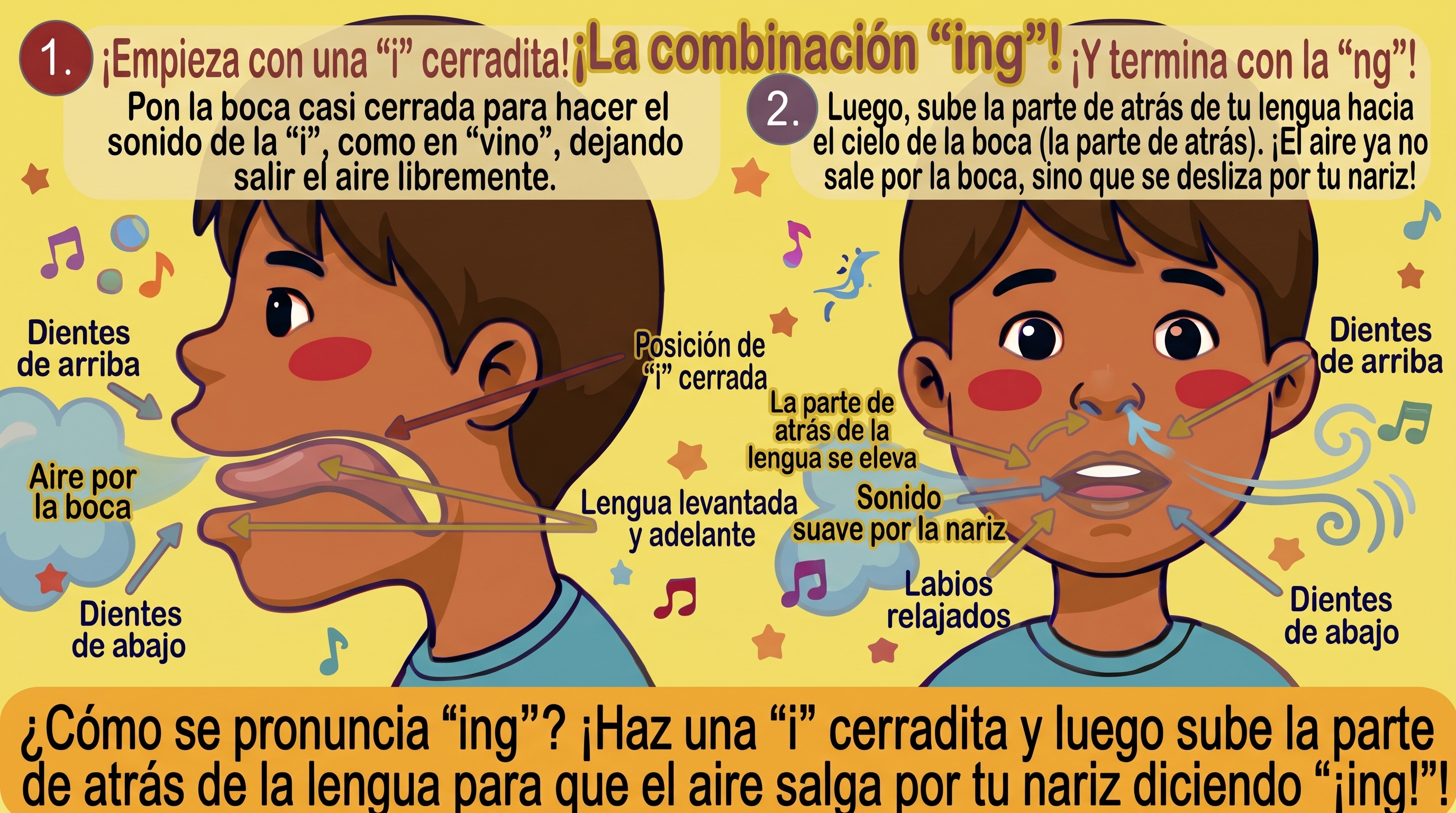
拼音Pīnyīn中zhōng的de“ing”由yóu“i”和hé“ng”组成zǔchéng,发音fāyīn和hé英语Yīngyǔ单词dāncí“sing”中zhōng的de“ing”相似xiāngsì。/El sonido «ing» en pinyin combina la «i» con el sonido «ng» y se pronuncia de manera parecida a «ing» en la palabra inglesa «sing»./The sound “ing” in pinyin combines “i” with the sound “ng” and is pronounced much like the “ing” in the English word “sing”.
--------------------------------------------------------------------------------

--------------------------------------------------------------------------------
• 先Xiān发fā“i”,像xiàng“vino”中zhōng的de“i”。/Empieza con una «i» cerrada, como en «vino»./It begins with a closed “i”, as in “vino”.
• 再Zài发fā“ng”,舌根shégēn往上wǎngshàng抬tái,气流qìliú从cóng鼻子bízi出来chūlái。/Luego viene la «ng»: la parte posterior de la lengua sube y el aire sale por la nariz./Then comes the “ng”: the back of the tongue rises and the air comes out through the nose.
• 发音Fāyīn连贯liánguàn,带dài鼻音bíyīn,中间zhōngjiān没有méiyǒu停顿tíngdùn。/Se articula de forma fluida y nasal, sin pausa entre la vocal y la consonante./It is articulated smoothly and nasally, with no pause between the vowel and the consonant.
1) 星xīng/estrella/star
2) 京jīng/capital (Pekín)/capital (Beijing)
3) 冰bīng/hielo/ice
4) 钉dīng/clavo/nail
5) 名míng/nombre; famoso/name; famous
6) 听tīng/escuchar/to listen
7) 英yīng/héroe; brillante/hero; brilliant
8) 灵líng/espíritu; ágil/spirit; nimble
9) 静jìng/tranquilo/quiet, calm
10) 请qǐng/por favor; invitar/please; to invite
11) 鹰yīng/águila/eagle
12) 病bìng/enfermedad/illness
13) 零líng/cero/zero
14) 瓶píng/botella/bottle
15) 影yǐng/sombra; película/shadow; film
--------------------------------------------------------------------------------
声调Shēngdiào会huì改变gǎibiàn意思yìsi,比如bǐrú京jīng(北京Běijīng)和hé静jìng(安静ānjìng)。/El tono cambia el significado, como en jīng (capital) y jìng (tranquilo)./The tone changes the meaning, as in jīng (capital) and jìng (quiet).

Practica aquí · 在这里练习
--------------------------------------------------------------------------------
拼音Pīnyīn中zhōng的de“ong”由yóu“o”和hé“ng”组成zǔchéng;这里zhèlǐ的de“o”比较bǐjiào闭bì,接近jiējìn“u”,所以suǒyǐ听tīng起来qǐlái有点儿yǒudiǎnr像xiàng“ung”。/El sonido «ong» en pinyin combina la «o» con el sonido «ng»; aquí la «o» es bastante cerrada, casi una «u», así que suena parecido a «ung»./The sound “ong” in pinyin combines “o” with the sound “ng”; here the “o” is quite closed, almost a “u”, so it sounds rather like “ung”.
--------------------------------------------------------------------------------

--------------------------------------------------------------------------------
• 先Xiān发fā一个yígè圆yuán唇chún的de“o”,比bǐ西班牙语Xībānyáyǔ的de“o”更gèng闭bì,接近jiējìn“u”。/Empieza con una «o» redondeada, más cerrada que la española, casi una «u»./It begins with a rounded “o”, more closed than the Spanish one, almost a “u”.
• 再Zài发fā“ng”,和hé“song”结尾jiéwěi的de音yīn一样yíyàng。/Luego viene la «ng», como al final de «song»./Then comes the “ng”, as at the end of “song”.
• 发音Fāyīn时shí鼻音bíyīn明显míngxiǎn,又yòu长cháng又yòu顺shùn。/Tiene un tono nasal marcado y es relativamente largo y fluido./It has a clear nasal tone and is relatively long and smooth.
1) 红hóng/rojo/red
2) 工gōng/trabajo/work
3) 龙lóng/dragón/dragon
4) 同tóng/igual/same
5) 虫chóng/insecto/insect
6) 松sōng/pino/pine
7) 空kōng/vacío; cielo/empty; sky
8) 东dōng/este/east
9) 钟zhōng/campana, reloj/bell, clock
10) 懂dǒng/entender/to understand
11) 冬dōng/invierno/winter
12) 中zhōng/medio, centro/middle, centre
13) 送sòng/enviar, regalar/to send, to give
14) 痛tòng/dolor/pain
15) 公园gōngyuán/parque/park
--------------------------------------------------------------------------------
声调Shēngdiào可以kěyǐ区分qūfēn意思yìsi,比如bǐrú同tóng(相同xiāngtóng)和hé桶tǒng(水桶shuǐtǒng)。/El tono distingue significados, como en tóng (igual) y tǒng (cubo)./The tone tells meanings apart, as in tóng (same) and tǒng (bucket).
āng áng ǎng àng
āng
áng
ǎng
àng
ēng éng ěng èng
ēng
éng
ěng
èng
īng íng ǐng ìng
īng
íng
ǐng
ìng
ōng óng ǒng òng
ōng
óng
ǒng
òng

![]()




