秋天Qiūtiān到dào了le,小狗xiǎogǒu和hé小猫xiǎomāo在zài草cǎo地上dìshang玩球wánqiú。/Ha llegado el otoño: el perrito y el gatito juegan con la pelota en la hierba./Autumn has come: the puppy and the kitten play with a ball on the grass.
** 想一想, 说一说/Xiǎng yi xiǎng, shuō yi shuō/Piensa y responde/Think and answer the following questions **
(1)读一读Dú yi dú“ao”“ou”“iu”,说shuō说shuō“iu”的de声调shēngdiào标biāo在zài哪里nǎlǐ。/Lee ao, ou e iu: ¿dónde va el tono en «iu»?/Read ao, ou and iu: where does the tone go in “iu”?
(2)说一说Shuō yi shuō你nǐ家里jiālǐ有yǒu什么shénme动物dòngwù。/Di qué animales hay en tu casa./Say what animals there are at your home.
(3)读一读Dú yi dú,说一说shuō yi shuō带dài这些zhèxiē音yīn的de词语cíyǔ。/Lee y di palabras con estos sonidos: ao, ou, iu./Read and say words with these sounds: ao, ou, iu.
(4)朗读Lǎngdú儿歌érgē,背诵bèisòng儿歌érgē。/Lee la canción infantil en voz alta y apréndela de memoria./Read the nursery rhyme aloud and learn it by heart.
** 家庭/Jiātíng/FAMILIA/FAMILY **
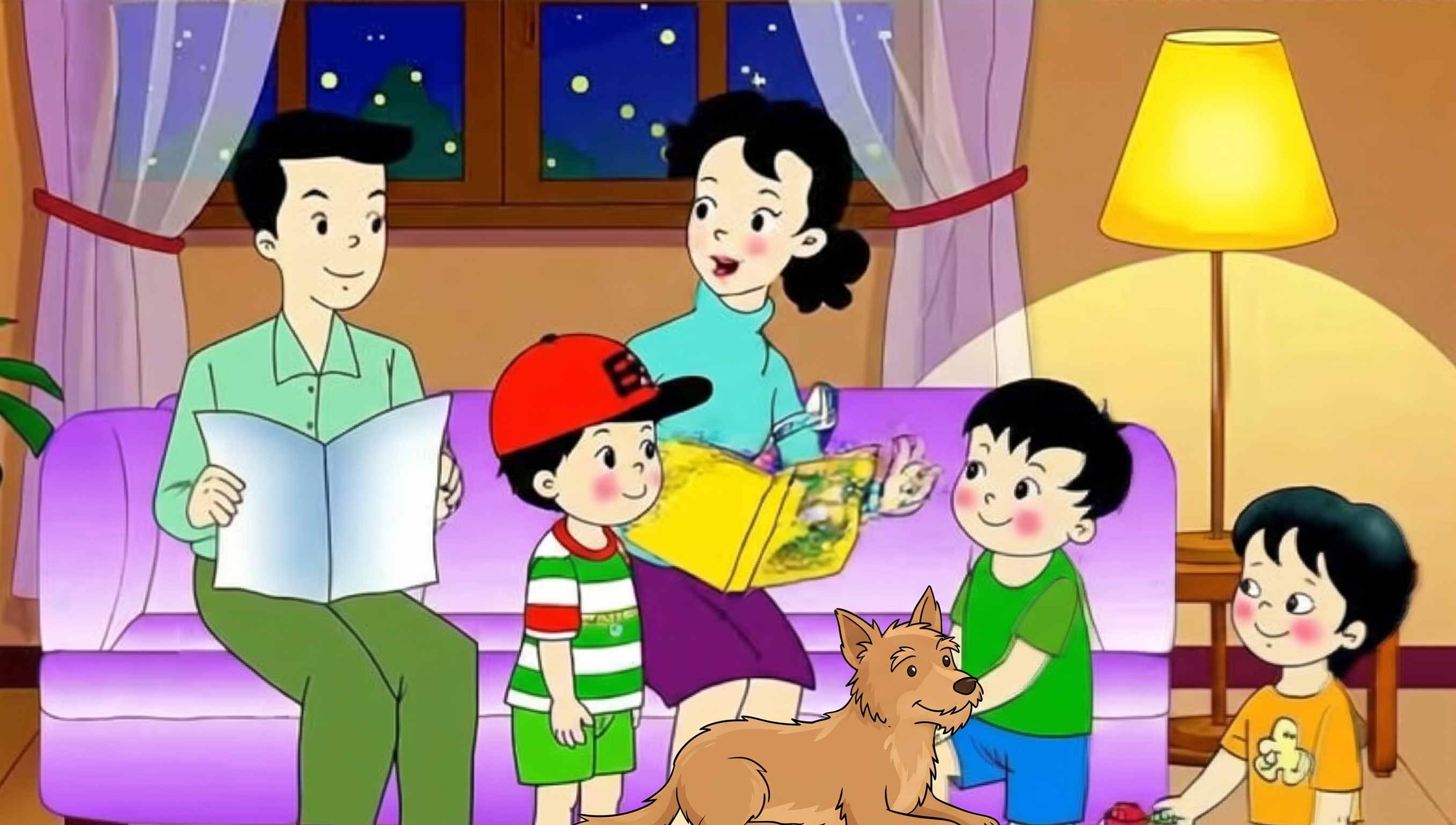
宝宝Bǎobao一yī家jiā/La familia de Baobao/Baobao's family
爸爸Bàba/Papá, padre/Dad, father
妈妈Māma/Mamá, madre/Mum, mother
宝宝Bǎobao/Baobao/Baobao
婷婷Tíngtíng/Tíngting/Tíngting
嘟嘟Dūdū/Dudú/Dudú
洛基Luòjī/Rocky/Rocky
** 对话/Duìhuà/Diálogo/Dialogue **
嘟嘟Dūdū:爸爸Bàba,我wǒ的de书包shūbāo里lǐ有yǒu一只yìzhī小猫xiǎomāo!/Dudú: Papá, ¡hay un gatito en mi mochila!/Dudú: Dad, there's a kitten in my school bag!
爸爸Bàba:真的Zhēnde?它tā的de毛máo好hǎo软ruǎn啊a。/Papá: ¿De verdad? ¡Qué suave tiene el pelo!/Dad: Really? Its fur is so soft.
婷婷Tíngtíng:小心Xiǎoxīn,别bié让ràng小狗xiǎogǒu看见kànjiàn它tā。/Tíngting: Cuidado, que no lo vea el perrito./Tíngting: Careful, don't let the puppy see it.
宝宝Bǎobǎo:小猫Xiǎomāo在zài玩球wánqiú,球qiú滚gǔn到dào我wǒ手上shǒushàng了le!/Baobao: El gatito juega con la pelota, ¡y la pelota me ha llegado a la mano!/Baobao: The kitten is playing with a ball – the ball rolled into my hand!
妈妈Māma:秋天Qiūtiān到dào了le,我们wǒmen带dài小猫xiǎomāo去qù公园gōngyuán吧ba。/Mamá: Ya ha llegado el otoño: llevemos al gatito al parque./Mum: Autumn is here – let's take the kitten to the park.
Comentario Pedagógico: ao, ou, iu: 1. Movimiento de la boca: En «ao» y «ou» la boca pasa de abierta a redondeada; en «iu», de estirada a redondeada. 2. Tono: En «ao» y «ou» el tono va en la primera letra; en «iu», en la «u»: liù. 3. Caracteres: Se aprenden 毛 y 包 con ayuda de dibujos y objetos reales.
Pedagogical Commentary: ao, ou, iu: 1. Mouth movement: In “ao” and “ou” the mouth goes from open to rounded; in “iu”, from spread to rounded. 2. Tone: In “ao” and “ou” the tone goes on the first letter; in “iu”, on the “u”: liù. 3. Characters: Learn 毛 and 包 with the help of pictures and real objects.
@ Pinyin 资料 (PDF, MP3 等) 的版权归属于:中国华文教育网 - Overseas Chinese Language and Culture Education Online。
@ Los materiales Pinyin (PDF, MP3, etc.) son propiedad de: 中国华文教育网 - Overseas Chinese Language and Culture Education Online.
@ The materials Pinyin (PDF, MP3, etc.) are the property of: 中国华文教育网 - Overseas Chinese Language and Culture Education Online.