· 小猫Xiǎomāo是shì黑hēi的de。/El gatito es negro./The kitten is black.
对Duì/correcto/right
· 你Nǐ说得对shuōdeduì。/Tienes razón./You're right.
水Shuǐ/agua/water
· 我Wǒ要yào喝水hēshuǐ。/Quiero beber agua./I want to drink water.
** 想一想, 说一说/Xiǎng yi xiǎng, shuō yi shuō/Piensa y responde/Think and answer the following questions **
(1)读一读Dú yi dú“ai”“ei”“ui”,说shuō说shuō它们tāmen是shì由yóu哪nǎ两个liǎnggè字母zìmǔ组成zǔchéng的de。/Lee ai, ei y ui: ¿de qué dos letras se forma cada una?/Read ai, ei and ui: which two letters make each one?
(2) “ui”的de声调shēngdiào标biāo在zài哪个nǎge字母zìmǔ上shàng?/¿Sobre qué letra va la tilde de tono en «ui»?/On which letter does the tone mark go in “ui”?
(3)读一读Dú yi dú,说一说shuō yi shuō带dài这些zhèxiē音yīn的de词语cíyǔ。/Lee y di palabras con estos sonidos: ai, ei, ui./Read and say words with these sounds: ai, ei, ui.
(4)朗读Lǎngdú儿歌érgē,背诵bèisòng儿歌érgē。/Lee la canción infantil en voz alta y apréndela de memoria./Read the nursery rhyme aloud and learn it by heart.
** 家庭/Jiātíng/FAMILIA/FAMILY **
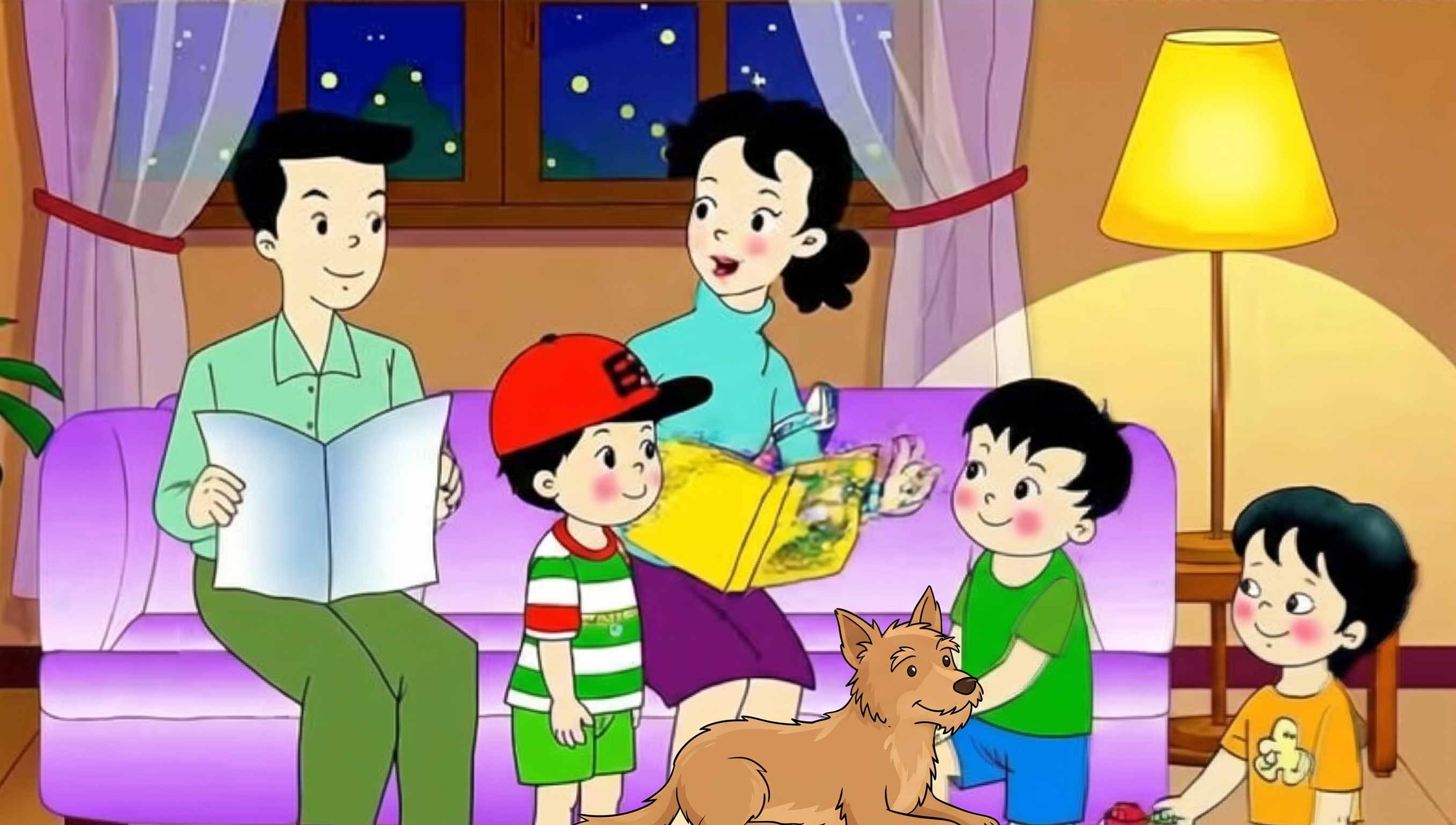
宝宝Bǎobao一yī家jiā/La familia de Baobao/Baobao's family
爸爸Bàba/Papá, padre/Dad, father
妈妈Māma/Mamá, madre/Mum, mother
宝宝Bǎobao/Baobao/Baobao
婷婷Tíngtíng/Tíngting/Tíngting
嘟嘟Dūdū/Dudú/Dudú
洛基Luòjī/Rocky/Rocky
** 对话/Duìhuà/Diálogo/Dialogue **
嘟嘟Dūdū:妈妈Māma,我wǒ想xiǎng给gěi妹妹mèimei买mǎi一个yígè杯子bēizi。/Dudú: Mamá, quiero comprarle un vaso a mi hermana pequeña./Dudú: Mum, I want to buy my little sister a cup.
爸爸Bàba:好Hǎo啊a!你nǐ要yào白bái的de还是háishì黑hēi的de?/Papá: ¡Vale! ¿Lo quieres blanco o negro?/Dad: OK! Do you want a white one or a black one?
婷婷Tíngtíng:白Bái杯子bēizi好看hǎokàn,妹妹mèimei最zuì爱ài白色báisè。/Tíngting: El vaso blanco es más bonito; a nuestra hermana le encanta el blanco./Tíngting: The white cup looks nicer – our little sister loves white.
宝宝Bǎobǎo:对Duì!我wǒ要yào用yòng新xīn杯子bēizi喝水hēshuǐ!/Baobao: ¡Eso! ¡Quiero beber agua en el vaso nuevo!/Baobao: Yes! I want to drink water from the new cup!
妈妈Māma:宝宝Bǎobǎo说得对shuōdeduì,我们wǒmen去qù买mǎi吧ba。/Mamá: Baobao tiene razón, vamos a comprarlo./Mum: Baobao's right, let's go and buy it.
Comentario Pedagógico: ai, ei, ui: diptongos: 1. Deslizamiento: En los diptongos se pasa de un sonido al otro sin pausa. 2. Regla del tono: Si hay «a», el tono va en ella; si no, en «o» o «e»; con «i» y «u» juntas, va en la segunda: «uí». 3. Caracteres: Se aprenden 妹 y 杯, y se buscan cosas cotidianas con estos sonidos.
Pedagogical Commentary: ai, ei, ui: diphthongs: 1. Glide: In diphthongs, glide from one sound to the next without a pause. 2. Tone rule: If there's an “a”, the tone goes on it; if not, on “o” or “e”; when “i” and “u” are together, it goes on the second: “uí”. 3. Characters: Learn 妹 and 杯, and look for everyday things with these sounds.
@ Pinyin 资料 (PDF, MP3 等) 的版权归属于:中国华文教育网 - Overseas Chinese Language and Culture Education Online。
@ Los materiales Pinyin (PDF, MP3, etc.) son propiedad de: 中国华文教育网 - Overseas Chinese Language and Culture Education Online.
@ The materials Pinyin (PDF, MP3, etc.) are the property of: 中国华文教育网 - Overseas Chinese Language and Culture Education Online.