MT
L01
L02
L03
L04
L05
EL1
P01
P02
P13
P03
P04
P07
P08
P09
P10
P11
P12
EP1
P05
P06
P15
P16
P17
P18
EP2
T01
T02
T03
T04
ET1
L06
L07
L08
L09
L10
EL2
T05
T06
T07
T08
ET2
T09
T10
T11
ET3
T12
T13
T14
ET4
PRIMARIA_C1_N1_14_P05

Practica aquí · 在这里练习
--------------------------------------------------------------------------------
拼音Pīnyīn中zhōng的de“ai”是shì一个yígè复韵母fùyùnmǔ,发音fāyīn和hé西班牙语Xībānyáyǔ单词dāncí“aire”中zhōng的de“ai”相似xiāngsì,只是zhǐshì语调yǔdiào和hé发音fāyīn方式fāngshì稍shāo有yǒu不同bùtóng。/El sonido «ai» en pinyin es un diptongo que se pronuncia de manera similar a «ai» en la palabra española «aire», con una ligera diferencia en la entonación y en la forma de producirlo./The sound “ai” in pinyin is a diphthong pronounced much like the “ai” in the Spanish word “aire”, with a slight difference in intonation and in the way it is produced.
--------------------------------------------------------------------------------

--------------------------------------------------------------------------------
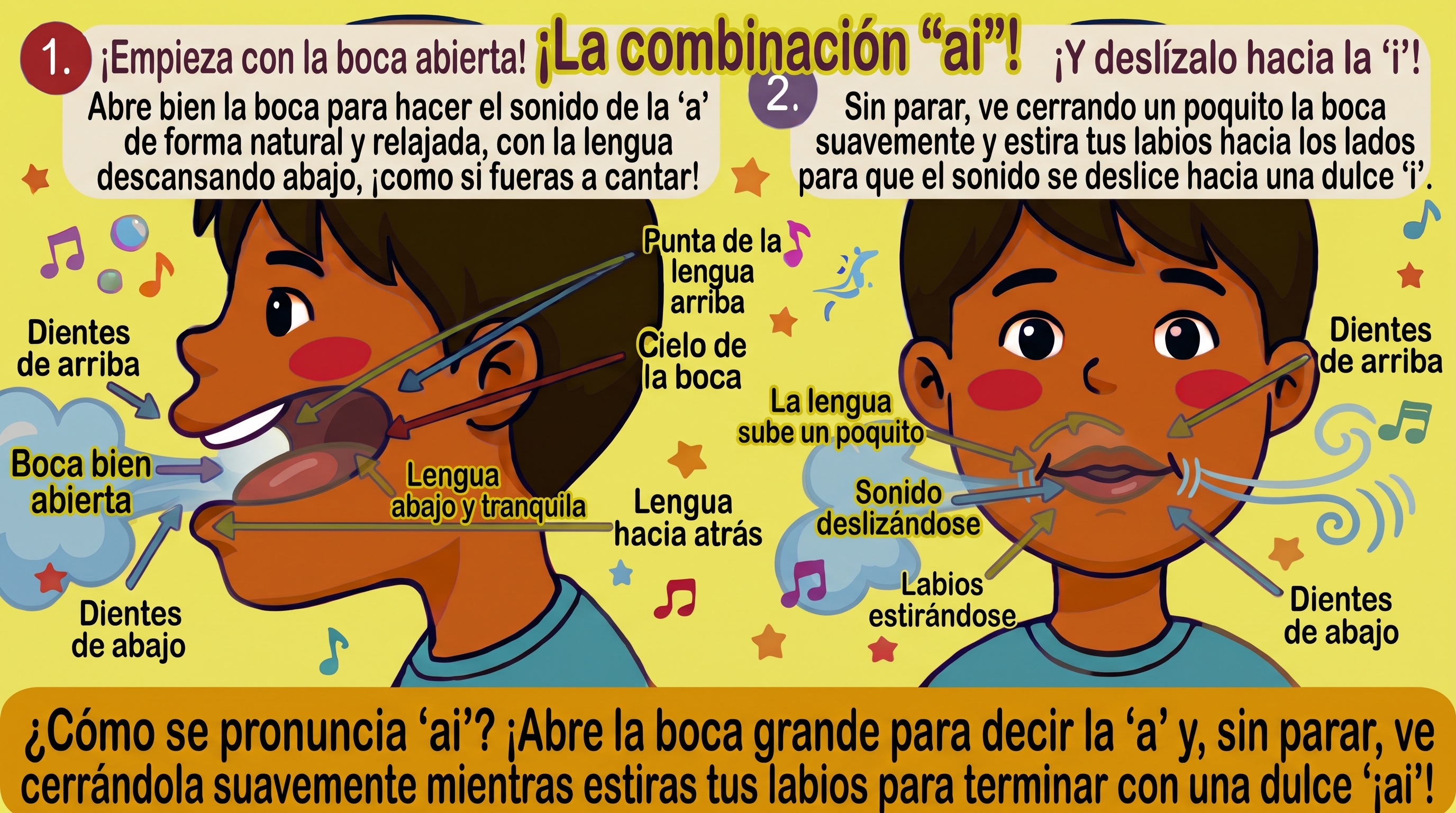
• 先Xiān发fā“a”,再zài滑向huáxiàng“i”。/Empieza con un sonido parecido a la «a» y se desliza hacia la «i»./It begins with a sound like “a” and glides towards “i”.
• “a”开口kāikǒu大dà,“i”比较bǐjiào闭bì,像xiàng“vino”中zhōng的de“i”。/La «a» es abierta, como en español, y la «i» más cerrada, como en «vino»./The “a” is open, as in Spanish, and the “i” is more closed, as in “vino”.
• 两个Liǎnggè音yīn连在一起liánzàiyìqǐ,中间zhōngjiān没有méiyǒu停顿tíngdùn。/Se pronuncia con fluidez, sin pausa entre los dos sonidos./It is pronounced smoothly, with no pause between the two sounds.
1) 爱ài/amor/love
2) 矮ǎi/bajo (de estatura)/short (in height)
3) 百bǎi/cien/hundred
4) 来lái/venir/to come
5) 买mǎi/comprar/to buy
6) 赛sài/competición/competition
7) 带dài/llevar/to bring, to carry
8) 晒shài/secar al sol/to dry in the sun
9) 还hái/todavía, también/still, also
10) 菜cài/verdura, plato/vegetable, dish
11) 白bái/blanco/white
12) 海hǎi/mar/sea
13) 开kāi/abrir/to open
14) 奶nǎi/leche/milk
15) 在zài/estar en/to be at, in
--------------------------------------------------------------------------------
“ai”在zài普通话pǔtōnghuà里lǐ很hěn常见chángjiàn;声调shēngdiào会huì改变gǎibiàn意思yìsi,比如bǐrú爱ài是shì降调jiàngdiào,来lái是shì升调shēngdiào。/El sonido «ai» es muy común en chino mandarín, y el tono cambia el significado: ài (amor) tiene un tono descendente y lái (venir), uno ascendente./The “ai” sound is very common in Mandarin Chinese, and the tone changes the meaning: ài (love) has a falling tone and lái (to come) a rising one.

Practica aquí · 在这里练习
--------------------------------------------------------------------------------
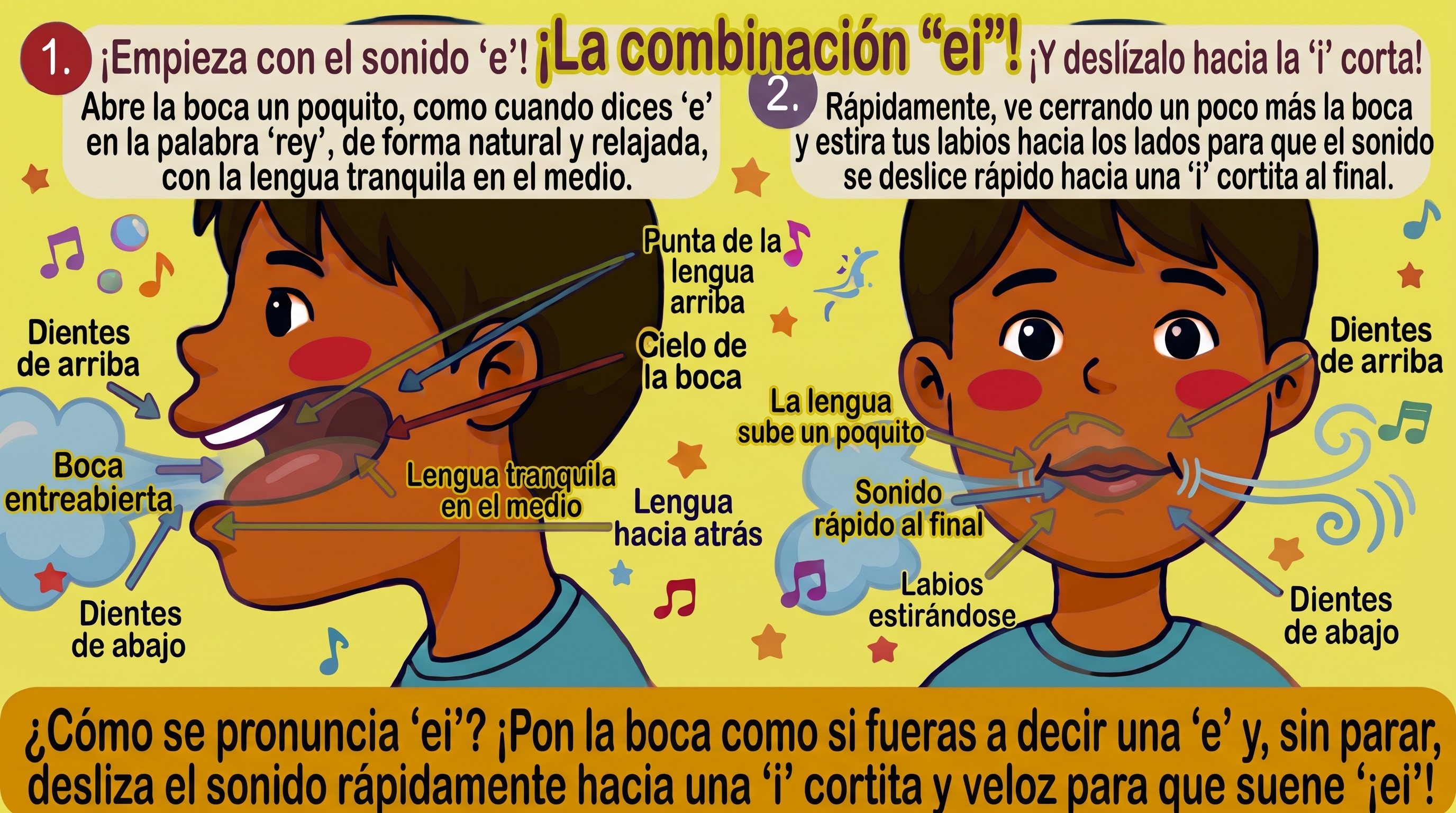
拼音Pīnyīn中zhōng的de“ei”是shì一个yígè复韵母fùyùnmǔ,发音fāyīn和hé西班牙语Xībānyáyǔ单词dāncí“reina”中zhōng的de“ei”相似xiāngsì。/El sonido «ei» en pinyin es un diptongo que se pronuncia de manera similar a «ei» en la palabra española «reina»./The sound “ei” in pinyin is a diphthong pronounced much like the “ei” in the Spanish word “reina”.
--------------------------------------------------------------------------------

--------------------------------------------------------------------------------
• 先Xiān发fā“e”,再zài滑向huáxiàng“i”;这里zhèlǐ的de“e”像xiàng西班牙语Xībānyáyǔ单词dāncí“rey”中zhōng的de“e”。/Empieza con una «e», como la de «rey», y se desliza hacia la «i»./It begins with an “e”, like the one in “rey”, and glides towards “i”.
• “i”很hěn短duǎn,在zài最后zuìhòu很快hěnkuài带dài过guò。/La «i» es breve y se articula rápidamente al final./The “i” is short and is said quickly at the end.
• 两个Liǎnggè音yīn连在一起liánzàiyìqǐ,中间zhōngjiān没有méiyǒu停顿tíngdùn。/Se pronuncia con fluidez, sin pausa entre los dos sonidos./It is pronounced smoothly, with no pause between the two sounds.
1) 北běi/norte/north
2) 被bèi/partícula de pasiva/passive marker
3) 给gěi/dar/to give
4) 得děi/tener que/must, to have to
5) 贼zéi/ladrón/thief
6) 美měi/bonito, bello/beautiful
7) 内nèi/dentro/inside
8) 飞fēi/volar/to fly
9) 费fèi/gastar; gasto/to spend; fee
10) 累lèi/cansado/tired
11) 杯bēi/taza/cup
12) 黑hēi/negro/black
13) 妹mèi/hermana menor/younger sister
14) 谁shéi/quién/who
15) 雷léi/trueno/thunder
--------------------------------------------------------------------------------
“ei”出现chūxiàn在zài很多hěnduō重要zhòngyào的de词cí里lǐ,声调shēngdiào可以kěyǐ改变gǎibiàn意思yìsi,比如bǐrú北běi(北方běifāng)和hé被bèi(被动bèidòng)。/El diptongo «ei» aparece en muchas palabras importantes, y el tono puede cambiar el significado, como en běi (norte) y bèi (partícula de pasiva)./The “ei” appears in many key words, and the tone can change the meaning, as in běi (north) and bèi (passive marker).

Practica aquí · 在这里练习
--------------------------------------------------------------------------------
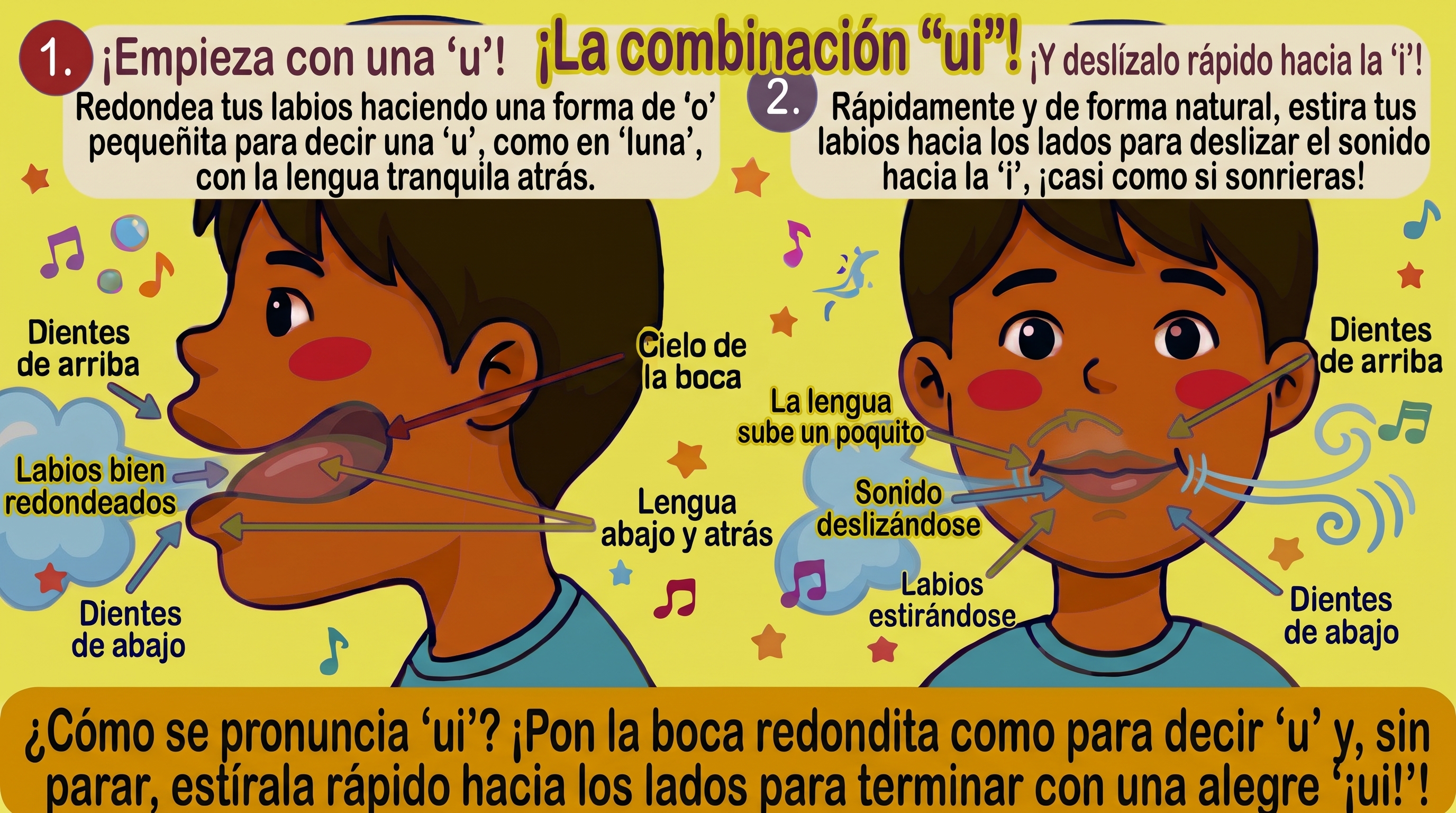
拼音Pīnyīn中zhōng的de“ui”是shì“uei”的de简写jiǎnxiě,发音fāyīn和hé西班牙语Xībānyáyǔ单词dāncí“buey”中zhōng的de“uey”相似xiāngsì。/El sonido «ui» en pinyin es una forma abreviada de «uei» y se pronuncia de manera parecida a «uey» en la palabra española «buey»./The sound “ui” in pinyin is a shortened spelling of “uei” and is pronounced much like the “uey” in the Spanish word “buey”.
--------------------------------------------------------------------------------

--------------------------------------------------------------------------------
• 先Xiān发fā“u”,像xiàng“luna”中zhōng的de“u”,再zài滑向huáxiàng“i”,中间zhōngjiān带dài一点儿yìdiǎnr“e”的de音yīn。/Empieza con una «u», como en «luna», y se desliza hacia la «i», con una ligera «e» en medio./It begins with a “u”, as in “luna”, and glides towards “i”, with a light “e” in between.
• 发音Fāyīn要yào连贯liánguàn,从cóng“u”到dào“i”的de变化biànhuà又yòu快kuài又yòu自然zìrán。/Se pronuncia de forma fluida, y el paso de la «u» a la «i» es rápido y natural./It is pronounced smoothly, and the change from “u” to “i” is quick and natural.
• 前面Qiánmiàn没有méiyǒu声母shēngmǔ时shí,写成xiěchéng“wei”,比如bǐrú围wéi。/Cuando no lleva consonante delante, se escribe «wei», como en wéi./When there is no consonant before it, it is written “wei”, as in wéi.
1) 对duì/correcto; hacia/correct; towards
2) 推tuī/empujar/to push
3) 亏kuī/perder; déficit/loss, deficit
4) 灰huī/gris; ceniza/grey; ash
5) 堆duī/montón/pile, heap
6) 瑞ruì/auspicioso/auspicious
7) 追zhuī/perseguir/to chase
8) 贵guì/caro/expensive
9) 水shuǐ/agua/water
10) 围wéi/rodear (se escribe «wei»)/to surround (written “wei”)
11) 嘴zuǐ/boca/mouth
12) 腿tuǐ/pierna/leg
13) 岁suì/años (de edad)/years (of age)
14) 睡shuì/dormir/to sleep
15) 鬼guǐ/fantasma/ghost
--------------------------------------------------------------------------------
声调Shēngdiào可以kěyǐ区分qūfēn意思yìsi,比如bǐrú对duì(对错duìcuò)和hé堆duī(一堆yìduī),声音shēngyīn组合zǔhé一样yíyàng,意思yìsi却què不同bùtóng。/El tono distingue significados: duì (correcto) y duī (montón) tienen la misma combinación de sonidos, pero significan cosas distintas./The tone tells meanings apart: duì (correct) and duī (pile) have the same combination of sounds but different meanings.
āi ái ǎi ài
āi
ái
ǎi
ài
ēi éi ěi èi
ēi
éi
ěi
èi
uī uí uǐ uì
uī
uí
uǐ
uì

![]()