老师Lǎoshī用yòng尺子chǐzi在zài纸zhǐ上shàng画huà了le一条yì tiáo线xiàn。/El profesor trazó una línea en el papel con la regla./The teacher drew a line on the paper with a ruler.
· 我Wǒ有yǒu十shí本书běnshū。/Tengo diez libros./I have ten books.
吃Chī/comer/to eat
· 我们Wǒmen吃饭chīfàn吧ba。/Vamos a comer./Let's eat.
热Rè/calor/hot
· 今天Jīntiān很hěn热rè。/Hoy hace mucho calor./It's very hot today.
** 想一想, 说一说/Xiǎng yi xiǎng, shuō yi shuō/Piensa y responde/Think and answer the following questions **
(1)读一读Dú yi dú“zhi”“chi”“shi”“ri”,再zài读一读dú yi dú“zi”“ci”“si”,说shuō说shuō有yǒu什么shénme不同bùtóng。/Lee zhi, chi, shi, ri y luego zi, ci, si: ¿qué diferencia hay?/Read zhi, chi, shi, ri and then zi, ci, si: what's the difference?
(2)读一读Dú yi dú“十四shísì”和hé“四十sìshí”,说shuō说shuō意思yìsi有yǒu什么shénme不同bùtóng。/Lee 十四 y 四十: ¿qué significa cada uno?/Read 十四 and 四十: what does each one mean?
(3)读一读Dú yi dú,说一说shuō yi shuō带dài这些zhèxiē音yīn的de词语cíyǔ。/Lee y di palabras con estos sonidos: zh, ch, sh, r./Read and say words with these sounds: zh, ch, sh, r.
(4)读一读Dú yi dú绕口令ràokǒulìng,看kàn谁shéi读dú得de又yòu快kuài又yòu准zhǔn。/Lee el trabalenguas: ¡a ver quién lo dice más rápido y mejor!/Read the tongue twister: who can say it fastest and best?
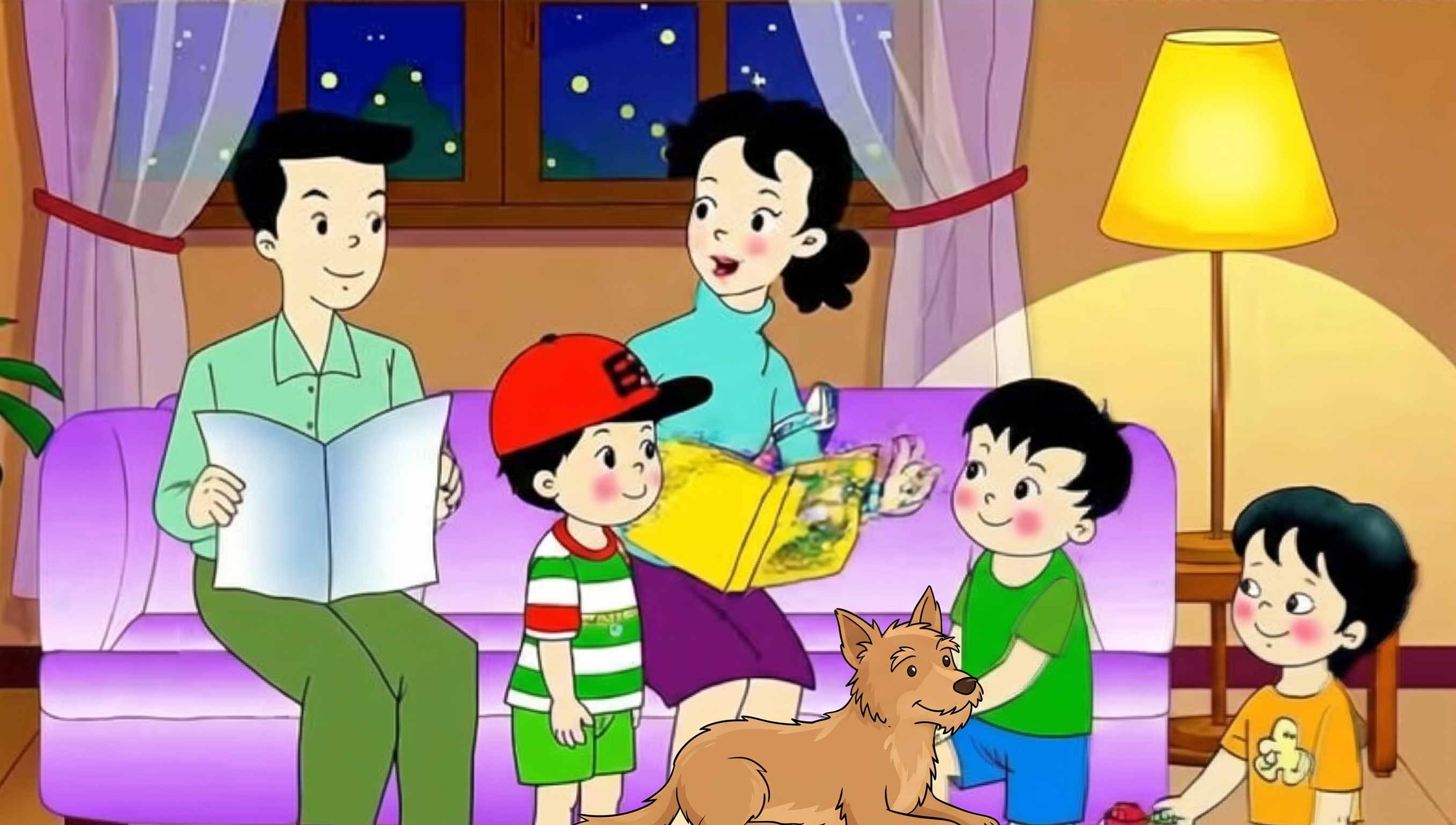
** 家庭/Jiātíng/FAMILIA/FAMILY **
宝宝Bǎobao一yī家jiā/La familia de Baobao/Baobao's family
爸爸Bàba/Papá, padre/Dad, father
妈妈Māma/Mamá, madre/Mum, mother
宝宝Bǎobao/Baobao/Baobao
婷婷Tíngtíng/Tíngting/Tíngting
嘟嘟Dūdū/Dudú/Dudú
洛基Luòjī/Rocky/Rocky
** 对话/Duìhuà/Diálogo/Dialogue **
嘟嘟Dūdū:今天Jīntiān是shì星期日xīngqīrì,天气tiānqì好hǎo热rè啊a!/Dudú: Hoy es domingo, ¡qué calor hace!/Dudú: It's Sunday today – it's so hot!
爸爸Bàba:我们Wǒmen在家zàijiā看书kànshū、画画huàhuà吧ba。/Papá: Quedémonos en casa leyendo y dibujando./Dad: Let's stay at home reading and drawing.
婷婷Tíngtíng:我Wǒ要yào一张白纸yìzhāngbáizhǐ和hé一把yìbǎ尺子chǐzi。/Tíngting: Necesito una hoja de papel blanco y una regla./Tíngting: I need a sheet of white paper and a ruler.
宝宝Bǎobǎo:老师Lǎoshī说shuō,我wǒ能néng数shǔ到dào十shí了le!/Baobao: ¡La profesora dice que ya sé contar hasta diez!/Baobao: The teacher says I can count to ten now!
妈妈Māma:真棒Zhēnbàng!我们wǒmen一起yìqǐ吃chī西瓜xīguā吧ba。/Mamá: ¡Genial! Vamos a comer sandía juntos./Mum: Brilliant! Let's eat some watermelon together.
Comentario Pedagógico: zh, ch, sh y r: 1. Sonidos retroflejos: En «zh», «ch», «sh» y «r» la punta de la lengua se dobla hacia arriba, hacia el paladar. 2. Lengua plana o doblada: Se comparan zi—zhi, ci—chi y si—shi para oír la diferencia. 3. Aviso para hispanohablantes: La «r» se dice con la lengua doblada pero sin vibrar: no se parece a la «r» española.
Pedagogical Commentary: zh, ch, sh and r: 1. Retroflex sounds: For “zh”, “ch”, “sh” and “r” the tip of the tongue curls up towards the palate. 2. Flat or curled tongue: Compare zi—zhi, ci—chi and si—shi to hear the difference. 3. Note for Spanish speakers: “r” is made with the tongue curled back but not trilled: it is nothing like the Spanish “r”.
@ Pinyin 资料 (PDF, MP3 等) 的版权归属于:中国华文教育网 - Overseas Chinese Language and Culture Education Online。
@ Los materiales Pinyin (PDF, MP3, etc.) son propiedad de: 中国华文教育网 - Overseas Chinese Language and Culture Education Online.
@ The materials Pinyin (PDF, MP3, etc.) are the property of: 中国华文教育网 - Overseas Chinese Language and Culture Education Online.