MT
L01
L02
L03
L04
L05
EL1
P01
P02
P13
P03
P04
P07
P08
P09
P10
P11
P12
EP1
P05
P06
P15
P16
P17
P18
EP2
T01
T02
T03
T04
ET1
L06
L07
L08
L09
L10
EL2
T05
T06
T07
T08
ET2
T09
T10
T11
ET3
T12
T13
T14
ET4
PRIMARIA_C1_N1_13_P12

Practica aquí · 在这里练习
--------------------------------------------------------------------------------
拼音Pīnyīn中zhōng的de“zh”是shì一个yígè卷舌音juǎnshéyīn,像xiàng西班牙语Xībānyáyǔ的de“ch”,但dàn舌尖shéjiān要yào往上wǎngshàng卷juǎn,而且érqiě不bú送气sòngqì。/El sonido «zh» en pinyin es retroflejo: se parece a la «ch» española, pero con la punta de la lengua doblada hacia atrás y sin soltar aire./The sound “zh” in pinyin is retroflex: it is like the Spanish “ch”, but with the tip of the tongue curled back and no puff of air.
--------------------------------------------------------------------------------

--------------------------------------------------------------------------------
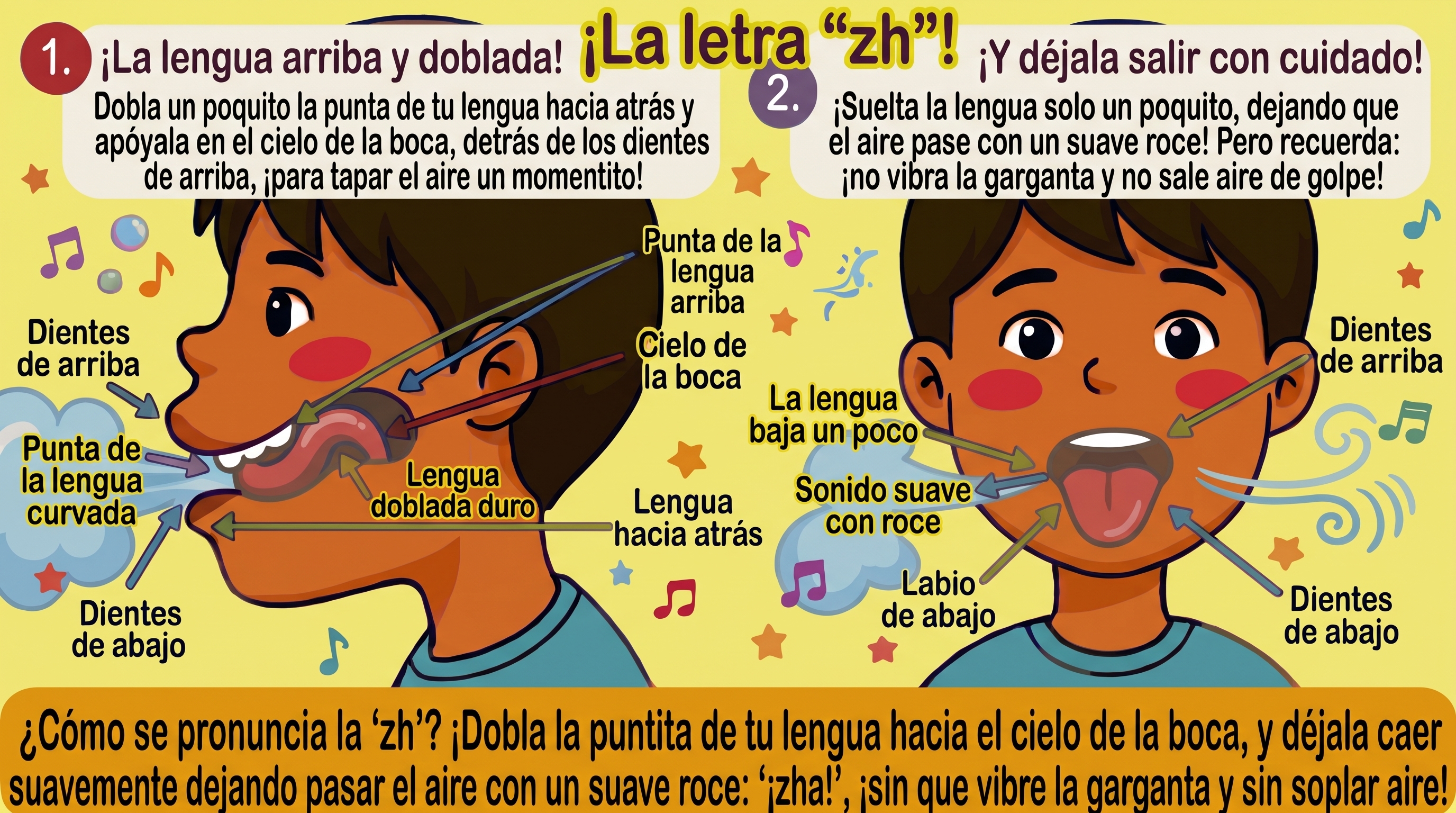
• 舌尖Shéjiān往上wǎngshàng卷juǎn,抵住dǐzhù硬腭yìng'è前部qiánbù。/La punta de la lengua se dobla hacia atrás y toca la parte delantera del paladar./The tip of the tongue curls back and touches the front of the hard palate.
• 它Tā是shì清音qīngyīn,声带shēngdài不bú振动zhèndòng。/Es un sonido sordo: las cuerdas vocales no vibran./It is an unvoiced sound: the vocal cords do not vibrate.
• 它Tā不bú送气sòngqì,没有méiyǒu气流qìliú冲chōng出来chūlái,这zhè一点yìdiǎn和hé“ch”不同bùtóng。/No es aspirada: no sale aire, a diferencia de la «ch»./It is unaspirated: no air comes out, unlike “ch”.
1) 中zhōng/medio, centro/middle, centre
2) 知zhī/saber/to know
3) 张zhāng/abrir; hoja (clasificador)/to open; sheet (measure word)
4) 者zhě/persona (sufijo)/person (suffix)
5) 这zhè/esto/this
6) 纸zhǐ/papel/paper
7) 住zhù/vivir/to live, to stay
8) 找zhǎo/buscar/to look for
9) 招zhāo/atraer, invitar/to invite, to attract
10) 职zhí/trabajo, puesto/job, post
11) 织zhī/tejer/to weave
12) 猪zhū/cerdo/pig
13) 桌子zhuōzi/mesa/table
14) 竹zhú/bambú/bamboo
15) 站zhàn/estar de pie; estación/to stand; station
--------------------------------------------------------------------------------
声调Shēngdiào可以kěyǐ完全wánquán改变gǎibiàn意思yìsi,比如bǐrú纸zhǐ(纸张zhǐzhāng)和hé知zhī(知道zhīdao)。/El tono puede cambiar por completo el significado, como en zhǐ (papel) y zhī (saber)./The tone can completely change the meaning, as in zhǐ (paper) and zhī (to know).

Practica aquí · 在这里练习
--------------------------------------------------------------------------------
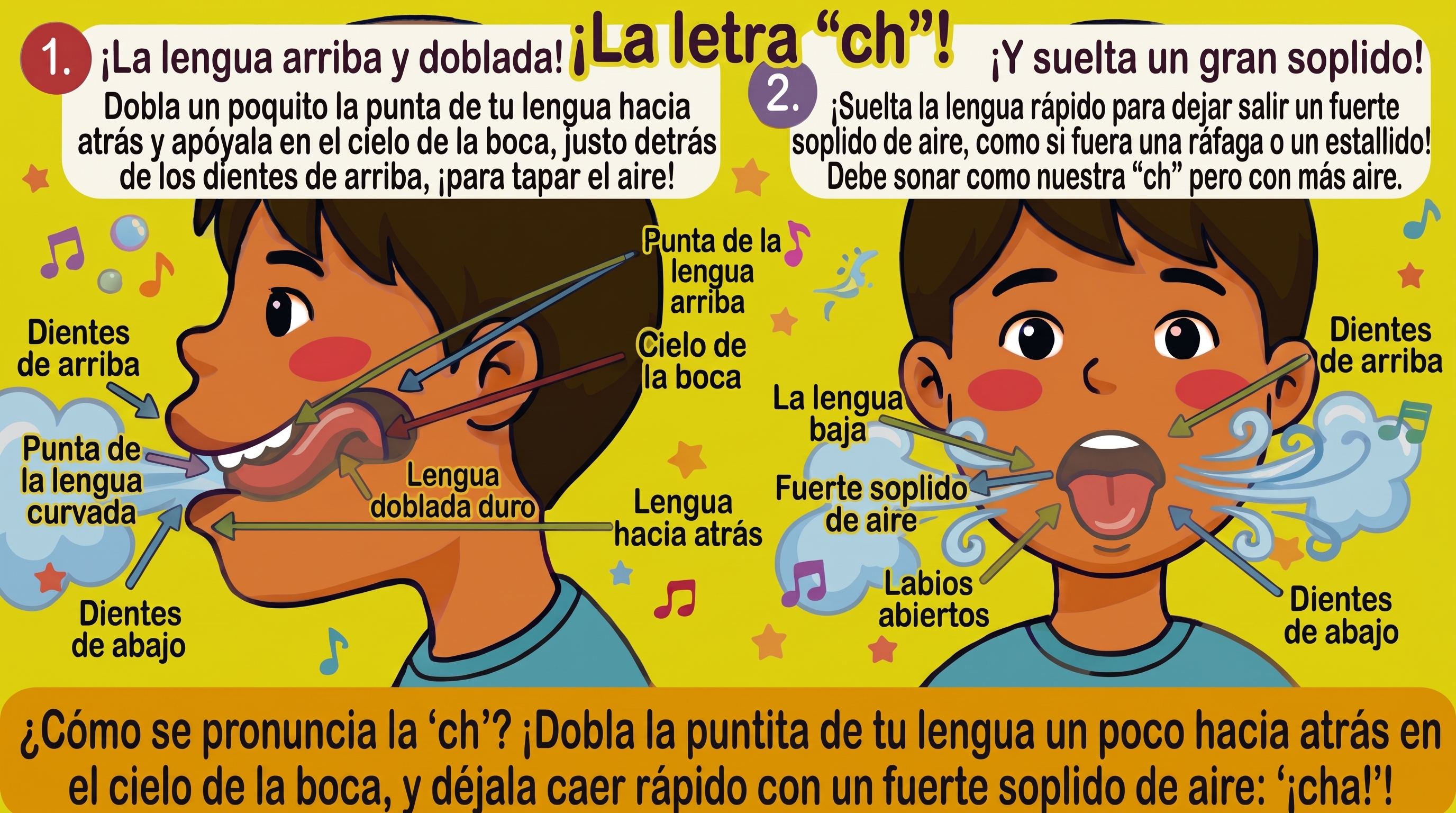
拼音Pīnyīn中zhōng的de“ch”像xiàng西班牙语Xībānyáyǔ单词dāncí“chocolate”中zhōng的de“ch”,但dàn它tā是shì卷舌音juǎnshéyīn,而且érqiě是shì送气音sòngqìyīn,会huì冲出chōngchū一股yìgǔ气流qìliú。/El sonido «ch» en pinyin se parece a la «ch» de «chocolate», pero es retroflejo y aspirado: se dobla la lengua hacia atrás y sale un golpe de aire./The sound “ch” in pinyin is like the “ch” in “chocolate”, but it is retroflex and aspirated: the tongue curls back and a puff of air comes out.
--------------------------------------------------------------------------------

--------------------------------------------------------------------------------
• 舌尖Shéjiān往上wǎngshàng卷juǎn,和hé“zh”一样yíyàng,但dàn要yào送sòng出chū一股yìgǔ强qiáng气流qìliú。/La lengua se dobla hacia atrás como en la «zh», pero con una fuerte salida de aire./The tongue curls back as for “zh”, but with a strong release of air.
• 它Tā是shì清音qīngyīn,声带shēngdài不bú振动zhèndòng。/Es un sonido sordo: las cuerdas vocales no vibran./It is an unvoiced sound: the vocal cords do not vibrate.
• 它Tā和hé“zh”的de区别qūbié就是jiùshì送气sòngqì:发fā“ch”时shí,手shǒu放在fàngzài嘴zuǐ前qián能néng感到gǎndào气流qìliú。/Lo que la distingue de la «zh» es el aire: con la mano delante de la boca lo notarás al decir «ch»./What sets it apart from “zh” is the air: with your hand in front of your mouth you will feel it when you say “ch”.
1) 吃chī/comer/to eat
2) 出chū/salir/to go out
3) 池chí/estanque/pond, pool
4) 长cháng/largo/long
5) 车chē/coche/car, vehicle
6) 炒chǎo/saltear/to stir-fry
7) 丑chǒu/feo/ugly
8) 春chūn/primavera/spring (season)
9) 沉chén/hundirse/to sink
10) 赤chì/rojo/red
11) 茶chá/té/tea
12) 床chuáng/cama/bed
13) 船chuán/barco/boat
14) 唱chàng/cantar/to sing
15) 窗chuāng/ventana/window
--------------------------------------------------------------------------------
声调Shēngdiào会huì改变gǎibiàn意思yìsi,比如bǐrú吃chī(吃饭chīfàn)和hé池chí(水池shuǐchí)。/El tono cambia el significado, como en chī (comer) y chí (estanque)./The tone changes the meaning, as in chī (to eat) and chí (pond).

Practica aquí · 在这里练习
--------------------------------------------------------------------------------
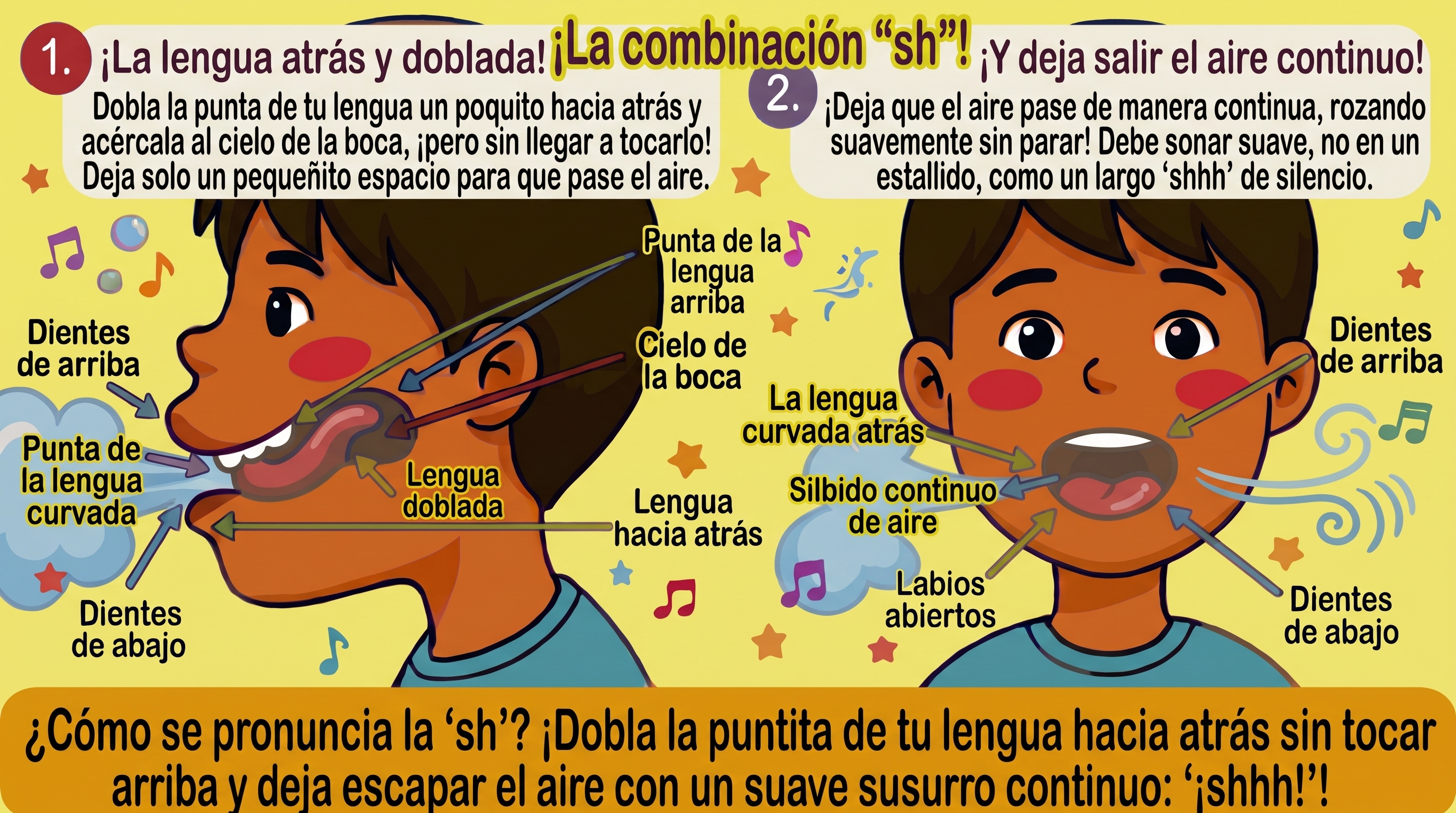
拼音Pīnyīn中zhōng的de“sh”像xiàng英语Yīngyǔ单词dāncí“she”中zhōng的de“sh”,但dàn它tā是shì卷舌音juǎnshéyīn:舌尖shéjiān要yào往上wǎngshàng卷juǎn,发出fāchū摩擦mócā的de声音shēngyīn。/El sonido «sh» en pinyin se parece a la «sh» de la palabra inglesa «she», pero es retroflejo: la punta de la lengua se dobla hacia atrás y el aire sale rozando./The sound “sh” in pinyin is like the “sh” in the English word “she”, but it is retroflex: the tip of the tongue curls back and the air comes out with friction.
--------------------------------------------------------------------------------

--------------------------------------------------------------------------------
• 舌尖Shéjiān往上wǎngshàng卷juǎn,靠近kàojìn硬腭yìng'è,但dàn不bú碰到pèngdào。/La punta de la lengua se dobla hacia atrás y se acerca al paladar sin tocarlo./The tip of the tongue curls back and approaches the palate without touching it.
• 它Tā是shì擦音cāyīn,气流qìliú连续不断liánxùbúduàn地de摩擦mócā出来chūlái,不是búshì一下子yíxiàzi冲chōng出来chūlái。/Es fricativa: el aire sale rozando de forma continua, no de golpe./It is a fricative: the air flows out continuously with friction, not in a burst.
• 它Tā是shì清音qīngyīn,声带shēngdài不bú振动zhèndòng。/Es un sonido sordo: las cuerdas vocales no vibran./It is an unvoiced sound: the vocal cords do not vibrate.
1) 书shū/libro/book
2) 师shī/maestro/teacher
3) 十shí/diez/ten
4) 少shǎo/poco/few, little
5) 上shàng/arriba/up, above
6) 诗shī/poesía/poetry
7) 生shēng/vida; nacer/life; to be born
8) 身shēn/cuerpo/body
9) 食shí/comida/food
10) 树shù/árbol/tree
11) 狮子shīzi/león/lion
12) 山shān/montaña/mountain
13) 水shuǐ/agua/water
14) 手shǒu/mano/hand
15) 说shuō/hablar, decir/to speak, to say
--------------------------------------------------------------------------------
“sh”很hěn常见chángjiàn,声调shēngdiào会huì改变gǎibiàn意思yìsi,比如bǐrú师shī(老师lǎoshī)和hé十shí(数字shùzì十shí)。/La «sh» es muy común y el tono cambia el significado, como en shī (maestro) y shí (diez)./The “sh” is very common and the tone changes the meaning, as in shī (teacher) and shí (ten).

Practica aquí · 在这里练习
--------------------------------------------------------------------------------
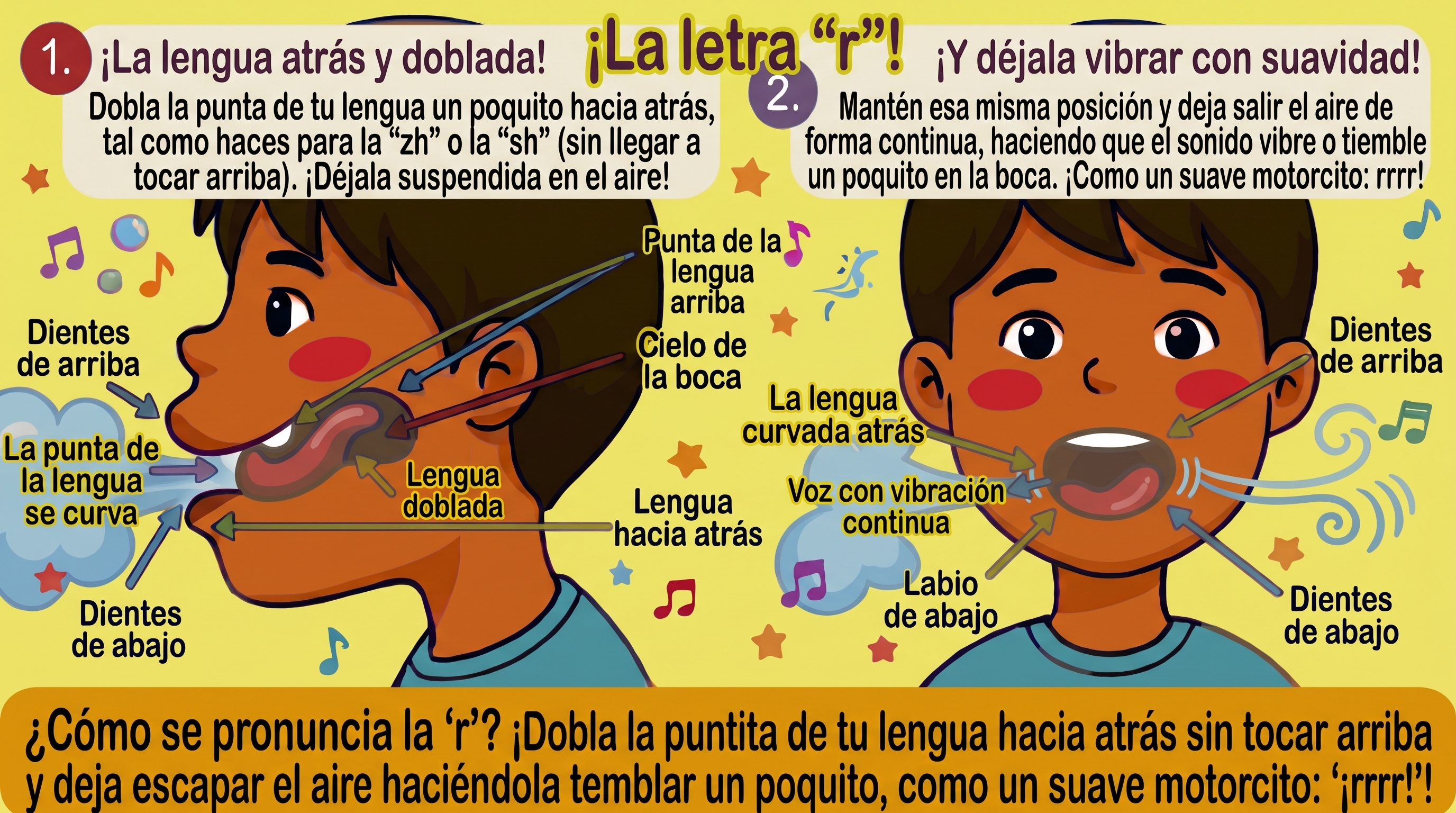
拼音Pīnyīn中zhōng的de“r”和hé西班牙语Xībānyáyǔ的de“r”完全wánquán不同bùtóng:它tā不bú颤动chàndòng,舌尖shéjiān往上wǎngshàng卷juǎn,听tīng起来qǐlái有点儿yǒudiǎnr像xiàng英语Yīngyǔ单词dāncí“pleasure”中zhōng的de“s”。/El sonido «r» en pinyin no tiene nada que ver con la «r» española: no vibra, se pronuncia con la lengua doblada hacia atrás y suena parecido a la «s» de la palabra inglesa «pleasure»./The sound “r” in pinyin has nothing to do with the Spanish “r”: it is not trilled, it is made with the tongue curled back, and it sounds rather like the “s” in the English word “pleasure”.
--------------------------------------------------------------------------------

--------------------------------------------------------------------------------
• 舌尖Shéjiān往上wǎngshàng卷juǎn,和hé发fā“zh”“sh”时shí一样yíyàng。/La lengua se dobla hacia atrás, igual que para la «zh» o la «sh»./The tongue curls back, just as for “zh” or “sh”.
• 它Tā是shì浊音zhuóyīn,声带shēngdài振动zhèndòng,但dàn舌头shétou不bú颤动chàndòng。/Es sonora (las cuerdas vocales vibran), pero la lengua no vibra./It is voiced (the vocal cords vibrate), but the tongue does not trill.
• 它Tā不bú送气sòngqì。/No es aspirada./It is unaspirated.
1) 人rén/persona/person
2) 日rì/día; sol/day; sun
3) 忍rěn/aguantar/to tolerate, to endure
4) 入rù/entrar/to enter
5) 弱ruò/débil/weak
6) 绕rào/rodear/to go round
7) 让ràng/dejar, permitir/to let, to allow
8) 热rè/caliente/hot
9) 肉ròu/carne/meat
10) 乳rǔ/leche/milk
11) 认rèn/reconocer/to recognise
12) 软ruǎn/blando/soft
13) 容易róngyì/fácil/easy
14) 扔rēng/tirar, lanzar/to throw
15) 如rú/como, si/as, if
--------------------------------------------------------------------------------
“r”开始kāishǐ可能kěnéng比较bǐjiào难nán发fā,但dàn很多hěnduō常用词chángyòngcí里lǐ都dōu有yǒu它tā。/La «r» del pinyin puede costar al principio, pero aparece en muchas palabras clave del chino mandarín./The pinyin “r” can be difficult at first, but it appears in many key Mandarin Chinese words.
zhī zhí zhǐ zhì
zhī
zhí
zhǐ
zhì
chī chí chǐ chì
chī
chí
chǐ
chì
shī shí shǐ shì
shī
shí
shǐ
shì
rī rí rǐ rì
rī
rí
rǐ
rì

![]()