早上Zǎoshang我们wǒmen做zuò早操zǎocāo,然后ránhòu走路zǒulù去qù上学shàngxué。/Por la mañana hacemos gimnasia y luego vamos andando al colegio./In the morning we do our exercises and then walk to school.
· 下雨Xiàyǔ要yào带dài伞sǎn。/Cuando llueve hay que llevar paraguas./Take an umbrella when it rains.
** 想一想, 说一说/Xiǎng yi xiǎng, shuō yi shuō/Piensa y responde/Think and answer the following questions **
(1)读一读Dú yi dú“zi”“ci”“si”,说shuō说shuō它们tāmen和hé“za”“ca”“sa”有yǒu什么shénme不同bùtóng。/Lee zi, ci y si: ¿en qué se diferencian de za, ca y sa?/Read zi, ci and si: how are they different from za, ca and sa?
(2)说一说Shuō yi shuō:你nǐ每天měitiān早上zǎoshang做zuò什么shénme?/Di: ¿qué haces cada mañana?/Say: what do you do every morning?
(3)读一读Dú yi dú,说一说shuō yi shuō带dài这些zhèxiē音yīn的de词语cíyǔ。/Lee y di palabras con estos sonidos: z, c, s./Read and say words with these sounds: z, c, s.
(4)朗读Lǎngdú儿歌érgē,背诵bèisòng儿歌érgē。/Lee la canción infantil en voz alta y apréndela de memoria./Read the nursery rhyme aloud and learn it by heart.
** 家庭/Jiātíng/FAMILIA/FAMILY **
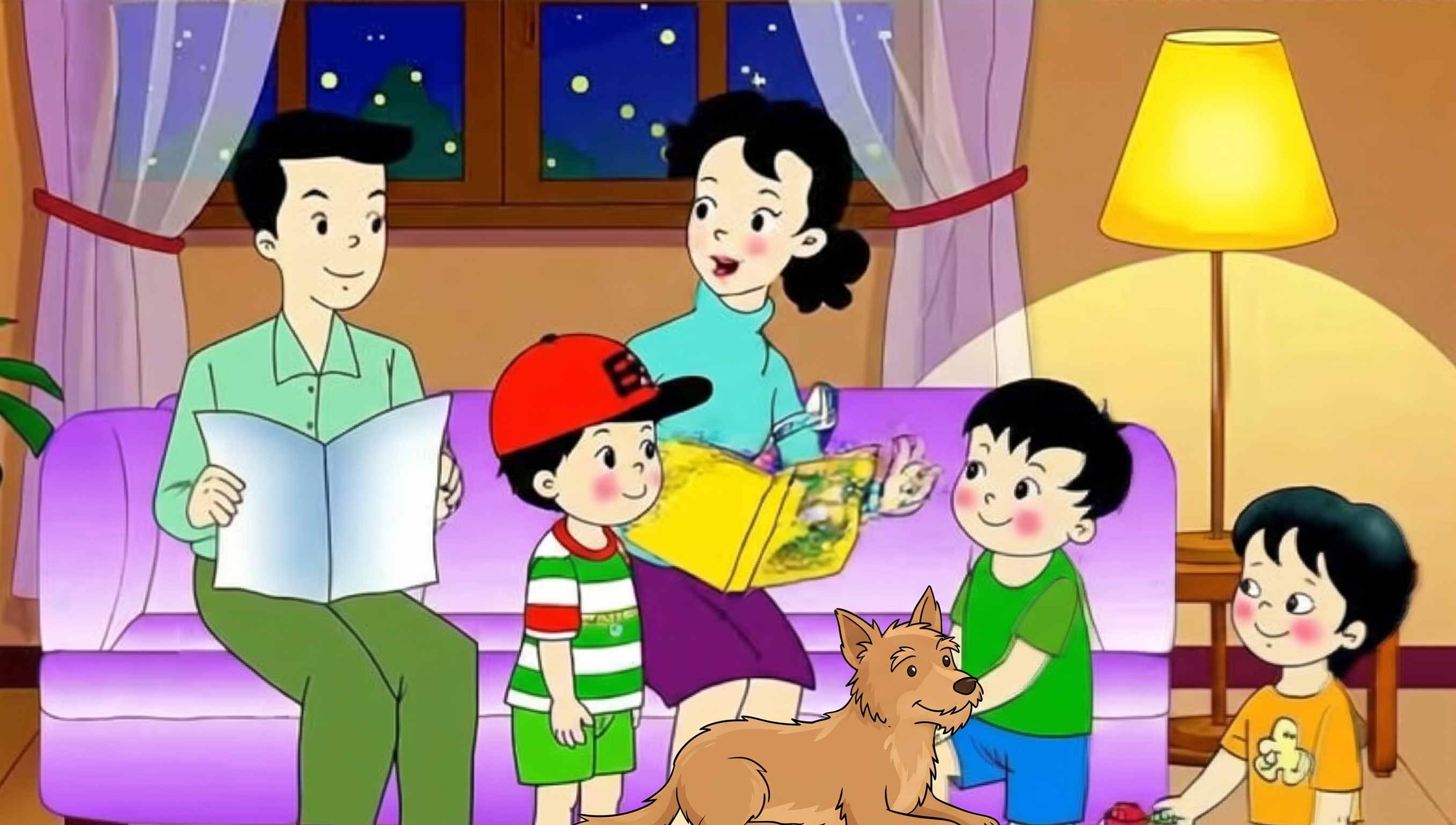
宝宝Bǎobao一yī家jiā/La familia de Baobao/Baobao's family
爸爸Bàba/Papá, padre/Dad, father
妈妈Māma/Mamá, madre/Mum, mother
宝宝Bǎobao/Baobao/Baobao
婷婷Tíngtíng/Tíngting/Tíngting
嘟嘟Dūdū/Dudú/Dudú
洛基Luòjī/Rocky/Rocky
** 对话/Duìhuà/Diálogo/Dialogue **
嘟嘟Dūdū:爸爸Bàba,今天jīntiān学校xuéxiào有yǒu跑步pǎobù比赛bǐsài!/Dudú: Papá, ¡hoy hay una carrera en el colegio!/Dudú: Dad, there's a running race at school today!
爸爸Bàba:那Nà你nǐ要yào先xiān做zuò早操zǎocāo,再zài走路zǒulù去qù学校xuéxiào。/Papá: Entonces primero haz la gimnasia matinal y luego ve andando al colegio./Dad: Then do your morning exercises first and walk to school.
婷婷Tíngtíng:下雨Xiàyǔ了le,别忘了biéwàngle带dài伞sǎn!/Tíngting: ¡Está lloviendo, no olvides el paraguas!/Tíngting: It's raining – don't forget your umbrella!
宝宝Bǎobǎo:我Wǒ会huì写xiě四个sìgè字zì了le!/Baobao: ¡Ya sé escribir cuatro caracteres!/Baobao: I can write four characters now!
妈妈Māma:真棒Zhēnbàng!放学fàngxué后hòu我们wǒmen去qù买菜mǎicài,再zài去qù草cǎo地上dìshang玩wán。/Mamá: ¡Muy bien! Después del colegio vamos a comprar verdura y luego a jugar en la hierba./Mum: Brilliant! After school we'll buy some vegetables and then play on the grass.
Comentario Pedagógico: z, c, s y las sílabas enteras: 1. Lengua plana: En «z», «c» y «s» la punta de la lengua se apoya detrás de los dientes de arriba, con la lengua plana. 2. Sílabas enteras: «zi», «ci» y «si» se leen de golpe, sin deletrearlas. 3. Aviso para hispanohablantes: La «z» y la «c» del pinyin no se leen como en español.
Pedagogical Commentary: z, c, s and whole syllables: 1. Flat tongue: For “z”, “c” and “s” the tip of the tongue rests behind the upper teeth, with the tongue flat. 2. Whole syllables: “zi”, “ci” and “si” are read as a whole, without blending. 3. Note for Spanish speakers: Pinyin “z” and “c” are not read as in Spanish.
@ Pinyin 资料 (PDF, MP3 等) 的版权归属于:中国华文教育网 - Overseas Chinese Language and Culture Education Online。
@ Los materiales Pinyin (PDF, MP3, etc.) son propiedad de: 中国华文教育网 - Overseas Chinese Language and Culture Education Online.
@ The materials Pinyin (PDF, MP3, etc.) are the property of: 中国华文教育网 - Overseas Chinese Language and Culture Education Online.