Saltar al contenido
Home » LECCION_PRIMARIA_P » Página 2

LECCION_PRIMARIA_P


PRIMARIA_C1_N1_12_P11

z
Practica aquí · 在这里练习
--------------------------------------------------------------------------------
拼音Pīnyīn中zhōng的de“z”像xiàng“ts”,但dàn不bú送气sòngqì,发音fāyīn很hěn轻qīng,有点儿yǒudiǎnr像xiàng英语Yīngyǔ单词dāncí“kids”中zhōng的de“ds”。/El sonido «z» en pinyin se parece al grupo «ts», pero sin soltar aire y muy suave, algo así como la «ds» de la palabra inglesa «kids»./The sound “z” in pinyin is like “ts”, but with no puff of air and very soft, rather like the “ds” in the English word “kids”.
它Tā和hé西班牙语Xībānyáyǔ单词dāncí“zapato”中zhōng的de“z”完全wánquán不同bùtóng。/No tiene nada que ver con la «z» española de «zapato»./It has nothing to do with the Spanish “z” in “zapato”.
--------------------------------------------------------------------------------
--------------------------------------------------------------------------------
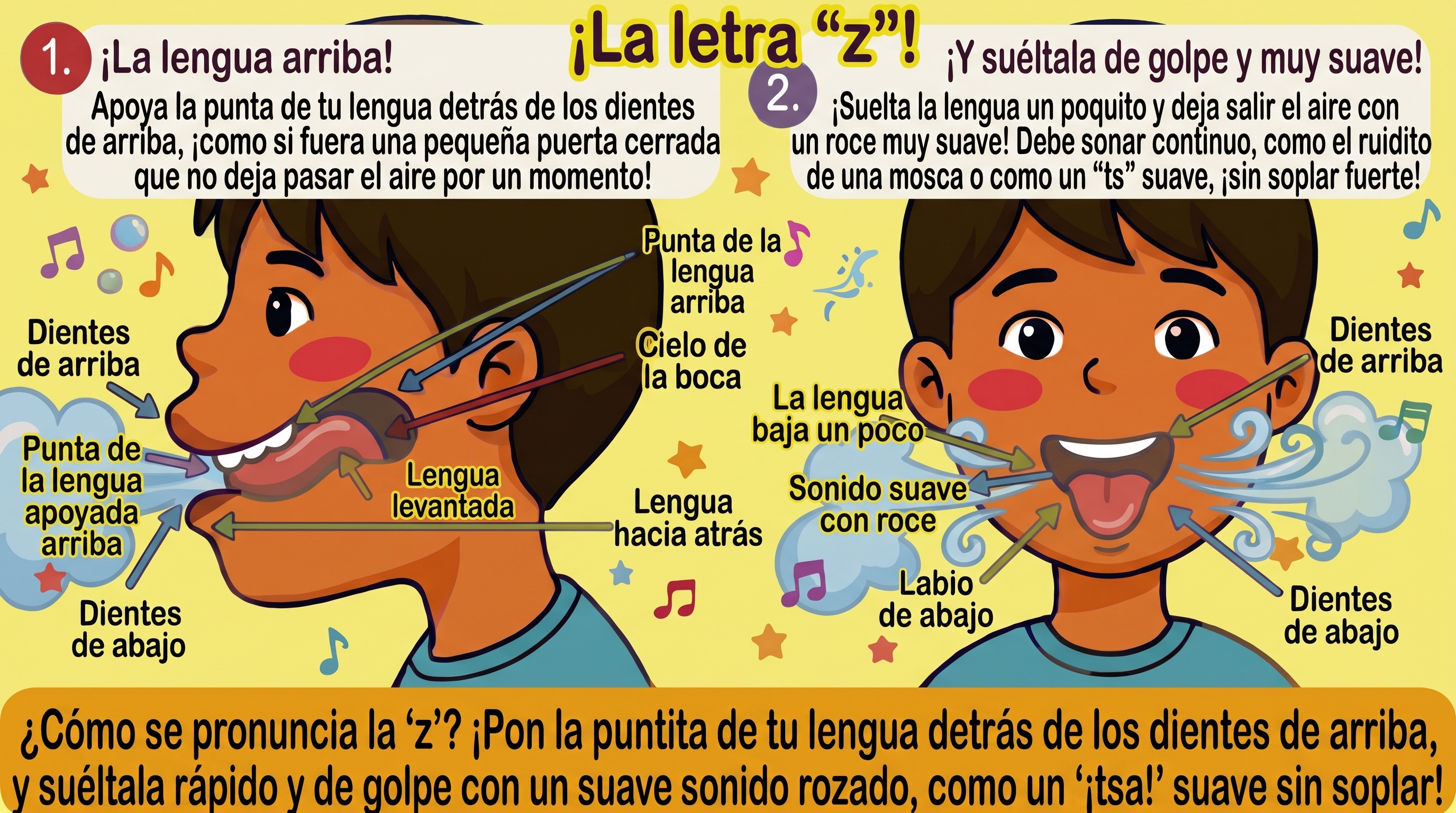
• 舌尖Shéjiān抵住dǐzhù上齿背shàngchǐbèi,先xiān挡住dǎngzhù气流qìliú,再zài轻轻qīngqīng放开fàngkāi,带dài一点儿yìdiǎnr摩擦mócā。/La punta de la lengua se apoya detrás de los dientes superiores, corta el aire y lo suelta suavemente con un ligero roce./The tip of the tongue rests behind the upper teeth, stops the air and releases it gently with slight friction.
• 它Tā不bú送气sòngqì,声带shēngdài也yě不bú振动zhèndòng。/No es aspirada y las cuerdas vocales no vibran./It is unaspirated, and the vocal cords do not vibrate.
1) 在zài/estar en/to be at, in
2) 字zì/carácter, palabra/character, word
3) 走zǒu/andar, ir/to walk, to go
4) 做zuò/hacer/to do, to make
5) 最zuì/el más/most
6) 再zài/otra vez/again
7) 早zǎo/temprano/early
8) 嘴zuǐ/boca/mouth
9) 租zū/alquilar/to rent
10) 自zì/uno mismo/self
11) 坐zuò/sentarse/to sit
12) 左zuǒ/izquierda/left
13) 紫zǐ/morado/purple
14) 怎么zěnme/cómo/how
15) 总zǒng/siempre; total/always; total
--------------------------------------------------------------------------------
在Zài(在家zàijiā)和hé再zài(再见zàijiàn)读音dúyīn完全wánquán一样yíyàng,要yào靠kào上下文shàngxiàwén区分qūfēn;早zǎo和hé造zào只是zhǐshì声调shēngdiào不同bùtóng。/zài 在 (estar en) y zài 再 (otra vez) suenan exactamente igual y se distinguen por el contexto, mientras que zǎo (temprano) y zào (construir) solo se diferencian en el tono./zài 在 (to be at) and zài 再 (again) sound exactly the same and are told apart by context, while zǎo (early) and zào (to build) differ only in tone.

c
Practica aquí · 在这里练习
--------------------------------------------------------------------------------
拼音Pīnyīn中zhōng的de“c”像xiàng“ts”,但是dànshì是shì送气音sòngqìyīn:发音fāyīn时shí会huì冲出chōngchū一股yìgǔ很hěn强qiáng的de气流qìliú,就jiù像xiàng英语Yīngyǔ单词dāncí“cats”中zhōng的de“ts”再zài加jiā一口气yìkǒuqì。/El sonido «c» en pinyin es como una «ts» con un fuerte golpe de aire al final: se parece a la «ts» de la palabra inglesa «cats», pero más aspirada./The sound “c” in pinyin is like a “ts” with a strong puff of air at the end: it is similar to the “ts” in the English word “cats”, but more aspirated.
它Tā和hé西班牙语Xībānyáyǔ单词dāncí“casa”“cielo”中zhōng的de“c”完全wánquán不同bùtóng。/No se pronuncia como la «c» española de «casa» ni de «cielo»./It is not pronounced like the Spanish “c” in “casa” or “cielo”.
--------------------------------------------------------------------------------
--------------------------------------------------------------------------------
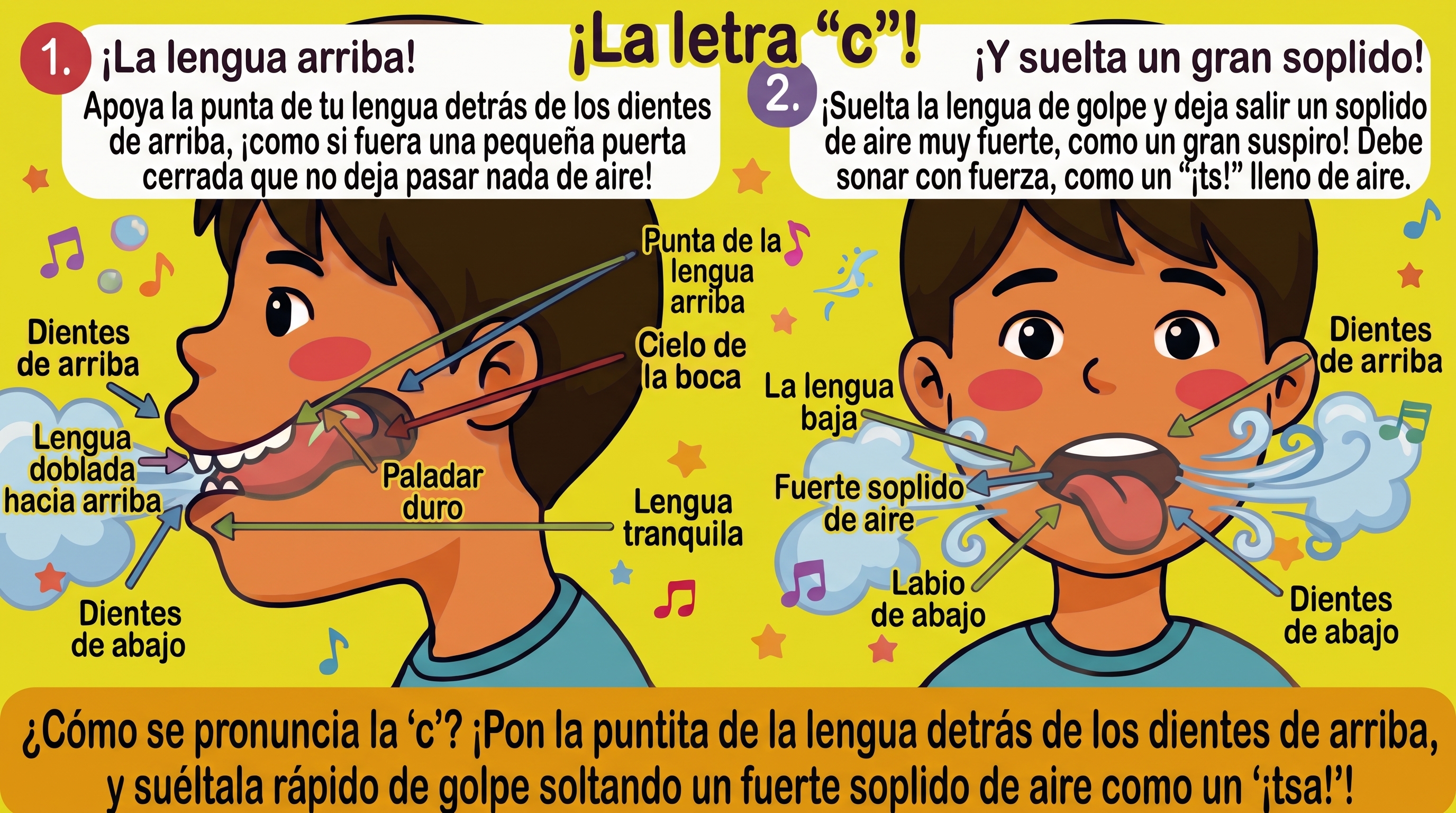
• 舌头Shétou和hé发fā“z”时shí一样yíyàng,先xiān挡住dǎngzhù气流qìliú,再zài放开fàngkāi。/La lengua se coloca igual que para la «z»: corta el aire y luego lo suelta./The tongue is placed as for “z”: it stops the air and then releases it.
• 放开Fàngkāi时shí要yào多duō送sòng一口气yìkǒuqì,像xiàng叹气tànqì一样yíyàng。/Al soltarla hay que dejar salir aire extra, como si suspiraras./When releasing it, let out extra air, as if sighing.
• 不要Búyào和hé不bú送气sòngqì的de“z”混淆hùnxiáo。/No hay que confundirla con la «z», que no lleva aire./Do not confuse it with “z”, which has no puff of air.
1) 菜cài/verdura, plato/vegetable, dish
2) 草cǎo/hierba/grass
3) 次cì/vez/time (occurrence)
4) 从cóng/desde/from
5) 粗cū/grueso/thick, coarse
6) 册cè/tomo, volumen/volume, book
7) 聪cōng/inteligente/clever
8) 槽cáo/ranura/groove, trough
9) 擦cā/frotar, limpiar/to rub, to wipe
10) 葱cōng/cebolleta/spring onion
11) 刺cì/espina/thorn
12) 错cuò/error; incorrecto/mistake; wrong
13) 层céng/piso, capa/floor, layer
14) 村cūn/pueblo, aldea/village
15) 词cí/palabra/word
--------------------------------------------------------------------------------
上下文Shàngxiàwén和hé声调shēngdiào都dōu很hěn重要zhòngyào:菜cài(饭菜fàncài)和hé蔡Cài(姓xìng)读音dúyīn完全wánquán一样yíyàng,而ér词cí和hé次cì只是zhǐshì声调shēngdiào不同bùtóng。/El contexto y el tono son clave: cài 菜 (plato) y Cài 蔡 (apellido) suenan igual, mientras que cí (palabra) y cì (vez) solo se diferencian en el tono./Context and tone are both key: cài 菜 (dish) and Cài 蔡 (a surname) sound the same, while cí (word) and cì (time) differ only in tone.

s
Practica aquí · 在这里练习
--------------------------------------------------------------------------------
拼音Pīnyīn中zhōng的de“s”和hé西班牙语Xībānyáyǔ单词dāncí“silla”“sol”中zhōng的de“s”一样yíyàng,是shì一个yígè擦音cāyīn:气流qìliú从cóng舌头shétou和hé牙齿yáchǐ之间zhījiān的de小xiǎo缝里fènglǐ出来chūlái,发出fāchū嘶嘶sīsī的de声音shēngyīn。/El sonido «s» en pinyin se pronuncia como la «s» de las palabras españolas «silla» o «sol»: es una consonante fricativa, en la que el aire pasa por una pequeña abertura entre la lengua y los dientes y produce un silbido./The sound “s” in pinyin is pronounced like the “s” in the Spanish words “silla” or “sol”: it is a fricative, in which the air passes through a small gap between the tongue and the teeth, producing a hiss.
--------------------------------------------------------------------------------
--------------------------------------------------------------------------------
• 舌尖Shéjiān靠近kàojìn上齿背shàngchǐbèi,但dàn不bú碰到pèngdào。/La punta de la lengua se acerca a los dientes superiores sin tocarlos./The tip of the tongue approaches the upper teeth without touching them.
• 它Tā是shì清音qīngyīn,声带shēngdài不bú振动zhèndòng,和hé西班牙语Xībānyáyǔ的de“s”一样yíyàng。/Es un sonido sordo, como la «s» española./It is an unvoiced sound, like the Spanish “s”.
• 它Tā比bǐ“sh”更gèng清楚qīngchu、更gèng尖jiān,发fā“sh”时shí要yào卷舌juǎnshé。/Es más clara y aguda que la «sh», que se pronuncia con la lengua doblada hacia atrás./It is clearer and sharper than “sh”, which is made with the tongue curled back.
1) 四sì/cuatro/four
2) 伞sǎn/paraguas/umbrella
3) 三sān/tres/three
4) 孙sūn/nieto/grandson
5) 色sè/color/colour
6) 思sī/pensar/to think
7) 送sòng/enviar, regalar/to send, to give
8) 死sǐ/morir/to die
9) 桑sāng/morera/mulberry
10) 丝sī/seda/silk
11) 岁suì/años (de edad)/years (of age)
12) 扫sǎo/barrer/to sweep
13) 酸suān/ácido, agrio/sour
14) 森林sēnlín/bosque/forest
15) 松sōng/pino/pine
--------------------------------------------------------------------------------
声调Shēngdiào能néng区分qūfēn意思yìsi,比如bǐrú四sì(数字shùzì四sì)和hé死sǐ(死亡sǐwáng)。/El tono es decisivo para distinguir significados, como en sì (cuatro) y sǐ (morir)./The tone is decisive for telling meanings apart, as in sì (four) and sǐ (to die).

zī zí zǐ zì
zī
zí
zǐ
zì
cī cí cǐ cì
cī
cí
cǐ
cì
sī sí sǐ sì
sī
sí
sǐ
sì



主题/Zhǔtí/Tema/Theme

主题 2/Zhǔtí 2/Tema/Theme 2

词汇 Cíhuì/Vocabulario/Vocabulary

PDF与视频/PDF,videos Y Quiz/PDF, Videos and Quiz

PDF与视频/PDF,videos Y Quiz/PDF, Videos and Quiz

Loading

Páginas: 1 2 3 4