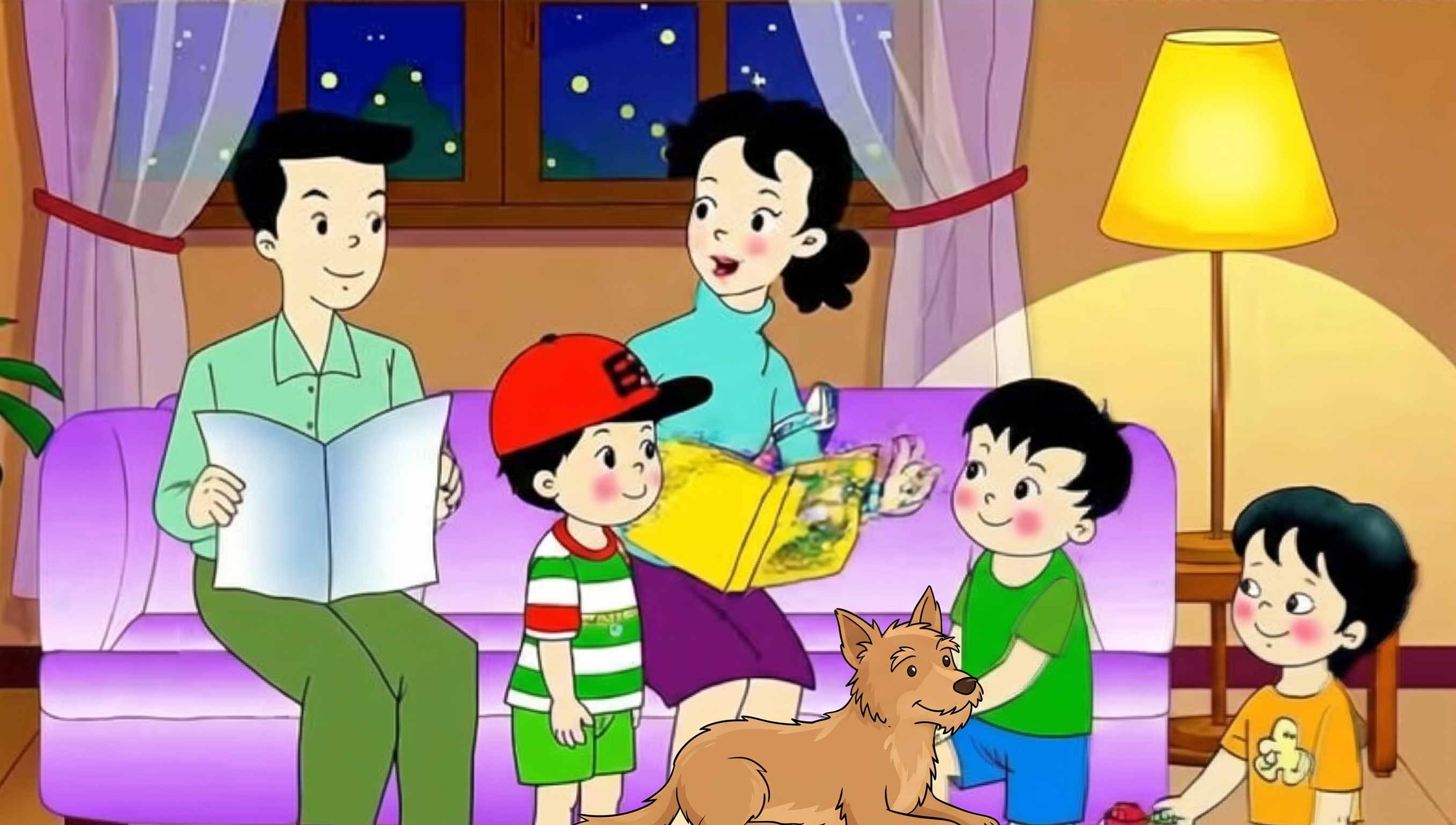
爸爸Bàba去qù开会kāihuì了le,哥哥gēge给gěi我wǒ倒dào了le一杯yìbēi好喝hǎohē的de牛奶niúnǎi。/Papá se ha ido a una reunión y mi hermano mayor me ha servido un vaso de leche muy rica./Dad has gone to a meeting, and my elder brother poured me a glass of tasty milk.
· 你好Nǐhǎo,我wǒ叫jiào宝宝Bǎobǎo。/Hola, me llamo Baobao./Hello, my name is Baobao.
口Kǒu/boca/mouth
· 张Zhāng开口kāikǒu,说shuō“a”。/Abre la boca y di «a»./Open your mouth and say “a”.
好喝Hǎohē/rico (de beber)/tasty (to drink)
· 这Zhè杯bēi果汁guǒzhī真zhēn好喝hǎohē。/¡Qué rico está este zumo!/This juice is really tasty!
** 想一想, 说一说/Xiǎng yi xiǎng, shuō yi shuō/Piensa y responde/Think and answer the following questions **
(1)读一读Dú yi dú“ge”“ke”“he”,说shuō说shuō“g”和hé“k”有yǒu什么shénme不同bùtóng。/Lee ge, ke y he: ¿en qué se diferencian la g y la k?/Read ge, ke and he: how are g and k different?
(2)拼一拼Pīn yi pīn:g—u—ā→guā,你nǐ还hái能néng拼出pīnchū哪些nǎxiē音节yīnjié?/Une: g—u—ā→guā. ¿Qué otras sílabas puedes formar?/Blend: g—u—ā→guā. What other syllables can you make?
(3)读一读Dú yi dú,说一说shuō yi shuō带dài这些zhèxiē音yīn的de词语cíyǔ。/Lee y di palabras con estos sonidos: g, k, h./Read and say words with these sounds: g, k, h.
(4)朗读Lǎngdú儿歌érgē,背诵bèisòng儿歌érgē。/Lee la canción infantil en voz alta y apréndela de memoria./Read the nursery rhyme aloud and learn it by heart.
** 家庭/Jiātíng/FAMILIA/FAMILY **
宝宝Bǎobao一yī家jiā/La familia de Baobao/Baobao's family
爸爸Bàba/Papá, padre/Dad, father
妈妈Māma/Mamá, madre/Mum, mother
宝宝Bǎobao/Baobao/Baobao
婷婷Tíngtíng/Tíngting/Tíngting
嘟嘟Dūdū/Dudú/Dudú
洛基Luòjī/Rocky/Rocky
** 对话/Duìhuà/Diálogo/Dialogue **
嘟嘟Dūdū:你好Nǐhǎo,哥哥gēge!你nǐ看kàn,池塘chítáng里lǐ有yǒu小蝌蚪xiǎokēdǒu!/Dudú: ¡Hola, hermano! Mira, ¡hay renacuajos en el estanque!/Dudú: Hello, big brother! Look, there are tadpoles in the pond!
爸爸Bàba:小蝌蚪Xiǎokēdǒu长大zhǎngdà会huì变成biànchéng青蛙qīngwā。/Papá: Cuando crecen, los renacuajos se convierten en ranas./Dad: When tadpoles grow up, they turn into frogs.
婷婷Tíngtíng:爸爸Bàba,你nǐ今天jīntiān要yào去qù开会kāihuì吗ma?/Tíngting: Papá, ¿hoy tienes una reunión?/Tíngting: Dad, have you got a meeting today?
宝宝Bǎobǎo:我Wǒ要yào喝牛奶hēniúnǎi!/Baobao: ¡Quiero beber leche!/Baobao: I want to drink milk!
妈妈Māma:来Lái,喝hē一口yìkǒu,牛奶niúnǎi很hěn好喝hǎohē。/Mamá: Toma, bebe un sorbo: la leche está muy rica./Mum: Here, have a sip – the milk is very tasty.
Comentario Pedagógico: g, k y h: 1. Punto de articulación: «g», «k» y «h» se pronuncian con la parte posterior de la lengua contra el paladar blando. 2. Comparación con el español: La «h» se parece a la «j» de «jamón», pero más suave. 3. Palabras con tono neutro: La segunda sílaba de 哥哥 es átona: breve y suave.
Pedagogical Commentary: g, k and h: 1. Place of articulation: “g”, “k” and “h” are made with the back of the tongue against the soft palate. 2. Comparison with Spanish: “h” is like the Spanish “j” in “jamón”, but softer. 3. Neutral-tone words: The second syllable of 哥哥 is neutral: short and light.
@ Pinyin 资料 (PDF, MP3 等) 的版权归属于:中国华文教育网 - Overseas Chinese Language and Culture Education Online。
@ Los materiales Pinyin (PDF, MP3, etc.) son propiedad de: 中国华文教育网 - Overseas Chinese Language and Culture Education Online.
@ The materials Pinyin (PDF, MP3, etc.) are the property of: 中国华文教育网 - Overseas Chinese Language and Culture Education Online.