Saltar al contenido
Home » LECCION_PRIMARIA_P » Página 2

LECCION_PRIMARIA_P


PRIMARIA_C1_N1_10_P09

g
Practica aquí · 在这里练习
--------------------------------------------------------------------------------
拼音Pīnyīn中zhōng的de“g”和hé西班牙语Xībānyáyǔ单词dāncí“gato”“guitarra”中zhōng的de“g”相似xiāngsì,但dàn它tā是shì不bú送气sòngqì的de清音qīngyīn,更gèng接近jiējìn西班牙语Xībānyáyǔ单词dāncí“casa”中zhōng的de“c”。/El sonido «g» en pinyin se parece a la «g» de las palabras españolas «gato» o «guitarra», pero es sordo y no aspirado: se acerca más a la «c» de «casa»./The sound “g” in pinyin is similar to the “g” in the Spanish words “gato” or “guitarra”, but it is unvoiced and unaspirated: it is closer to the “c” in “casa”.
--------------------------------------------------------------------------------
--------------------------------------------------------------------------------
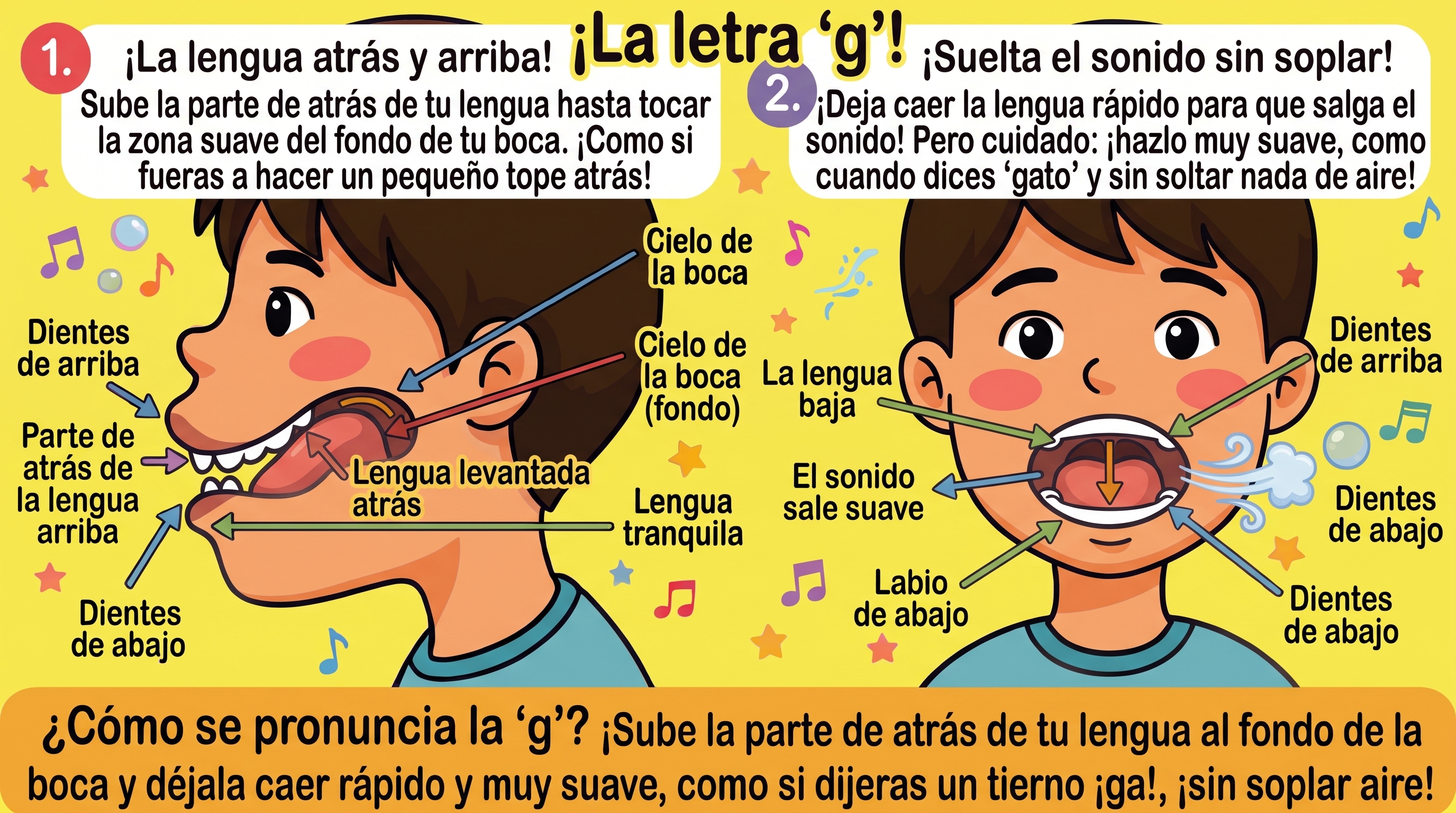
• 舌根Shégēn抵住dǐzhù软腭ruǎn'è,也yě就是jiùshì上腭shàng'è后面hòumiàn软ruǎn的de部分bùfèn。/La parte posterior de la lengua toca el paladar blando (la zona suave del fondo del techo de la boca)./The back of the tongue touches the soft palate (the soft back part of the roof of the mouth).
• 它Tā不bú送气sòngqì,没有méiyǒu气流qìliú冲chōng出来chūlái,这zhè一点yìdiǎn和hé“k”不同bùtóng。/No es aspirada: no sale un golpe de aire, a diferencia de la «k»./It is unaspirated: no puff of air comes out, unlike “k”.
1) 高gāo/alto/tall, high
2) 狗gǒu/perro/dog
3) 哥gē/hermano mayor/elder brother
4) 故gù/causa/reason, cause
5) 国guó/país/country
6) 钢gāng/acero/steel
7) 个gè/clasificador general/general measure word
8) 瓜guā/melón/melon
9) 搞gǎo/hacer/to do, to carry out
10) 古gǔ/antiguo/ancient
11) 鸽gē/paloma/pigeon, dove
12) 歌gē/canción/song
13) 果guǒ/fruta/fruit
14) 给gěi/dar/to give
15) 关guān/cerrar/to close
--------------------------------------------------------------------------------
“g”常常chángcháng和hé“a”“o”“e”“u”拼在一起pīnzàiyìqǐ;声调shēngdiào也yě很hěn重要zhòngyào,比如bǐrú古gǔ(古代gǔdài)和hé故gù(故事gùshi)。/La «g» se combina a menudo con «a», «o», «e» y «u», y el tono es decisivo para el significado, como en gǔ (antiguo) y gù (causa)./The “g” often combines with “a”, “o”, “e” and “u”, and the tone is decisive for the meaning, as in gǔ (ancient) and gù (reason).

k
Practica aquí · 在这里练习
--------------------------------------------------------------------------------
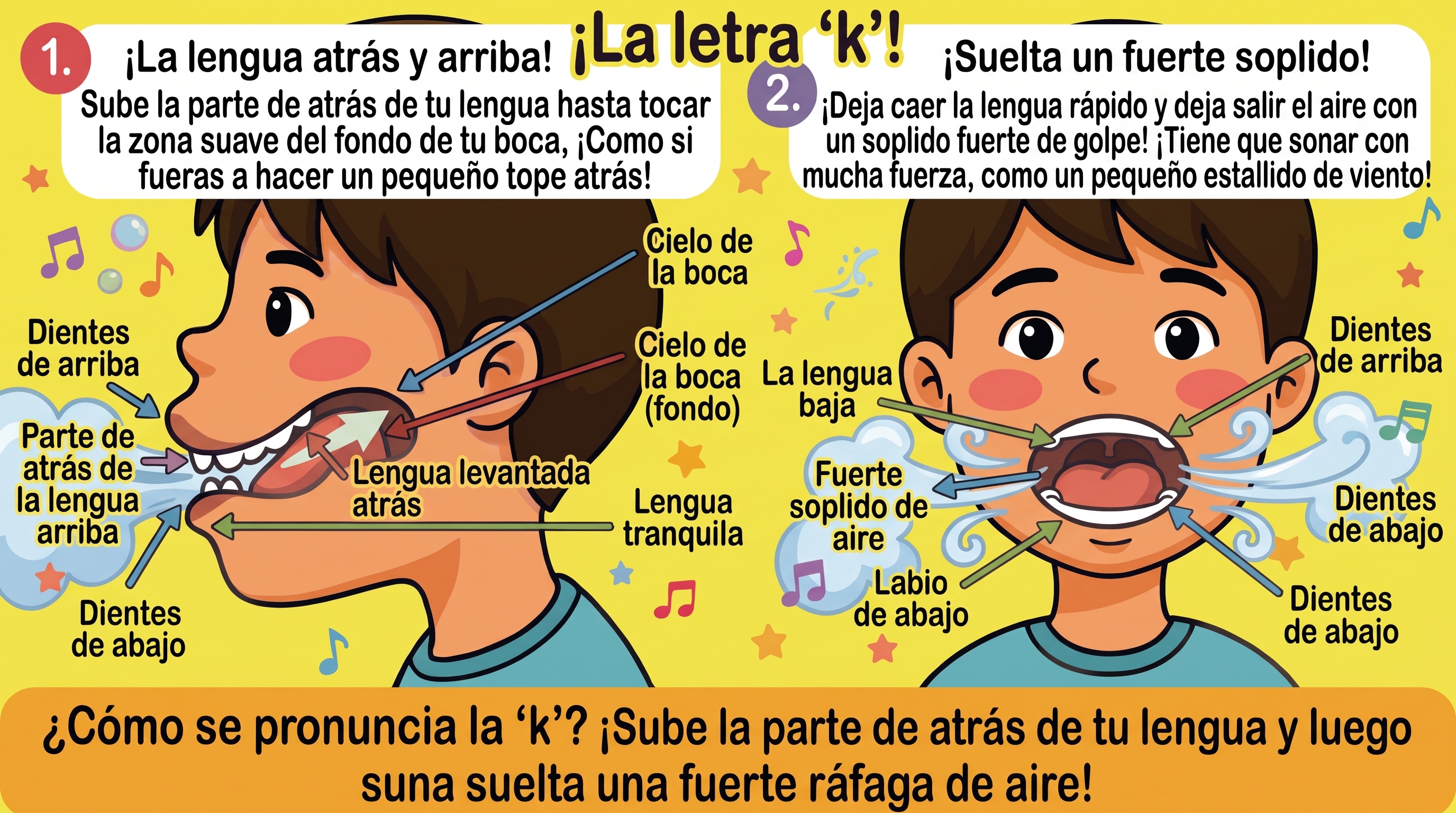
拼音Pīnyīn中zhōng的de“k”和hé西班牙语Xībānyáyǔ单词dāncí“kilo”中zhōng的de“k”相似xiāngsì,但dàn它tā是shì送气音sòngqìyīn:发音fāyīn时shí会huì冲出chōngchū一股yìgǔ气流qìliú。/El sonido «k» en pinyin se parece a la «k» de «kilo» o la «c» de «casa», pero es aspirado: al pronunciarlo sale un golpe de aire./The sound “k” in pinyin is similar to the “k” in “kilo” or the “c” in “casa”, but it is aspirated: a puff of air comes out when you say it.
--------------------------------------------------------------------------------
--------------------------------------------------------------------------------
• 舌根Shégēn抵住dǐzhù软腭ruǎn'è,和hé西班牙语Xībānyáyǔ的de“k”一样yíyàng。/La parte posterior de la lengua se apoya en el paladar blando, como en la «k» española./The back of the tongue rests against the soft palate, as for the Spanish “k”.
• 它Tā是shì送气音sòngqìyīn,气流qìliú比bǐ“g”强qiáng得de多duō。/Es una consonante aspirada: sale mucho más aire que con la «g»./It is aspirated: much more air comes out than with “g”.
• 它Tā是shì清音qīngyīn,声带shēngdài不bú振动zhèndòng。/Es un sonido sordo: las cuerdas vocales no vibran./It is an unvoiced sound: the vocal cords do not vibrate.
1) 开kāi/abrir, empezar/to open, to start
2) 考kǎo/examinar/to examine, to test
3) 课kè/lección, clase/lesson, class
4) 空kōng/vacío; cielo/empty; sky
5) 哭kū/llorar/to cry
6) 客kè/invitado/guest
7) 困kùn/cansado, con sueño/sleepy, tired
8) 口kǒu/boca/mouth
9) 卡kǎ/tarjeta/card
10) 烤kǎo/asar/to roast, to bake
11) 蝌蚪kēdǒu/renacuajo/tadpole
12) 看kàn/mirar/to look
13) 渴kě/tener sed/thirsty
14) 裤子kùzi/pantalones/trousers
15) 快kuài/rápido/fast
--------------------------------------------------------------------------------
“k”发音fāyīn清楚qīngchu、有力yǒulì;声调shēngdiào也yě很hěn重要zhòngyào,比如bǐrú考kǎo(考试kǎoshì)和hé靠kào(依靠yīkào)。/La «k» es clara y directa, con un golpe de aire, y el tono también es fundamental, como en kǎo (examinar) y kào (apoyarse)./The “k” is clear and direct, with a puff of air, and the tone is also fundamental, as in kǎo (to test) and kào (to lean on).

h
Practica aquí · 在这里练习
--------------------------------------------------------------------------------
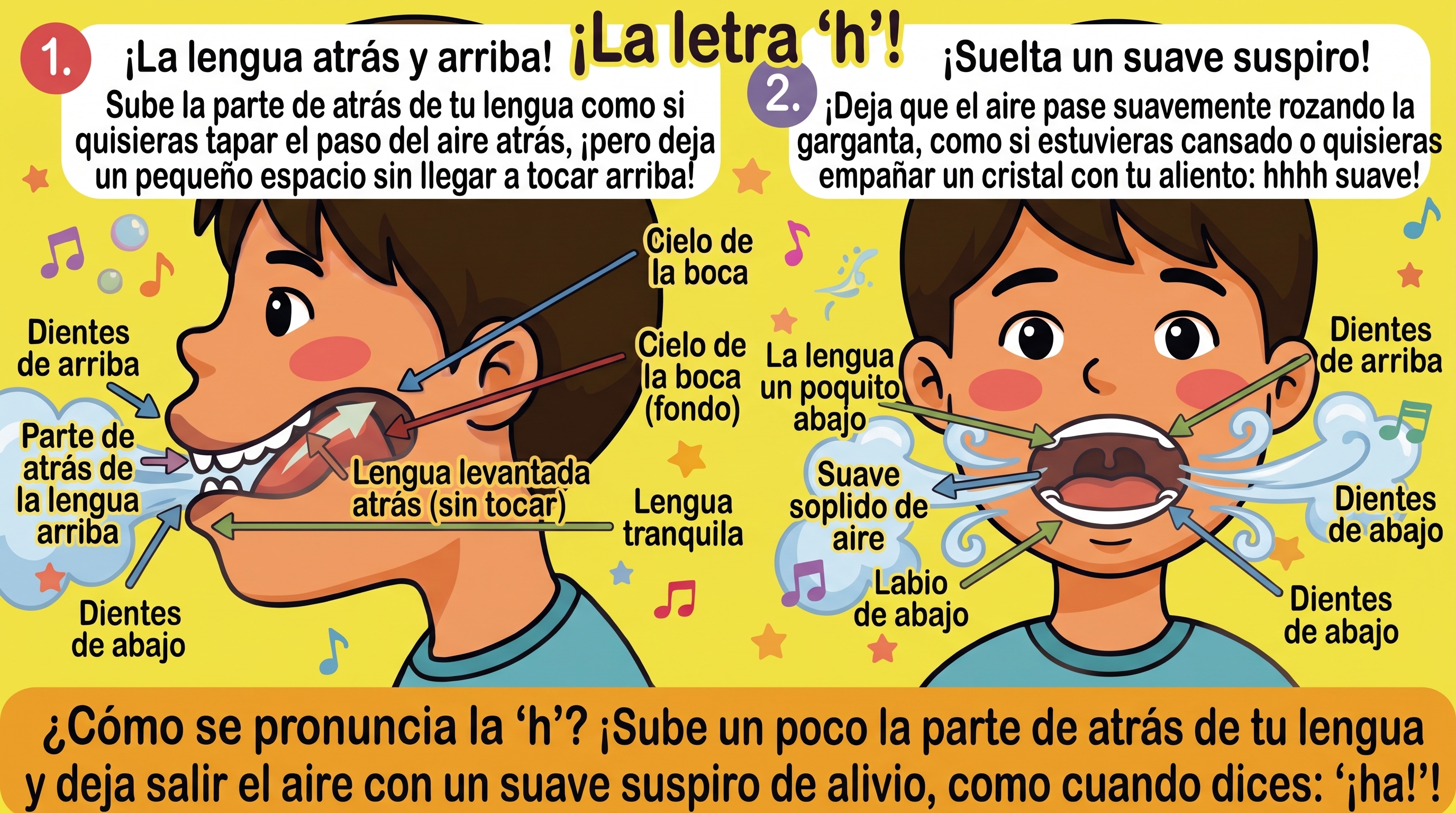
拼音Pīnyīn中zhōng的de“h”和hé西班牙语Xībānyáyǔ的de“h”不bù一样yíyàng,它tā不是búshì哑音yǎyīn,而是érshì和hé西班牙语Xībānyáyǔ单词dāncí“jamón”中zhōng的de“j”很hěn像xiàng,只是zhǐshì更gèng轻qīng一些yìxiē。/El sonido «h» en pinyin no es muda como en español: se parece mucho a la «j» de la palabra española «jamón», aunque más suave./The sound “h” in pinyin is not silent as in Spanish: it is very like the “j” in the Spanish word “jamón”, though softer.
--------------------------------------------------------------------------------
--------------------------------------------------------------------------------
• 舌根Shégēn靠近kàojìn软腭ruǎn'è,让ràng气流qìliú摩擦mócā着zhe出来chūlái。/La parte posterior de la lengua se acerca al paladar blando y el aire sale con un ligero roce./The back of the tongue moves close to the soft palate, and the air comes out with slight friction.
• 它Tā比bǐ英语Yīngyǔ单词dāncí“house”中zhōng的de“h”更gèng有力yǒulì,但dàn比bǐ西班牙语Xībānyáyǔ的de“j”更gèng轻qīng。/Es más fuerte que la «h» inglesa de «house», pero más suave que la «j» española./It is stronger than the “h” in the English word “house”, but softer than the Spanish “j”.
1) 哈hā/ja (risa)/ha (laughter)
2) 好hǎo/bueno/good
3) 喝hē/beber/to drink
4) 火huǒ/fuego/fire
5) 红hóng/rojo/red
6) 后hòu/después, detrás/after, behind
7) 湖hú/lago/lake
8) 灰huī/gris; ceniza/grey; ash
9) 汉hàn/Han (etnia china)/Han (Chinese ethnic group)
10) 黑hēi/negro/black
11) 花huā/flor/flower
12) 河hé/río/river
13) 虎hǔ/tigre/tiger
14) 海hǎi/mar/sea
15) 画huà/dibujar; cuadro/to draw; painting
--------------------------------------------------------------------------------
“h”总zǒng要yào发出fāchū来lái,不能bùnéng省略shěnglüè;声调shēngdiào会huì改变gǎibiàn意思yìsi,比如bǐrú湖hú(湖水húshuǐ)和hé户hù(户口hùkǒu)。/La «h» del pinyin siempre se pronuncia, nunca es muda, y el tono cambia el significado, como en hú (lago) y hù (hogar)./The pinyin “h” is always pronounced, never silent, and the tone changes the meaning, as in hú (lake) and hù (household).

gē gé gě gè
gē
gé
gě
gè
kē ké kě kè
kē
ké
kě
kè
hē hé hě hè
hē
hé
hě
hè



主题/Zhǔtí/Tema/Theme

主题 2/Zhǔtí 2/Tema/Theme 2

词汇 Cíhuì/Vocabulario/Vocabulary

PDF与视频/PDF,videos Y Quiz/PDF, Videos and Quiz

PDF与视频/PDF,videos Y Quiz/PDF, Videos and Quiz

Loading

Páginas: 1 2 3 4