河边Hébiān的de柳树liǔshù绿lǜ了le,奶奶nǎinai带我去dàiwǒqù看kàn。/Los sauces de la orilla ya están verdes y la abuela me lleva a verlos./The willows by the river have turned green, and Grandma takes me to see them.
· 我Wǒ六岁liùsuì了le。/Tengo seis años./I'm six years old.
** 想一想, 说一说/Xiǎng yi xiǎng, shuō yi shuō/Piensa y responde/Think and answer the following questions **
(1)读一读Dú yi dú“nü—lü”“nu—lu”,说shuō说shuō“n”和hé“l”有yǒu什么shénme不同bùtóng。/Lee nü–lü y nu–lu: ¿en qué se diferencian la n y la l?/Read nü–lü and nu–lu: how are n and l different?
(2) “女Nǚ”的de拼音pīnyīn为什么wèishénme写xiě“nǚ”,不bù写xiě“nǔ”?/¿Por qué 女 se escribe nǚ y no nǔ?/Why is 女 written nǚ and not nǔ?
(3)读一读Dú yi dú,说一说shuō yi shuō带dài这些zhèxiē音yīn的de词语cíyǔ。/Lee y di palabras con estos sonidos: n, l./Read and say words with these sounds: n, l.
(4)朗读Lǎngdú儿歌érgē,背诵bèisòng儿歌érgē。/Lee la canción infantil en voz alta y apréndela de memoria./Read the nursery rhyme aloud and learn it by heart.
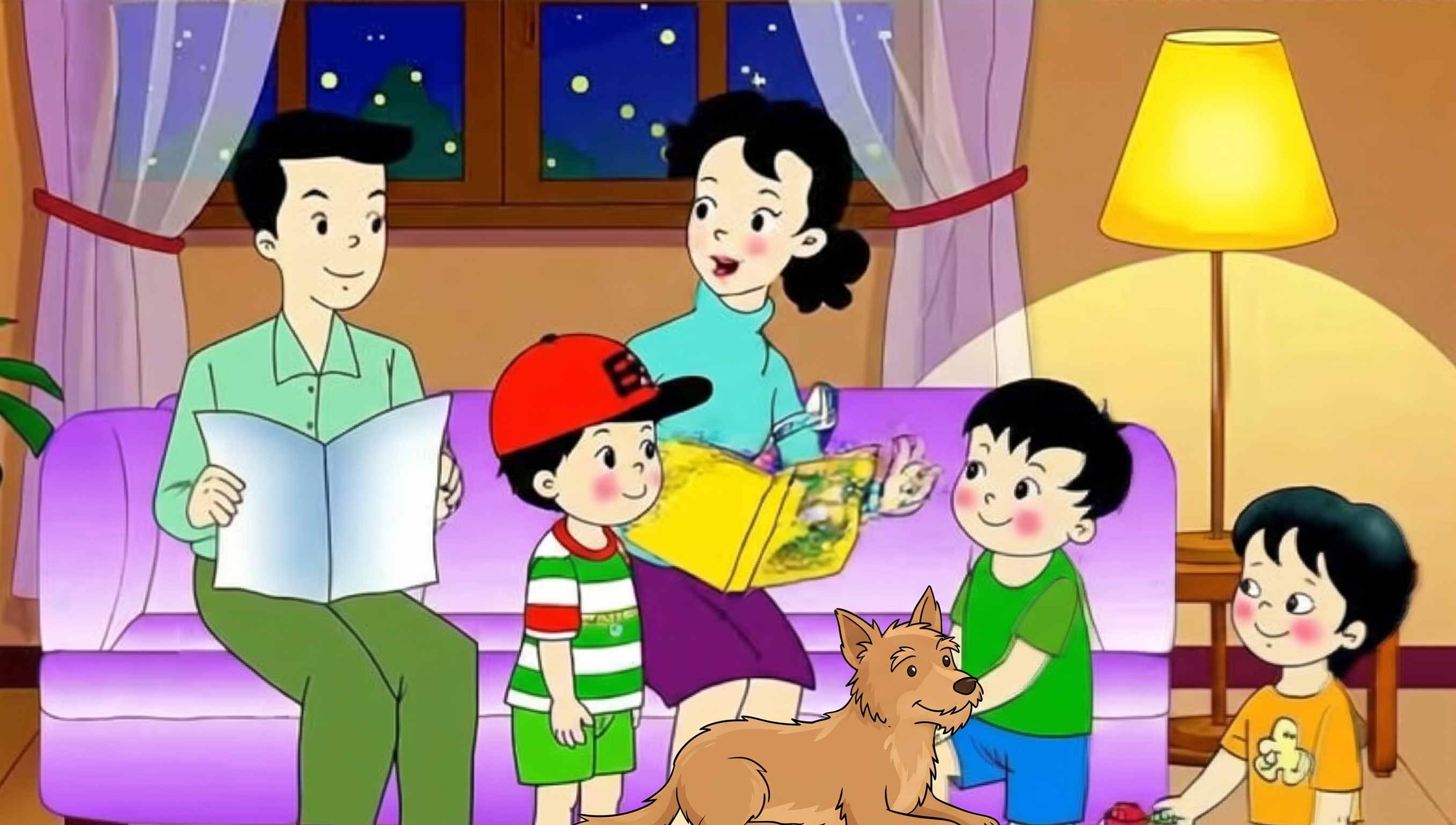
** 家庭/Jiātíng/FAMILIA/FAMILY **
宝宝Bǎobao一yī家jiā/La familia de Baobao/Baobao's family
爸爸Bàba/Papá, padre/Dad, father
妈妈Māma/Mamá, madre/Mum, mother
宝宝Bǎobao/Baobao/Baobao
婷婷Tíngtíng/Tíngting/Tíngting
嘟嘟Dūdū/Dudú/Dudú
洛基Luòjī/Rocky/Rocky
** 对话/Duìhuà/Diálogo/Dialogue **
嘟嘟Dūdū:爸爸Bàba,奶奶家nǎinǎijiā有yǒu几头jǐtóu奶牛nǎiniú?/Dudú: Papá, ¿cuántas vacas lecheras tiene la abuela?/Dudú: Dad, how many dairy cows has Grandma got?
爸爸Bàba:有Yǒu六liù头牛tóuniú,都dōu是shì奶牛nǎiniú。/Papá: Tiene seis vacas, todas lecheras./Dad: She has six cows – all dairy cows.
婷婷Tíngtíng:奶奶Nǎinai家门口jiāménkǒu还有háiyǒu一棵yì kē大柳树dàliǔshù。/Tíngting: Delante de casa de la abuela también hay un sauce grande./Tíngting: There's a big willow in front of Grandma's house too.
宝宝Bǎobǎo:我们Wǒmen家住jiāzhù在zài大楼dàlóu里lǐ,没有méiyǒu牛niú。/Baobao: Nosotros vivimos en un edificio alto y no tenemos vacas./Baobao: We live in a tall building and we haven't got any cows.
妈妈Māma:婷婷Tíngtíng,你nǐ是shì大dà女孩nǚhái了le,带dài弟弟dìdi妹妹mèimèi去qù奶奶家nǎinǎijiā吧ba。/Mamá: Tíngting, ya eres una niña mayor: lleva a tus hermanos pequeños a casa de la abuela./Mum: Tíngting, you're a big girl now – take your little brother and sister to Grandma's.
Comentario Pedagógico: n y l: 1. Distinguir: Con la «n» el aire sale por la nariz y con la «l», por los lados de la lengua; pruébalo tapándote la nariz. 2. Los puntos de la ü: Con «n» y «l», la «ü» conserva los dos puntos: nǚ, lǜ. 3. Tono neutro: La segunda sílaba de 奶奶 es átona.
Pedagogical Commentary: n and l: 1. Telling them apart: With “n” the air comes out through the nose and with “l” along the sides of the tongue; try it holding your nose. 2. The dots on ü: With “n” and “l”, “ü” keeps its two dots: nǚ, lǜ. 3. Neutral tone: The second syllable of 奶奶 has a neutral tone.
@ Pinyin 资料 (PDF, MP3 等) 的版权归属于:中国华文教育网 - Overseas Chinese Language and Culture Education Online。
@ Los materiales Pinyin (PDF, MP3, etc.) son propiedad de: 中国华文教育网 - Overseas Chinese Language and Culture Education Online.
@ The materials Pinyin (PDF, MP3, etc.) are the property of: 中国华文教育网 - Overseas Chinese Language and Culture Education Online.