
MT
L01
L02
L03
L04
L05
EL1
P01
P02
P13
P03
P04
P07
P08
P09
P10
P11
P12
EP1
P05
P06
P15
P16
P17
P18
EP2
T01
T02
T03
T04
ET1
L06
L07
L08
L09
L10
EL2
T05
T06
T07
T08
ET2
T09
T10
T11
ET3
T12
T13
T14
ET4
PRIMARIA_C1_N1_09_P08

Practica aquí · 在这里练习
--------------------------------------------------------------------------------
拼音Pīnyīn中zhōng的de“n”和hé西班牙语Xībānyáyǔ单词dāncí“noche”“niño”中zhōng的de“n”一样yíyàng,是shì一个yígè鼻音bíyīn,气流qìliú从cóng鼻子bízi出来chūlái。/El sonido «n» en pinyin se pronuncia como la «n» de las palabras españolas «noche» o «niño»: es una consonante nasal, en la que el aire sale por la nariz./The sound “n” in pinyin is pronounced like the “n” in the Spanish words “noche” or “niño”: it is a nasal consonant, in which the air comes out through the nose.
--------------------------------------------------------------------------------

--------------------------------------------------------------------------------
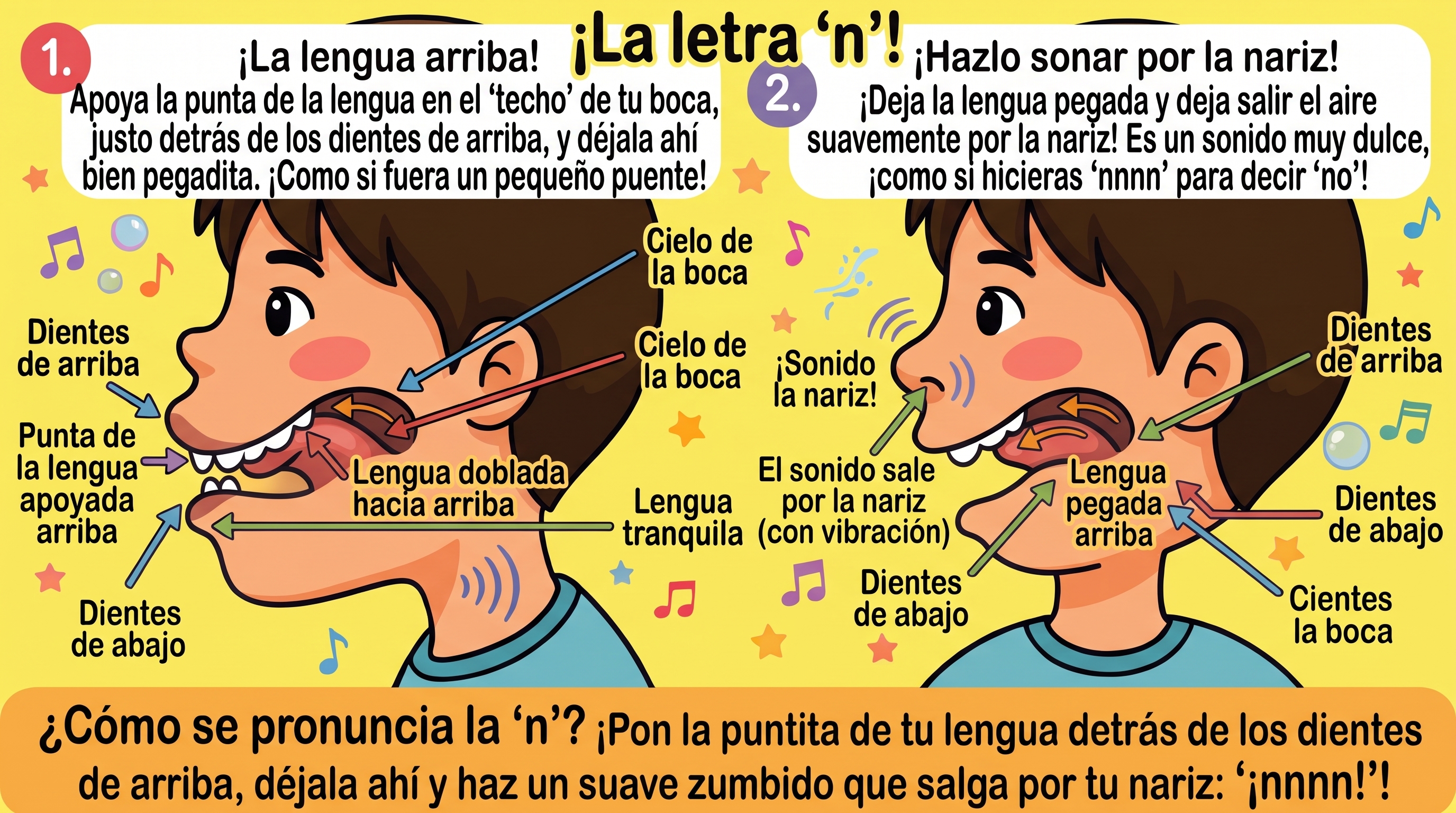
• 舌尖Shéjiān抵住dǐzhù上齿龈shàngchǐyín。/La punta de la lengua toca la zona justo detrás de los dientes superiores./The tip of the tongue touches the area just behind the upper teeth.
• 气流Qìliú从cóng鼻子bízi出来chūlái,声音shēngyīn柔和róuhé。/El aire sale por la nariz y el sonido es suave./The air comes out through the nose, and the sound is soft.
• 它Tā是shì浊音zhuóyīn,发音fāyīn时shí声带shēngdài振动zhèndòng,和hé西班牙语Xībānyáyǔ的de“n”一样yíyàng。/Es un sonido sonoro: las cuerdas vocales vibran, igual que con la «n» española./It is a voiced sound: the vocal cords vibrate, just as with the Spanish “n”.
1) 你nǐ/tú/you
2) 男nán/hombre, masculino/man, male
3) 女nǚ/mujer/woman
4) 闹nào/hacer ruido/noisy; to make a fuss
5) 内nèi/dentro/inside
6) 难nán/difícil/difficult
7) 那nà/eso, aquel/that
8) 那nèi/ese (pronunciación coloquial)/that (colloquial pronunciation)
9) 您nín/usted/you (polite form)
10) 农nóng/agricultura/agriculture
11) 牛niú/vaca/cow
12) 鸟niǎo/pájaro/bird
13) 年nián/año/year
14) 奶nǎi/leche/milk
15) 拿ná/coger/to take
--------------------------------------------------------------------------------
“n”是shì拼音pīnyīn里lǐ最zuì容易róngyì的de声母shēngmǔ之一zhīyī;要yào注意zhùyì声调shēngdiào,比如bǐrú那nà(那个nàge)和hé拿ná(拿ná东西dōngxi)。/La «n» es uno de los sonidos más sencillos del pinyin, pero hay que fijarse en los tonos, como en nà (eso) y ná (coger)./The “n” is one of the simplest sounds in pinyin, but mind the tones, as in nà (that) and ná (to take).

Practica aquí · 在这里练习
--------------------------------------------------------------------------------
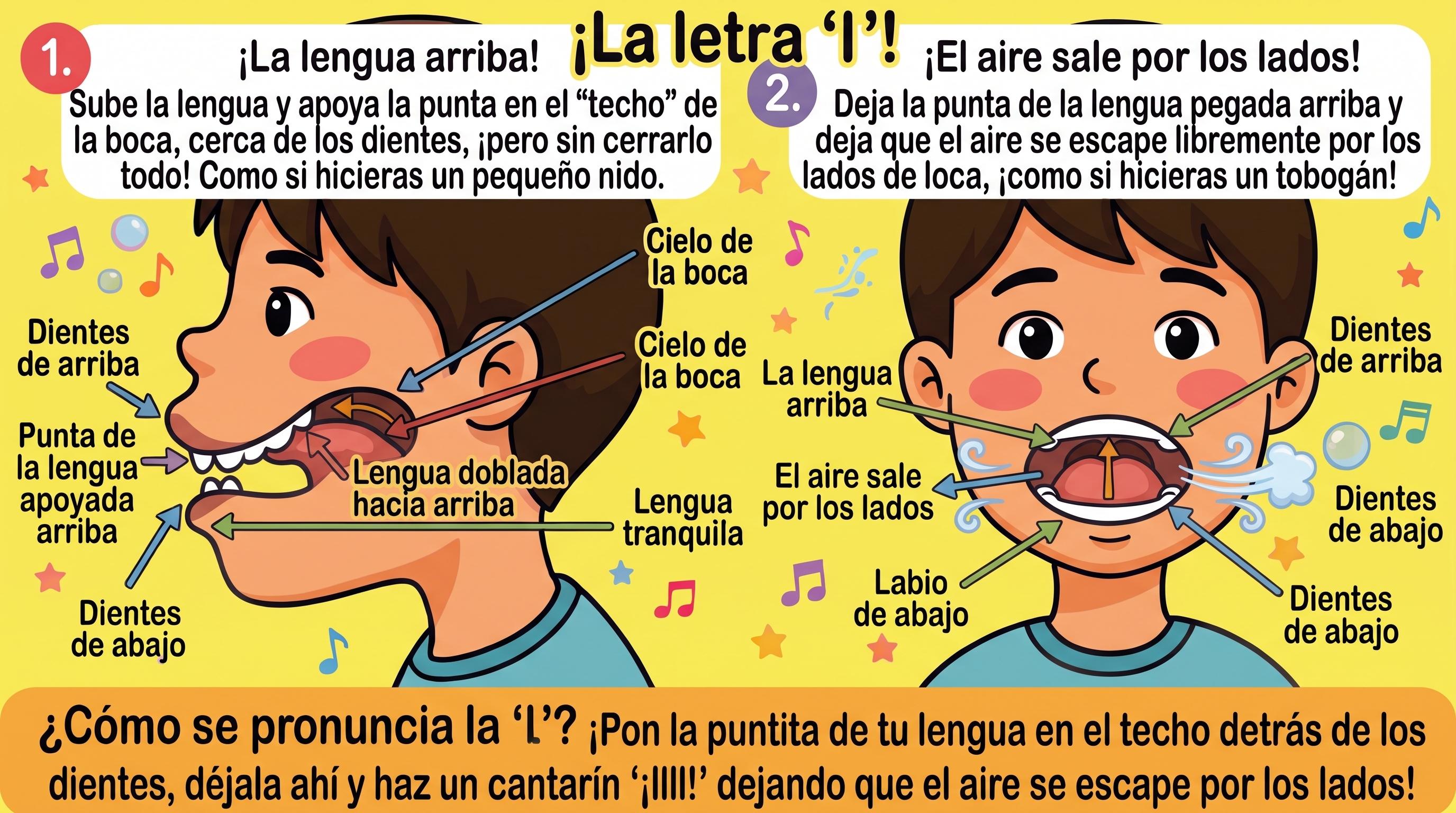
拼音Pīnyīn中zhōng的de“l”和hé西班牙语Xībānyáyǔ单词dāncí“luz”“lago”中zhōng的de“l”一样yíyàng,是shì一个yígè边音biānyīn:气流qìliú从cóng舌头shétou两边liǎngbiān出来chūlái。/El sonido «l» en pinyin se pronuncia como la «l» de las palabras españolas «luz» o «lago»: es una consonante lateral, en la que el aire pasa por los lados de la lengua./The sound “l” in pinyin is pronounced like the “l” in the Spanish words “luz” or “lago”: it is a lateral consonant, in which the air passes along the sides of the tongue.
--------------------------------------------------------------------------------

--------------------------------------------------------------------------------
• 舌尖Shéjiān抵住dǐzhù上齿龈shàngchǐyín,但dàn不bù完全wánquán挡住dǎngzhù气流qìliú,让ràng它tā从cóng两边liǎngbiān出来chūlái。/La lengua toca el paladar cerca de los dientes, pero sin cerrar del todo, dejando pasar el aire por los lados./The tongue touches the roof of the mouth near the teeth, but without closing completely, letting the air pass along the sides.
• 声音Shēngyīn清楚qīngchu、柔和róuhé,和hé西班牙语Xībānyáyǔ的de“l”一样yíyàng。/Es un sonido claro y suave, como en español./It is a clear, soft sound, as in Spanish.
• 它Tā是shì浊音zhuóyīn,声带shēngdài振动zhèndòng。/Es un sonido sonoro: las cuerdas vocales vibran./It is a voiced sound: the vocal cords vibrate.
1) 力lì/fuerza/strength
2) 老lǎo/viejo/old
3) 利lì/beneficio/benefit
4) 乐lè/alegre/happy, joyful
5) 龙lóng/dragón/dragon
6) 里lǐ/dentro/inside
7) 路lù/camino, calle/road, street
8) 懒lǎn/perezoso/lazy
9) 来lái/venir/to come
10) 两liǎng/dos/two
11) 绿lǜ/verde/green
12) 蓝lán/azul/blue
13) 冷lěng/frío/cold
14) 楼lóu/edificio/building
15) 六liù/seis/six
--------------------------------------------------------------------------------
“l”很hěn常见chángjiàn,也yě很hěn容易róngyì发fā;声调shēngdiào可以kěyǐ改变gǎibiàn意思yìsi,比如bǐrú力lì(力气lìqi)和hé里lǐ(里面lǐmiàn)。/La «l» es común y fácil de pronunciar, y el tono puede cambiar el significado, como en lì (fuerza) y lǐ (dentro)./The “l” is common and easy to pronounce, and the tone can change the meaning, as in lì (strength) and lǐ (inside).
nā ná nǎ nà
nā
ná
nǎ
nà
lā lá lǎ là
lā
lá
lǎ
là

![]()




