他Tā站zhàn在zài高高的gāogāode塔tǎ下xià,抬头táitóu看kàn天tiān。/Él está al pie de la torre alta, mirando al cielo./He stands under the tall tower, looking up at the sky.
· 小刀Xiǎodāo很快hěnkuài,要yào小心xiǎoxīn。/La navaja corta mucho: ¡cuidado!/The penknife is sharp – be careful.
大Dà/grande/big
· 大象Dàxiàng很大hěndà。/El elefante es muy grande./The elephant is very big.
头Tóu/cabeza/head
· 他Tā点点头diǎndiǎntóu。/Él asiente con la cabeza./He nods his head.
** 想一想, 说一说/Xiǎng yi xiǎng, shuō yi shuō/Piensa y responde/Think and answer the following questions **
(1)读一读Dú yi dú“da—ta”“du—tu”,说shuō说shuō“d”和hé“t”有yǒu什么shénme不同bùtóng。/Lee da–ta y du–tu: ¿en qué se diferencian la d y la t?/Read da–ta and du–tu: how are d and t different?
(2)你Nǐ会huì写xiě“d”和hé“t”吗ma?说shuō说shuō它们tāmen在zài四线sìxiàn三sān格里gélǐ的de位置wèizhi。/¿Sabes escribir la d y la t? Explica dónde van en la pauta de cuatro líneas./Can you write d and t? Say where they go on the four-line grid.
(3)读一读Dú yi dú,说一说shuō yi shuō带dài这些zhèxiē音yīn的de词语cíyǔ。/Lee y di palabras con estos sonidos: d, t./Read and say words with these sounds: d, t.
(4)朗读Lǎngdú儿歌érgē,背诵bèisòng儿歌érgē。/Lee la canción infantil en voz alta y apréndela de memoria./Read the nursery rhyme aloud and learn it by heart.
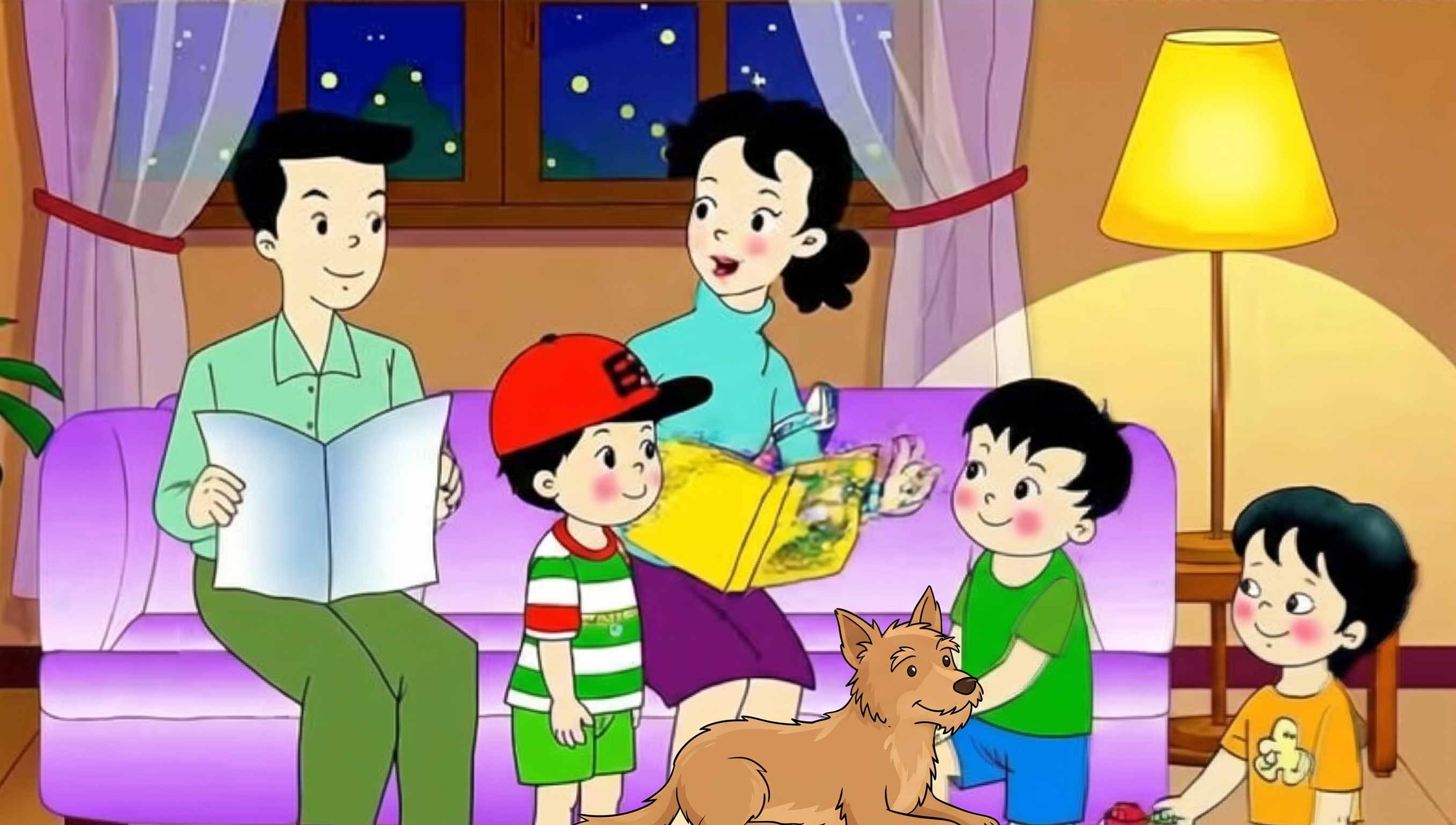
** 家庭/Jiātíng/FAMILIA/FAMILY **
宝宝Bǎobao一yī家jiā/La familia de Baobao/Baobao's family
爸爸Bàba/Papá, padre/Dad, father
妈妈Māma/Mamá, madre/Mum, mother
宝宝Bǎobao/Baobao/Baobao
婷婷Tíngtíng/Tíngting/Tíngting
嘟嘟Dūdū/Dudú/Dudú
洛基Luòjī/Rocky/Rocky
** 对话/Duìhuà/Diálogo/Dialogue **
嘟嘟Dūdū:爸爸Bàba,弟弟dìdi在读zàidú什么shénme书shū?/Dudú: Papá, ¿qué libro está leyendo mi hermano pequeño?/Dudú: Dad, what book is my little brother reading?
爸爸Bàba:他Tā在读zàidú一本yìběn大白兔dàbáitù的de书shū。/Papá: Está leyendo un libro sobre un conejo blanco grande./Dad: He's reading a book about a big white rabbit.
婷婷Tíngtíng:书Shū里lǐ还有háiyǒu一座yízuò高高的gāogāode塔tǎ。/Tíngting: En el libro también hay una torre muy alta./Tíngting: There's a very tall tower in the book too.
宝宝Bǎobǎo:小白兔Xiǎobáitù的de头上tóushàng有yǒu两只liǎng zhī长耳朵cháng ěrduo!/Baobao: ¡El conejito tiene dos orejas largas en la cabeza!/Baobao: The little rabbit has two long ears on its head!
妈妈Māma:吃水果Chīshuǐguǒ了le,切qiè水果shuǐguǒ要yào用yòng小刀xiǎodāo,大家dàjiā小心xiǎoxīn。/Mamá: ¡A comer fruta! Para cortarla usamos un cuchillo pequeño: cuidado todos./Mum: Fruit time! We use a little knife to cut it – everyone be careful.
Comentario Pedagógico: d y t: 1. Pronunciación: La «d» no lleva aire y la «t» sí; se comprueba con una tira de papel. 2. Escritura: «d» y «t» ocupan el espacio superior y el central; el palo de la «t» es más corto que el de la «d». 3. Lectura de sílabas: Se practica unir «d» y «t» con las finales: dú, tǎ, dāo.
Pedagogical Commentary: d and t: 1. Pronunciation: “d” has no puff of air and “t” does; check it with a strip of paper. 2. Writing: “d” and “t” use the top and middle spaces; the stem of “t” is shorter than that of “d”. 3. Blending: Practise joining “d” and “t” to finals: dú, tǎ, dāo.
@ Pinyin 资料 (PDF, MP3 等) 的版权归属于:中国华文教育网 - Overseas Chinese Language and Culture Education Online。
@ Los materiales Pinyin (PDF, MP3, etc.) son propiedad de: 中国华文教育网 - Overseas Chinese Language and Culture Education Online.
@ The materials Pinyin (PDF, MP3, etc.) are the property of: 中国华文教育网 - Overseas Chinese Language and Culture Education Online.