
Saltar al contenido
Home » LECCION_PRIMARIA_P » Página 2

LECCION_PRIMARIA_P


PRIMARIA_C1_N1_09_P07

d
Practica aquí · 在这里练习
--------------------------------------------------------------------------------
拼音Pīnyīn中zhōng的de“d”和hé西班牙语Xībānyáyǔ单词dāncí“día”“dedo”中zhōng的de“d”相似xiāngsì,但dàn它tā是shì不bú送气sòngqì的de清音qīngyīn,比bǐ西班牙语Xībānyáyǔ的de“d”更gèng轻qīng,其实qíshí更gèng接近jiējìn“t”。/El sonido «d» en pinyin se parece a la «d» de las palabras españolas «día» o «dedo», pero es sordo y no aspirado: suena más suave y, en realidad, se acerca a una «t» española./The sound “d” in pinyin is similar to the “d” in the Spanish words “día” or “dedo”, but it is unvoiced and unaspirated: it is softer and actually closer to a Spanish “t”.
--------------------------------------------------------------------------------
--------------------------------------------------------------------------------
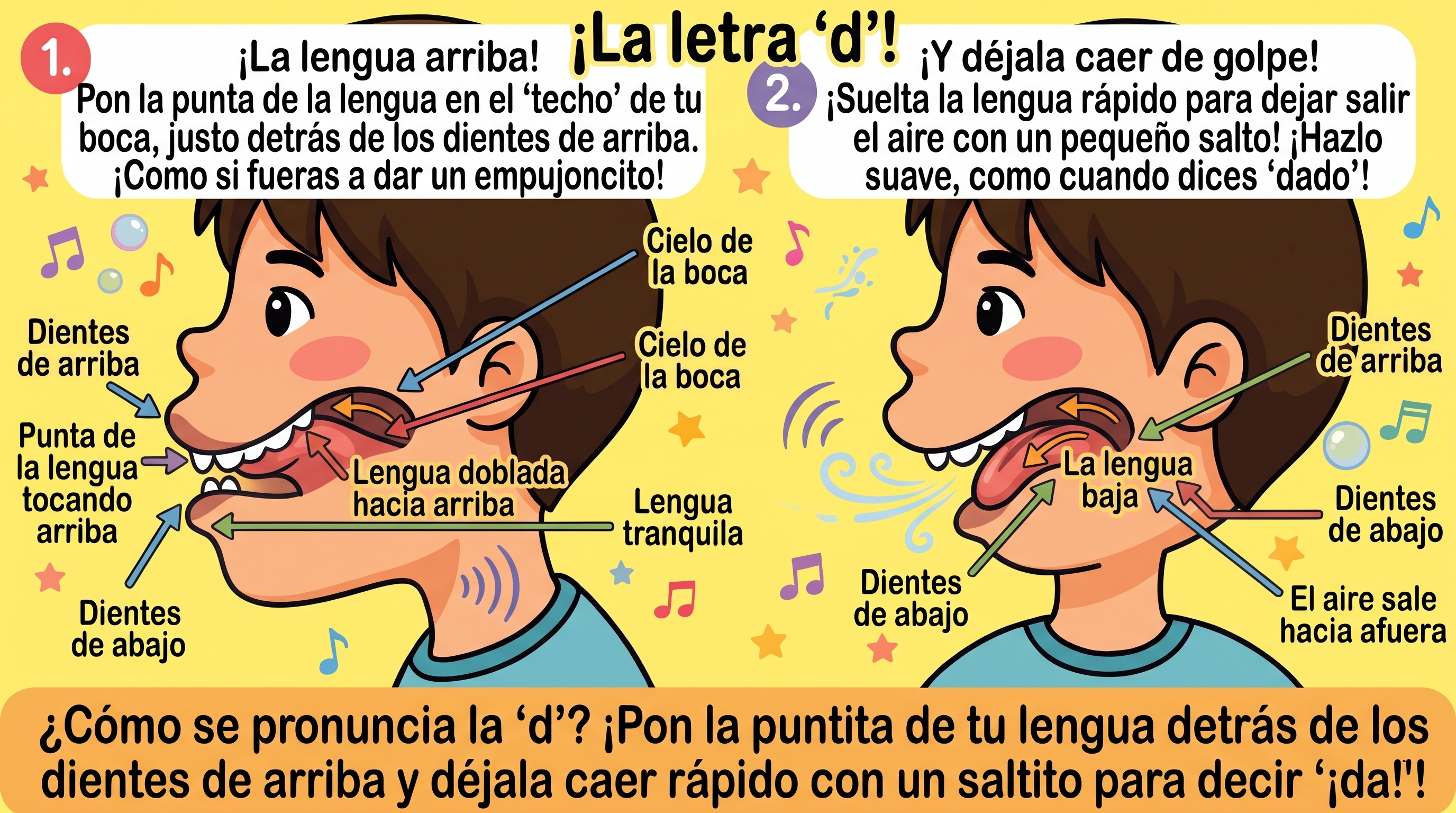
• 舌尖Shéjiān抵住dǐzhù上齿龈shàngchǐyín,然后ránhòu放开fàngkāi。/La punta de la lengua toca la parte de atrás de los dientes superiores y luego se suelta./The tip of the tongue touches the ridge behind the upper teeth and is then released.
• 它Tā不bú送气sòngqì,没有méiyǒu气流qìliú冲chōng出来chūlái;拼音pīnyīn的de“t”和hé“p”才cái是shì送气音sòngqìyīn。/Es una consonante no aspirada: no sale aire, a diferencia de la «t» y la «p» del pinyin, que sí son aspiradas./It is unaspirated: no air comes out, unlike pinyin “t” and “p”, which are aspirated.
1) 搭dā/montar, construir/to put up, to build
2) 打dǎ/golpear; jugar/to hit; to play
3) 敌dí/enemigo/enemy
4) 大dà/grande/big
5) 度dù/grado, medida/degree, measure
6) 动dòng/mover/to move
7) 低dī/bajo/low
8) 到dào/llegar/to arrive
9) 得dé/obtener, conseguir/to obtain, to get
10) 对duì/correcto; hacia/correct; towards
11) 弟dì/hermano menor/younger brother
12) 多duō/mucho/many, much
13) 读dú/leer/to read
14) 东dōng/este/east
15) 灯dēng/lámpara/lamp
--------------------------------------------------------------------------------
声调Shēngdiào会huì改变gǎibiàn意思yìsi,比如bǐrú大dà(大小dàxiǎo)和hé打dǎ(打球dǎqiú)。/Como en otras consonantes, el tono cambia el significado de la palabra, por ejemplo dà (grande) y dǎ (golpear)./As with other consonants, the tone changes the meaning of the word, for example dà (big) and dǎ (to hit).

t
Practica aquí · 在这里练习
--------------------------------------------------------------------------------
拼音Pīnyīn中zhōng的de“t”和hé西班牙语Xībānyáyǔ单词dāncí“taza”“tocar”中zhōng的de“t”相似xiāngsì,但dàn它tā是shì送气音sòngqìyīn:发音fāyīn时shí会huì冲出chōngchū一股yìgǔ气流qìliú。/El sonido «t» en pinyin se parece a la «t» de las palabras españolas «taza» o «tocar», pero es aspirado: al pronunciarlo sale un golpe de aire./The sound “t” in pinyin is similar to the “t” in the Spanish words “taza” or “tocar”, but it is aspirated: a puff of air comes out when you say it.
--------------------------------------------------------------------------------
--------------------------------------------------------------------------------
• 舌尖Shéjiān抵住dǐzhù上齿龈shàngchǐyín,然后ránhòu突然tūrán放开fàngkāi,让ràng气流qìliú冲chōng出来chūlái。/La punta de la lengua se apoya detrás de los dientes superiores y se suelta de golpe, dejando salir el aire./The tip of the tongue rests behind the upper teeth and is released suddenly, letting the air out.
• 它Tā是shì清音qīngyīn,声带shēngdài不bú振动zhèndòng。/Es un sonido sordo: las cuerdas vocales no vibran./It is an unvoiced sound: the vocal cords do not vibrate.
1) 他tā/él/he, him
2) 听tīng/escuchar/to listen
3) 替tì/sustituir/to replace
4) 图tú/imagen, gráfico/picture, chart
5) 掏tāo/sacar/to take out
6) 土tǔ/tierra/soil, earth
7) 同tóng/igual/same
8) 太tài/muy, demasiado/too, very
9) 头tóu/cabeza/head
10) 桶tǒng/cubo, barril/bucket, barrel
11) 特tè/especial/special
12) 天tiān/cielo; día/sky; day
13) 糖táng/azúcar, caramelo/sugar, sweet
14) 踢tī/dar una patada/to kick
15) 跳tiào/saltar/to jump
--------------------------------------------------------------------------------
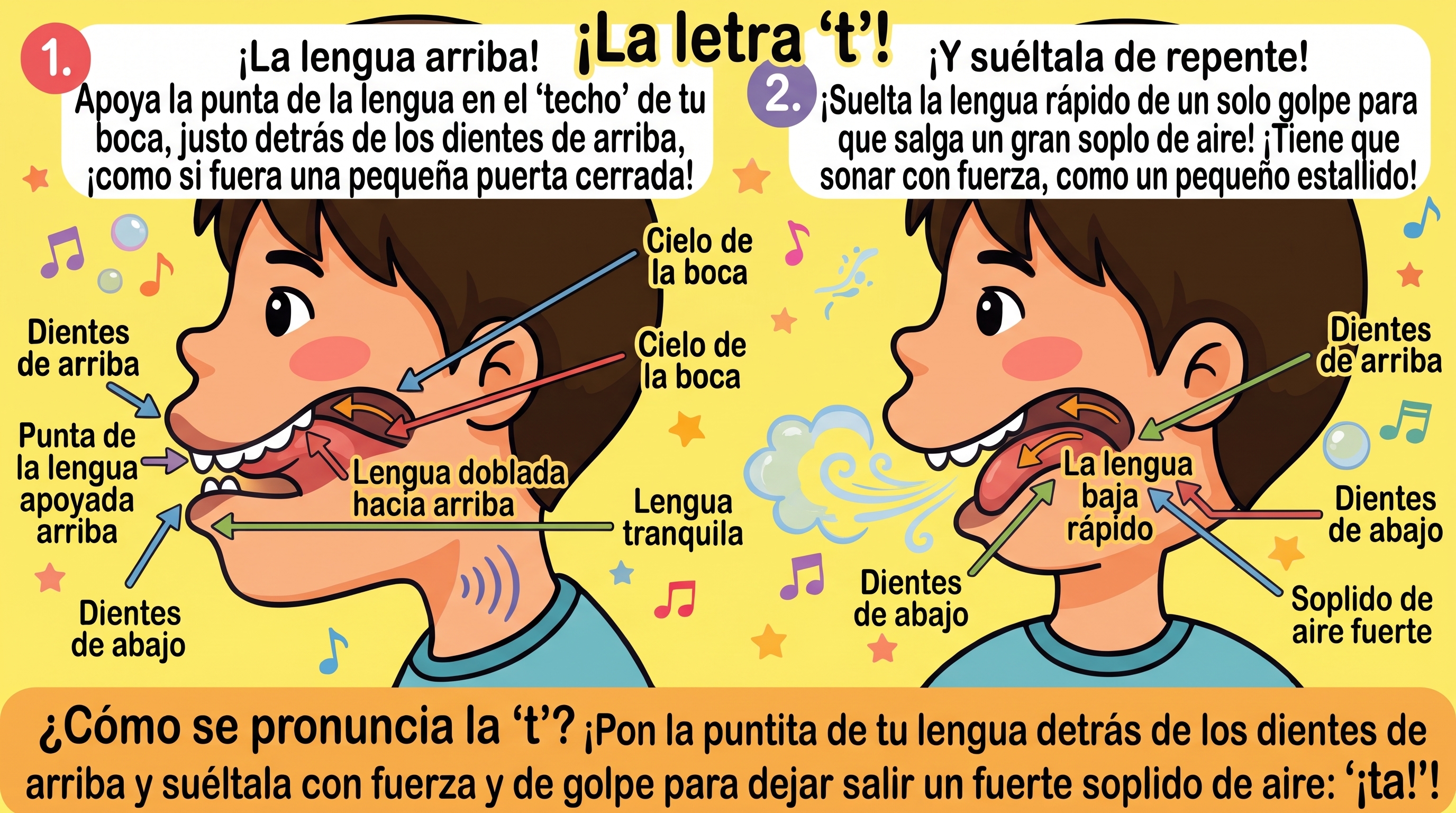
因为Yīnwèi送气sòngqì,“t”听tīng起来qǐlái比bǐ“d”更gèng有力yǒulì;声调shēngdiào也yě很hěn重要zhòngyào,比如bǐrú图tú(图画túhuà)和hé土tǔ(泥土nítǔ)。/Al ser aspirada, la «t» suena más fuerte que la «d», y el tono también es importante, como en tú (imagen) y tǔ (tierra)./Being aspirated, the “t” sounds stronger than the “d”, and the tone also matters, as in tú (picture) and tǔ (soil).

dā dá dǎ dà
dā
dá
dǎ
dà
tā tá tǎ tà
tā
tá
tǎ
tà



主题/Zhǔtí/Tema/Theme

主题 2/Zhǔtí 2/Tema/Theme 2

词汇 Cíhuì/Vocabulario/Vocabulary

PDF与视频/PDF,videos Y Quiz/PDF, Videos and Quiz

PDF与视频/PDF,videos Y Quiz/PDF, Videos and Quiz

Loading

Páginas: 1 2 3 4