爸爸Bàba用yòng斧子fǔzi劈pī木头mùtou,妈妈māma在家zàijiā做zuò米饭mǐfàn。/Papá corta leña con el hacha y mamá hace arroz en casa./Dad chops wood with an axe and Mum cooks rice at home.
** 想一想, 说一说/Xiǎng yi xiǎng, shuō yi shuō/Piensa y responde/Think and answer the following questions **
(1)读一读Dú yi dú“ma”“mo”“mi”“mu”和hé“fa”“fo”“fu”。/Lee ma, mo, mi, mu y fa, fo, fu./Read ma, mo, mi, mu and fa, fo, fu.
(2)发Fā“m”的de时候shíhou,气qì从cóng哪里nǎlǐ出来chūlái?/Al decir m, ¿por dónde sale el aire?/When you say m, where does the air come out?
(3)读一读Dú yi dú,说一说shuō yi shuō带dài这些zhèxiē音yīn的de词语cíyǔ。/Lee y di palabras con estos sonidos: m, f./Read and say words with these sounds: m, f.
(4)读一读Dú yi dú“妈妈māma”。/Lee «妈妈»./Read “妈妈”.
** 家庭/Jiātíng/FAMILIA/FAMILY **
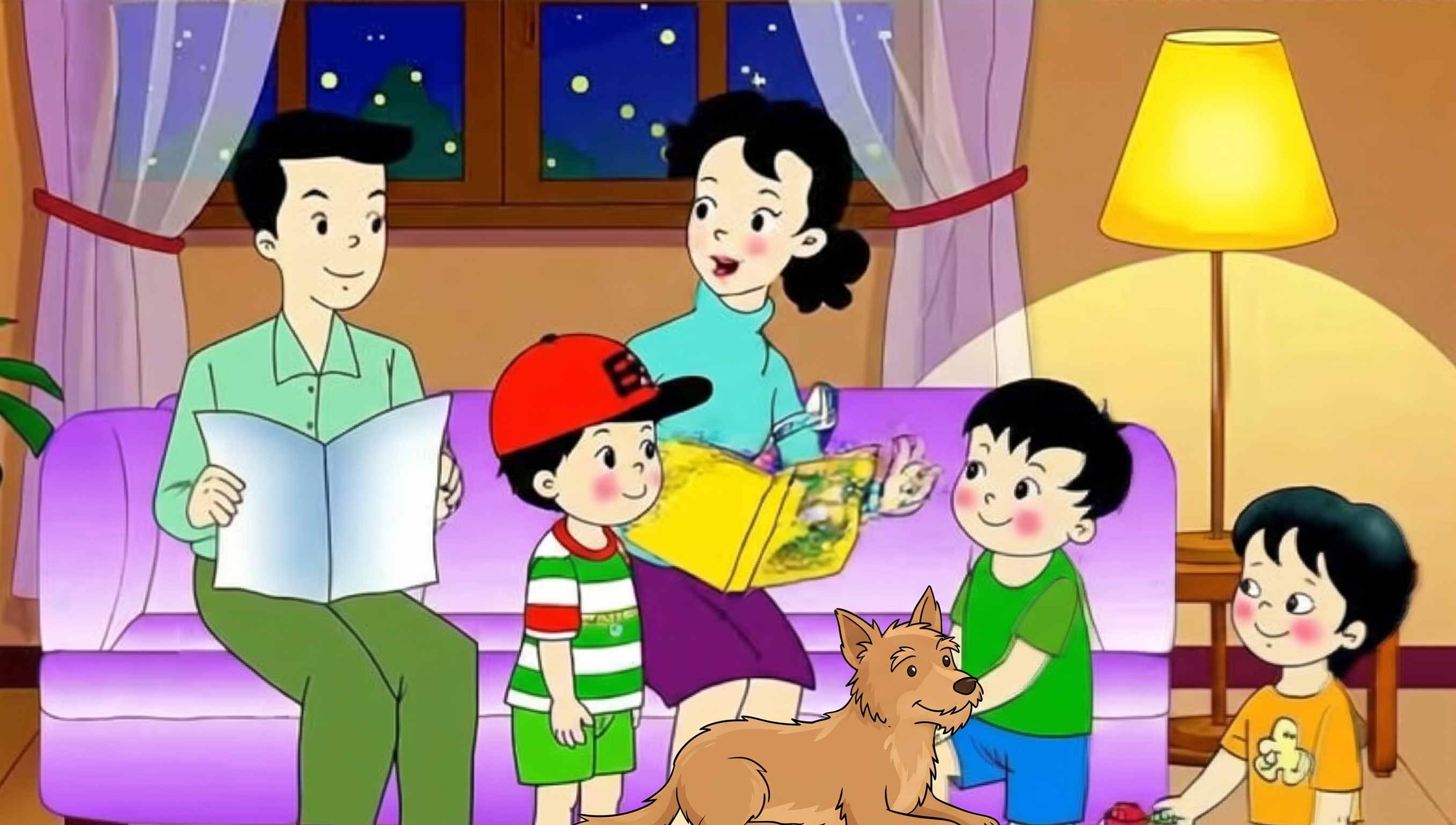
宝宝Bǎobao一yī家jiā/La familia de Baobao/Baobao's family
爸爸Bàba/Papá, padre/Dad, father
妈妈Māma/Mamá, madre/Mum, mother
宝宝Bǎobao/Baobao/Baobao
婷婷Tíngtíng/Tíngting/Tíngting
嘟嘟Dūdū/Dudú/Dudú
洛基Luòjī/Rocky/Rocky
** 对话/Duìhuà/Diálogo/Dialogue **
嘟嘟Dūdū:妈妈Māma,我们wǒmen今天jīntiān吃chī米饭mǐfàn吗ma?/Dudú: Mamá, ¿hoy comemos arroz?/Dudú: Mum, are we having rice today?
爸爸Bàba:吃Chī!我wǒ先xiān用yòng斧子fǔzi劈pī木头mùtou。/Papá: ¡Sí! Primero corto leña con el hacha./Dad: Yes! First I'll chop some wood with the axe.
婷婷Tíngtíng:风Fēng好hǎo大dà,我wǒ的de头发tóufa都dōu飞fēi起来qǐlái了le!/Tíngting: ¡Hace mucho viento, se me vuela el pelo!/Tíngting: It's so windy, my hair is flying everywhere!
宝宝Bǎobǎo:我Wǒ要yào骑qí大马dàmǎ!/Baobao: ¡Quiero montar en el caballo grande!/Baobao: I want to ride the big horse!
妈妈Māma:吃完饭Chīwánfàn,我们wǒmen去qù看kàn马mǎ。/Mamá: Después de comer, vamos a ver los caballos./Mum: After we eat, we'll go and see the horses.
Comentario Pedagógico: m y f, y el tono neutro: 1. Nasal: Para la «m» se cierran los labios y el aire sale por la nariz. 2. Labiodental: Para la «f» los dientes de arriba tocan el labio inferior, como en español. 3. Tono neutro: La segunda sílaba de 妈妈 o 爸爸 es breve y suave, y no lleva tilde de tono.
Pedagogical Commentary: m and f, and the neutral tone: 1. Nasal: For “m” the lips close and the air comes out through the nose. 2. Labiodental: For “f” the upper teeth touch the lower lip, as in English. 3. Neutral tone: The second syllable of 妈妈 or 爸爸 is short and light, with no tone mark.
@ Pinyin 资料 (PDF, MP3 等) 的版权归属于:中国华文教育网 - Overseas Chinese Language and Culture Education Online。
@ Los materiales Pinyin (PDF, MP3, etc.) son propiedad de: 中国华文教育网 - Overseas Chinese Language and Culture Education Online.
@ The materials Pinyin (PDF, MP3, etc.) are the property of: 中国华文教育网 - Overseas Chinese Language and Culture Education Online.