
Saltar al contenido
Home » LECCION_PRIMARIA_P » Página 2

LECCION_PRIMARIA_P


PRIMARIA_C1_N1_08_P04

m
Practica aquí · 在这里练习
--------------------------------------------------------------------------------
拼音Pīnyīn中zhōng的de“m”和hé西班牙语Xībānyáyǔ单词dāncí“mamá”中zhōng的de“m”一样yíyàng,是shì一个yígè鼻音bíyīn:嘴唇zuǐchún轻轻qīngqīng闭bì上shàng,气流qìliú从cóng鼻子bízi出来chūlái。/El sonido «m» en pinyin se pronuncia como la «m» de la palabra española «mamá»: es una consonante nasal, en la que los labios se cierran suavemente y el aire sale por la nariz./The sound “m” in pinyin is pronounced like the “m” in the Spanish word “mamá”: it is a nasal consonant, in which the lips close gently and the air comes out through the nose.
--------------------------------------------------------------------------------
--------------------------------------------------------------------------------
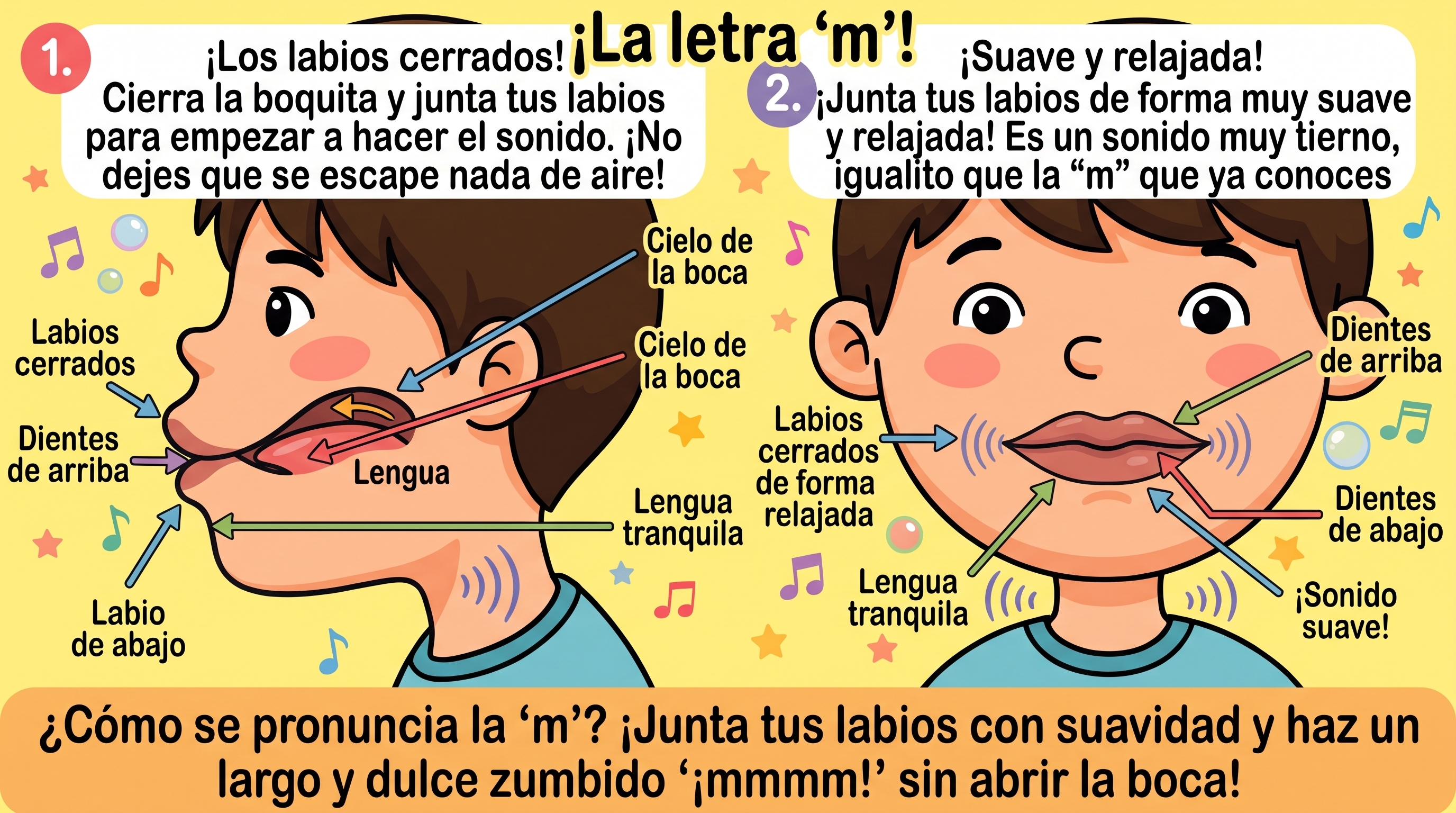
• 双唇Shuāngchún闭bì上shàng,发出声音fāchūshēngyīn。/Los labios se cierran para producir el sonido./The lips close to produce the sound.
• 气流Qìliú从cóng鼻子bízi出来chūlái,所以suǒyǐ它tā是shì鼻音bíyīn。/El aire sale por la nariz, por eso es una consonante nasal./The air comes out through the nose, which makes it a nasal consonant.
• 声音Shēngyīn柔和róuhé、清楚qīngchu,和hé西班牙语Xībānyáyǔ、英语Yīngyǔ的de“m”一样yíyàng。/Es un sonido suave y claro, igual que la «m» del español o del inglés./It is a soft, clear sound, just like the “m” in Spanish or English.
1) 妈mā/mamá/mum
2) 马mǎ/caballo/horse
3) 密mì/secreto, denso/secret, dense
4) 妹mèi/hermana menor/younger sister
5) 名míng/nombre/name
6) 魔mó/demonio/demon
7) 买mǎi/comprar/to buy
8) 忙máng/ocupado/busy
9) 木mù/madera/wood
10) 门mén/puerta/door
11) 摸mō/tocar/to touch
12) 猫māo/gato/cat
13) 米mǐ/arroz/rice
14) 面miàn/fideos; cara/noodles; face
15) 毛máo/pelo, pelaje/fur, hair
--------------------------------------------------------------------------------
“m”和hé韵母yùnmǔ一起yìqǐ组成zǔchéng音节yīnjié,声调shēngdiào可以kěyǐ改变gǎibiàn意思yìsi,比如bǐrú妈mā(妈妈māma)和hé马mǎ(马匹mǎpǐ)。/La «m» se combina con una vocal para formar la sílaba, y el tono puede cambiar el significado, como en mā (mamá) y mǎ (caballo)./The “m” combines with a vowel to form the syllable, and the tone can change the meaning, as in mā (mum) and mǎ (horse).

f
Practica aquí · 在这里练习
--------------------------------------------------------------------------------
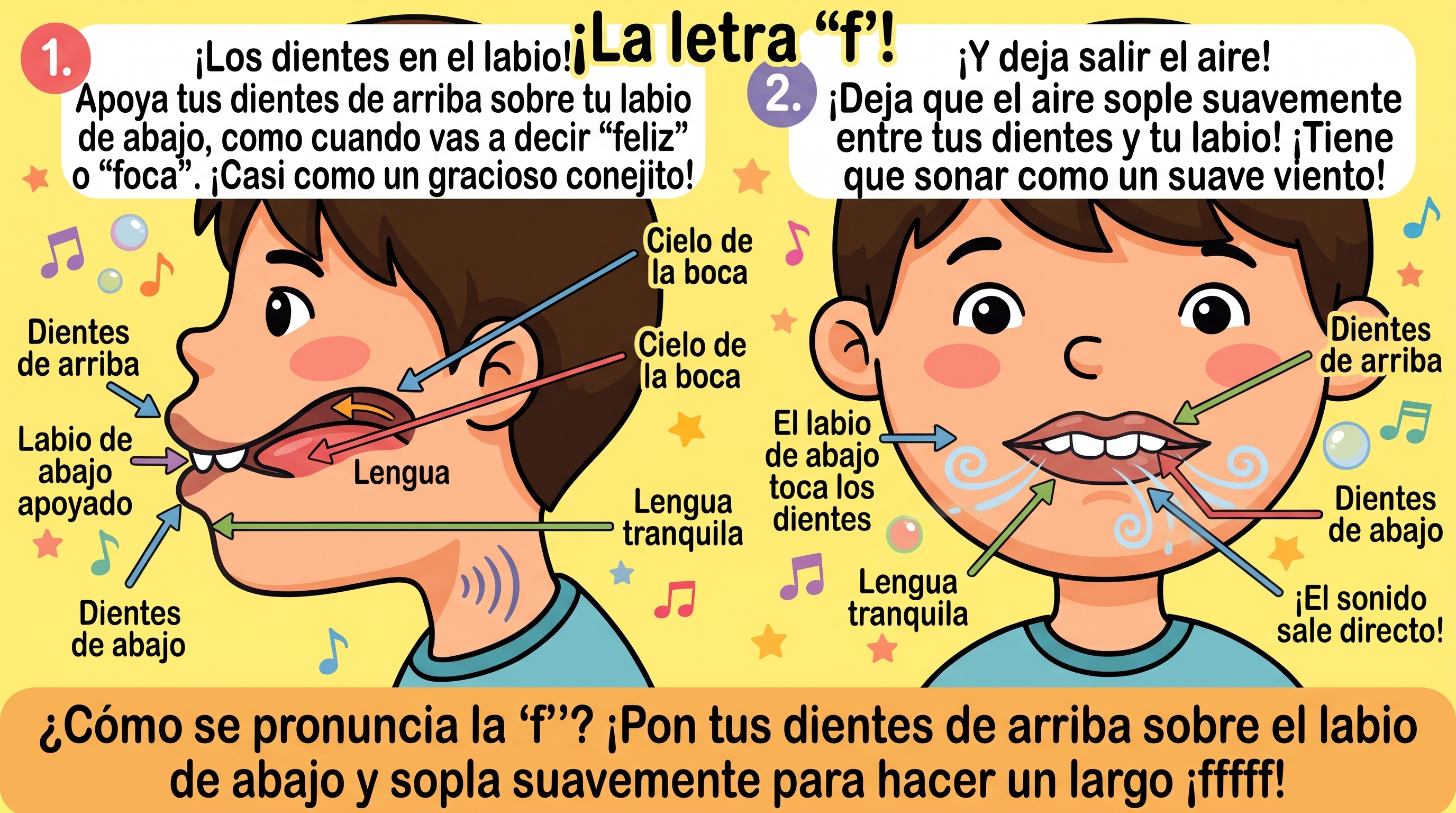
拼音Pīnyīn中zhōng的de“f”和hé西班牙语Xībānyáyǔ单词dāncí“feliz”中zhōng的de“f”一样yíyàng,是shì唇齿擦音chúnchǐcāyīn:上shàng齿chǐ轻轻qīngqīng碰pèng下唇xiàchún,让ràng气流qìliú从cóng中间zhōngjiān摩擦mócā出来chūlái。/El sonido «f» en pinyin se pronuncia como la «f» de la palabra española «feliz»: es una consonante fricativa labiodental, que se produce apoyando los dientes superiores sobre el labio inferior y dejando pasar el aire./The sound “f” in pinyin is pronounced like the “f” in the Spanish word “feliz”: it is a labiodental fricative, made by resting the upper teeth on the lower lip and letting the air flow through.
--------------------------------------------------------------------------------
--------------------------------------------------------------------------------
• 下唇Xiàchún轻轻qīngqīng贴住tiēzhù上shàng齿chǐ,像xiàng说shuō“feliz”一样yíyàng。/El labio inferior se apoya contra los dientes superiores, como al decir «feliz»./The lower lip rests against the upper teeth, as when saying “feliz”.
• 它Tā是shì清音qīngyīn,声带shēngdài不bú振动zhèndòng。/Es un sonido sordo: las cuerdas vocales no vibran./It is an unvoiced sound: the vocal cords do not vibrate.
1) 发fā/enviar, emitir/to send, to issue
2) 父fù/padre/father
3) 非fēi/no/not, non-
4) 法fǎ/ley, método/law, method
5) 风fēng/viento/wind
6) 富fù/rico/rich
7) 饭fàn/comida, arroz cocido/meal, cooked rice
8) 福fú/felicidad, buena suerte/good fortune, happiness
9) 服务fúwù/servicio/service
10) 方fāng/dirección; cuadrado/direction; square
11) 佛fó/Buda/Buddha
12) 飞fēi/volar/to fly
13) 房fáng/casa/house
14) 放fàng/poner, soltar/to put, to let go
15) 粉fěn/polvo; rosa (color)/powder; pink
--------------------------------------------------------------------------------
“f”很hěn容易róngyì发fā,和hé西班牙语Xībānyáyǔ一样yíyàng;不过búguò要yào注意zhùyì声调shēngdiào,比如bǐrú发fā(发信fāxìn)和hé法fǎ(法律fǎlǜ)。/La «f» es fácil de pronunciar, igual que en español, pero hay que fijarse en el tono, como en fā (enviar) y fǎ (ley)./The “f” is easy to pronounce, just as in Spanish, but watch the tone, as in fā (to send) and fǎ (law).

mā má mǎ mà
mā
má
mǎ
mà
fā fá fǎ fà
fā
fá
fǎ
fà



主题/Zhǔtí/Tema/Theme

主题 2/Zhǔtí 2/Tema/Theme 2

词汇 Cíhuì/Vocabulario/Vocabulary

PDF与视频/PDF,videos Y Quiz/PDF, Videos and Quiz

PDF与视频/PDF,videos Y Quiz/PDF, Videos and Quiz

Loading

Páginas: 1 2 3 4