一只Yìzhī小xiǎo乌龟wūguī慢慢mànmàn地de爬pá,我wǒ在zài旁边pángbiān看着kànzhe它tā。/Una tortuguita avanza despacio y yo la miro a su lado./A little turtle crawls slowly while I watch it.
· 我Wǒ吃chī了le一碗yìwǎn饭fàn。/Me comí un cuenco de arroz./I ate a bowl of rice.
雨Yǔ/lluvia/rain
· 雨Yǔ下xià大dà了le。/Llueve más fuerte./The rain is getting heavier.
** 想一想, 说一说/Xiǎng yi xiǎng, shuō yi shuō/Piensa y responde/Think and answer the following questions **
(1)读一读Dú yi dú“yi”“wu”“yu”,说shuō说shuō它们tāmen为什么wèishénme要yào整体zhěngtǐ认读rèndú。/Lee yi, wu y yu: ¿por qué se leen enteras?/Read yi, wu and yu: why are they read as a whole?
(2) “鱼Yú”写成xiěchéng“yú”,“女nǚ”写成xiěchéng“nǚ”,说shuō说shuō为什么wèishénme一个yígè有yǒu两点liǎngdiǎn,一个yígè没有méiyǒu。/鱼 se escribe yú y 女, nǚ: ¿por qué uno lleva los dos puntos y el otro no?/鱼 is written yú and 女 is written nǚ: why does one have the dots and the other not?
(3)读一读Dú yi dú,说一说shuō yi shuō带dài这些zhèxiē音yīn的de词语cíyǔ。/Lee y di palabras con estos sonidos: y, w./Read and say words with these sounds: y, w.
** 家庭/Jiātíng/FAMILIA/FAMILY **
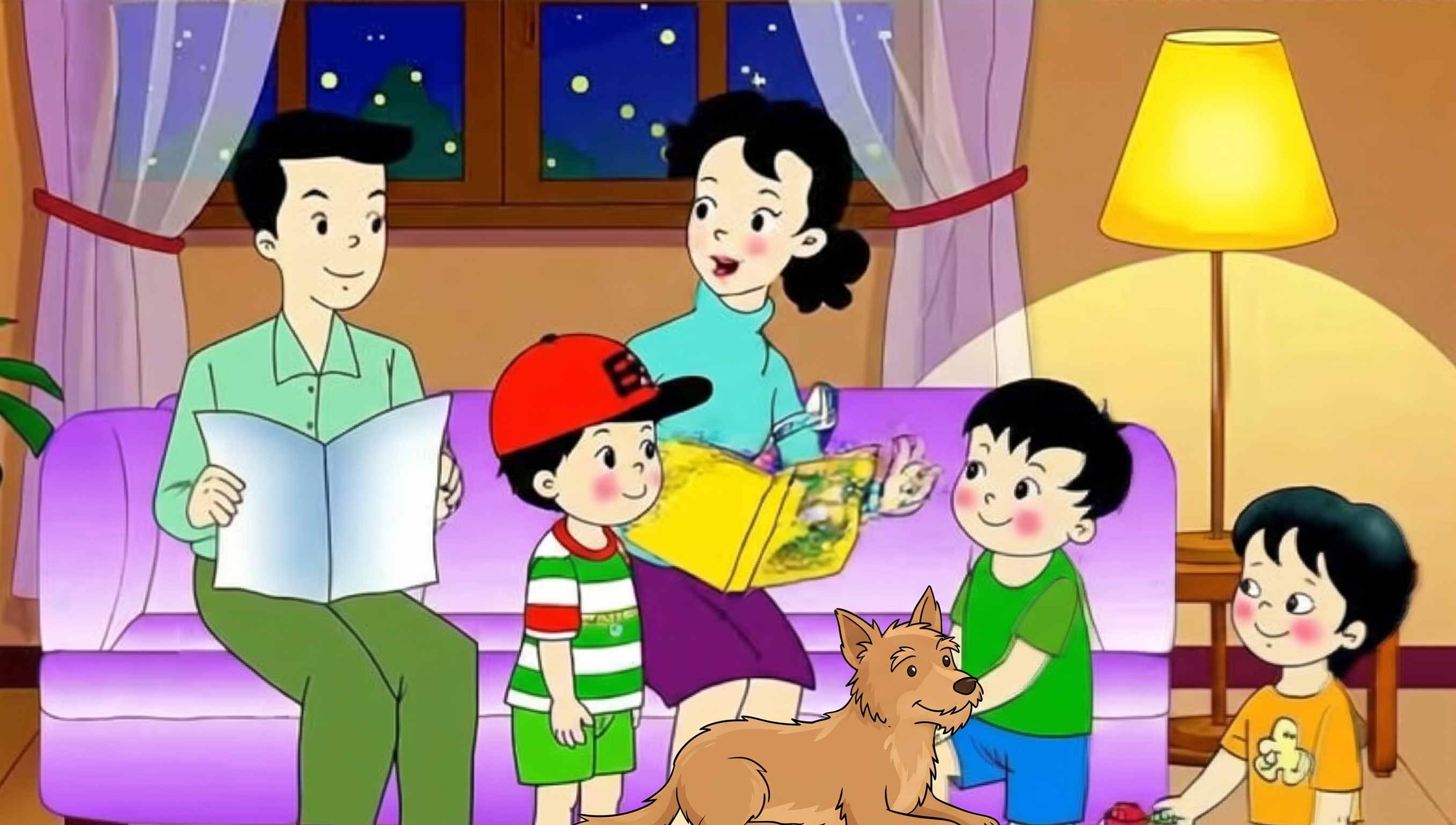
宝宝Bǎobao一yī家jiā/La familia de Baobao/Baobao's family
爸爸Bàba/Papá, padre/Dad, father
妈妈Māma/Mamá, madre/Mum, mother
宝宝Bǎobao/Baobao/Baobao
婷婷Tíngtíng/Tíngting/Tíngting
嘟嘟Dūdū/Dudú/Dudú
洛基Luòjī/Rocky/Rocky
** 对话/Duìhuà/Diálogo/Dialogue **
嘟嘟Dūdū:下雨Xiàyǔ了le,我wǒ要yào穿chuān外衣wàiyī。/Dudú: Está lloviendo, voy a ponerme el abrigo./Dudú: It's raining – I'm going to put on my coat.
爸爸Bàba:好Hǎo,我们wǒmen去qù河边hébiān看kàn鸭子yāzi。/Papá: Vale, vamos al río a ver los patos./Dad: OK, let's go to the river to see the ducks.
婷婷Tíngtíng:一Yī、二èr、三sān、四sì、五wǔ,有yǒu五只wǔ zhī鸭子yāzi!/Tíngting: Uno, dos, tres, cuatro, cinco: ¡hay cinco patos!/Tíngting: One, two, three, four, five – there are five ducks!
宝宝Bǎobǎo:还有Háiyǒu一只yìzhī小xiǎo乌龟wūguī!/Baobao: ¡Y también una tortuguita!/Baobao: And a little turtle too!
妈妈Māma:回家吧Huíjiāba,我wǒ给gěi你们nǐmen每人měirén盛chéng一碗yìwǎn热汤rètāng。/Mamá: Volvamos a casa, os pongo a cada uno un cuenco de sopa caliente./Mum: Let's go home – I'll give each of you a bowl of hot soup.
Comentario Pedagógico: y, w y las sílabas enteras: 1. Función: «y» y «w» van al principio de la sílaba y sustituyen a «i», «u» y «ü». 2. Sílabas enteras: «yi», «wu» y «yu» se leen de golpe. 3. Rima: «Cuando la ü encuentra a la y, se quita los puntos y sigue sonando ü».
Pedagogical Commentary: y, w and whole syllables: 1. Role: “y” and “w” go at the start of a syllable in place of “i”, “u” and “ü”. 2. Whole syllables: “yi”, “wu” and “yu” are read as a whole. 3. Rhyme: “When ü meets y, it drops its dots but still sounds ü.”
@ Pinyin 资料 (PDF, MP3 等) 的版权归属于:中国华文教育网 - Overseas Chinese Language and Culture Education Online。
@ Los materiales Pinyin (PDF, MP3, etc.) son propiedad de: 中国华文教育网 - Overseas Chinese Language and Culture Education Online.
@ The materials Pinyin (PDF, MP3, etc.) are the property of: 中国华文教育网 - Overseas Chinese Language and Culture Education Online.