
MT
L01
L02
L03
L04
L05
EL1
P01
P02
P13
P03
P04
P07
P08
P09
P10
P11
P12
EP1
P05
P06
P15
P16
P17
P18
EP2
T01
T02
T03
T04
ET1
L06
L07
L08
L09
L10
EL2
T05
T06
T07
T08
ET2
T09
T10
T11
ET3
T12
T13
T14
ET4
PRIMARIA_C1_N1_07_P13

Practica aquí · 在这里练习
--------------------------------------------------------------------------------
在Zài拼音pīnyīn里lǐ,“y”不是búshì元音yuányīn,而是érshì放在fàngzài音节yīnjié开头kāitóu的de字母zìmǔ,发音fāyīn像xiàng英语Yīngyǔ单词dāncí“yes”开头kāitóu的de音yīn。/En pinyin, la «y» no es una vocal sino una letra que va al principio de la sílaba y suena como el comienzo de la palabra inglesa «yes»./In pinyin, “y” is not a vowel but a letter used at the start of a syllable, and it sounds like the beginning of the English word “yes”.
--------------------------------------------------------------------------------

--------------------------------------------------------------------------------
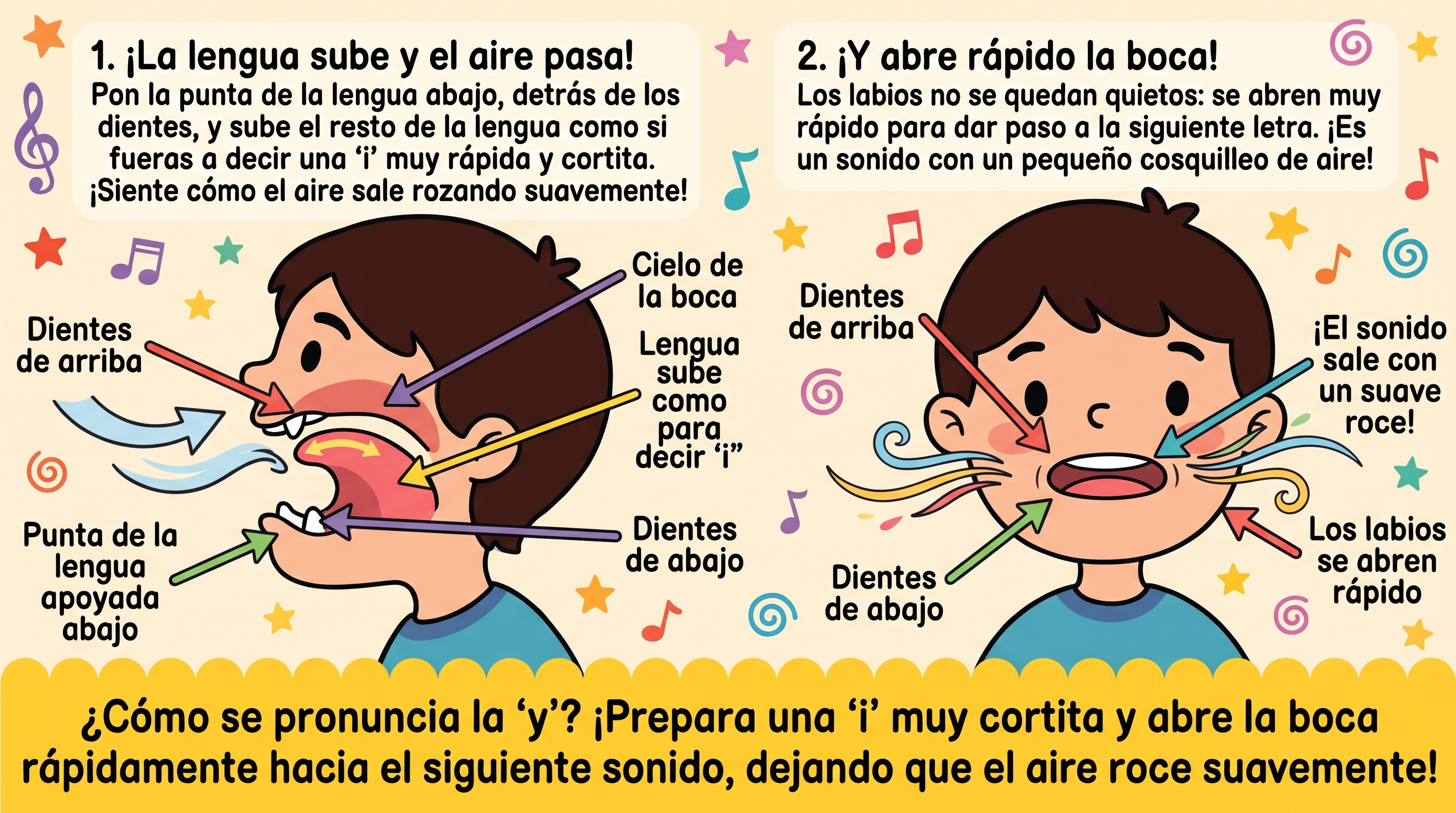
• 它Tā的de发音fāyīn像xiàng一个yígè很hěn短duǎn的de“i”。/Se pronuncia como una «i» muy breve que hace de consonante inicial./It is pronounced like a very short “i” acting as the initial consonant.
• 它Tā和hé英语Yīngyǔ单词dāncí“you”“yellow”开头kāitóu的de音yīn相似xiāngsì。/Se parece al sonido inicial de las palabras inglesas «you» o «yellow»./It is similar to the first sound in the English words “you” or “yellow”.
• 它Tā后面hòumiàn总是zǒngshì跟着gēnzhe元音yuányīn;“yu”读作dúzuò“ü”,比如bǐrú鱼yú。/Siempre va seguida de una vocal; «yu» se lee «ü», como en yú (pez)./It is always followed by a vowel; “yu” is read as “ü”, as in yú (fish).
1) 一yī/uno/one
2) 雨yǔ/lluvia/rain
3) 英语Yīngyǔ/inglés (idioma)/English (language)
4) 要yào/querer/to want
5) 游yóu/nadar/to swim
6) 英国Yīngguó/Reino Unido/Britain, the United Kingdom
7) 云yún/nube/cloud
8) 月yuè/luna; mes/moon; month
9) 油yóu/aceite/oil
10) 羊yáng/oveja/sheep
11) 医生yīshēng/médico/doctor
12) 鸭yā/pato/duck
13) 眼yǎn/ojo/eye
14) 叶yè/hoja/leaf
15) 鱼yú/pez/fish
--------------------------------------------------------------------------------
在Zài这些zhèxiē例子lìzi里lǐ,“y”后面hòumiàn都dōu跟着gēnzhe元音yuányīn(“i”“u”“a”“o”“e”……),声音shēngyīn轻qīng而ér清楚qīngchu。/En todos estos casos la «y» va delante de una vocal (i, u, a, o, e…) y tiene un sonido suave y claro./In all these cases, “y” comes before a vowel (i, u, a, o, e…) and has a soft, clear sound.

Practica aquí · 在这里练习
--------------------------------------------------------------------------------
拼音Pīnyīn中zhōng的de“w”和hé英语Yīngyǔ单词dāncí“water”“wonder”中zhōng的de“w”一样yíyàng,也yě像xiàng西班牙语Xībānyáyǔ单词dāncí“huevo”开头kāitóu的de音yīn。/El sonido «w» en pinyin se pronuncia como la «w» de las palabras inglesas «water» o «wonder», o como el comienzo de la palabra española «huevo»./The sound “w” in pinyin is pronounced like the “w” in the English words “water” or “wonder”, or like the beginning of the Spanish word “huevo”.
--------------------------------------------------------------------------------

--------------------------------------------------------------------------------
• 嘴唇Zuǐchún拢圆lǒngyuán,像xiàng发fā一个yígè很hěn短duǎn的de“u”。/Se forma con los labios redondeados, como una «u» muy breve./It is formed with rounded lips, like a very short “u”.
• 声带Shēngdài轻轻qīngqīng振动zhèndòng。/Las cuerdas vocales vibran ligeramente./The vocal cords vibrate slightly.
• 单独Dāndú的de“wu”就jiù读dú“u”,比如bǐrú五wǔ。/Sola, «wu» se lee simplemente «u», como en wǔ (cinco)./On its own, “wu” is read simply as “u”, as in wǔ (five).
1) 我wǒ/yo/I, me
2) 王Wáng/rey; apellido común/king; a common surname
3) 问wèn/preguntar/to ask
4) 我们wǒmen/nosotros/we, us
5) 为wèi/para, por/for
6) 物wù/cosa, objeto/thing, object
7) 娃wá/bebé, niño/baby, child
8) 五wǔ/cinco/five
9) 屋wū/casa, habitación/house, room
10) 无wú/sin, no tener/without, not to have
11) 碗wǎn/cuenco/bowl
12) 外wài/fuera/outside
13) 网wǎng/red/net
14) 玩wán/jugar/to play
15) 袜子wàzi/calcetines/socks
--------------------------------------------------------------------------------
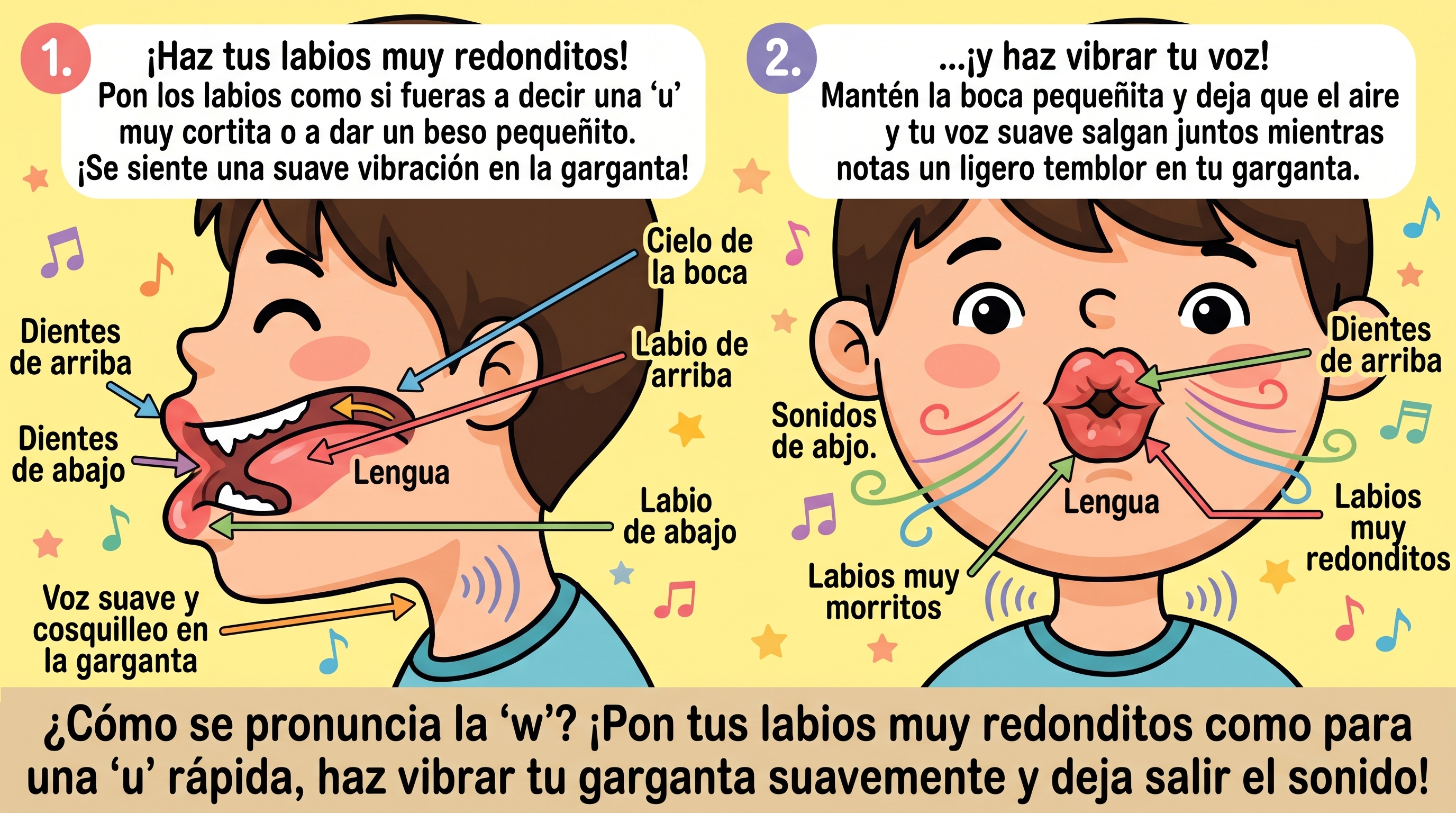
在Zài这些zhèxiē例子lìzi里lǐ,“w”都dōu在zài音节yīnjié开头kāitóu,后面hòumiàn跟着gēnzhe元音yuányīn。/En estos ejemplos, la «w» va al principio de la sílaba y siempre la sigue una vocal./In these examples, “w” is at the start of the syllable and is always followed by a vowel.
yī yí yǐ yì
yī
yí
yǐ
yì
wū wú wǔ wù
wū
wú
wǔ
wù

![]()




