乌鸦Wūyā穿着chuānzhe黑衣服hēiyīfú,小鱼xiǎoyú穿着chuānzhe绿lǜ衣服yīfu。/El cuervo lleva ropa negra y el pececito, ropa verde./The crow wears black clothes and the little fish wears green.
· 小猪Xiǎozhū胖胖的pàngpàngde。/El cerdito está muy gordito./The piglet is nice and chubby.
哭Kū/llorar/to cry
· 宝宝Bǎobǎo不bù哭kū了le。/Baobao ya no llora./Baobao has stopped crying.
** 想一想, 说一说/Xiǎng yi xiǎng, shuō yi shuō/Piensa y responde/Think and answer the following questions **
(1)读一读Dú yi dú“i”“u”“ü”的de四个sìgè声调shēngdiào,注意zhùyì“ü”的de口形kǒuxíng。/Lee los cuatro tonos de i, u y ü; fíjate en la forma de la boca para la ü./Read the four tones of i, u and ü; pay attention to your mouth for ü.
(2) “鱼Yú”的de拼音pīnyīn是shì“yú”,为什么wèishénme“u”上面shàngmiàn没有méiyǒu两点liǎngdiǎn?/El pinyin de 鱼 es yú: ¿por qué la u no lleva los dos puntos?/The pinyin of 鱼 is yú: why does the u have no dots?
(3)读一读Dú yi dú,说一说shuō yi shuō带dài这些zhèxiē音yīn的de词语cíyǔ。/Lee y di palabras con estos sonidos: i, u, ü./Read and say words with these sounds: i, u, ü.
** 家庭/Jiātíng/FAMILIA/FAMILY **
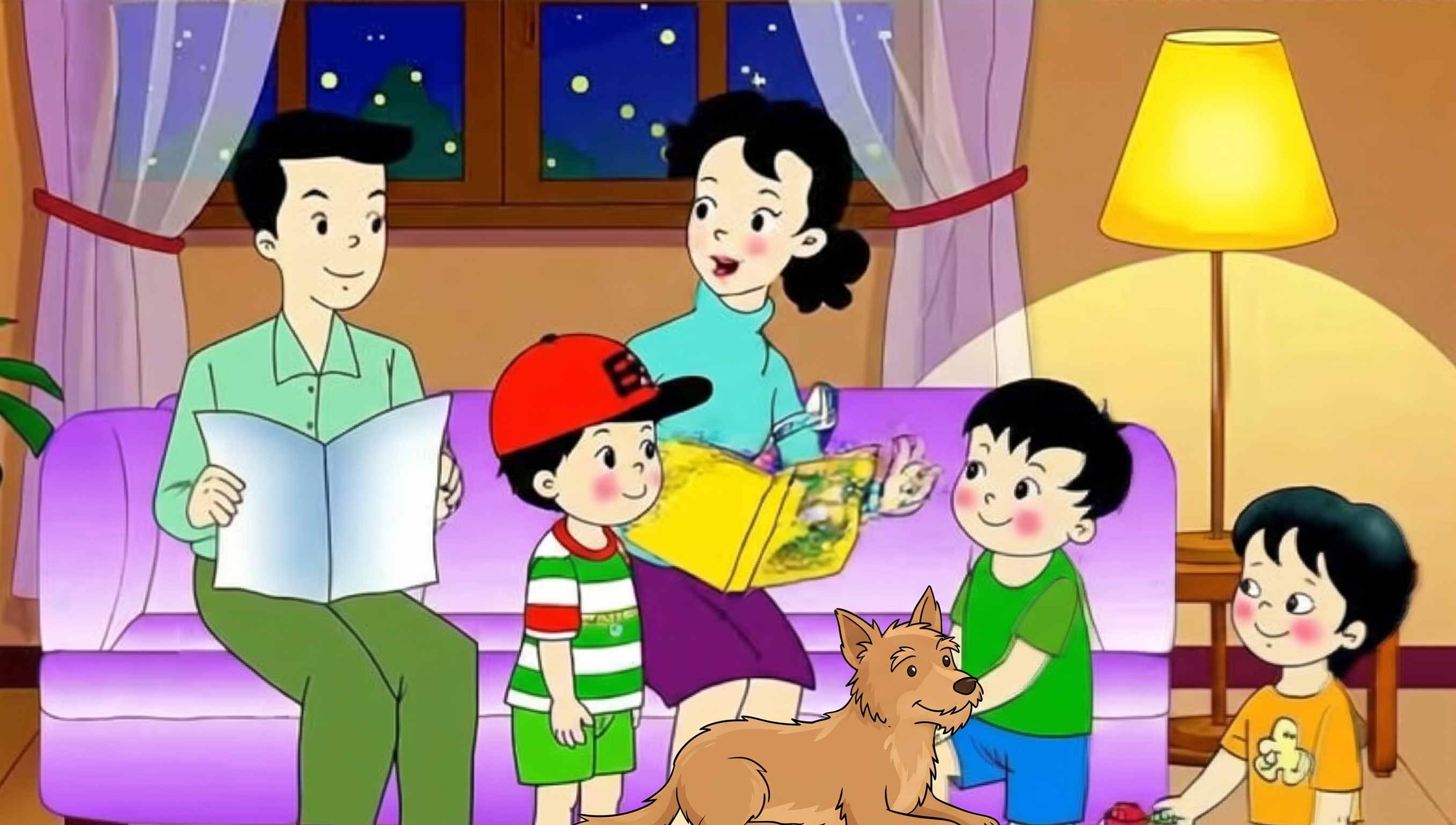
宝宝Bǎobao一yī家jiā/La familia de Baobao/Baobao's family
爸爸Bàba/Papá, padre/Dad, father
妈妈Māma/Mamá, madre/Mum, mother
宝宝Bǎobao/Baobao/Baobao
婷婷Tíngtíng/Tíngting/Tíngting
嘟嘟Dūdū/Dudú/Dudú
洛基Luòjī/Rocky/Rocky
** 对话/Duìhuà/Diálogo/Dialogue **
嘟嘟Dūdū:爸爸Bàba,我们wǒmen今天jīntiān去qù哪儿nǎr?/Dudú: Papá, ¿adónde vamos hoy?/Dudú: Dad, where are we going today?
爸爸Bàba:穿Chuān上shàng绿lǜ衣服yīfu,我们wǒmen去qù农场nóngchǎng看kàn小猪xiǎozhū。/Papá: Ponte la ropa verde, vamos a la granja a ver los cerditos./Dad: Put on your green clothes – we're going to the farm to see the piglets.
婷婷Tíngtíng:农场Nóngchǎng里lǐ还有háiyǒu一个yígè池塘chítáng,里面lǐmiàn有yǒu很多hěnduō鱼yú。/Tíngting: En la granja también hay un estanque con muchos peces./Tíngting: There's a pond on the farm too, with lots of fish.
宝宝Bǎobǎo:一只Yìzhī乌鸦wūyā飞过来fēiguòlái,我wǒ吓xià得de哭kū了le!/Baobao: Vino volando un cuervo y me asusté tanto que me puse a llorar./Baobao: A crow flew over and I got so scared I cried!
妈妈Māma:别哭Biékū,我们wǒmen拿ná米mǐ喂wèi小鸡xiǎojī吧ba。/Mamá: No llores, vamos a dar arroz a los pollitos./Mum: Don't cry – let's feed some rice to the chicks.
Comentario Pedagógico: i, u, ü: tres vocales cerradas: 1. Forma de la boca: La «i» con los labios estirados, la «u» con los labios redondeados y la «ü» con la lengua de la «i» y los labios de la «u». 2. Los dos puntos: Con «j», «q», «x» e «y», la «ü» pierde los dos puntos. 3. Marca del tono: Cuando la «i» lleva tono, se quita el punto: «ī».
Pedagogical Commentary: i, u, ü: three closed vowels: 1. Mouth shape: “i” with spread lips, “u” with rounded lips and “ü” with the tongue of “i” and the lips of “u”. 2. The two dots: With “j”, “q”, “x” and “y”, “ü” loses its two dots. 3. Tone mark: When “i” carries a tone mark, its dot is dropped: “ī”.
@ Pinyin 资料 (PDF, MP3 等) 的版权归属于:中国华文教育网 - Overseas Chinese Language and Culture Education Online。
@ Los materiales Pinyin (PDF, MP3, etc.) son propiedad de: 中国华文教育网 - Overseas Chinese Language and Culture Education Online.
@ The materials Pinyin (PDF, MP3, etc.) are the property of: 中国华文教育网 - Overseas Chinese Language and Culture Education Online.