
MT
L01
L02
L03
L04
L05
EL1
P01
P02
P13
P03
P04
P07
P08
P09
P10
P11
P12
EP1
P05
P06
P15
P16
P17
P18
EP2
T01
T02
T03
T04
ET1
L06
L07
L08
L09
L10
EL2
T05
T06
T07
T08
ET2
T09
T10
T11
ET3
T12
T13
T14
ET4
PRIMARIA_C1_N1_07_P02

Practica aquí · 在这里练习
--------------------------------------------------------------------------------
拼音Pīnyīn中zhōng的de“i”是shì一个yígè闭元音bìyuányīn,发音fāyīn和hé西班牙语Xībānyáyǔ单词dāncí“vino”或huò“pino”中zhōng的de“i”相似xiāngsì。/El sonido «i» en pinyin es una vocal cerrada que se pronuncia de manera similar a la «i» de las palabras españolas «vino» o «pino»./The sound “i” in pinyin is a closed vowel pronounced much like the “i” in the Spanish words “vino” or “pino”.
不过Búguò,“i”在zài拼音pīnyīn里lǐ有yǒu一些yìxiē特别tèbié的de地方dìfang,要yào看kàn它tā前面qiánmiàn的de声母shēngmǔ。/Sin embargo, en pinyin la «i» tiene algunas particularidades según la consonante que la precede./However, in pinyin the “i” has some special features depending on the consonant before it.
--------------------------------------------------------------------------------
--------------------------------------------------------------------------------
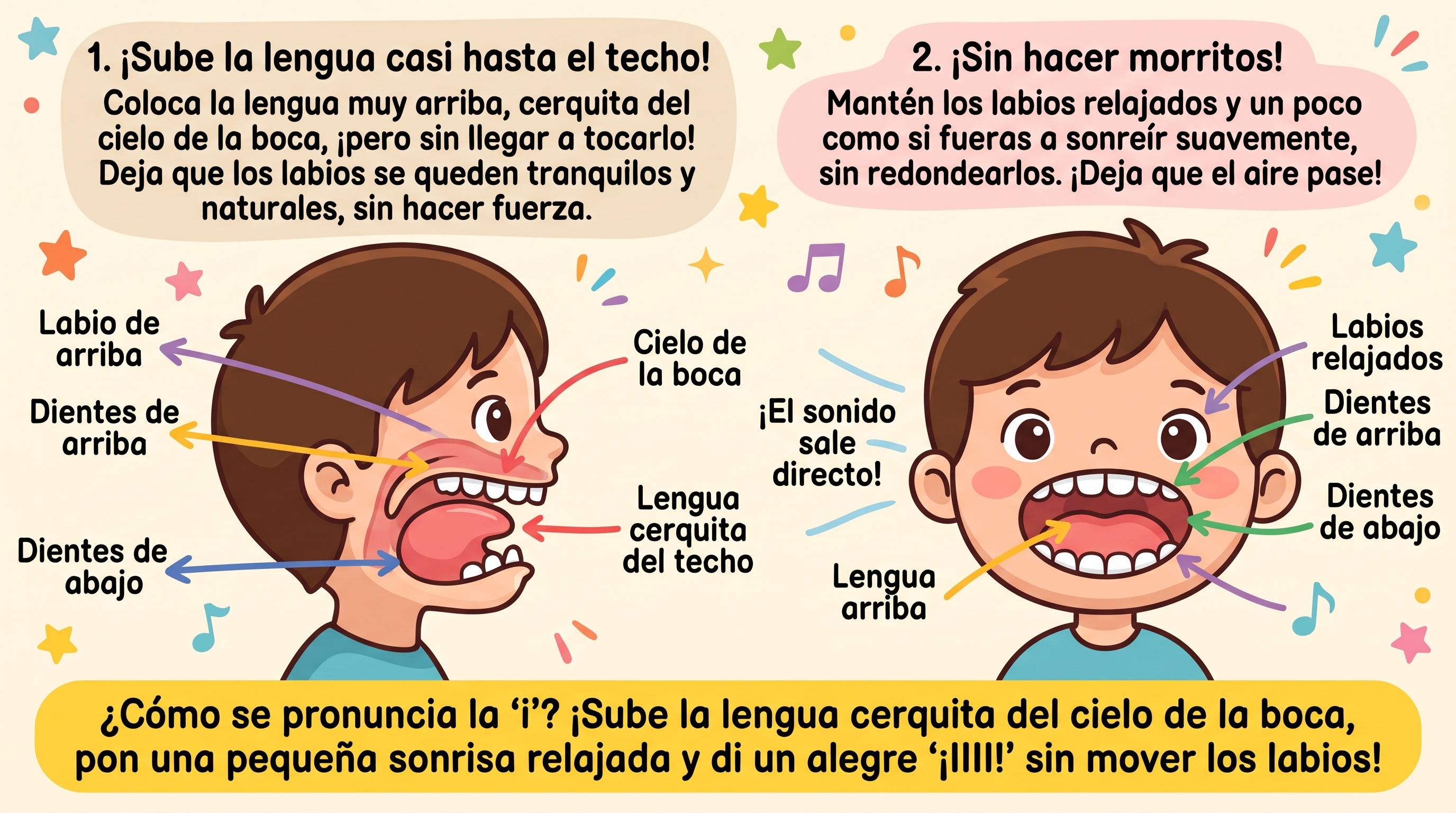
• 它Tā是shì一个yígè闭元音bìyuányīn,舌位shéwèi高gāo,和hé西班牙语Xībānyáyǔ的de“i”很hěn像xiàng。/Es una vocal cerrada y alta, muy parecida a la «i» española./It is a closed, high vowel, very like the Spanish “i”.
• 舌头Shétou靠近kàojìn上腭shàng'è,嘴唇zuǐchún自然zìrán放松fàngsōng,不要búyào拢圆lǒngyuán。/La lengua se coloca cerca del paladar, y los labios permanecen en una posición neutra, sin redondearse./The tongue is close to the palate, and the lips stay neutral, without rounding.
• 在Zài“z”“c”“s”后面hòumiàn,“i”不bù读dú“i”,而是érshì延续yánxù前面qiánmiàn的de声母shēngmǔ,发出fāchū一种yìzhǒng嗡嗡wēngwēng的de声音shēngyīn;在zài“zh”“ch”“sh”“r”后面hòumiàn也yě一样yíyàng,只是zhǐshì舌尖shéjiān要yào卷juǎn起来qǐlái(在zài例子lìzi中zhōng注明zhùmíng为wéi特殊tèshū读音dúyīn)。/Después de «z», «c» y «s» no suena como «i», sino como un zumbido que prolonga la consonante; después de «zh», «ch», «sh» y «r» ocurre lo mismo, pero con la lengua doblada hacia atrás (en los ejemplos se indica «i especial»)./After “z”, “c” and “s” it does not sound like “i” but like a buzz that continues the consonant; after “zh”, “ch”, “sh” and “r” the same happens, but with the tongue curled back (marked “special i” in the examples).
1) 咪mī/maullido/miaow (a cat's cry)
2) 丝sī/hilo, seda (i especial)/thread, silk (special i)
3) 逼bī/presionar, forzar/to press, to force
4) 知zhī/saber (i especial)/to know (special i)
5) 西xī/oeste/west
6) 力lì/fuerza/strength
7) 提tí/levantar/to lift, to raise
8) 急jí/urgente/urgent
9) 基jī/base/base, foundation
10) 日rì/sol, día (i especial)/sun, day (special i)
11) 衣yī/ropa/clothes
12) 米mǐ/arroz/rice
13) 笔bǐ/bolígrafo, pincel/pen, brush
14) 七qī/siete/seven
15) 吃chī/comer (i especial)/to eat (special i)
--------------------------------------------------------------------------------
普通话Pǔtōnghuà的de很多hěnduō常用词chángyòngcí里lǐ都dōu有yǒu“i”这个zhège音yīn。/El sonido «i» se usa en muchas palabras comunes del chino mandarín./The “i” sound is used in many common Mandarin Chinese words.
声调Shēngdiào非常fēicháng重要zhòngyào,它tā能néng完全wánquán改变gǎibiàn字zì的de意思yìsi,比如bǐrú丝sī(丝线sīxiàn)和hé四sì(数字shùzì四sì)只是zhǐshì声调shēngdiào不同bùtóng。/El tono es fundamental, ya que puede cambiar por completo el significado: sī (hilo) y sì (cuatro) solo se diferencian en el tono./The tone is essential, as it can completely change the meaning: sī (thread) and sì (four) differ only in their tones.

Practica aquí · 在这里练习
--------------------------------------------------------------------------------
拼音Pīnyīn中zhōng的de“u”是shì一个yígè闭元音bìyuányīn,发音fāyīn和hé西班牙语Xībānyáyǔ单词dāncí“luna”中zhōng的de“u”相似xiāngsì,但dàn有yǒu一些yìxiē普通话pǔtōnghuà自己zìjǐ的de特点tèdiǎn。/El sonido «u» en pinyin es una vocal cerrada que se pronuncia de manera similar a la «u» de la palabra española «luna», pero con algunas particularidades propias del chino mandarín./The sound “u” in pinyin is a closed vowel pronounced much like the “u” in the Spanish word “luna”, but with some features of its own in Mandarin Chinese.
--------------------------------------------------------------------------------
--------------------------------------------------------------------------------
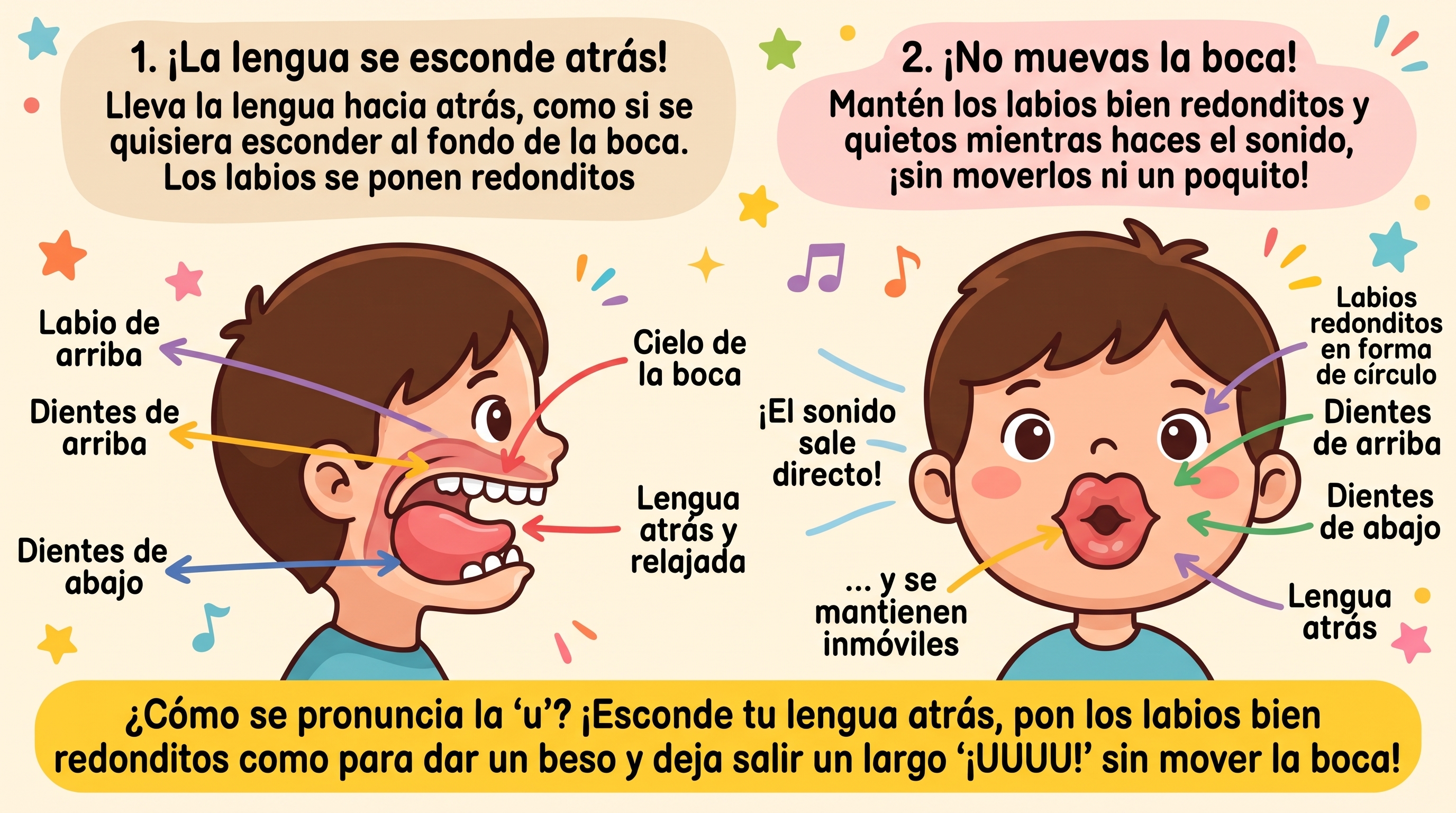
• 它Tā是shì一个yígè后元音hòuyuányīn,舌位shéwèi高gāo,和hé“luna”中zhōng的de“u”一样yíyàng。/Es una vocal cerrada y posterior, como la «u» de «luna»./It is a closed, back vowel, like the “u” in “luna”.
• 舌头Shétou往后wǎnghòu缩suō,嘴唇zuǐchún拢圆lǒngyuán,发音fāyīn时shí嘴唇zuǐchún保持bǎochí不bú动dòng。/La lengua se coloca en la parte posterior de la boca, y los labios se redondean y no se mueven mientras se emite el sonido./The tongue is placed at the back of the mouth, and the lips are rounded and stay still while the sound is made.
• 在Zài“j”“q”“x”“y”后面hòumiàn,字母zìmǔ“u”其实qíshí读dú“ü”,比如bǐrú去qù、鱼yú。/Después de «j», «q», «x» e «y», la letra «u» representa en realidad el sonido «ü», como en qù o yú./After “j”, “q”, “x” and “y”, the letter “u” actually stands for the sound “ü”, as in qù or yú.
1) 路lù/camino, calle/road, street
2) 库kù/almacén/warehouse, store
3) 兔tù/conejo/rabbit
4) 书shū/libro/book
5) 户hù/hogar, puerta/household, door
6) 乌wū/cuervo/crow
7) 怒nù/enfado/anger
8) 固gù/firme, sólido/firm, solid
9) 普pǔ/general, universal/general, universal
10) 足zú/pie; suficiente/foot; enough
11) 五wǔ/cinco/five
12) 哭kū/llorar/to cry
13) 猪zhū/cerdo/pig
14) 读dú/leer/to read
15) 布bù/tela/cloth
--------------------------------------------------------------------------------
普通话Pǔtōnghuà的de很多hěnduō词cí里lǐ都dōu有yǒu“u”,声调shēngdiào能néng区分qūfēn意思yìsi,比如bǐrú书shū(书本shūběn)和hé树shù(树木shùmù)只是zhǐshì声调shēngdiào不同bùtóng。/El sonido «u» se utiliza en muchas palabras del chino mandarín, y el tono permite distinguir significados: shū (libro) y shù (árbol) solo se diferencian en el tono./The “u” sound is used in many Mandarin Chinese words, and the tone tells meanings apart: shū (book) and shù (tree) differ only in tone.
Practica aquí · 在这里练习
--------------------------------------------------------------------------------
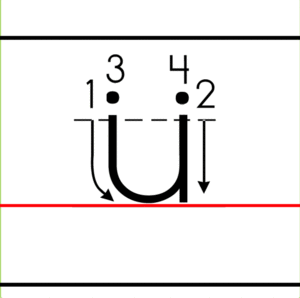
拼音Pīnyīn中zhōng的de“ü”是shì一个yígè西班牙语Xībānyáyǔ里lǐ没有méiyǒu的de元音yuányīn:可以kěyǐ先xiān发fā“i”,再zài把bǎ嘴唇zuǐchún拢圆lǒngyuán,就jiù像xiàng发fā“u”一样yíyàng。/El sonido «ü» en pinyin es una vocal que no existe en español: se puede aproximar diciendo «i» con los labios redondeados como para la «u»./The sound “ü” in pinyin is a vowel that does not exist in Spanish: it can be approximated by saying “i” with the lips rounded as for “u”.
它Tā和hé德语Déyǔ的de“ü”、法语Fǎyǔ的de“u”是shì同一个tóngyígè音yīn。/Es el mismo sonido que la «ü» alemana o la «u» francesa./It is the same sound as the German “ü” or the French “u”.
--------------------------------------------------------------------------------
--------------------------------------------------------------------------------
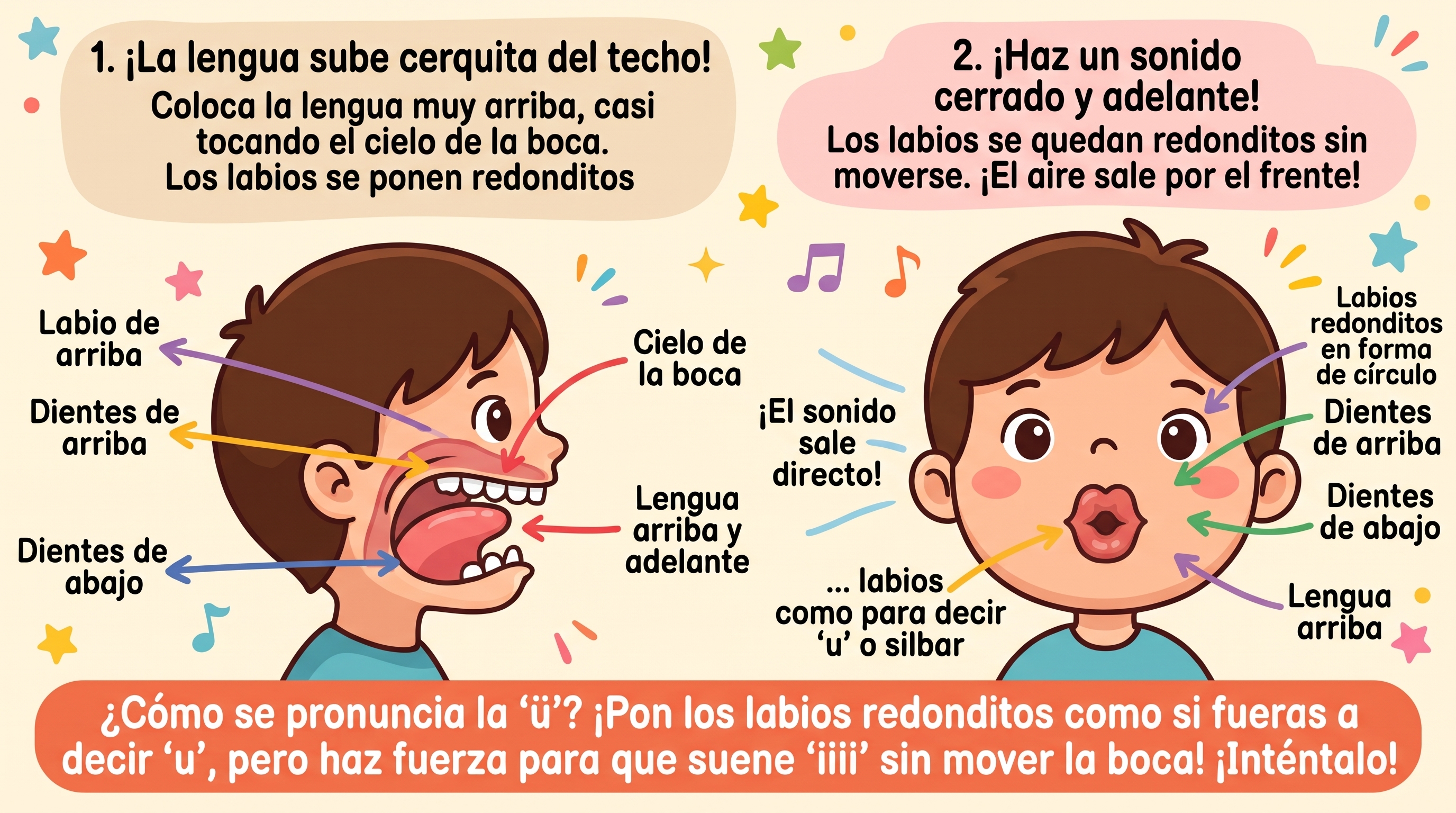
• 先Xiān摆好bǎihǎo发fā“i”的de口形kǒuxíng,再zài把bǎ嘴唇zuǐchún拢圆lǒngyuán,像xiàng发fā“u”一样yíyàng。/Empieza con la posición de la «i», como en «vino», pero redondea los labios como si dijeras «u»./Start from the position of “i”, as in “vino”, but round your lips as if saying “u”.
• 舌头Shétou靠近kàojìn上腭shàng'è,嘴唇zuǐchún保持bǎochí圆形yuánxíng,这zhè是shì一个yígè闭bì的de前元音qiányuányīn。/La lengua se mantiene cerca del paladar y los labios redondeados: es un sonido cerrado y frontal./The tongue stays close to the palate and the lips stay rounded: it is a closed, front sound.
• 在Zài“j”“q”“x”“y”后面hòumiàn,“ü”上shàng的de两点liǎngdiǎn省略shěnglüè,但dàn还是háishì读dú“ü”;在zài“n”“l”后面hòumiàn保留bǎoliú两点liǎngdiǎn。/Después de «j», «q», «x» e «y» se quitan los dos puntos (ju, qu, xu, yu), pero sigue sonando «ü»; después de «n» y «l» se mantienen (nü, lü)./After “j”, “q”, “x” and “y” the two dots are dropped (ju, qu, xu, yu), but it still sounds like “ü”; after “n” and “l” they are kept (nü, lü).
1) 绿lǜ/verde/green
2) 女nǚ/mujer/woman
3) 许xǔ/permitir, prometer/to allow, to promise
4) 举jǔ/levantar/to lift, to raise
5) 与yǔ/y, con/and, with
6) 去qù/ir/to go
7) 旅lǚ/viajar/to travel
8) 鱼yú/pez/fish
9) 驴lǘ/burro/donkey
10) 率lǜ/tasa, porcentaje/rate, percentage
11) 雨yǔ/lluvia/rain
12) 句jù/frase/sentence
13) 需xū/necesitar/to need
14) 区qū/distrito, zona/district, area
15) 菊jú/crisantemo/chrysanthemum
--------------------------------------------------------------------------------
“ü”在zài普通话pǔtōnghuà里lǐ非常fēicháng重要zhòngyào,发fā准zhǔn这个zhège音yīn是shì听懂tīngdǒng和hé说好shuōhǎo普通话pǔtōnghuà的de关键guānjiàn。/El sonido «ü» es fundamental en chino mandarín, y pronunciarlo bien es clave para entender y hacerse entender./The “ü” sound is fundamental in Mandarin Chinese, and pronouncing it well is key to understanding and being understood.
īíǐì
ī
í
ǐ
ì
ūúǔù
ū
ú
ǔ
ù
ǖǘǚǜ
ǖ
ǘ
ǚ
ǜ

主题/Zhǔtí/Tema/Theme

主题 2/Zhǔtí 2/Tema/Theme 2

词汇 Cíhuì/Vocabulario/Vocabulary

PDF与视频/PDF,videos Y Quiz/PDF, Videos and Quiz

PDF与视频/PDF,videos Y Quiz/PDF, Videos and Quiz
