
MT
L01
L02
L03
L04
L05
EL1
P01
P02
P13
P03
P04
P07
P08
P09
P10
P11
P12
EP1
P05
P06
P15
P16
P17
P18
EP2
T01
T02
T03
T04
ET1
L06
L07
L08
L09
L10
EL2
T05
T06
T07
T08
ET2
T09
T10
T11
ET3
T12
T13
T14
ET4
PRIMARIA_C1_N1_08_P03

Practica aquí · 在这里练习
--------------------------------------------------------------------------------
拼音Pīnyīn中zhōng的de“b”和hé西班牙语Xībānyáyǔ的de“b”有点儿yǒudiǎnr像xiàng,但dàn发音fāyīn时shí声带shēngdài不bú振动zhèndòng,也yě不bú送气sòngqì。/El sonido «b» en pinyin se parece a la «b» española, pero se pronuncia sin vibración de las cuerdas vocales y sin soplo de aire./The sound “b” in pinyin is similar to the Spanish “b”, but it is pronounced without vibration of the vocal cords and without a puff of air.
其实Qíshí它tā更gèng像xiàng西班牙语Xībānyáyǔ单词dāncí“papá”中zhōng的de“p”。/En realidad se parece mucho a la «p» de «papá»./In fact, it sounds very like the “p” in “papá”.
--------------------------------------------------------------------------------

--------------------------------------------------------------------------------
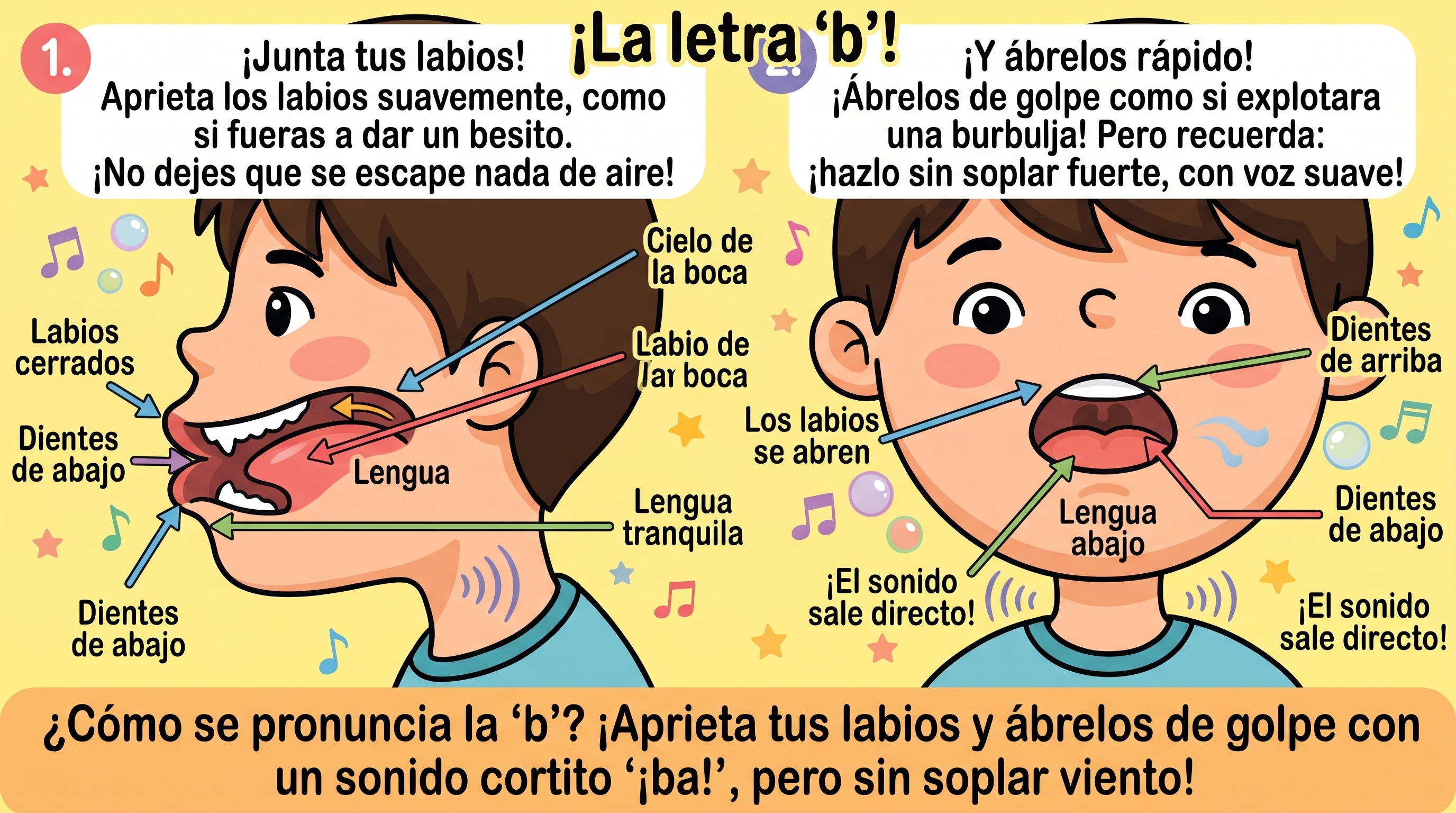
• 双唇Shuāngchún先xiān闭bì紧jǐn,然后ránhòu很快hěnkuài张开zhāngkāi,让ràng气流qìliú出来chūlái,但dàn不要búyào用力yònglì送气sòngqì。/Los labios se cierran y se abren rápidamente para soltar el aire, pero sin soplar./The lips close and then open quickly to release the air, but without a puff.
• 和Hé“banco”“bola”中zhōng的de“b”相比xiāngbǐ,它tā更gèng轻qīng,声带shēngdài也yě不bú振动zhèndòng。/Comparada con la «b» de «banco» o «bola», es más suave y sin vibración./Compared with the “b” in “banco” or “bola”, it is softer and has no vibration.
1) 爸bà/papá/dad
2) 不bù/no/no, not
3) 冰bīng/hielo/ice
4) 包bāo/bolsa, paquete/bag, parcel
5) 鼻bí/nariz/nose
6) 背bèi/espalda/back
7) 不会búhuì/no saber, no poder/can't, won't
8) 办bàn/hacer, gestionar/to do, to handle
9) 报bào/informar; periódico/to report; newspaper
10) 宝bǎo/tesoro/treasure
11) 八bā/ocho/eight
12) 白bái/blanco/white
13) 北běi/norte/north
14) 杯bēi/vaso, taza/cup, glass
15) 播bō/emitir/to broadcast
--------------------------------------------------------------------------------
“b”是shì一个yígè清楚qīngchu、直接zhíjiē的de声母shēngmǔ,后面hòumiàn一般yìbān跟着gēnzhe韵母yùnmǔ;声调shēngdiào可以kěyǐ改变gǎibiàn意思yìsi,比如bǐrú八bā(数字shùzì八bā)和hé爸bà(爸爸bàba)。/La «b» es una consonante clara y directa, que suele ir seguida de una vocal; el tono puede cambiar el significado, como en bā (ocho) y bà (papá)./The “b” is a clear, direct consonant, usually followed by a vowel; the tone can change the meaning, as in bā (eight) and bà (dad).

Practica aquí · 在这里练习
--------------------------------------------------------------------------------
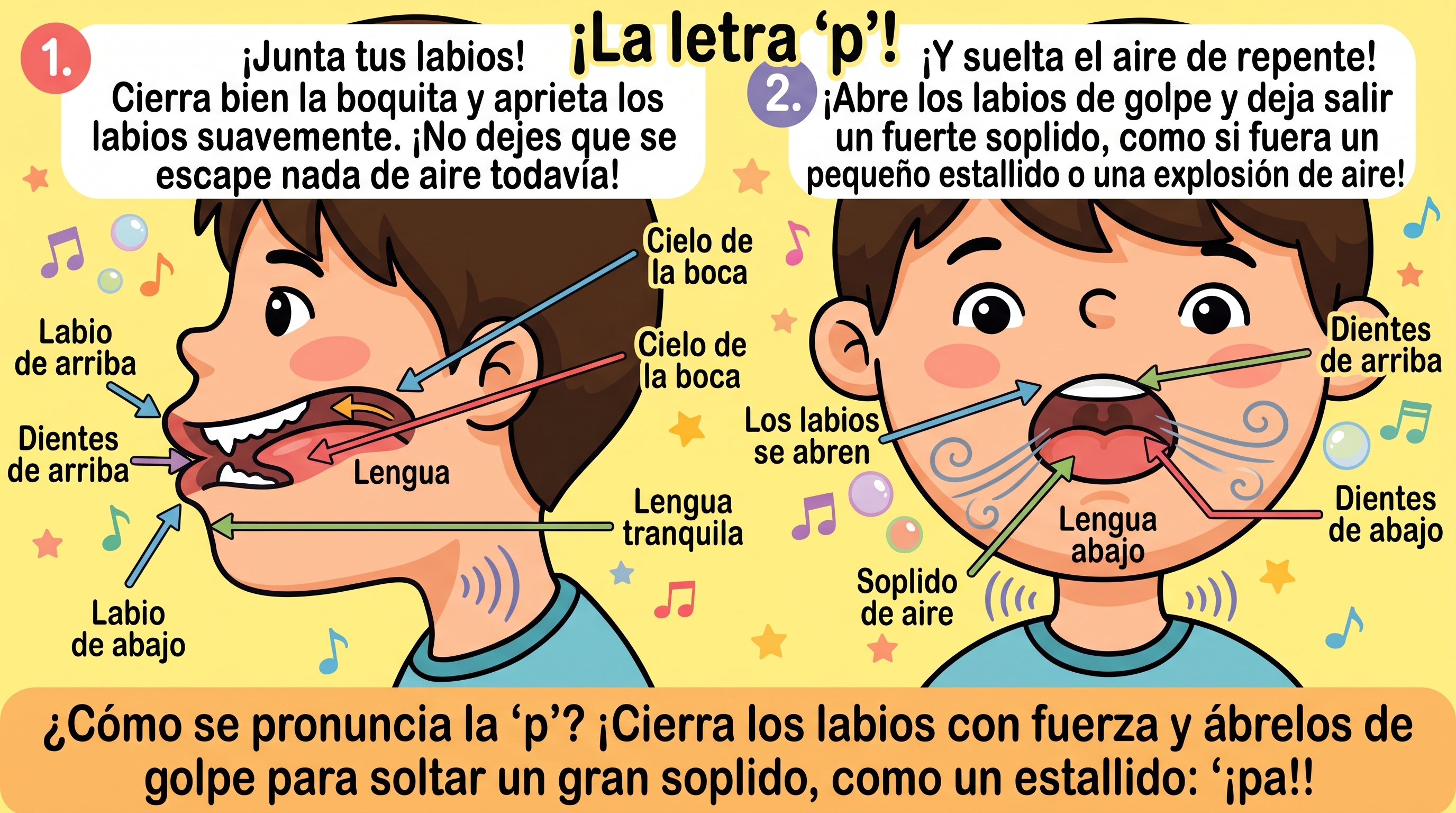
拼音Pīnyīn中zhōng的de“p”和hé西班牙语Xībānyáyǔ的de“p”相似xiāngsì,但dàn它tā是shì送气音sòngqìyīn:发音fāyīn时shí会huì冲出chōngchū一股yìgǔ气流qìliú,就jiù像xiàng英语Yīngyǔ单词dāncí“park”“pat”中zhōng的de“p”。/El sonido «p» en pinyin se parece a la «p» española, pero es una consonante aspirada: al pronunciarla sale un golpe de aire, como en las palabras inglesas «park» o «pat»./The sound “p” in pinyin is similar to the Spanish “p”, but it is aspirated: a puff of air comes out when you say it, as in the English words “park” or “pat”.
--------------------------------------------------------------------------------

--------------------------------------------------------------------------------
• 双唇Shuāngchún闭bì紧jǐn,然后ránhòu突然tūrán张开zhāngkāi,冲出chōngchū一股yìgǔ气流qìliú。/Los labios se cierran y se abren de golpe, soltando un chorro de aire./The lips close and then open suddenly, releasing a burst of air.
• 小窍门Xiǎoqiàomén:把bǎ手shǒu放在fàngzài嘴zuǐ前qián,发fā“p”时shí能néng感到gǎndào气流qìliú,发fā“b”时shí几乎jīhū感觉gǎnjué不到búdào。/Truco: pon la mano delante de la boca; con la «p» notarás el aire y con la «b» casi nada./Tip: put your hand in front of your mouth; with “p” you will feel the air, and with “b” almost nothing.
1) 披pī/echarse por encima (ropa)/to drape over the shoulders
2) 跑pǎo/correr/to run
3) 平píng/plano, llano/flat, level
4) 皮pí/piel/skin
5) 碰pèng/chocar, tocar/to bump into, to touch
6) 配pèi/emparejar, combinar/to match, to combine
7) 怕pà/tener miedo/to be afraid
8) 婆pó/anciana/old woman
9) 泡pào/burbuja; remojar/bubble; to soak
10) 喷pēn/rociar, esparcir/to spray, to sprinkle
11) 泼pō/salpicar/to splash
12) 爬pá/trepar/to climb
13) 朋友péngyou/amigo/friend
14) 盘pán/plato, bandeja/plate, tray
15) 票piào/billete, entrada/ticket
--------------------------------------------------------------------------------
“p”后面hòumiàn总是zǒngshì跟着gēnzhe韵母yùnmǔ,声调shēngdiào不同bùtóng,意思yìsi也yě不同bùtóng,比如bǐrú跑pǎo(跑步pǎobù)和hé泡pào(泡茶pàochá)。/La «p» siempre va seguida de una vocal, y el tono cambia el significado, como en pǎo (correr) y pào (remojar)./The “p” is always followed by a vowel, and the tone changes the meaning, as in pǎo (to run) and pào (to soak).
bā bá bǎ bà
bā
bá
bǎ
bà
pā pá pǎ pà
pā
pá
pǎ
pà

![]()




