
PRIMARIA_C2_N1_28_T25B
** 28_T25B_狐狸养鸡(二)/Húli yǎng jī (èr)/El zorro que criaba pollos (II)/The Fox Who Raised Chicks (2) **
** 额外内容/Contenido adicional/Additional Content **
** 扩大和替换/Kuòdà hé tìhuàn/Ampliar y sustituir/Expand and substitute. **
飞/volar/fly
飞起来的感觉/la sensación de volar/the feeling of flying
呀,飞起来的感觉真好。/¡Ah, qué bien se está volando!/Oh, flying feels so good!
矛盾/dividido/torn
心里矛盾极了/sentirse muy dividido/feel completely torn
望着一天天肥壮起来的鸡,狐狸心里矛盾极了。/Mirando a los pollos, cada día más gordos, el zorro se sentía muy dividido./Looking at the chickens growing plumper by the day, the fox felt completely torn.
--------------------------------------------------------------------------------
在一个黑漆漆的夜晚,狐狸悄悄地溜走了。/Una noche negra como boca de lobo, el zorro se escabulló sin hacer ruido./On a pitch-dark night, the fox quietly slipped away.
--------------------------------------------------------------------------------
狐狸想/el zorro quiere/the fox wants
· 训练鸡们学飞/enseñar a volar a los pollos./to teach the chickens to fly.
鸡们学会了飞/los pollos aprenden a volar/the chickens learn to fly
· 却还挤在狐狸身边/pero siguen junto al zorro./but still huddle beside the fox.
最后,狐狸/al final, el zorro/in the end, the fox
· 悄悄地溜走了/se escabulle sin hacer ruido./quietly slips away.
** 想一想, 说一说/Xiǎng yi xiǎng, shuō yi shuō/Piensa y responde/Think and answer the following questions **
--------------------------------------------------------------------------------
狐狸为什么要训练鸡们学飞?/¿Por qué entrena el zorro a los pollos para que vuelen?/Why does the fox train the chickens to fly?
最后狐狸为什么悄悄地溜走了?/¿Por qué se escabulle el zorro al final?/Why does the fox quietly slip away in the end?
** 家庭/Jiātíng/FAMILIA/FAMILY **
--------------------------------------------------------------------------------
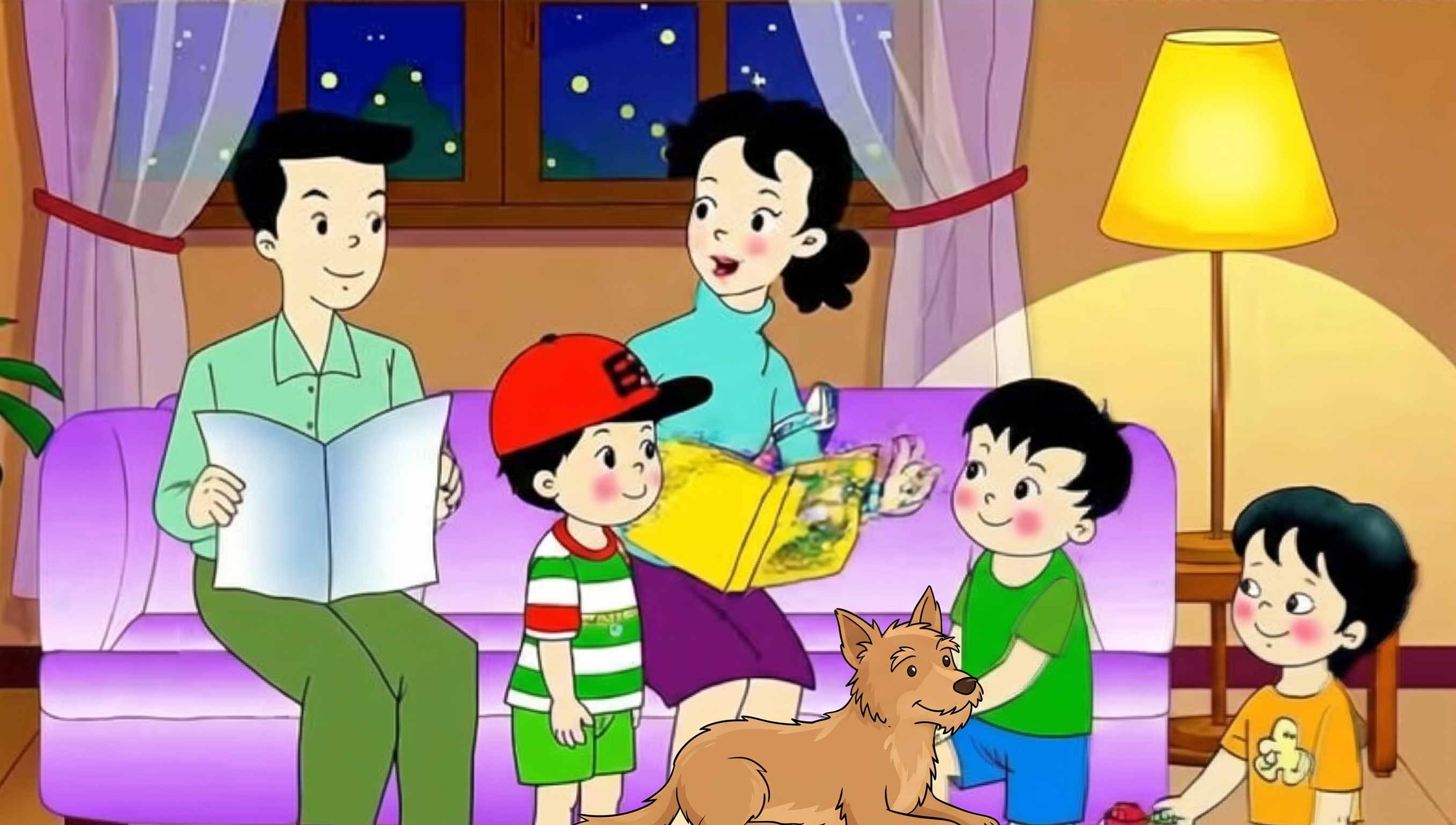
宝宝一家/La familia de Baobao/Baobao's family
爸爸/Papá, padre/Dad, father
妈妈/Mamá, madre/Mum, mother
宝宝/Baobao/Baobao
婷婷/Tíngting/Tíngting
嘟嘟/Dudú/Dudú
洛基/Rocky/Rocky
** 对话/Duìhuà/Diálogo/Dialogue **
--------------------------------------------------------------------------------
宝宝我猜对了!狐狸最后还是没有吃鸡。/Baobao: ¡Lo adiviné! Al final el zorro no se comió a los pollos./Baobao: I guessed right! In the end the fox didn't eat the chickens.
婷婷他训练鸡们学飞,鸡们真的飞上了天。/Tíngting: Los entrenó para volar y los pollos de verdad echaron a volar./Tíngting: He trained them to fly, and the chickens really did fly up into the sky.
嘟嘟可是它们还是挤在狐狸身边睡觉。/Dudú: Pero seguían durmiendo apretujados junto al zorro./Dudú: But they still slept huddled beside the fox.
妈妈狐狸心里很矛盾,最后悄悄地溜走了。/Mamá: El zorro estaba muy dividido y al final se escabulló./Mum: The fox felt torn, and in the end he quietly slipped away.
爸爸鸡们在四处寻找他。你们觉得狐狸会回来吗?/Papá: Los pollos lo buscan por todas partes. ¿Creéis que volverá?/Dad: The chickens search for him everywhere. Do you think the fox will come back?
洛基汪汪!/Rocky: ¡Guau!/Rocky: Woof!
▶ 📝 评论 / Comentarios / Comments
狐狸养鸡(二):爱比本能更强大:
1. 默读与猜字: 课文较长,让学生默读并做到不出声;遇到不认识的字,如 冠子 (guānzi) 、龇牙咧嘴 (zīyá-liězuǐ) 、矛盾 (máodùn) ,先猜一猜,再和同学交流。
2. 狐狸的矛盾: 狐狸“天生爱吃鸡”,却“无论如何也下不了口 (wúlùn-rúhé yě xià bu liǎo kǒu) ”,最后“悄悄地溜走了 (qiāoqiāo de liūzǒu le) ”。引导学生说说狐狸为什么这样做。
3. 前后呼应: 两篇课文都用“山坡前的草地上出现了这样一番景象”来写不同的画面。让学生比较三个“景象”,体会故事的变化。
1. 默读与猜字: 课文较长,让学生默读并做到不出声;遇到不认识的字,如 冠子 (guānzi) 、龇牙咧嘴 (zīyá-liězuǐ) 、矛盾 (máodùn) ,先猜一猜,再和同学交流。
2. 狐狸的矛盾: 狐狸“天生爱吃鸡”,却“无论如何也下不了口 (wúlùn-rúhé yě xià bu liǎo kǒu) ”,最后“悄悄地溜走了 (qiāoqiāo de liūzǒu le) ”。引导学生说说狐狸为什么这样做。
3. 前后呼应: 两篇课文都用“山坡前的草地上出现了这样一番景象”来写不同的画面。让学生比较三个“景象”,体会故事的变化。
Comentario Pedagógico: El zorro que criaba pollos (II): el cariño puede más que el instinto:
1. Lectura silenciosa y deducción: El texto es largo; los alumnos leen en silencio y, ante caracteres desconocidos como 冠子 (guānzi) , 龇牙咧嘴 (zīyá-liězuǐ) o 矛盾 (máodùn) , primero deducen y luego lo comentan con los compañeros.
2. El dilema del zorro: Por naturaleza le encanta el pollo, pero “无论如何也下不了口 (wúlùn-rúhé yě xià bu liǎo kǒu) ” y al final “悄悄地溜走了 (qiāoqiāo de liūzǒu le) ”. Los alumnos explican por qué actúa así.
3. Escenas que se responden: Las dos partes usan “山坡前的草地上出现了这样一番景象” para mostrar escenas distintas. Los alumnos comparan las tres escenas y ven cómo cambia la historia.
Pedagogical Commentary: The Fox Who Raised Chicks (2): love is stronger than instinct:
1. Silent reading and guessing: The text is long; students read silently and, for unknown characters such as 冠子 (guānzi) , 龇牙咧嘴 (zīyá-liězuǐ) or 矛盾 (máodùn) , guess first and then discuss with classmates.
2. The fox's dilemma: By nature he loves chicken, yet “无论如何也下不了口 (wúlùn-rúhé yě xià bu liǎo kǒu) ”, and in the end “悄悄地溜走了 (qiāoqiāo de liūzǒu le) ”. Students explain why he acts this way.
3. Echoing scenes: Both parts use “山坡前的草地上出现了这样一番景象” to show different scenes. Students compare the three scenes and see how the story changes.

主题/Zhǔtí/Tema/Theme

其他/Qítā/Otros/Others.

词汇 Cíhuì/Vocabulario/Vocabulary

PDF与视频/PDF,videos Y Quiz/PDF, Videos and Quiz
