
PRIMARIA_C2_N1_28_T24
** 28_T24_风娃娃/Fēng wáwa/El niño viento/The Wind Child **
** 额外内容/Contenido adicional/Additional Content **
** 扩大和替换/Kuòdà hé tìhuàn/Ampliar y sustituir/Expand and substitute. **
吹/soplar/blow
使劲吹/soplar con fuerza/blow hard
鼓起腮使劲吹/inflar los mofletes y soplar con fuerza/puff out one's cheeks and blow hard
他深深地吸了一口气,鼓起腮使劲向风车吹去。/Respiró hondo, infló los mofletes y sopló con fuerza hacia el molino./He took a deep breath, puffed out his cheeks and blew hard at the windmill.
愿望/deseo, intención/intention
好的愿望/buena intención/good intentions
做事情光有好的愿望还不行,还要看是不是真的对别人有用。/No basta con tener buena intención; también hay que ver si lo que haces es de verdad útil para los demás./Good intentions alone aren't enough; you also have to see whether what you do is really useful to others.
--------------------------------------------------------------------------------
寒风、凉风、暖风/viento helado, viento fresco, viento cálido/icy wind, cool breeze, warm wind
狂风、台风、暴风/vendaval, tifón, tormenta/gale, typhoon, storm
和风细雨、风和日丽/brisa suave y llovizna, día soleado y apacible/gentle breeze and light rain, sunny and calm
风平浪静、风调雨顺/calma total, clima favorable para las cosechas/calm seas, favourable weather
--------------------------------------------------------------------------------
风娃娃来到田野/el niño viento llega al campo/the Wind Child comes to the fields
· 吹动风车,秧苗喝足了水/mueve el molino y los brotes beben hasta hartarse./turns the windmill, and the seedlings drink their fill.
风娃娃来到河边/el niño viento llega al río/the Wind Child comes to the river
· 吹动船帆,船工们表示感谢/hincha la vela y los barqueros le dan las gracias./fills the sail, and the boatmen thank him.
风娃娃来到广场/el niño viento llega a la plaza/the Wind Child comes to the square
· 吹跑了风筝,孩子们伤心极了/se lleva las cometas y los niños se ponen tristísimos./blows the kites away, and the children are terribly upset.
** 想一想, 说一说/Xiǎng yi xiǎng, shuō yi shuō/Piensa y responde/Think and answer the following questions **
--------------------------------------------------------------------------------
风娃娃做了哪些好事?又做了哪些坏事?/¿Qué cosas buenas hizo el niño viento? ¿Y cuáles malas?/What good things did the Wind Child do? And what bad things?
读一读,想一想生活中风还能做些什么?/Piensa: ¿para qué más sirve el viento en la vida diaria?/Think: what else can wind do in everyday life?
** 家庭/Jiātíng/FAMILIA/FAMILY **
--------------------------------------------------------------------------------
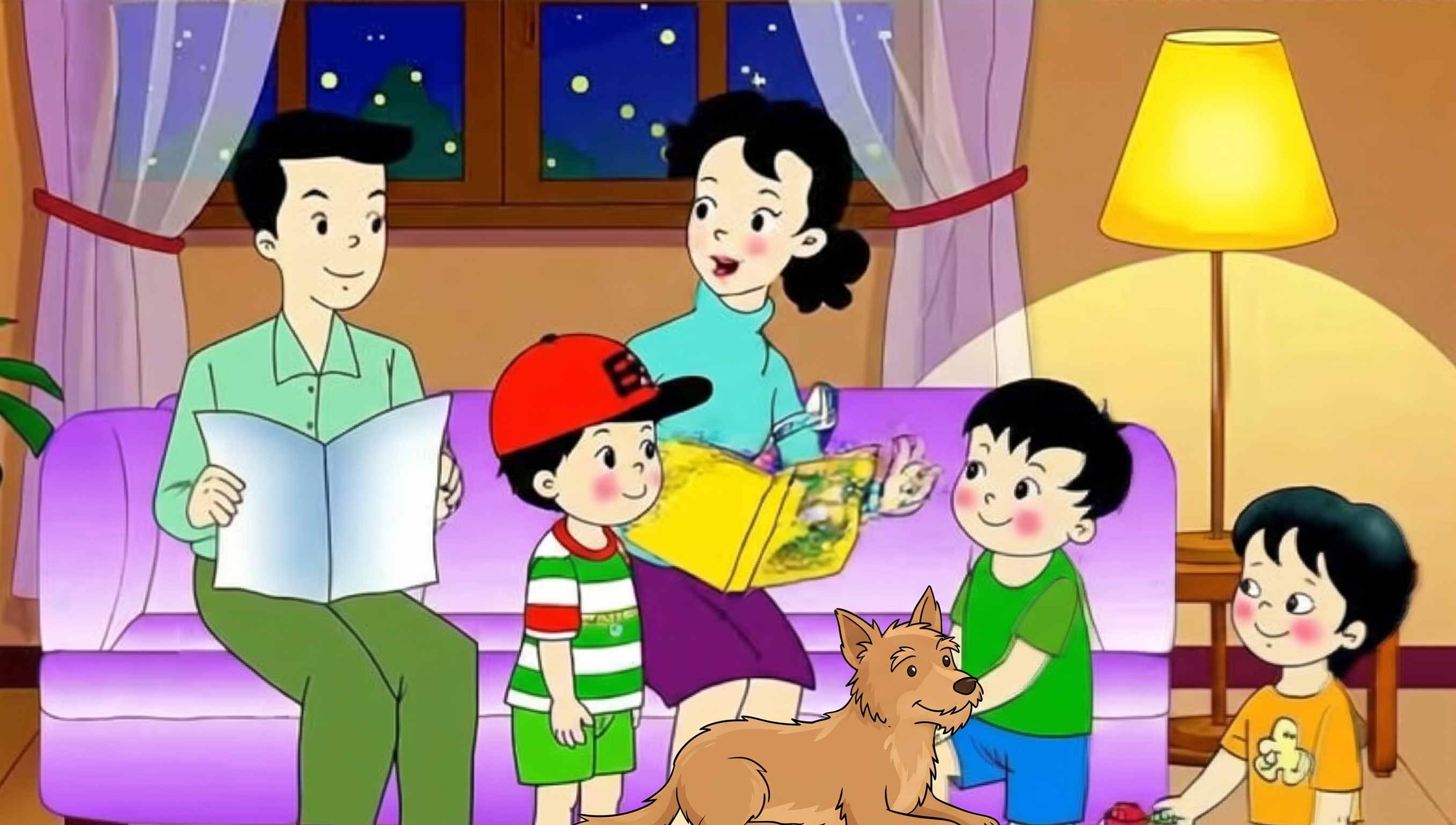
宝宝一家/La familia de Baobao/Baobao's family
爸爸/Papá, padre/Dad, father
妈妈/Mamá, madre/Mum, mother
宝宝/Baobao/Baobao
婷婷/Tíngting/Tíngting
嘟嘟/Dudú/Dudú
洛基/Rocky/Rocky
** 对话/Duìhuà/Diálogo/Dialogue **
--------------------------------------------------------------------------------
嘟嘟妈妈,我帮你擦桌子,结果把杯子打碎了。/Dudú: Mamá, te estaba ayudando a limpiar la mesa y he roto un vaso./Dudú: Mum, I was helping you wipe the table and I broke a glass.
妈妈没关系,你是想帮忙。下次先把杯子拿开。/Mamá: No pasa nada, querías ayudar. La próxima vez, aparta primero el vaso./Mum: Never mind, you wanted to help. Next time move the glass out of the way first.
婷婷嘟嘟像风娃娃,有好的愿望,可是做错了。/Tíngting: Dudú es como el niño viento: tiene buena intención, pero se ha equivocado./Tíngting: Dudú is like the Wind Child: he means well, but he got it wrong.
宝宝风娃娃吹动风车,帮秧苗喝足了水。/Baobao: El niño viento movió el molino y ayudó a los brotes a beber agua./Baobao: The Wind Child turned the windmill and helped the seedlings drink their fill.
爸爸可是他也吹跑了孩子们的风筝,人们都责怪他。/Papá: Pero también se llevó las cometas de los niños, y todos le echaron la culpa./Dad: But he also blew the children's kites away, and everyone blamed him.
嘟嘟我明白了,做事情还要看是不是真的对别人有用。/Dudú: Ya lo entiendo: también hay que ver si lo que haces de verdad sirve a los demás./Dudú: I get it: you also have to see whether what you do is really useful to others.
洛基汪汪!/Rocky: ¡Guau!/Rocky: Woof!
▶ 📝 评论 / Comentarios / Comments
风娃娃:好心也要做对事:
1. 对比好事和坏事: 风娃娃吹动 风车 (fēngchē) 、吹动 船帆 (chuánfān) ,人们感谢他;吹跑 风筝 (fēngzheng) 、吹跑 衣服 (yīfu) 、折断 小树 (xiǎoshù) ,人们责怪他。让学生说说同样是“吹”,为什么结果不一样。
2. 生动的词语: 断断续续 (duànduàn-xùxù) 、摇摇摆摆 (yáoyáo-bǎibǎi) 、无影无踪 (wúyǐng-wúzōng) 、哗啦哗啦 (huālā-huālā) 等词语把景象写得很形象。可以让学生积累这些词语,试着用一用。
3. 明白道理: 风妈妈说:“做事情光有好的愿望还不行,还要看是不是真的对别人有用。”引导学生联系生活,说说自己的体会。
Comentario Pedagógico: El niño viento: la buena intención no basta:
1. Comparar lo bueno y lo malo: Cuando mueve el 风车 (fēngchē) y la 船帆 (chuánfān) , le dan las gracias; cuando se lleva las 风筝 (fēngzheng) y la 衣服 (yīfu) y parte los 小树 (xiǎoshù) , le echan la culpa. Los alumnos explican por qué el mismo “soplar” tiene resultados tan distintos.
2. Palabras expresivas: 断断续续 (duànduàn-xùxù) , 摇摇摆摆 (yáoyáo-bǎibǎi) , 无影无踪 (wúyǐng-wúzōng) y 哗啦哗啦 (huālā-huālā) hacen muy vivas las escenas. Los alumnos pueden aprenderlas y usarlas.
3. La enseñanza: Mamá Viento dice: “做事情光有好的愿望还不行,还要看是不是真的对别人有用”. Los alumnos lo relacionan con su vida y cuentan sus experiencias.
Pedagogical Commentary: The Wind Child: good intentions aren't enough:
1. Good deeds and bad: When he turns the 风车 (fēngchē) and fills the 船帆 (chuánfān) , people thank him; when he blows away the 风筝 (fēngzheng) and the 衣服 (yīfu) and snaps the 小树 (xiǎoshù) , they blame him. Students explain why the same “blowing” has such different results.
2. Vivid words: 断断续续 (duànduàn-xùxù) , 摇摇摆摆 (yáoyáo-bǎibǎi) , 无影无踪 (wúyǐng-wúzōng) and 哗啦哗啦 (huālā-huālā) bring the scenes to life. Students can learn these words and try using them.
3. The lesson: Mother Wind says: “做事情光有好的愿望还不行,还要看是不是真的对别人有用”. Students relate this to their own lives and share their experiences.

主题/Zhǔtí/Tema/Theme

其他/Qítā/Otros/Others.

词汇 Cíhuì/Vocabulario/Vocabulary

PDF与视频/PDF,videos Y Quiz/PDF, Videos and Quiz
