
PRIMARIA_C2_N1_23_T19B
** 23_T19B_雾在哪里/Wù zài nǎlǐ/¿Dónde está la niebla?/Where Is the Fog? **
** 额外内容/Contenido adicional/Additional Content **
** 扩大和替换/Kuòdà hé tìhuàn/Ampliar y sustituir/Expand and substitute. **
藏起来/esconder/hide
把大海藏起来/esconder el mar/hide the sea
雾把大海藏了起来。无论是海水、船只,还是蓝色的远方,都看不见了。/La niebla escondió el mar. Ya no se veía nada: ni el agua, ni los barcos, ni la lejanía azul./The fog hid the sea. Whether the seawater, the ships or the blue distance, nothing could be seen.
无论还是都/ya sea… o…, …/whether… or…, …
雾把公园藏了起来。无论是花草、树木,还是小亭子,都看不见了。/La niebla escondió el parque. No se veían ni las flores, ni los árboles, ni el pabellón./The fog hid the park. Whether the flowers, the trees or the little pavilion, nothing could be seen.
--------------------------------------------------------------------------------
路上走着行人,小黑猫也出现了,它摇着黑尾巴,悠闲地散步。/Por la calle pasaba gente y apareció también el gatito negro, que paseaba tranquilo moviendo su cola negra./People were walking along, and the little black cat appeared too, swishing its black tail and strolling along.
--------------------------------------------------------------------------------
雾把大海藏起来/la niebla esconde el mar/the fog hides the sea
· 海水、船只都看不见了/no se ven ni el agua ni los barcos./neither the water nor the ships can be seen.
雾把天空藏起来/la niebla esconde el cielo/the fog hides the sky
· 四周变暗了/todo se oscurece./everything goes dark.
雾把城市藏起来/la niebla esconde la ciudad/the fog hides the city
· 房屋、街道、桥梁都看不见了/no se ven ni las casas, ni las calles, ni los puentes./houses, streets and bridges can't be seen.
雾把自己藏起来/la niebla se esconde/the fog hides itself
· 一切都露出来了/todo vuelve a aparecer./everything reappears.
** 想一想, 说一说/Xiǎng yi xiǎng, shuō yi shuō/Piensa y responde/Think and answer the following questions **
--------------------------------------------------------------------------------
雾都把什么藏了起来?/¿Qué cosas esconde la niebla?/What does the fog hide?
课文说雾是个又淘气又顽皮的孩子,在你眼里,雾又是什么呢?/El texto dice que la niebla «es un niño travieso y juguetón». Para ti, ¿qué es la niebla?/The text says the fog “is a naughty, mischievous child”. What is fog to you?
** 家庭/Jiātíng/FAMILIA/FAMILY **
--------------------------------------------------------------------------------
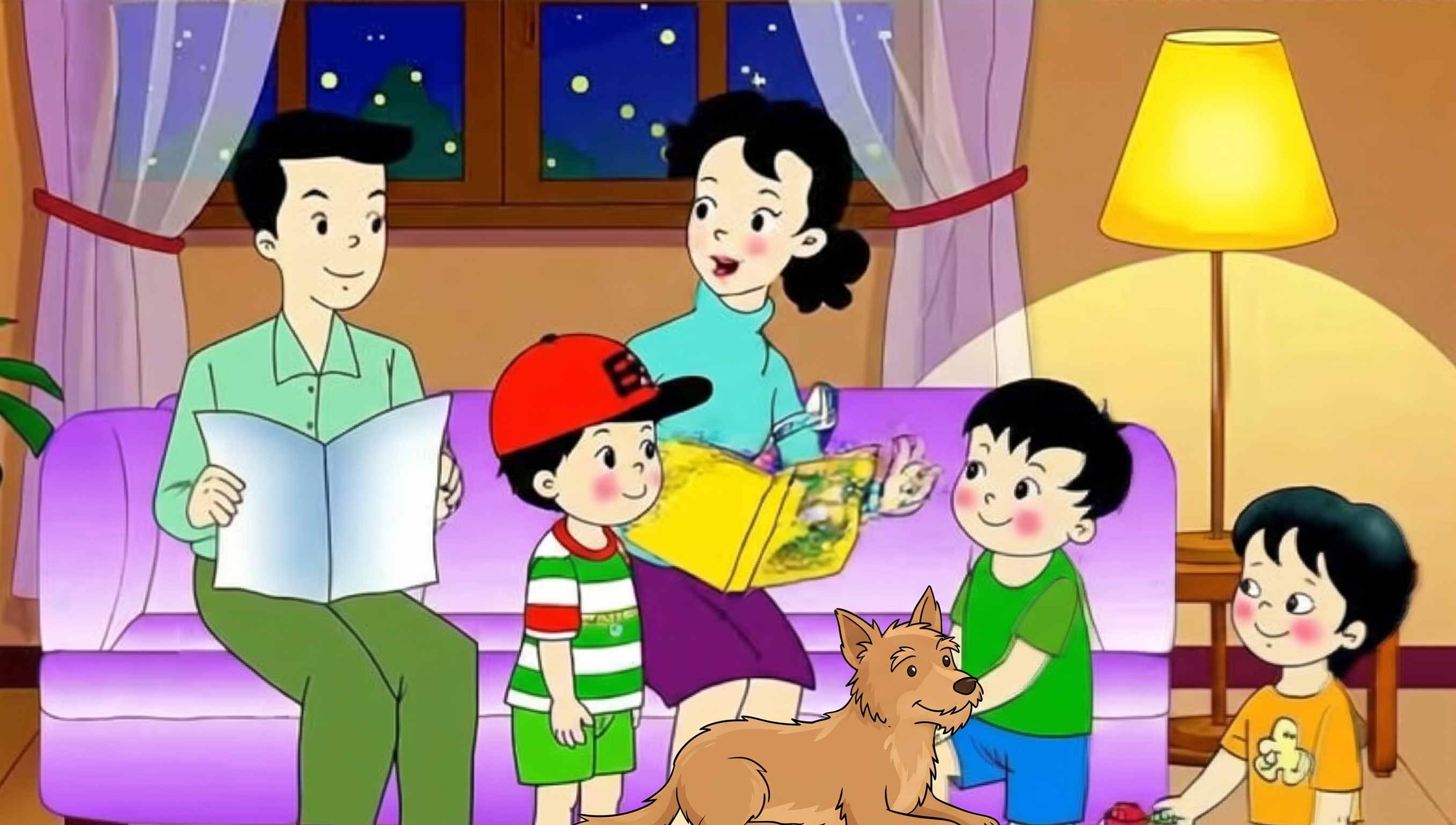
宝宝一家/La familia de Baobao/Baobao's family
爸爸/Papá, padre/Dad, father
妈妈/Mamá, madre/Mum, mother
宝宝/Baobao/Baobao
婷婷/Tíngting/Tíngting
嘟嘟/Dudú/Dudú
洛基/Rocky/Rocky
** 对话/Duìhuà/Diálogo/Dialogue **
--------------------------------------------------------------------------------
嘟嘟妈妈,今天早上窗外什么都看不见了!/Dudú: ¡Mamá, esta mañana no se ve nada por la ventana!/Dudú: Mum, you can't see anything out of the window this morning!
妈妈起大雾了。雾把房屋、街道和树木都藏起来了。/Mamá: Hay mucha niebla. Ha escondido las casas, las calles y los árboles./Mum: It's very foggy. The fog has hidden the houses, the streets and the trees.
婷婷雾真像一个又淘气又顽皮的孩子。/Tíngting: La niebla parece de verdad un niño travieso y juguetón./Tíngting: The fog really is like a naughty, mischievous child.
宝宝它甚至把太阳也藏起来了。/Baobao: Hasta ha escondido el sol./Baobao: It's even hidden the sun.
爸爸别着急,不久雾就会消失的。/Papá: Tranquilos, la niebla desaparecerá pronto./Dad: Don't worry, the fog will soon disappear.
嘟嘟看!房子和大树都露出来了。/Dudú: ¡Mirad! Ya se ven las casas y los árboles./Dudú: Look! The houses and the trees are showing again.
婷婷雾呢?它躲到哪里去了?/Tíngting: ¿Y la niebla? ¿Dónde se ha escondido?/Tíngting: And the fog? Where has it gone to hide?
洛基汪汪!/Rocky: ¡Guau!/Rocky: Woof!
▶ 📝 评论 / Comentarios / Comments
雾在哪里:一个会藏东西的“淘气孩子”:
1. 读好雾的话: 雾说“我要把大海藏起来”“现在我要把天空连同太阳一起藏起来”……让学生读出雾得意、淘气的语气。
2. 学习句式: “无论 (wúlùn) 是海水、船只,还是 (háishi) 蓝色的远方,都 (dōu) 看不见了。”可以照样子说说雾还会把什么藏起来,藏起来之后景色是什么样的。
3. 发挥想象: 课文把雾写成“又淘气又顽皮的孩子”。引导学生说说在自己眼里雾像什么,培养想象力。
1. 读好雾的话: 雾说“我要把大海藏起来”“现在我要把天空连同太阳一起藏起来”……让学生读出雾得意、淘气的语气。
2. 学习句式: “无论 (wúlùn) 是海水、船只,还是 (háishi) 蓝色的远方,都 (dōu) 看不见了。”可以照样子说说雾还会把什么藏起来,藏起来之后景色是什么样的。
3. 发挥想象: 课文把雾写成“又淘气又顽皮的孩子”。引导学生说说在自己眼里雾像什么,培养想象力。
Comentario Pedagógico: ¿Dónde está la niebla?: un «niño travieso» que esconde cosas:
1. Leer las palabras de la niebla: La niebla dice “我要把大海藏起来”, “现在我要把天空连同太阳一起藏起来”… Los alumnos las leen con tono orgulloso y travieso.
2. Una estructura útil: “无论 (wúlùn) 是海水、船只,还是 (háishi) 蓝色的远方,都 (dōu) 看不见了”. Los alumnos la imitan para decir qué más podría esconder la niebla y cómo quedaría el paisaje.
3. Imaginar: El texto presenta la niebla como “un niño travieso y juguetón”. Los alumnos dicen a qué se parece para ellos, desarrollando la imaginación.
Pedagogical Commentary: Where Is the Fog?: a “naughty child” who hides things:
1. Reading the fog's words: The fog says “我要把大海藏起来”, “现在我要把天空连同太阳一起藏起来”… Students read them in a proud, naughty tone.
2. A useful pattern: “无论 (wúlùn) 是海水、船只,还是 (háishi) 蓝色的远方,都 (dōu) 看不见了”. Students copy it to say what else the fog could hide and what the scene would look like.
3. Imagining: The text presents the fog as “a naughty, mischievous child”. Students say what fog is like for them, building their imagination.

主题/Zhǔtí/Tema/Theme

其他/Qítā/Otros/Others.

词汇 Cíhuì/Vocabulario/Vocabulary

PDF与视频/PDF,videos Y Quiz/PDF, Videos and Quiz
