
PRIMARIA_C2_N1_16_T12
** 16_T12_坐井观天/Zuò jǐng guān tiān/Mirar el cielo desde el fondo del pozo/Looking at the Sky from the Bottom of a Well **
** 额外内容/Contenido adicional/Additional Content **
** 扩大和替换/Kuòdà hé tìhuàn/Ampliar y sustituir/Expand and substitute. **
天/cielo/sky
天无边无际/el cielo no tiene fin/the sky is boundless
天无边无际,大得很哪!/¡El cielo no tiene fin, es inmenso!/The sky goes on for ever; it's enormous!
井口/boca del pozo/mouth of the well
井口那么大/tan grande como la boca del pozo/as big as the mouth of the well
天不过井口那么大,还用飞那么远吗?/El cielo no es más grande que la boca del pozo; ¿hace falta volar tan lejos?/The sky is no bigger than the mouth of the well; why fly so far?
--------------------------------------------------------------------------------
不信,你跳出井口来看一看吧。/Si no te lo crees, sal del pozo y míralo tú misma./If you don't believe me, jump out of the well and have a look.
--------------------------------------------------------------------------------
青蛙说/la rana dice/the frog says
· 天不过井口那么大/el cielo es como la boca del pozo./the sky is as big as the mouth of the well.
小鸟说/el pájaro dice/the bird says
· 天无边无际/el cielo no tiene fin./the sky is boundless.
青蛙为什么这样说/por qué lo dice la rana/why the frog says this
· 它天天坐在井里/se pasa el día en el pozo./it sits in the well every day.
小鸟为什么这样说/por qué lo dice el pájaro/why the bird says this
· 它飞了一百多里/ha volado más de cien li./it has flown over a hundred li.
** 想一想, 说一说/Xiǎng yi xiǎng, shuō yi shuō/Piensa y responde/Think and answer the following questions **
--------------------------------------------------------------------------------
小鸟和青蛙在争论什么?/¿Sobre qué discuten el pájaro y la rana?/What are the bird and the frog arguing about?
它们的说法为什么不一样?/¿Por qué dicen cosas distintas?/Why do they say different things?
** 家庭/Jiātíng/FAMILIA/FAMILY **
--------------------------------------------------------------------------------
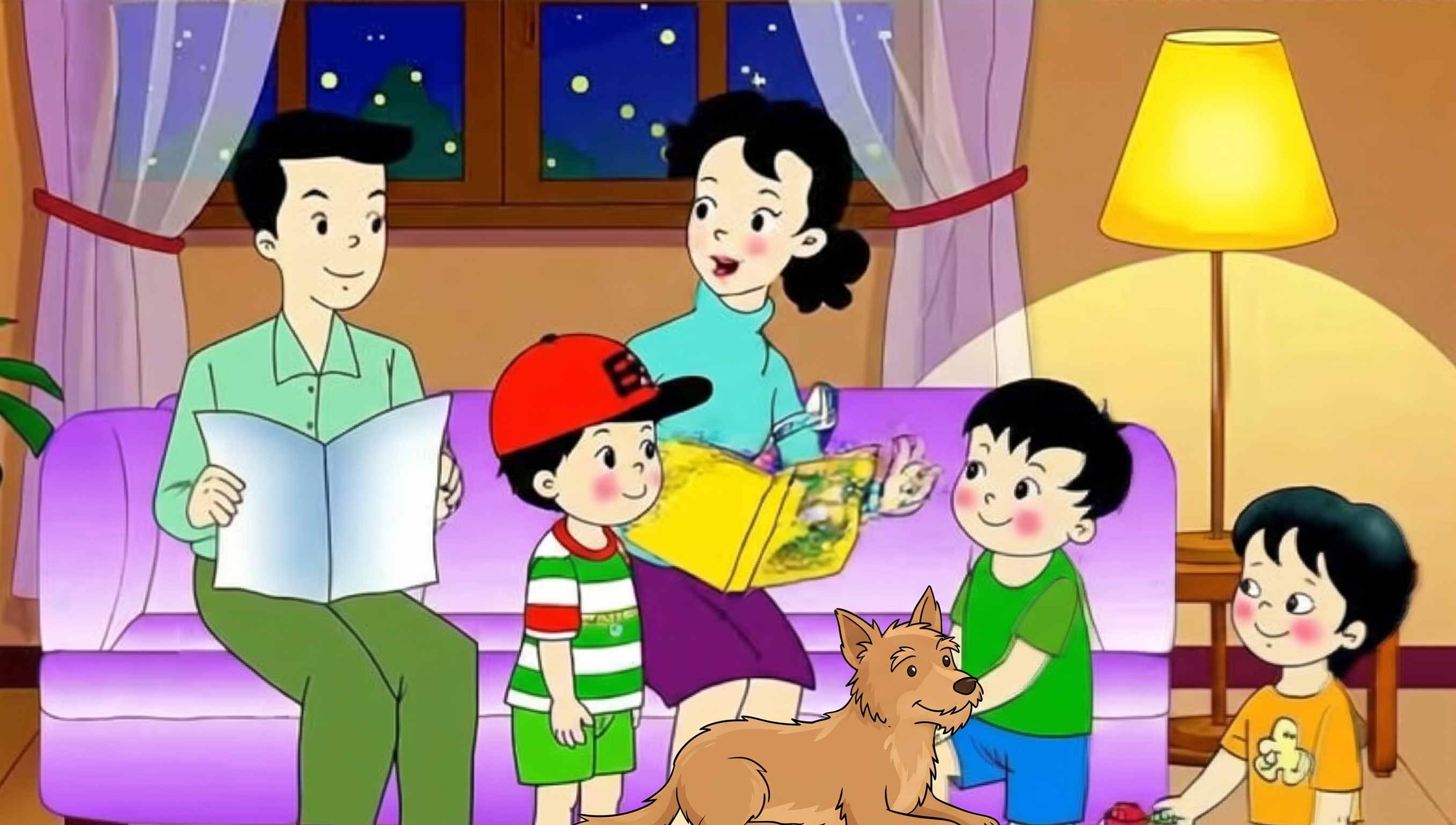
宝宝一家/La familia de Baobao/Baobao's family
爸爸/Papá, padre/Dad, father
妈妈/Mamá, madre/Mum, mother
宝宝/Baobao/Baobao
婷婷/Tíngting/Tíngting
嘟嘟/Dudú/Dudú
洛基/Rocky/Rocky
** 对话/Duìhuà/Diálogo/Dialogue **
--------------------------------------------------------------------------------
嘟嘟爸爸,井里的青蛙为什么说天只有井口那么大?/Dudú: Papá, ¿por qué dice la rana del pozo que el cielo es como la boca del pozo?/Dudú: Dad, why does the frog in the well say the sky is only as big as the mouth of the well?
爸爸因为它天天坐在井里,一抬头只看到一小块天。/Papá: Porque se pasa el día en el pozo y, al levantar la cabeza, solo ve un trocito de cielo./Dad: Because it sits in the well every day, and when it looks up it only sees a little patch of sky.
婷婷小鸟飞了一百多里,它知道天无边无际。/Tíngting: El pájaro ha volado más de cien li y sabe que el cielo no tiene fin./Tíngting: The bird has flown over a hundred li, so it knows the sky is boundless.
宝宝青蛙弄错了,它应该跳出井口看一看。/Baobao: La rana se equivoca; debería salir del pozo y mirar./Baobao: The frog is wrong; it should jump out of the well and have a look.
妈妈我们也不能做井底之蛙,要多看、多学。/Mamá: Nosotros tampoco podemos ser «la rana del pozo»: hay que ver y aprender mucho./Mum: We mustn't be a “frog at the bottom of a well” either; we need to see and learn lots.
嘟嘟我想去很多地方看看!/Dudú: ¡Yo quiero ir a ver muchos sitios!/Dudú: I want to go and see lots of places!
洛基汪汪!/Rocky: ¡Guau!/Rocky: Woof!
▶ 📝 评论 / Comentarios / Comments
坐井观天:看问题要全面:
1. 分角色朗读: 课文主要是青蛙和小鸟的三次对话。让学生分角色读,读出青蛙“别说大话了 (bié shuō dàhuà le) ”的自以为是和小鸟“你弄错了 (nǐ nòngcuò le) ”的耐心。
2. 理解争论: 它们争论的是“天有多大”。青蛙说“天不过井口那么大”,因为它一直坐在井里;小鸟说“天无边无际”,因为它飞了一百多里。引导学生说说为什么它们的说法不一样。
3. 明白道理: 成语 坐井观天 (zuòjǐng-guāntiān) 比喻眼界小、见识少。可以让学生想一想:青蛙跳出井口以后会看到什么?会说些什么?
1. 分角色朗读: 课文主要是青蛙和小鸟的三次对话。让学生分角色读,读出青蛙“别说大话了 (bié shuō dàhuà le) ”的自以为是和小鸟“你弄错了 (nǐ nòngcuò le) ”的耐心。
2. 理解争论: 它们争论的是“天有多大”。青蛙说“天不过井口那么大”,因为它一直坐在井里;小鸟说“天无边无际”,因为它飞了一百多里。引导学生说说为什么它们的说法不一样。
3. 明白道理: 成语 坐井观天 (zuòjǐng-guāntiān) 比喻眼界小、见识少。可以让学生想一想:青蛙跳出井口以后会看到什么?会说些什么?
Comentario Pedagógico: Mirar el cielo desde el fondo del pozo: ver las cosas con perspectiva:
1. Leer por papeles: El texto son tres diálogos entre la rana y el pájaro. Los alumnos los leen repartiéndose los papeles y transmiten la arrogancia de la rana (“别说大话了 (bié shuō dàhuà le) ”) y la paciencia del pájaro (“你弄错了 (nǐ nòngcuò le) ”).
2. Entender la discusión: Discuten sobre “lo grande que es el cielo”. La rana dice que “no es más grande que la boca del pozo” porque nunca sale de él; el pájaro dice que “no tiene fin” porque ha volado más de cien li. Los alumnos explican por qué opinan distinto.
3. La moraleja: La expresión 坐井观天 (zuòjǐng-guāntiān) se usa para quien tiene una visión estrecha del mundo. Los alumnos imaginan qué verá y dirá la rana cuando salga del pozo.
Pedagogical Commentary: Looking at the Sky from the Bottom of a Well: seeing the bigger picture:
1. Reading in roles: The text is three exchanges between the frog and the bird. Students read the parts and bring out the frog's arrogance (“别说大话了 (bié shuō dàhuà le) ”) and the bird's patience (“你弄错了 (nǐ nòngcuò le) ”).
2. Understanding the argument: They argue about “how big the sky is”. The frog says it is “no bigger than the mouth of the well” because it never leaves; the bird says it is “boundless” because it has flown over a hundred li. Students explain why they disagree.
3. The moral: The idiom 坐井观天 (zuòjǐng-guāntiān) describes someone with a narrow view of the world. Students imagine what the frog would see and say after jumping out of the well.

主题/Zhǔtí/Tema/Theme

其他/Qítā/Otros/Others.

词汇 Cíhuì/Vocabulario/Vocabulary

PDF与视频/PDF,videos Y Quiz/PDF, Videos and Quiz
