
PRIMARIA_C2_N1_11_T07
** 11_T07_妈妈睡了/Māma shuì le/Mamá se ha dormido/Mum Is Asleep **
** 额外内容/Contenido adicional/Additional Content **
** 扩大和替换/Kuòdà hé tìhuàn/Ampliar y sustituir/Expand and substitute. **
眼睛/ojos/eyes
明亮的眼睛/ojos brillantes/bright eyes
水汪汪的眼睛/ojos brillantes y húmedos/big watery eyes
妹妹有一双水汪汪的大眼睛。/Mi hermanita tiene unos ojos grandes y brillantes./My little sister has big, shining eyes.
头发/pelo/hair
乌黑的头发/pelo negro azabache/jet-black hair
波浪似的头发/pelo ondulado/wavy hair
妈妈有一头乌黑的头发。/Mamá tiene el pelo negro azabache./Mum has jet-black hair.
--------------------------------------------------------------------------------
窗外,小鸟在唱着歌,风儿在树叶间散步,发出沙沙的响声。/Fuera, los pajarillos cantan y el viento pasea entre las hojas haciendo un susurro./Outside, little birds are singing and the breeze strolls among the leaves with a rustling sound.
--------------------------------------------------------------------------------
睡梦中的妈妈/mamá dormida/Mum asleep
· 真美丽/está preciosa./looks so beautiful.
睡梦中的妈妈/mamá dormida/Mum asleep
· 好慈祥/tiene un aire muy dulce./looks so kind.
睡梦中的妈妈/mamá dormida/Mum asleep
· 好累/parece muy cansada./looks so tired.
** 想一想, 说一说/Xiǎng yi xiǎng, shuō yi shuō/Piensa y responde/Think and answer the following questions **
--------------------------------------------------------------------------------
睡梦中的妈妈是什么样子的?/¿Cómo es mamá cuando duerme?/What does Mum look like in her sleep?
你看过妈妈睡觉的样子吗?说一说。/¿Has visto alguna vez a tu madre dormir? Cuéntalo./Have you ever watched your mum sleeping? Tell us about it.
** 家庭/Jiātíng/FAMILIA/FAMILY **
--------------------------------------------------------------------------------
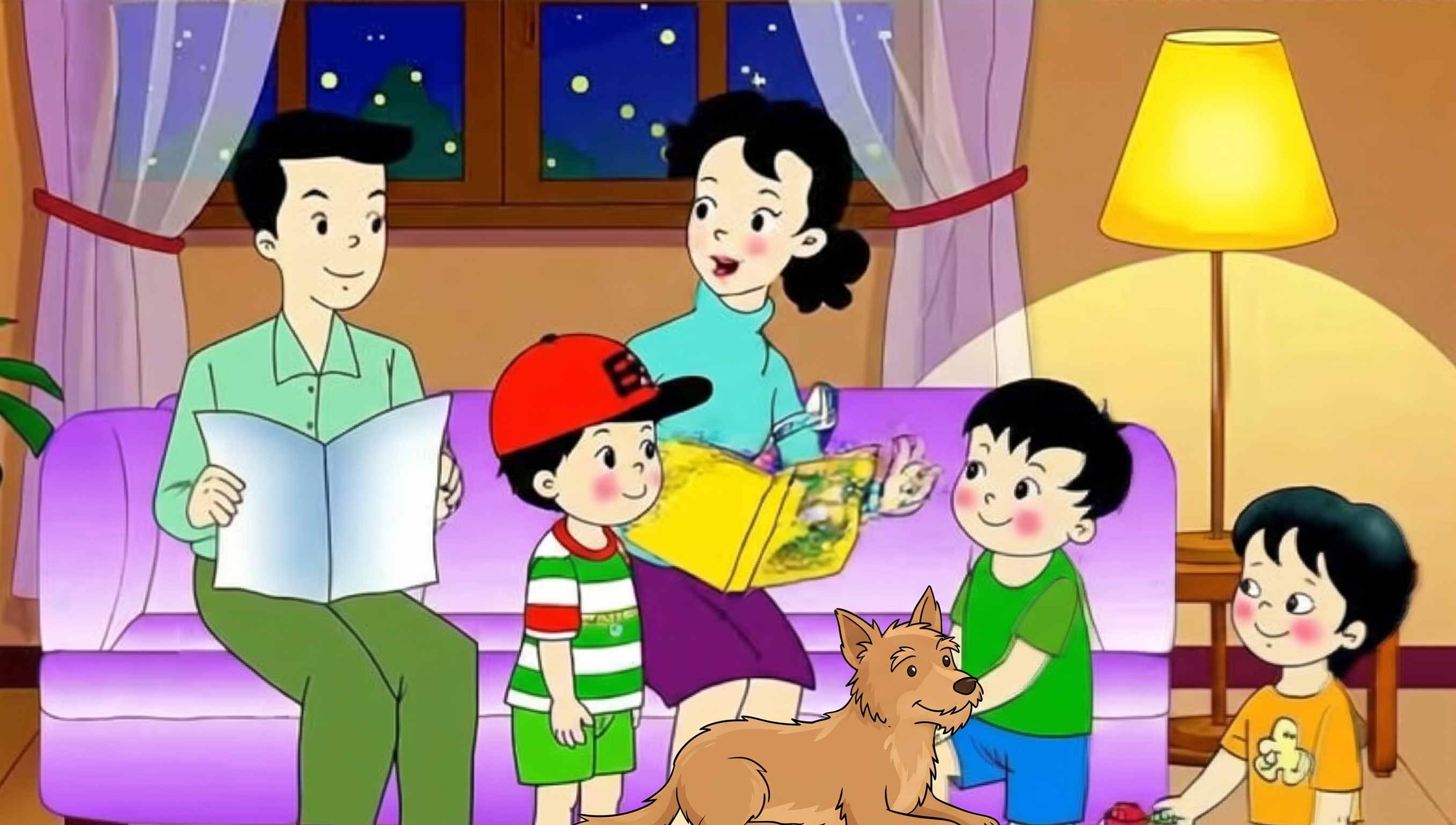
宝宝一家/La familia de Baobao/Baobao's family
爸爸/Papá, padre/Dad, father
妈妈/Mamá, madre/Mum, mother
宝宝/Baobao/Baobao
婷婷/Tíngting/Tíngting
嘟嘟/Dudú/Dudú
洛基/Rocky/Rocky
** 对话/Duìhuà/Diálogo/Dialogue **
--------------------------------------------------------------------------------
宝宝嘘,小声点儿,妈妈睡了。/Baobao: ¡Chis! Hablad bajito, mamá se ha dormido./Baobao: Shh, keep your voices down, Mum's asleep.
婷婷她哄嘟嘟午睡,自己先睡着了。/Tíngting: Estaba haciendo dormir a Dudú y se ha dormido ella primero./Tíngting: She was getting Dudú to nap and fell asleep first.
嘟嘟你们看,妈妈在微微地笑呢。/Dudú: Mirad, mamá está sonriendo un poquito./Dudú: Look, Mum is smiling a little.
婷婷她的额头上有汗珠,今天一定很累。/Tíngting: Tiene gotas de sudor en la frente; hoy debe de estar muy cansada./Tíngting: She has beads of sweat on her forehead; she must be very tired today.
爸爸妈妈干了好多活儿,让她好好睡一觉吧。/Papá: Mamá ha trabajado mucho; dejémosla dormir bien./Dad: Mum has done lots of work; let's let her have a good sleep.
宝宝我去把窗户关上,别让风吵醒她。/Baobao: Voy a cerrar la ventana para que el viento no la despierte./Baobao: I'll shut the window so the wind won't wake her.
洛基呜/Rocky: Mmm…/Rocky: Mmm…
嘟嘟洛基也知道要安静。等妈妈醒了,我给她讲一个故事。/Dudú: Rocky también sabe que hay que estar en silencio. Cuando mamá se despierte, le contaré un cuento./Dudú: Rocky knows to be quiet too. When Mum wakes up, I'll tell her a story.
▶ 📝 评论 / Comentarios / Comments
妈妈睡了:用细致的观察写出对妈妈的爱:
1. 总分结构: 课文用“睡梦中的妈妈真美丽 (zhēn měilì) ”“好慈祥 (hǎo cíxiáng) ”“好累 (hǎo lèi) ”三句话开头,再具体描写妈妈的样子。引导学生找出每段的第一句,说说睡梦中的妈妈是什么样子的。
2. 积累词语: 明亮的眼睛 (míngliàng de yǎnjing) 、弯弯的眉毛 (wānwān de méimao) 、红润的脸蛋 (hóngrùn de liǎndàn) 、乌黑的头发 (wūhēi de tóufa) 都是“形容词+的+名词”。可以照着说:“水汪汪的眼睛”“波浪似的头发”。
3. 体会亲情: “她干了好多活儿,累了,乏了,她真该好好睡一觉”表达了孩子对妈妈的心疼。让学生说说自己看到的妈妈睡觉的样子。
Comentario Pedagógico: Mamá se ha dormido: describir a mamá con atención y cariño:
1. Estructura general-detalle: Cada párrafo empieza con una idea —“睡梦中的妈妈真美丽 (zhēn měilì) ”, “好慈祥 (hǎo cíxiáng) ”, “好累 (hǎo lèi) ”— y luego la desarrolla. Los alumnos localizan la primera frase de cada párrafo y describen a mamá dormida.
2. Ampliar vocabulario: 明亮的眼睛 (míngliàng de yǎnjing) , 弯弯的眉毛 (wānwān de méimao) , 红润的脸蛋 (hóngrùn de liǎndàn) y 乌黑的头发 (wūhēi de tóufa) siguen el patrón “adjetivo + 的 + nombre”. Los alumnos pueden imitarlo: “水汪汪的眼睛”, “波浪似的头发”.
3. El cariño familiar: “她干了好多活儿,累了,乏了,她真该好好睡一觉” muestra la ternura del niño hacia su madre. Los alumnos pueden contar cómo han visto dormir a su madre.
Pedagogical Commentary: Mum Is Asleep: describing Mum with care and love:
1. General-to-detail structure: Each paragraph opens with one idea —“睡梦中的妈妈真美丽 (zhēn měilì) ”, “好慈祥 (hǎo cíxiáng) ”, “好累 (hǎo lèi) ”— and then develops it. Students find the first sentence of each paragraph and describe Mum asleep.
2. Building vocabulary: 明亮的眼睛 (míngliàng de yǎnjing) , 弯弯的眉毛 (wānwān de méimao) , 红润的脸蛋 (hóngrùn de liǎndàn) and 乌黑的头发 (wūhēi de tóufa) follow the pattern “adjective + 的 + noun”. Students can copy it: “水汪汪的眼睛”, “波浪似的头发”.
3. Family love: “她干了好多活儿,累了,乏了,她真该好好睡一觉” shows the child's tenderness for Mum. Students can describe how they have seen their own mother sleep.

主题/Zhǔtí/Tema/Theme

其他/Qítā/Otros/Others.

词汇 Cíhuì/Vocabulario/Vocabulary

PDF与视频/PDF,videos Y Quiz/PDF, Videos and Quiz
