
** 9_古诗二首/Gǔshī èr shǒu/Dos poemas antiguos/Two Ancient Poems **
** 额外内容/Contenido adicional/Additional Content **
** 家庭/Jiātíng/FAMILIA/FAMILY **

** 词汇/Cíhuì/VOCABULARIO/VOCABULARY. **
** 历史/Lìshǐ/La historia/history **
** 横看成岭侧成峰/Héng kàn chéng lǐng cè chéng fēng/De frente, cordillera; de lado, pico/A Ridge from the Front, a Peak from the Side **
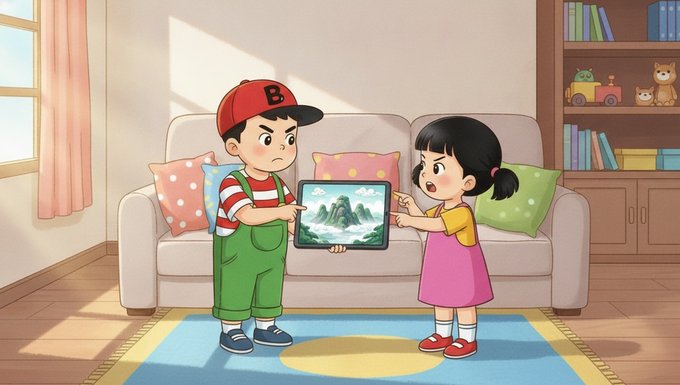
场景一/Chǎngjǐng yī/Escena 1/Scene 1
(Baobao) 和 (Tíngting) 看着一张 (Monte Lu/Mount Lu) 的照片吵了起来。
(宝宝Bǎobǎo) y (婷婷Tíngtíng) se pusieron a discutir mirando una foto del (庐山Lú Shān) .
(宝宝Bǎobǎo) and (婷婷Tíngtíng) started arguing over a photo of (庐山Lú Shān) .

场景二/Chǎngjǐng èr/Escena 2/Scene 2
(Baobao) 说:‘这是一条 (Cordillera/Ridge) 。’ (Tíngting) 说:‘不对,这是一座 (Pico/Peak) !’
(宝宝Bǎobǎo) dijo: ‘Esto es una (山岭shānlǐng) ’. (婷婷Tíngtíng) dijo: ‘¡No, es un (山峰shānfēng) !’.
(宝宝Bǎobǎo) said, ‘This is a (山岭shānlǐng) .’ (婷婷Tíngtíng) said, ‘No, it's a (山峰shānfēng) !’

场景三/Chǎngjǐng sān/Escena 3/Scene 3
(Papá,padre/Dad,father) 笑着说:‘ (Dinastía Song/Song Dynasty) 的 (Su Shi/Su Shi) 在西林寺的 (Pared/Wall) 上写过一首诗,叫《题西林壁》。’
(爸爸Bàba) se rio: ‘En la (宋朝Sòngcháo) , (苏轼Sū Shì) escribió un poema en la (墙壁qiángbì) del templo Xilin: ‘Escrito en la pared de Xilin’’.
(爸爸Bàba) laughed, ‘In the (宋朝Sòngcháo) , (苏轼Sū Shì) wrote a poem on the (墙壁qiángbì) of Xilin Temple: ‘Written on the Wall of Xilin’.’

场景四/Chǎngjǐng sì/Escena 4/Scene 4
‘ (De frente/From the front) 看成岭 (De lado/From the side) 成峰,远近高低各不同。’
‘ (横héng) es una cordillera, (侧cè) un pico; de lejos, de cerca, desde arriba o desde abajo, siempre es distinto’.
‘ (横héng) a ridge, (侧cè) a peak; near or far, high or low, it always looks different.’

场景五/Chǎngjǐng wǔ/Escena 5/Scene 5
‘不识 (Monte Lu/Mount Lu) (Verdadero rostro/True face) ,只 (Porque/Because) 身在此山中。你们从不同的 (Punto de vista/Angle) 看,所以都对。’
‘No se conoce el (真面目zhēn miànmù) del (庐山Lú Shān) solo (缘yuán) uno está dentro de la montaña. Lo miráis desde distintos (角度jiǎodù) , así que los dos tenéis razón’.
‘You can't see the (真面目zhēn miànmù) of (庐山Lú Shān) only (缘yuán) you are inside the mountain. You're looking from different (角度jiǎodù) , so you're both right.’

场景六/Chǎngjǐng liù/Escena 6/Scene 6
下午,全家去公园散步。公园里有一个小 (Estanque/Pond) ,水很 (Cristalino/Crystal clear) 。
Por la tarde, toda la familia fue a pasear al parque. Había un pequeño (池塘chítáng) de agua (清澈qīngchè) .
In the afternoon, the whole family went for a walk in the park. There was a small (池塘chítáng) with (清澈qīngchè) water.

场景七/Chǎngjǐng qī/Escena 7/Scene 7
天上的 (Sombra de las nubes/Cloud shadows) 在水里 (Ir y venir/Linger) , (Estanque/Pond) 像一面 (Espejo/Mirror) 。
La (云影yúnyǐng) iba y venía sobre el agua, y el (池塘chítáng) parecía un (镜子jìngzi) .
The (云影yúnyǐng) (徘徊páihuái) on the water, and the (池塘chítáng) looked like a (镜子jìngzi) .

场景八/Chǎngjǐng bā/Escena 8/Scene 8
(Mamá,madre/Mom,mother) 念道:‘半 (Mu (medida de superficie)/Mu (unit of area) ) 方塘一 (Espejo (clásico)/Mirror (classical) ) 开,天光 (Sombra de las nubes/Cloud shadows) 共 (Ir y venir/Linger) 。问 (Él (clásico)/It (classical) ) 那得清如许?为有 (Fuente/Source) (Agua viva/Fresh flowing water) 来。’
(妈妈Māmā) recitó: ‘Un estanque cuadrado de medio (亩mǔ) se abre como un (鉴jiàn) ; la luz del cielo y la (云影yúnyǐng) (徘徊páihuái) en él. ¿Por qué está (渠qú) tan claro? Porque de su (源头yuántóu) llega (活水huóshuǐ) ’.
(妈妈Māmā) recited, ‘A square pond of half a (亩mǔ) opens like a (鉴jiàn) ; skylight and (云影yúnyǐng) (徘徊páihuái) on it. Why is (渠qú) so clear? Because (活水huóshuǐ) comes from its (源头yuántóu) .’

场景九/Chǎngjǐng jiǔ/Escena 9/Scene 9
‘这是 (Dinastía Song/Song Dynasty) (Zhu Xi/Zhu Xi) 的诗。 (Estanque/Pond) 的水 (Cristalino/Crystal clear) ,是因为有 (Agua viva/Fresh flowing water) (Sin parar/Constantly) 流进来。’
‘Es un poema de (朱熹Zhū Xī) , de la (宋朝Sòngcháo) . El agua del (池塘chítáng) es (清澈qīngchè) porque le entra (活水huóshuǐ) (不断búduàn) ’.
‘It's a poem by (朱熹Zhū Xī) of the (宋朝Sòngcháo) . The (池塘chítáng) water is (清澈qīngchè) because (活水huóshuǐ) (不断búduàn) flows in.’
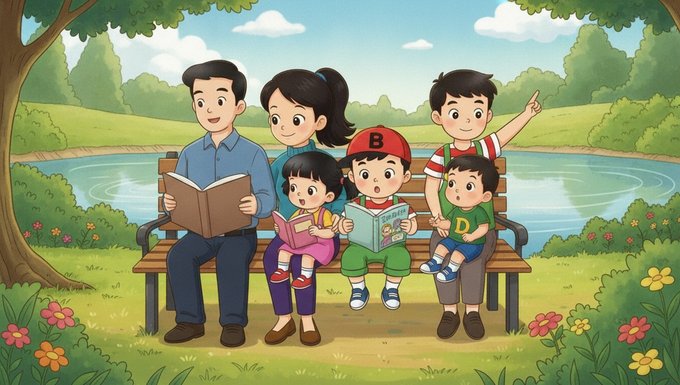
场景十/Chǎngjǐng shí/Escena 10/Scene 10
‘读书也一样,要 (Sin parar/Constantly) 学习新的 (Conocimientos/Knowledge) ,头脑才会清楚。’
‘Con la lectura pasa lo mismo: hay que aprender (知识zhīshi) nuevos (不断búduàn) para tener la mente clara’.
‘Reading is the same: you must (不断búduàn) learn new (知识zhīshi) to keep your mind clear.’
@ Zhongwen 资料 (SWF, PDF, MP3 等) 的版权归属于:中国华文教育网 - Overseas Chinese Language and Culture Education Online。
@ Los materiales Zhongwen (SWF, PDF, MP3, etc.) son propiedad de: 中国华文教育网 - Overseas Chinese Language and Culture Education Online.
@ The materials Zhongwen (SWF, PDF, MP3, etc.) are the property of: 中国华文教育网 - Overseas Chinese Language and Culture Education Online.

主题/Zhǔtí/Tema/Theme

其他/Qítā/Otros/Others.

阅读/Yuèdú/Lectura/Reading.

PDF与视频/PDF,videos Y Quiz/PDF, Videos and Quiz

额外内容/Contenido adicional/Additional Content
