
** 11_江河/Jiānghé/Ríos/Rivers **
** 额外内容/Contenido adicional/Additional Content **
** 家庭/Jiātíng/FAMILIA/FAMILY **

** 词汇/Cíhuì/VOCABULARIO/VOCABULARY. **
** 历史/Lìshǐ/La historia/history **
** 地图上的江河/Dìtú shang de jiānghé/Los ríos del mapa/Rivers on the Map **
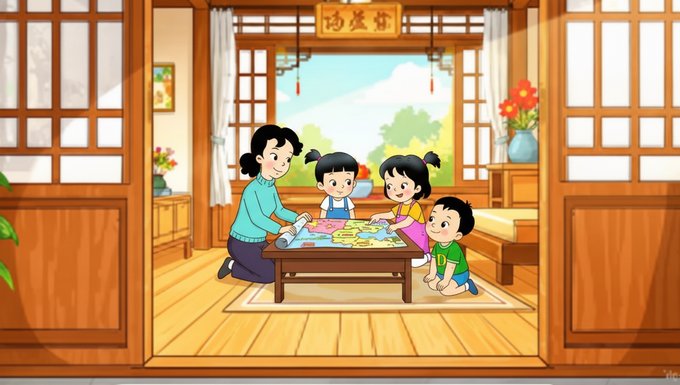
场景一/Chǎngjǐng yī/Escena 1/Scene 1
晚上, (Mamá,madre/Mom,mother) 拿出一张 (China/China) 地图。她说:‘ (China/China) 是一个 (Antiguo/Ancient) 的 (País/Country) ,有很多 (Ríos/Rivers) 。’
Por la noche, (妈妈Māmā) sacó un mapa de (中国Zhōngguó) . Dijo: ‘ (中国Zhōngguó) es un (国家guójiā) muy (古老gǔlǎo) y tiene muchos (江河jiānghé) ’.
In the evening, (妈妈Māmā) took out a map of (中国Zhōngguó) . She said, ‘ (中国Zhōngguó) is an (古老gǔlǎo) (国家guójiā) with many (江河jiānghé) .’
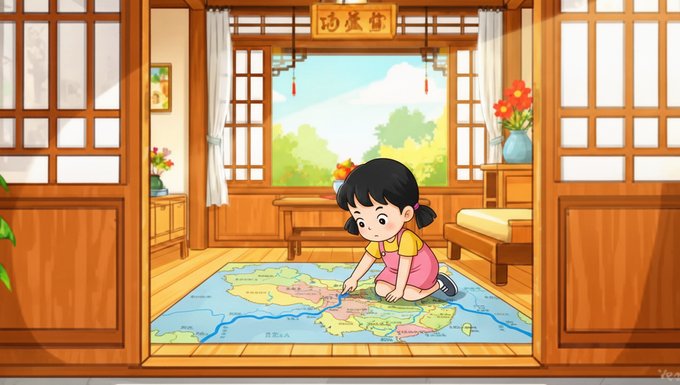
场景二/Chǎngjǐng èr/Escena 2/Scene 2
(Tíngting) 指着地图上一条长长的蓝线,问:‘这条 (Río grande/Big river) (Llamarse/Be called) 什么?’
(婷婷Tíngtíng) señaló una larga línea azul en el mapa y preguntó: ‘¿Cómo se (叫jiào) este (江jiāng) ?’.
(婷婷Tíngtíng) pointed at a long blue line on the map and asked, ‘What is this (江jiāng) (叫jiào) ?’
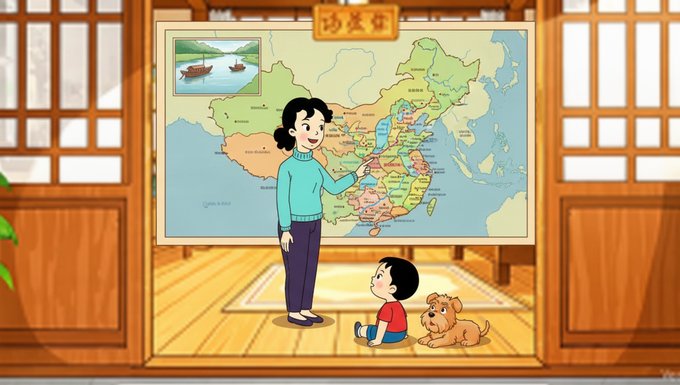
场景三/Chǎngjǐng sān/Escena 3/Scene 3
(Mamá,madre/Mom,mother) 说:‘它的 (Nombre/Name) (Llamarse/Be called) (Río Yangtsé/Yangtze River) 。 (Río Yangtsé/Yangtze River) 是 (China/China) (El más largo/The longest) 的 (Río grande/Big river) 。’
(妈妈Māmā) dijo: ‘Su (名字míngzi) es (长江Chángjiāng) . El (长江Chángjiāng) es el (江jiāng) (最长zuì cháng) de (中国Zhōngguó) ’.
(妈妈Māmā) said, ‘Its (名字míngzi) is the (长江Chángjiāng) . The (长江Chángjiāng) is the (最长zuì cháng) (江jiāng) in (中国Zhōngguó) .’
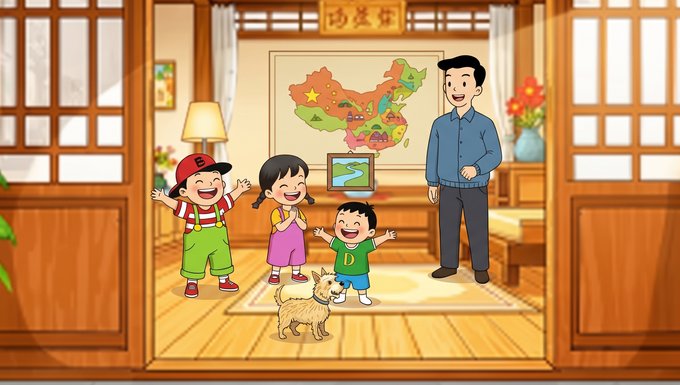
场景四/Chǎngjǐng sì/Escena 4/Scene 4
(Dudú) 问:‘它比我们家门前的小河还长吗?’大家都笑了。 (Rocky) 也摇了摇尾巴。
(嘟嘟Dūdū) preguntó: ‘¿Es más largo que el riachuelo de delante de casa?’. Todos se rieron. (洛基Luòjī) también movió la cola.
(嘟嘟Dūdū) asked, ‘Is it longer than the stream in front of our house?’ Everyone laughed. (洛基Luòjī) wagged his tail too.
场景五/Chǎngjǐng wǔ/Escena 5/Scene 5
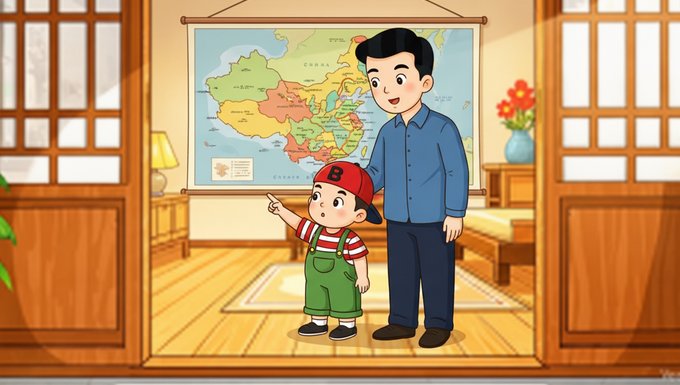
(Baobao) 指着另一条河问:‘这条黄色的河 (Llamarse/Be called) 什么?’ (Papá,padre/Dad,father) 说:‘它 (Llamarse/Be called) (Río Amarillo/Yellow River) 。’
(宝宝Bǎobǎo) señaló otro río y preguntó: ‘¿Cómo se (叫jiào) este río amarillo?’. (爸爸Bàba) dijo: ‘Se (叫jiào) (黄河Huánghé) ’.
(宝宝Bǎobǎo) pointed at another river and asked, ‘What is this yellow river (叫jiào) ?’ (爸爸Bàba) said, ‘It's (叫jiào) the (黄河Huánghé) .’
场景六/Chǎngjǐng liù/Escena 6/Scene 6
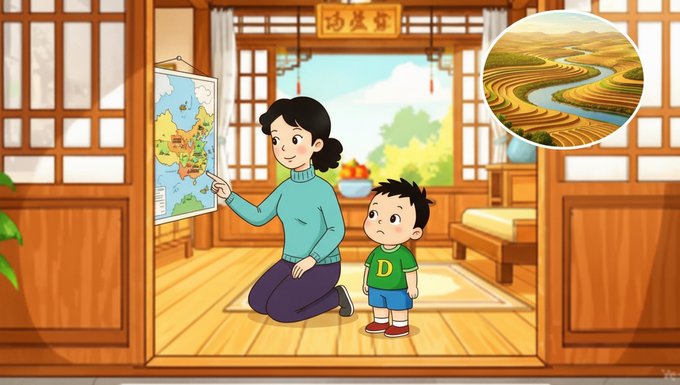
(Mamá,madre/Mom,mother) 说:‘ (Río Amarillo/Yellow River) 是 (China/China) 的 (Río madre/Mother river) 。’ (Dudú) 问:‘为什么 (Llamarse/Be called) (Río madre/Mother river) ?’
(妈妈Māmā) dijo: ‘El (黄河Huánghé) es el (母亲河mǔqīn hé) de (中国Zhōngguó) ’. (嘟嘟Dūdū) preguntó: ‘¿Por qué se (叫jiào) (母亲河mǔqīn hé) ?’.
(妈妈Māmā) said, ‘The (黄河Huánghé) is (中国Zhōngguó) 's (母亲河mǔqīn hé) .’ (嘟嘟Dūdū) asked, ‘Why is it (叫jiào) the (母亲河mǔqīn hé) ?’
场景七/Chǎngjǐng qī/Escena 7/Scene 7
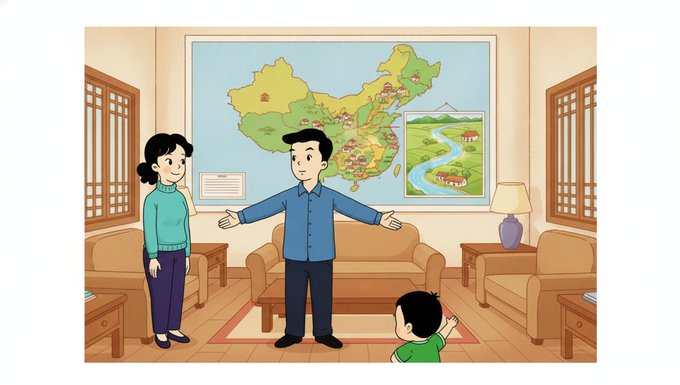
(Papá,padre/Dad,father) 说:‘因为 (Río Amarillo/Yellow River) 像 (Madre/Mother) 一样,养育着 (China (nombre poético)/China (poetic name) ) 大地。’
(爸爸Bàba) dijo: ‘Porque el (黄河Huánghé) , como una (母亲mǔqīn) , alimenta la tierra de (中华Zhōnghuá) ’.
(爸爸Bàba) said, ‘Because the (黄河Huánghé) , like a (母亲mǔqīn) , nourishes the land of (中华Zhōnghuá) .’
场景八/Chǎngjǐng bā/Escena 8/Scene 8
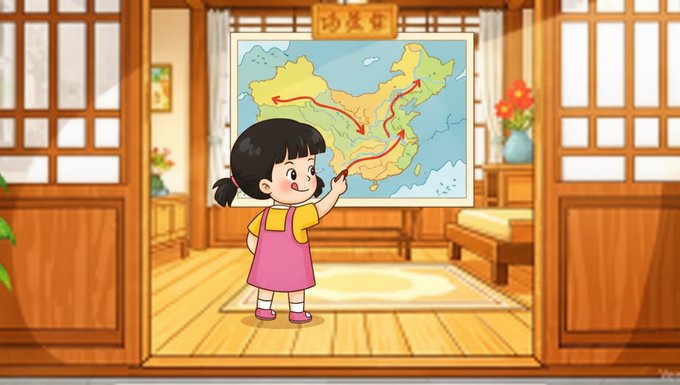
(Tíngting) 看着地图说:‘ (Río Yangtsé/Yangtze River) 和 (Río Amarillo/Yellow River) , (Ellos,ellas/They) 都 (Fluir de oeste a este/Flow from west to east) 。’
(婷婷Tíngtíng) miró el mapa y dijo: ‘El (长江Chángjiāng) y el (黄河Huánghé) : (它们tāmen) (从西流到东cóng xī liú dào dōng) ’.
(婷婷Tíngtíng) looked at the map and said, ‘The (长江Chángjiāng) and the (黄河Huánghé) : (它们tāmen) both (从西流到东cóng xī liú dào dōng) .’
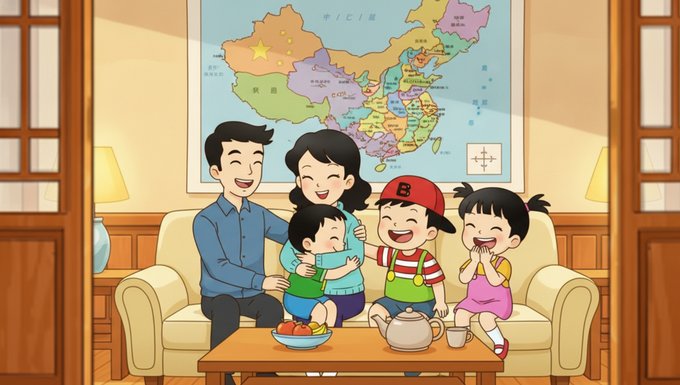
场景九/Chǎngjǐng jiǔ/Escena 9/Scene 9
(Dudú) 抱着 (Mamá,madre/Mom,mother) 说:‘ (Mamá,madre/Mom,mother) 是我们家的 (Río madre/Mother river) !’大家都笑了。
(嘟嘟Dūdū) abrazó a (妈妈Māmā) y dijo: ‘¡ (妈妈Māmā) es el (母亲河mǔqīn hé) de nuestra casa!’. Todos se rieron.
(嘟嘟Dūdū) hugged (妈妈Māmā) and said, ‘ (妈妈Māmā) is our family's (母亲河mǔqīn hé) !’ Everyone laughed.
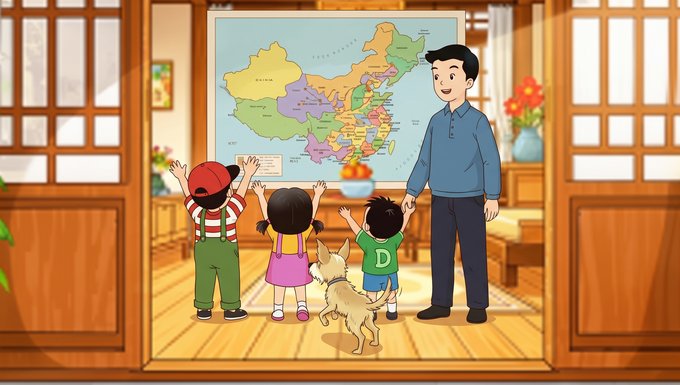
场景十/Chǎngjǐng shí/Escena 10/Scene 10
(Papá,padre/Dad,father) 说:‘明年夏天,我们回 (China/China) 去看 (Río Yangtsé/Yangtze River) 和 (Río Amarillo/Yellow River) !’孩子们说:‘我们爱 (Río Yangtsé/Yangtze River) ,我们爱 (Río Amarillo/Yellow River) ,我们爱 (China/China) !’
(爸爸Bàba) dijo: ‘¡El próximo verano volveremos a (中国Zhōngguó) a ver el (长江Chángjiāng) y el (黄河Huánghé) !’. Los niños dijeron: ‘¡Queremos al (长江Chángjiāng) , queremos al (黄河Huánghé) , queremos a (中国Zhōngguó) !’.
(爸爸Bàba) said, ‘Next summer, we'll go back to (中国Zhōngguó) to see the (长江Chángjiāng) and the (黄河Huánghé) !’ The children said, ‘We love the (长江Chángjiāng) , we love the (黄河Huánghé) , we love (中国Zhōngguó) !’
@ Zhongwen 资料 (SWF, PDF, MP3 等) 的版权归属于:中国华文教育网 - Overseas Chinese Language and Culture Education Online。
@ Los materiales Zhongwen (SWF, PDF, MP3, etc.) son propiedad de: 中国华文教育网 - Overseas Chinese Language and Culture Education Online.
@ The materials Zhongwen (SWF, PDF, MP3, etc.) are the property of: 中国华文教育网 - Overseas Chinese Language and Culture Education Online.

主题/Zhǔtí/Tema/Theme

其他/Qítā/Otros/Others.

阅读/Yuèdú/Lectura/Reading.

PDF与视频/PDF,videos Y Quiz/PDF, Videos and Quiz

额外内容/Contenido adicional/Additional Content
