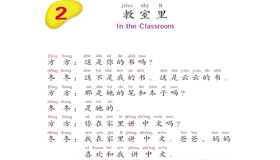
1) 教jiào/clase, escuela (en compuestos)/class, education (in compounds)/HSK 2
• 教室jiàoshì/aula/classroom/HSK 1
• 教师jiàoshī/profesor (formal)/teacher (formal)/HSK 3
• 教育jiàoyù/educación/education/HSK 3
• 教室jiàoshì里lǐ有yǒu二èr十shí个gè学xué生shēng。/En el aula hay veinte estudiantes./There are twenty students in the classroom.
--------------------------------------------------------------------------------
2) 室shì/habitación, sala/room/HSK 2
• 教室jiàoshì/aula/classroom/HSK 1
• 室内shìnèi/en interiores/indoor/HSK 4
• 室外shìwài/al aire libre/outdoor/HSK 4
• 这个zhège房间fángjiān是shì办bàn公gōng室shì。/Esta habitación es una oficina./This room is an office.
--------------------------------------------------------------------------------
3) 里lǐ/dentro, en/inside, in/HSK 1
• 心里xīnlǐ/en el corazón, por dentro/in one's heart/HSK 3
• 里外lǐwài/dentro y fuera/inside and outside/HSK 5
• 里面lǐmiàn/dentro/inside/HSK 1
• 书shū在zài书包shūbāo里lǐ。/El libro está dentro de la mochila./The book is inside the backpack.
--------------------------------------------------------------------------------
4) 书shū/libro/book/HSK 1
• 书画shūhuà/caligrafía y pintura/calligraphy and painting/HSK 6
• 书本shūběn/libros (en general)/books/HSK 4
• 书写shūxiě/escritura (formal)/writing (formal)/HSK 5
• 我wǒ有yǒu很hěn多duō书shū。/Tengo muchos libros./I have many books.
--------------------------------------------------------------------------------
5) 吗ma/(partícula interrogativa)/(question particle)/HSK 1
• 好吗hǎoma/¿está bien?/is that okay?/HSK 1
• 是吗shìma/¿de verdad?/really?/HSK 1
• 可以吗kěyǐma/¿se puede?/is it okay?/HSK 2
• 你nǐ是shì学xué生shēng吗ma?/¿Eres estudiante?/Are you a student?
--------------------------------------------------------------------------------
6) 不bù/no/not/HSK 1
• 不安bù'ān/inquieto, intranquilo/uneasy/HSK 5
• 不行bùxíng/no vale, no se puede/won't do, no way/HSK 3
• 不止bùzhǐ/no solo, más de/more than, not just/HSK 5
• 这个zhège不行bùxíng,换huàn一yī个gè吧ba。/Este no vale, cambia por otro./This won't do, change it for another one.
--------------------------------------------------------------------------------
7) 那nà/ese, aquel/that/HSK 1
• 那边nàbian/por allá/over there/HSK 2
• 那里nàlǐ/allí/there/HSK 1
• 那儿nàr/allí (coloquial)/there (colloquial)/HSK 2
• 我们wǒmen的de教室jiàoshì在zài那边nàbian。/Nuestra aula está por allá./Our classroom is over there.
--------------------------------------------------------------------------------
8) 她tā/ella/she, her/HSK 1
• 她们tāmen/ellas/they (female)/HSK 1
• 她tā的de/suyo (de ella)/her, hers/HSK 1
• 她tā是shì我wǒ的de同学tóngxué。/Ella es mi compañera de clase./She is my classmate.
--------------------------------------------------------------------------------
9) 笔bǐ/bolígrafo, pluma/pen/HSK 2
• 铅笔qiānbǐ/lápiz/pencil/HSK 2
• 钢笔gāngbǐ/pluma estilográfica/fountain pen/HSK 4
• 一支笔yìzhībǐ/un bolígrafo/a pen/HSK 2
• 请qǐng借jiè我wǒ一yī支zhī铅笔qiānbǐ。/Por favor préstame un lápiz./Please lend me a pencil.
--------------------------------------------------------------------------------
10) 本běn/(clasificador de libros), cuaderno/(measure word for books), notebook/HSK 1
• 本子běnzi/cuaderno/notebook/HSK 3
• 书本shūběn/libros (en general)/books/HSK 4
• 课本kèběn/libro de texto/textbook/HSK 4
• 我wǒ有yǒu一yī本běn新xīn本子běnzi。/Tengo un cuaderno nuevo./I have a new notebook.
--------------------------------------------------------------------------------
11) 子zi/(sufijo sustantivo)/(noun suffix)/HSK 1
• 子弟zǐdì/hijos, jóvenes de la familia/children of the family/HSK 6
• 子女zǐnǚ/hijos e hijas/sons and daughters/HSK 5
• 子孙zǐsūn/descendientes/descendants/HSK 6
• 这zhè位wèi老lǎo人rén有yǒu三sān个gè子女zǐnǚ。/Este anciano tiene tres hijos./This elderly person has three children.
--------------------------------------------------------------------------------
12) 讲jiǎng/hablar, contar/speak, tell/HSK 3
• 讲话jiǎnghuà/hablar, dar un discurso/speak, give a talk/HSK 4
• 讲jiǎng故事gùshi/contar un cuento/tell a story/HSK 3
• 讲课jiǎngkè/dar clase/give a lecture/HSK 4
• 老师lǎoshī给我gěiwǒ们men讲jiǎng故事gùshi。/El profesor nos cuenta un cuento./The teacher tells us a story.