
PRIMARIA_C2_N1_08_T04
** 08_T04_曹冲称象/Cáo Chōng chēng xiàng/Cao Chong pesa al elefante/Cao Chong Weighs the Elephant **
** 额外内容/Contenido adicional/Additional Content **
** 扩大和替换/Kuòdà hé tìhuàn/Ampliar y sustituir/Expand and substitute. **
七岁/siete años/seven years old
才七岁/solo siete años/only seven years old
曹操的儿子曹冲才七岁。/Cao Chong, el hijo de Cao Cao, solo tenía siete años./Cao Cao's son Cao Chong was only seven years old.
有多重/cuánto pesa/how heavy
到底有多重/cuánto pesa en realidad/how heavy, really
大象到底有多重呢?/¿Cuánto pesará en realidad el elefante?/How heavy can the elephant really be?
--------------------------------------------------------------------------------
石头有多重,大象就有多重。/Lo que pesen las piedras es lo que pesa el elefante./However heavy the stones are, that's how heavy the elephant is.
--------------------------------------------------------------------------------
第一步/primer paso/step one
· 赶象上船/subir el elefante al barco./drive the elephant onto the boat.
第二步/segundo paso/step two
· 在船舷上做记号/hacer una marca en el costado del barco./mark the side of the boat.
第三步/tercer paso/step three
· 把大象赶上岸,装石头上船/bajar el elefante y cargar piedras en el barco./drive the elephant ashore and load stones onto the boat.
第四步/cuarto paso/step four
· 称石头重量/pesar las piedras./weigh the stones.
** 想一想, 说一说/Xiǎng yi xiǎng, shuō yi shuō/Piensa y responde/Think and answer the following questions **
--------------------------------------------------------------------------------
官员们想出了哪些称象的办法?/¿Qué ideas tuvieron los funcionarios para pesar el elefante?/What ways of weighing the elephant did the officials suggest?
为什么曹冲称象的办法好?/¿Por qué es buena la idea de Cao Chong?/Why is Cao Chong's way of weighing the elephant a good one?
** 家庭/Jiātíng/FAMILIA/FAMILY **
--------------------------------------------------------------------------------
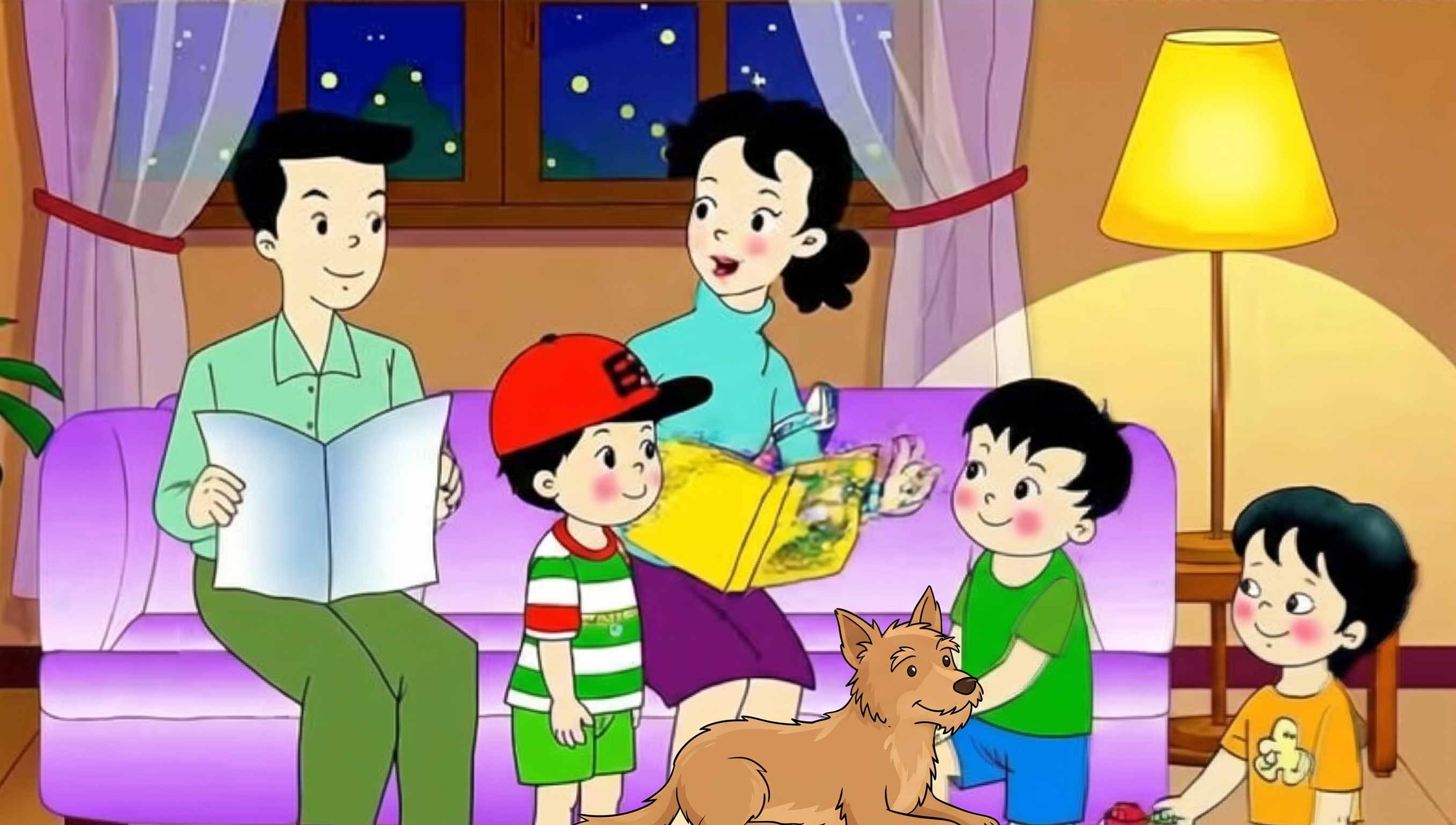
宝宝一家/La familia de Baobao/Baobao's family
爸爸/Papá, padre/Dad, father
妈妈/Mamá, madre/Mum, mother
宝宝/Baobao/Baobao
婷婷/Tíngting/Tíngting
嘟嘟/Dudú/Dudú
洛基/Rocky/Rocky
** 对话/Duìhuà/Diálogo/Dialogue **
--------------------------------------------------------------------------------
嘟嘟妈妈,大象那么大,怎么称呢?/Dudú: Mamá, un elefante tan grande, ¿cómo se pesa?/Dudú: Mum, an elephant is so big, how can you weigh it?
妈妈古时候,有个七岁的孩子叫曹冲,他想出了一个好办法。/Mamá: Hace mucho tiempo, un niño de siete años llamado Cao Chong tuvo una gran idea./Mum: Long ago, a seven-year-old boy called Cao Chong came up with a great idea.
婷婷我知道!先把大象赶到船上,在船舷上画一条线。/Tíngting: ¡Ya sé! Primero se sube el elefante al barco y se traza una línea en el costado./Tíngting: I know! First you drive the elephant onto a boat and draw a line on its side.
宝宝然后往船上装石头,装到画线的地方为止。/Baobao: Luego se cargan piedras en el barco hasta llegar a la línea./Baobao: Then you load stones onto the boat until it reaches the line.
爸爸对。石头有多重,大象就有多重。/Papá: Exacto. Lo que pesen las piedras es lo que pesa el elefante./Dad: Right. However heavy the stones are, that's how heavy the elephant is.
嘟嘟曹冲真聪明!/Dudú: ¡Qué listo era Cao Chong!/Dudú: Cao Chong was so clever!
妈妈遇到难题,我们也要开动脑筋,多想办法。/Mamá: Cuando tengamos un problema difícil, nosotros también tenemos que pensar y buscar soluciones./Mum: When we meet a hard problem, we should also use our heads and look for ways to solve it.
婷婷洛基,我们也来称称你有多重吧!/Tíngting: ¡Rocky, vamos a pesarte a ti también!/Tíngting: Rocky, let's weigh you too!
洛基汪汪!/Rocky: ¡Guau!/Rocky: Woof!
▶ 📝 评论 / Comentarios / Comments
曹冲称象:用小办法解决大难题:
1. 比较不同的办法: 官员们想了“造大秤”“把大象宰了”等办法,都行不通。曹冲用“以石代象”的办法称出了大象的重量。引导学生比较这些办法,说说曹冲的办法好在哪里。
2. 有顺序地表达: 曹冲称象的过程可以分成四步:赶象上船 (gǎn xiàng shàng chuán) 、做记号 (zuò jìhao) 、装石头 (zhuāng shítou) 、称石头 (chēng shítou) 。让学生用“先……再……然后……”说一说。
3. 体会词语: “曹冲七岁”和“曹冲才 (cái) 七岁”,“有多重”和“到底 (dàodǐ) 有多重”,加了一个词,意思就不一样了。可以让学生用“才”“到底”各说一句话。
Comentario Pedagógico: Cao Chong pesa al elefante: una idea sencilla para un gran problema:
1. Comparar soluciones: Los funcionarios proponen “hacer una balanza gigante” o “matar al elefante”, pero nada funciona. Cao Chong pesa el elefante “cambiándolo por piedras”. Los alumnos comparan las ideas y explican por qué la de Cao Chong es la mejor.
2. Contar con orden: El proceso tiene cuatro pasos: 赶象上船 (gǎn xiàng shàng chuán) , 做记号 (zuò jìhao) , 装石头 (zhuāng shítou) y 称石头 (chēng shítou) . Los alumnos lo cuentan con “先……再……然后……”.
3. El valor de una palabra: “曹冲七岁” y “曹冲才 (cái) 七岁”, “有多重” y “到底 (dàodǐ) 有多重”: una sola palabra cambia el sentido. Los alumnos pueden hacer una frase con “才” y otra con “到底”.
Pedagogical Commentary: Cao Chong Weighs the Elephant: a simple idea for a big problem:
1. Comparing ideas: The officials suggest “making a giant steelyard” or “killing the elephant”, but nothing works. Cao Chong weighs the elephant by “swapping it for stones”. Students compare the ideas and say why Cao Chong's is best.
2. Telling things in order: The process has four steps: 赶象上船 (gǎn xiàng shàng chuán) , 做记号 (zuò jìhao) , 装石头 (zhuāng shítou) and 称石头 (chēng shítou) . Students retell it with “先……再……然后……”.
3. The power of one word: “曹冲七岁” versus “曹冲才 (cái) 七岁”, and “有多重” versus “到底 (dàodǐ) 有多重”: one word changes the meaning. Students can make a sentence with “才” and another with “到底”.

主题/Zhǔtí/Tema/Theme

其他/Qítā/Otros/Others.

词汇 Cíhuì/Vocabulario/Vocabulary

PDF与视频/PDF,videos Y Quiz/PDF, Videos and Quiz
