
PRIMARIA_C2_N1_02_T02
** 02_T02_我是什么/Wǒ shì shénme/¿Qué soy yo?/What Am I? **
** 额外内容/Contenido adicional/Additional Content **
** 扩大和替换/Kuòdà hé tìhuàn/Ampliar y sustituir/Expand and substitute. **
云/nube/cloud
白云/nube blanca/white cloud
天空中的白云/las nubes blancas del cielo/the white clouds in the sky
天空中的白云有时候像小羊,有时候像棉花。/Las nubes blancas del cielo a veces parecen corderitos y a veces algodón./The white clouds in the sky sometimes look like little lambs and sometimes like cotton wool.
管叫/llamar (algo) …/call (something) …
人们管我叫雨/la gente me llama «lluvia»/people call me “rain”
到了冬天,我变成小花朵飘下来,人们又管我叫雪。/En invierno me convierto en florecitas que bajan revoloteando, y la gente me llama «nieve»./In winter I turn into little flowers that drift down, and people call me “snow”.
--------------------------------------------------------------------------------
有时候我变成小硬球打下来,人们就管我叫雹子。/A veces me convierto en bolitas duras que caen golpeando, y la gente me llama «granizo»./Sometimes I turn into little hard balls that come pelting down, and people call me “hail”.
--------------------------------------------------------------------------------
灌溉/regar/water, irrigate
· 田地/los campos./the fields.
发动/poner en marcha/start, drive
· 机器/las máquinas./the machines.
淹没/inundar/flood
· 庄稼/las cosechas./the crops.
冲毁/arrasar/wash away
· 房屋/las casas./the houses.
** 想一想, 说一说/Xiǎng yi xiǎng, shuō yi shuō/Piensa y responde/Think and answer the following questions **
--------------------------------------------------------------------------------
我是什么?我会变成什么?/¿Qué es «yo»? ¿En qué se convierte?/What is “I”? What can “I” turn into?
我做过哪些好事?又做过哪些坏事?/¿Qué cosas buenas ha hecho «yo»? ¿Y qué cosas malas?/What good things has “I” done? And what bad things?
** 家庭/Jiātíng/FAMILIA/FAMILY **
--------------------------------------------------------------------------------
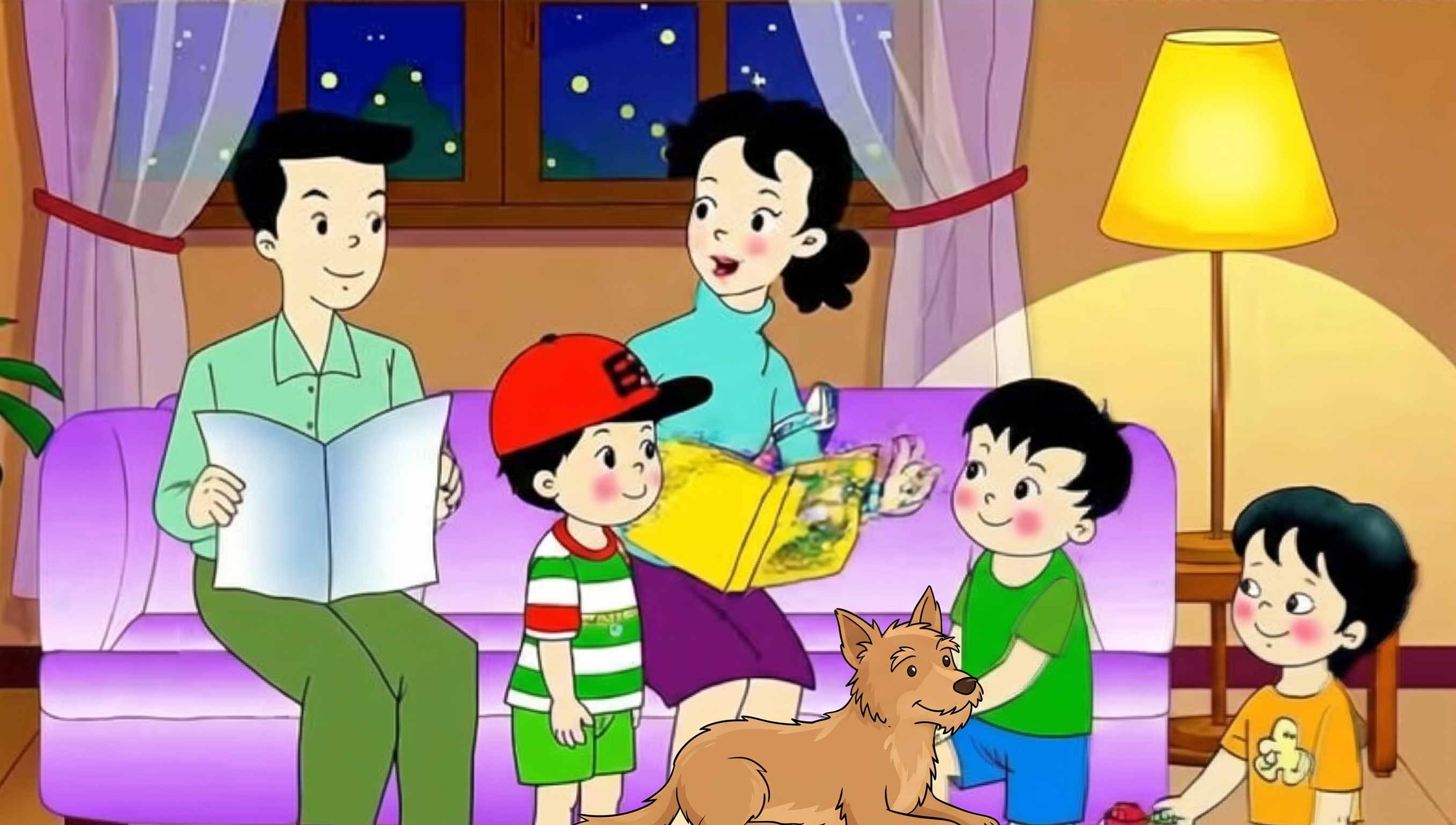
宝宝一家/La familia de Baobao/Baobao's family
爸爸/Papá, padre/Dad, father
妈妈/Mamá, madre/Mum, mother
宝宝/Baobao/Baobao
婷婷/Tíngting/Tíngting
嘟嘟/Dudú/Dudú
洛基/Rocky/Rocky
** 对话/Duìhuà/Diálogo/Dialogue **
--------------------------------------------------------------------------------
婷婷妈妈,下雨了!雨是从哪里来的?/Tíngting: ¡Mamá, está lloviendo! ¿De dónde viene la lluvia?/Tíngting: Mum, it's raining! Where does rain come from?
妈妈太阳一晒,水就变成汽,升到天空变成云。/Mamá: Cuando el sol calienta, el agua se convierte en vapor, sube al cielo y se convierte en nubes./Mum: When the sun shines, water turns into vapour, rises into the sky and becomes clouds.
宝宝云里的小水滴聚在一起,就落下来变成雨,对吗?/Baobao: Las gotitas de las nubes se juntan, caen y se convierten en lluvia, ¿verdad?/Baobao: The little drops in the clouds gather together and fall down as rain, right?
爸爸对!到了冬天,它还会变成雪花飘下来。/Papá: ¡Exacto! Y en invierno se convierte en copos de nieve que bajan revoloteando./Dad: That's right! And in winter it turns into snowflakes that drift down.
嘟嘟我喜欢雪!可是我不喜欢雹子,打在头上很疼。/Dudú: ¡Me encanta la nieve! Pero no me gusta el granizo, duele cuando te da en la cabeza./Dudú: I love snow! But I don't like hail; it hurts when it hits your head.
婷婷水能灌溉田地,也能发动机器。/Tíngting: El agua puede regar los campos y también mover máquinas./Tíngting: Water can water the fields and drive machines too.
爸爸可是发大水的时候,它会淹没庄稼,冲毁房屋。/Papá: Pero cuando hay una riada, inunda las cosechas y arrasa las casas./Dad: But when there's a flood, it can drown the crops and wash away houses.
宝宝所以人们要想办法管住它。/Baobao: Por eso la gente tiene que encontrar la manera de controlarla./Baobao: That's why people must find ways to control it.
洛基汪汪!/Rocky: ¡Guau!/Rocky: Woof!
妈妈洛基也想出去踩水呢!/Mamá: ¡Rocky también quiere salir a chapotear!/Mum: Rocky wants to go out and splash in the puddles too!
▶ 📝 评论 / Comentarios / Comments
我是什么:用谜语介绍水的变化:
1. 谜语式的写法: 课文用“我”来说话,一直到最后才问“你们猜猜,我是什么?”。学生边读边猜,既有趣又能抓住 云 (yún) 、雨 (yǔ) 、雹子 (báozi) 、雪 (xuě) 这几种变化。
2. “管……叫……”: 课文反复用“人们管我叫……”这个句式。可以让学生仿照着说:“人们管我叫……”,介绍别的事物,练习口语表达。
3. 动宾短语: “读一读,记一记”里的 灌溉田地 (guàngài tiándì) 、发动机器 (fādòng jīqì) 、淹没庄稼 (yānmò zhuāngjia) 、冲毁房屋 (chōnghuǐ fángwū) 都是“动词+名词”的结构,分别说明了水的好处和害处。
Comentario Pedagógico: ¿Qué soy yo?: el agua y sus cambios contados como una adivinanza:
1. Un texto-adivinanza: El agua habla en primera persona y solo al final pregunta “你们猜猜,我是什么?”. Los alumnos adivinan mientras leen y fijan los cambios: 云 (yún) , 雨 (yǔ) , 雹子 (báozi) y 雪 (xuě) .
2. La estructura “管……叫……”: El texto repite “人们管我叫……” (la gente me llama…). Los alumnos pueden imitarla para presentar otras cosas y practicar la expresión oral.
3. Verbo + complemento: Las expresiones de “读一读,记一记” —灌溉田地 (guàngài tiándì) , 发动机器 (fādòng jīqì) , 淹没庄稼 (yānmò zhuāngjia) y 冲毁房屋 (chōnghuǐ fángwū) — tienen la estructura “verbo + sustantivo” y muestran lo bueno y lo malo del agua.
Pedagogical Commentary: What Am I?: the changes of water told as a riddle:
1. A riddle text: Water speaks in the first person and only asks at the end “你们猜猜,我是什么?”. Students guess as they read and pick out the changes: 云 (yún) , 雨 (yǔ) , 雹子 (báozi) and 雪 (xuě) .
2. The pattern “管……叫……”: The text repeats “人们管我叫……” (people call me…). Students can copy it to introduce other things and practise speaking.
3. Verb + object: The phrases in “读一读,记一记” —灌溉田地 (guàngài tiándì) , 发动机器 (fādòng jīqì) , 淹没庄稼 (yānmò zhuāngjia) and 冲毁房屋 (chōnghuǐ fángwū) — all follow the “verb + noun” pattern and show both the benefits and the dangers of water.

主题/Zhǔtí/Tema/Theme

其他/Qítā/Otros/Others.

词汇 Cíhuì/Vocabulario/Vocabulary

PDF与视频/PDF,videos Y Quiz/PDF, Videos and Quiz
