
PRIMARIA_C2_N1_01_T01
** 01_T01_小蝌蚪找妈妈/Xiǎo kēdǒu zhǎo māma/Los renacuajos buscan a su mamá/The Little Tadpoles Look for Their Mum **
** 额外内容/Contenido adicional/Additional Content **
** 扩大和替换/Kuòdà hé tìhuàn/Ampliar y sustituir/Expand and substitute. **
尾巴/cola/tail
长长的尾巴/una cola larga/a long tail
甩着长长的尾巴/agitando su larga cola/swishing its long tail
小蝌蚪甩着长长的尾巴,快活地游来游去。/Los renacuajos agitan sus largas colas y nadan alegres de un lado a otro./The little tadpoles swish their long tails and happily swim to and fro.
眼睛/ojos/eyes
鼓着大大的眼睛/con los ojos grandes y saltones/with big bulging eyes
青蛙妈妈鼓着一对大眼睛。/Mamá rana tiene un par de ojos grandes y saltones./Mother Frog has a pair of big bulging eyes.
--------------------------------------------------------------------------------
荷叶上蹲着一只大青蛙,披着碧绿的衣裳,露着雪白的肚皮。/Sobre una hoja de loto hay una gran rana agazapada, con un vestido verde esmeralda y la barriga blanca como la nieve./A big frog is crouching on a lotus leaf, wearing an emerald-green coat and showing her snow-white belly.
--------------------------------------------------------------------------------
披着/llevar puesto/wearing
· 碧绿的衣裳/un vestido verde esmeralda./an emerald-green coat.
露着/dejar ver/showing
· 雪白的肚皮/una barriga blanca como la nieve./a snow-white belly.
鼓着/hinchar, abrir mucho/bulging
· 大大的眼睛/unos ojos muy grandes./big round eyes.
甩着/agitar/swishing
· 长长的尾巴/una cola muy larga./a long, long tail.
** 想一想, 说一说/Xiǎng yi xiǎng, shuō yi shuō/Piensa y responde/Think and answer the following questions **
--------------------------------------------------------------------------------
小蝌蚪是怎样长成青蛙的?/¿Cómo se convierten los renacuajos en ranas?/How do the little tadpoles grow into frogs?
小蝌蚪找妈妈的时候遇到了谁?/¿Con quién se encuentran los renacuajos mientras buscan a su mamá?/Who do the little tadpoles meet while looking for their mum?
** 家庭/Jiātíng/FAMILIA/FAMILY **
--------------------------------------------------------------------------------
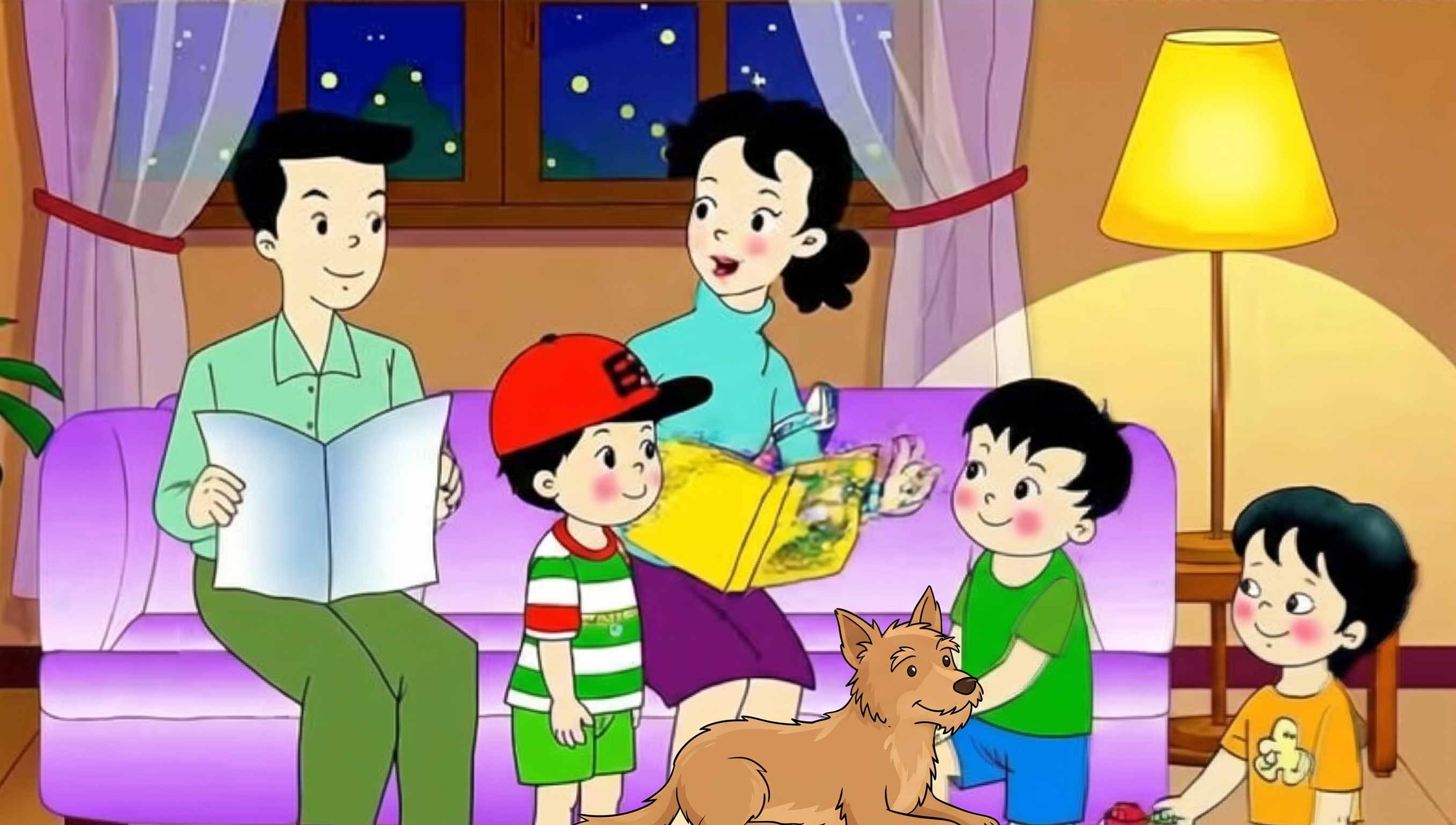
宝宝一家/La familia de Baobao/Baobao's family
爸爸/Papá, padre/Dad, father
妈妈/Mamá, madre/Mum, mother
宝宝/Baobao/Baobao
婷婷/Tíngting/Tíngting
嘟嘟/Dudú/Dudú
洛基/Rocky/Rocky
** 对话/Duìhuà/Diálogo/Dialogue **
--------------------------------------------------------------------------------
宝宝爸爸,快看!池塘里有好多小蝌蚪!/Baobao: ¡Papá, mira! ¡En el estanque hay un montón de renacuajos!/Baobao: Dad, look! There are loads of tadpoles in the pond!
爸爸是啊。它们大大的脑袋,甩着长长的尾巴。/Papá: Sí. Tienen la cabeza grande y agitan sus largas colas./Dad: Yes. They have big heads and swish their long tails.
婷婷它们的妈妈在哪里呢?/Tíngting: ¿Y dónde está su mamá?/Tíngting: Where is their mum?
妈妈它们的妈妈是青蛙。你们看,荷叶上蹲着一只大青蛙。/Mamá: Su mamá es una rana. Mirad, sobre la hoja de loto hay una gran rana./Mum: Their mum is a frog. Look, there's a big frog crouching on the lotus leaf.
嘟嘟它披着碧绿的衣裳,还鼓着两只大眼睛!/Dudú: ¡Lleva un vestido verde esmeralda y tiene dos ojos grandes y saltones!/Dudú: It's wearing an emerald-green coat and it has two big bulging eyes!
宝宝可是小蝌蚪没有腿,怎么会变成青蛙呢?/Baobao: Pero los renacuajos no tienen patas, ¿cómo se van a convertir en ranas?/Baobao: But tadpoles have no legs, so how can they turn into frogs?
爸爸先长出后腿,再长出前腿,最后尾巴就不见了。/Papá: Primero les salen las patas traseras, luego las delanteras y al final la cola desaparece./Dad: First they grow back legs, then front legs, and in the end the tail disappears.
婷婷青蛙天天捉害虫,我们要保护它们。/Tíngting: Las ranas cazan insectos dañinos todos los días; tenemos que protegerlas./Tíngting: Frogs catch pests every day; we must protect them.
洛基汪汪!/Rocky: ¡Guau!/Rocky: Woof!
妈妈洛基,别跳进池塘里哇!/Mamá: ¡Rocky, no te tires al estanque!/Mum: Rocky, don't jump into the pond!
▶ 📝 评论 / Comentarios / Comments
小蝌蚪找妈妈:一个关于成长的科学童话:
1. 偏旁归类: 眼 (yǎn) 和 睛 (jīng) 都是目字旁,和眼睛有关;蝌 (kē) 和 蚪 (dǒu) 都是虫字旁;塘 (táng) 是土字旁。引导学生按偏旁给生字分类,借助字形记住字义。
2. “动词+着”的词组: 课文用 披着 (pīzhe) 、露着 (lùzhe) 、鼓着 (gǔzhe) 、甩着 (shuǎizhe) 生动地描写动物的样子。可以让学生用“披着碧绿的衣裳”“甩着长长的尾巴”这样的词组说一说别的小动物。
3. 科学知识与复述: 小蝌蚪先长后腿,再长前腿,然后尾巴变短,最后变成青蛙。让学生按顺序排列图片,再讲一讲故事,既学了科学知识,又练习了有顺序地表达。
1. 偏旁归类: 眼 (yǎn) 和 睛 (jīng) 都是目字旁,和眼睛有关;蝌 (kē) 和 蚪 (dǒu) 都是虫字旁;塘 (táng) 是土字旁。引导学生按偏旁给生字分类,借助字形记住字义。
2. “动词+着”的词组: 课文用 披着 (pīzhe) 、露着 (lùzhe) 、鼓着 (gǔzhe) 、甩着 (shuǎizhe) 生动地描写动物的样子。可以让学生用“披着碧绿的衣裳”“甩着长长的尾巴”这样的词组说一说别的小动物。
3. 科学知识与复述: 小蝌蚪先长后腿,再长前腿,然后尾巴变短,最后变成青蛙。让学生按顺序排列图片,再讲一讲故事,既学了科学知识,又练习了有顺序地表达。
Comentario Pedagógico: Los renacuajos buscan a su mamá: un cuento científico sobre el crecimiento:
1. Agrupar por componentes: 眼 (yǎn) y 睛 (jīng) llevan el componente “目” (ojo) y tienen que ver con la vista; 蝌 (kē) y 蚪 (dǒu) llevan “虫” (insecto, bicho); 塘 (táng) lleva “土” (tierra). Clasificar los caracteres por su componente ayuda a recordar su significado.
2. Expresiones con “verbo + 着”: El texto describe a los animales con 披着 (pīzhe) , 露着 (lùzhe) , 鼓着 (gǔzhe) y 甩着 (shuǎizhe) . Los alumnos pueden usar expresiones como “披着碧绿的衣裳” o “甩着长长的尾巴” para describir a otros animales.
3. Ciencia y narración: Primero salen las patas traseras, luego las delanteras, después se acorta la cola y al final el renacuajo es una rana. Ordenar las imágenes y volver a contar la historia une el conocimiento científico con la expresión ordenada.
Pedagogical Commentary: The Little Tadpoles Look for Their Mum: a science story about growing up:
1. Grouping by component: 眼 (yǎn) and 睛 (jīng) both carry the “目” (eye) component and relate to sight; 蝌 (kē) and 蚪 (dǒu) carry “虫” (insect, creature); 塘 (táng) carries “土” (earth). Sorting characters by component helps students remember their meaning.
2. “Verb + 着” phrases: The text describes the animals vividly with 披着 (pīzhe) , 露着 (lùzhe) , 鼓着 (gǔzhe) and 甩着 (shuǎizhe) . Students can use phrases such as “披着碧绿的衣裳” and “甩着长长的尾巴” to describe other animals.
3. Science and retelling: First the back legs grow, then the front legs, then the tail gets shorter and finally the tadpole becomes a frog. Putting the pictures in order and retelling the story combines scientific knowledge with orderly speaking.

主题/Zhǔtí/Tema/Theme

其他/Qítā/Otros/Others.

词汇 Cíhuì/Vocabulario/Vocabulary

PDF与视频/PDF,videos Y Quiz/PDF, Videos and Quiz
