
PRIMARIA_C1_N1_23_L06
** 23_L06_画/Huà/El cuadro/The Painting **
** 额外内容/Contenido adicional/Additional Content **
** 扩大和替换/Kuòdà hé tìhuàn/Ampliar y sustituir/Expand and substitute. **
远看/mirar de lejos/look from afar
远看山有色/de lejos, la montaña tiene color/from afar the mountain has colour
远看山有色,近听水无声。/De lejos, la montaña tiene color; de cerca, el agua no hace ruido./From afar the mountain has colour; up close the water makes no sound.
春去/se va la primavera/spring goes
春去花还在/se va la primavera y las flores siguen/spring goes, yet the flowers remain
春去花还在,人来鸟不惊。/Se va la primavera y las flores siguen; llega la gente y los pájaros no se asustan./Spring goes, yet the flowers remain; people come, yet the birds aren't startled.
--------------------------------------------------------------------------------
人来鸟不惊。/Llega la gente y los pájaros no se asustan./People come, yet the birds aren't startled.
--------------------------------------------------------------------------------
远/lejos/far
· 近/cerca./near.
有/tener/have
· 无/no tener./not have.
去/irse/go
· 来/venir./come.
春/primavera/spring
· 花还在/las flores siguen./the flowers remain.
** 想一想, 说一说/Xiǎng yi xiǎng, shuō yi shuō/Piensa y responde/Think and answer the following questions **
--------------------------------------------------------------------------------
1朗读课文。背诵课文。/Lee el poema en voz alta y apréndelo de memoria./Read the poem aloud and learn it by heart.
2找一找,诗里有哪几对意思相反的字?/Busca: ¿qué parejas de caracteres de significado contrario hay en el poema?/Find the pairs of characters with opposite meanings in the poem.
** 家庭/Jiātíng/FAMILIA/FAMILY **
--------------------------------------------------------------------------------
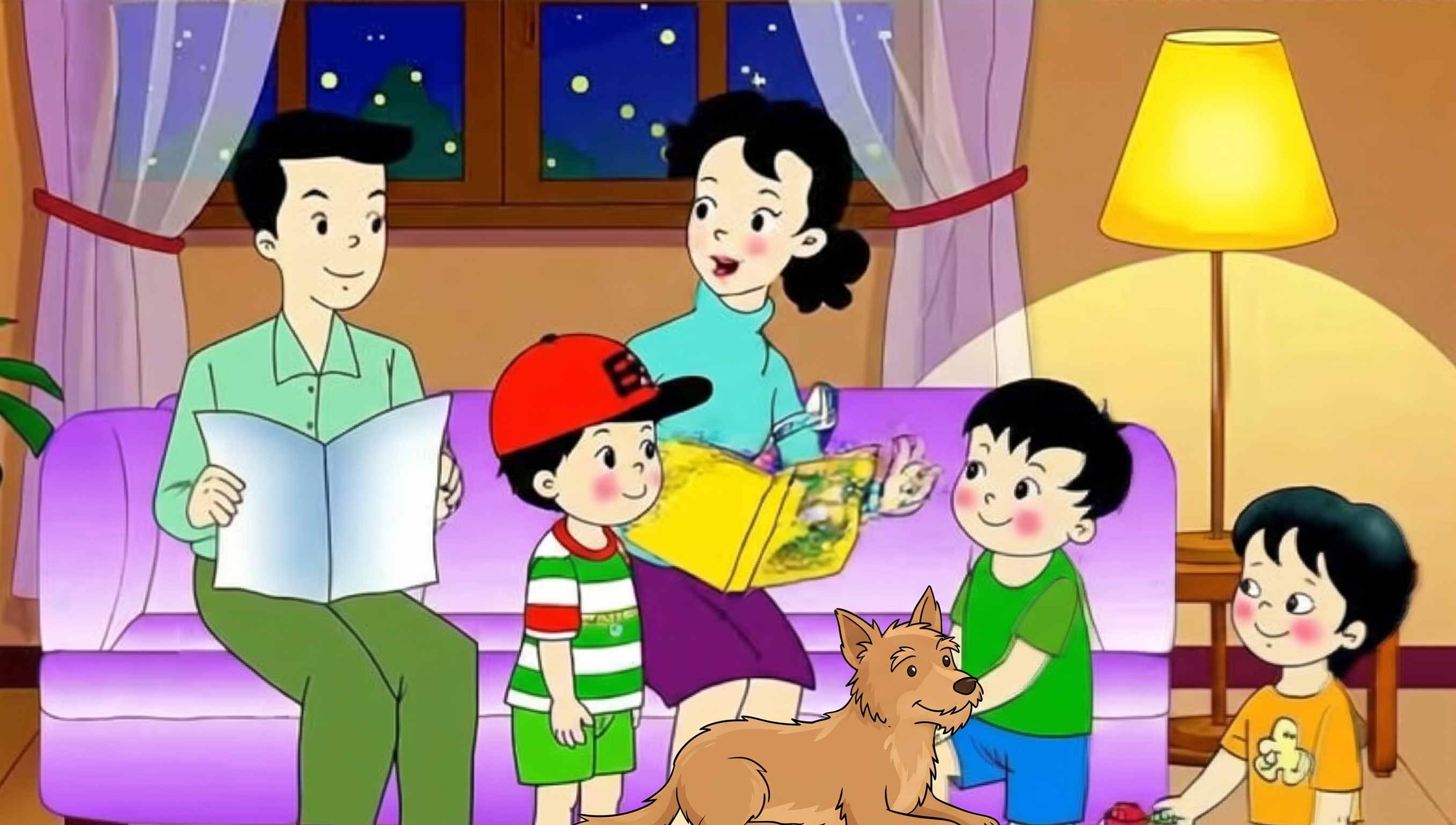
宝宝一家/La familia de Baobao/Baobao's family
爸爸/Papá, padre/Dad, father
妈妈/Mamá, madre/Mum, mother
宝宝/Baobao/Baobao
婷婷/Tíngting/Tíngting
嘟嘟/Dudú/Dudú
洛基/Rocky/Rocky
** 对话/Duìhuà/Diálogo/Dialogue **
--------------------------------------------------------------------------------
嘟嘟爸爸,这幅画上的山真好看!/Dudú: Papá, ¡qué bonita es la montaña de este cuadro!/Dudú: Dad, the mountain in this painting is so beautiful!
爸爸远看山有色,近听水无声。这是一首写画的诗。/Papá: «De lejos, la montaña tiene color; de cerca, el agua no hace ruido». Es un poema sobre un cuadro./Dad: “From afar the mountain has colour; up close the water makes no sound.” It's a poem about a painting.
婷婷画里的花一直开着,春天过去了也还在。/Tíngting: Las flores del cuadro siempre están abiertas: aunque pase la primavera, siguen ahí./Tíngting: The flowers in the painting are always in bloom – even after spring they're still there.
宝宝我走近了,画上的小鸟也不飞走。/Baobao: Me he acercado y el pajarito del cuadro no sale volando./Baobao: I went up close and the little bird in the painting didn't fly away.
妈妈对,这就是人来鸟不惊。/Mamá: Exacto: eso es «llega la gente y los pájaros no se asustan»./Mum: That's right – that's “people come, yet the birds aren't startled”.
洛基汪汪!/Rocky: ¡Guau!/Rocky: Woof!
▶ 📝 评论 / Comentarios / Comments
画:一首有趣的谜语诗:
1. 猜一猜: 这首诗像一个谜语,谜底就是“画”。让学生读完后猜一猜写的是什么。
2. 反义词: 诗中有几对意思相反的字:远—近、有—无、去—来。
3. 背诵: 诗句对仗工整,读起来有节奏,容易背诵。
1. 猜一猜: 这首诗像一个谜语,谜底就是“画”。让学生读完后猜一猜写的是什么。
2. 反义词: 诗中有几对意思相反的字:远—近、有—无、去—来。
3. 背诵: 诗句对仗工整,读起来有节奏,容易背诵。
Comentario Pedagógico: El cuadro: un poema-adivinanza:
1. Adivinar: El poema es como una adivinanza cuya solución es «el cuadro». Los alumnos lo leen y adivinan de qué habla.
2. Antónimos: En el poema hay varias parejas de contrarios: 远—近, 有—无, 去—来.
3. Memorizar: Los versos son paralelos y rítmicos, fáciles de memorizar.
1. Adivinar: El poema es como una adivinanza cuya solución es «el cuadro». Los alumnos lo leen y adivinan de qué habla.
2. Antónimos: En el poema hay varias parejas de contrarios: 远—近, 有—无, 去—来.
3. Memorizar: Los versos son paralelos y rítmicos, fáciles de memorizar.
Pedagogical Commentary: The Painting: a riddle poem:
1. Guessing: The poem is like a riddle whose answer is “a painting”. Students read it and guess what it describes.
2. Opposites: The poem has several pairs of opposites: 远—近, 有—无, 去—来.
3. Reciting: The lines are parallel and rhythmic, easy to learn by heart.
1. Guessing: The poem is like a riddle whose answer is “a painting”. Students read it and guess what it describes.
2. Opposites: The poem has several pairs of opposites: 远—近, 有—无, 去—来.
3. Reciting: The lines are parallel and rhythmic, easy to learn by heart.

主题/Zhǔtí/Tema/Theme

其他/Qítā/Otros/Others.

词汇 Cíhuì/Vocabulario/Vocabulary

PDF与视频/PDF,videos Y Quiz/PDF, Videos and Quiz
