
** 3_家庭音乐会/Jiātíng yīnyuèhuì/Concierto familiar/Family Concert **
** 额外内容/Contenido adicional/Additional Content **
** 家庭/Jiātíng/FAMILIA/FAMILY **

** 词汇/Cíhuì/VOCABULARIO/VOCABULARY. **
** 历史/Lìshǐ/La historia/history **
** 家庭音乐会/Jiātíng yīnyuèhuì/Concierto en familia/A Family Concert **
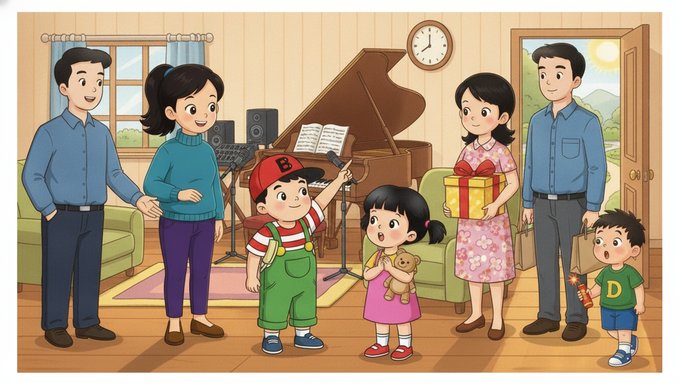
场景一/Chǎngjǐng yī/Escena 1/Scene 1
这个 (Fin de semana/Weekend) , (Tía (hermana de papá)/Aunt (dad's sister) ) 和 (Tío (marido de la tía)/Uncle (aunt's husband) ) 带着 (Prima/Cousin) 来家里 (Ir de visita/Visit) 。
Este (周末zhōumò) , la (姑姑Gūgu) y el (姑父Gūfu) vinieron de (做客zuòkè) con la (表妹biǎomèi) .
This (周末zhōumò) , (姑姑Gūgu) and (姑父Gūfu) came to (做客zuòkè) with their daughter, the children's (表妹biǎomèi) .
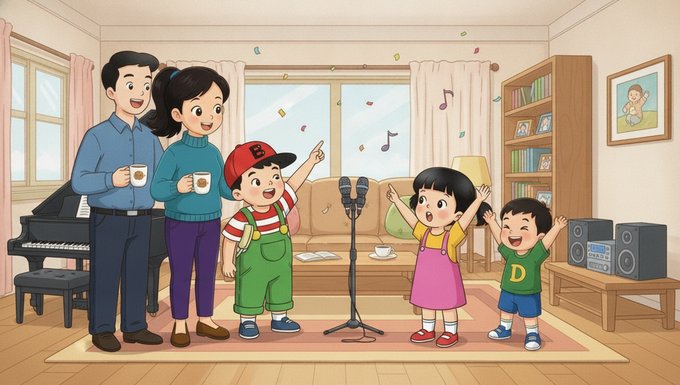
场景二/Chǎngjǐng èr/Escena 2/Scene 2
大家喝着 (Café/Coffee) , (Baobao) (Proponer/Suggest) :‘我们开一个家庭 (Concierto/Concert) 吧!’大家都 (Encantado/Gladly) (Estar de acuerdo/Agree) 。
Mientras tomaban (咖啡kāfēi) , (宝宝Bǎobǎo) (提议tíyì) : ‘¡Hagamos un (音乐会yīnyuèhuì) en familia!’. Todos (赞成zànchéng) , (欣然xīnrán) .
Over (咖啡kāfēi) , (宝宝Bǎobǎo) (提议tíyì) , ‘Let's have a family (音乐会yīnyuèhuì) !’ Everyone (欣然xīnrán) (赞成zànchéng) .
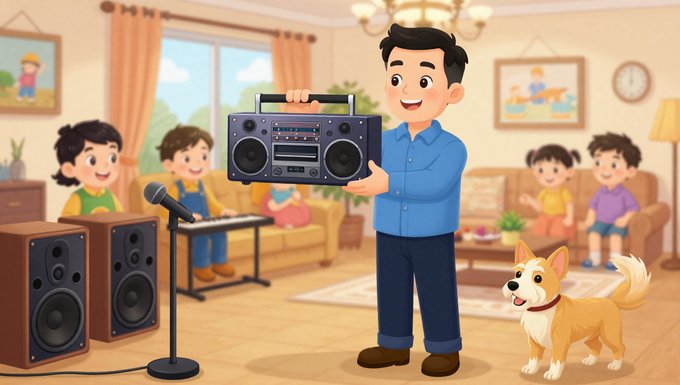
场景三/Chǎngjǐng sān/Escena 3/Scene 3
(Papá,padre/Dad,father) (Hace poco/Recently) 买了一套新 (Equipo de música/Sound system) ,正好可以 (Bien/Properly) (Disfrutar/Enjoy) 一下。
(爸爸Bàba) había comprado (最近zuìjìn) un (音响yīnxiǎng) nuevo, así que podían (享受xiǎngshòu) (好好儿hǎohāor) .
(爸爸Bàba) had (最近zuìjìn) bought a new (音响yīnxiǎng) , so it was a perfect chance to (享受xiǎngshòu) it (好好儿hǎohāor) .
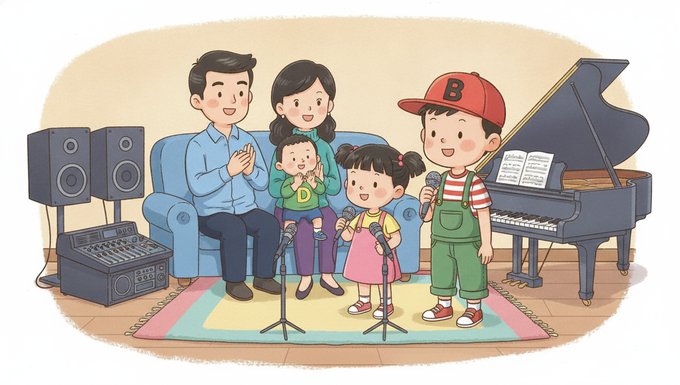
场景四/Chǎngjǐng sì/Escena 4/Scene 4
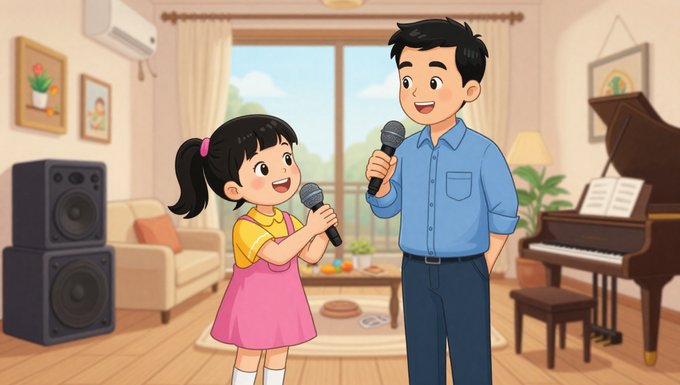
(Tíngting) 和 (Baobao) 拿着 (Micrófono/Microphone) ,学电视里的 (Presentador/Host) 说:‘ (Concierto/Concert) 现在开始!’
(婷婷Tíngtíng) y (宝宝Bǎobǎo) cogieron el (话筒huàtǒng) e imitaron a los (主持人zhǔchírén) de la tele: ‘¡Empieza el (音乐会yīnyuèhuì) !’.
(婷婷Tíngtíng) and (宝宝Bǎobǎo) picked up the (话筒huàtǒng) and, like (主持人zhǔchírén) on TV, said, ‘The (音乐会yīnyuèhuì) now begins!’
场景五/Chǎngjǐng wǔ/Escena 5/Scene 5
‘第一个 (Número/Act) , (Tío (marido de la tía)/Uncle (aunt's husband) ) 唱歌!’ (Tíngting) 把 (Micrófono/Microphone) (Pasar/Hand over) 给 (Tío (marido de la tía)/Uncle (aunt's husband) ) 。唱歌是他的 (Especialidad/Forte) (Número/Act) 。
‘¡Primer (节目jiémù) : canta el (姑父Gūfu) !’. (婷婷Tíngtíng) le (递dì) el (话筒huàtǒng) . Cantar es su (拿手náshǒu) .
‘First (节目jiémù) : (姑父Gūfu) sings!’ (婷婷Tíngtíng) (递dì) him the (话筒huàtǒng) . Singing is his (拿手náshǒu) .
场景六/Chǎngjǐng liù/Escena 6/Scene 6
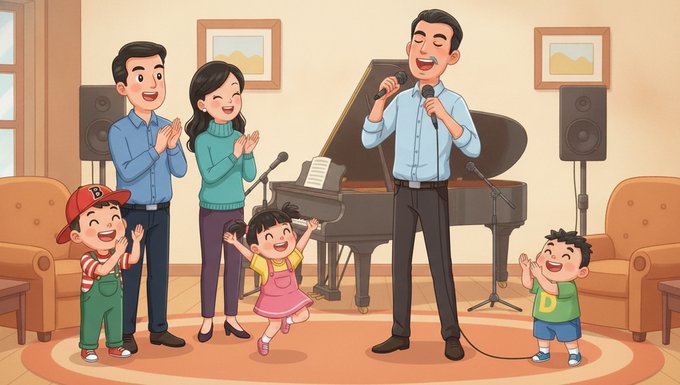
他清了清 (Garganta/Throat) ,声音 (Potente/Resonant) ,唱得非常动人,大家的 (Aplausos y vítores/Cheers) 不断。
Se aclaró la (嗓子sǎngzi) y cantó con una voz (洪亮hóngliàng) y muy emocionante; los (喝彩声hècǎishēng) no paraban.
He cleared his (嗓子sǎngzi) and sang in a (洪亮hóngliàng) , very moving voice; the (喝彩声hècǎishēng) never stopped.
场景七/Chǎngjǐng qī/Escena 7/Scene 7
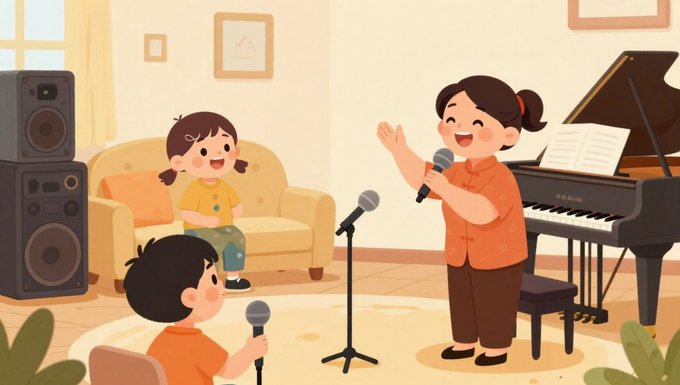
(Tía (hermana de papá)/Aunt (dad's sister) ) 是个 (Aficionada a la música/Music fan) ,她也不 (Quedarse atrás/Be outdone) , (Sin poder esperar/Can't wait) 地 (Arrebatar/Snatch) 过 (Micrófono/Microphone) ,唱了一段 (Ópera de Pekín/Peking opera) 。
La (姑姑Gūgu) , gran (歌迷gēmí) , no quiso (示弱shìruò) : (迫不及待pòbùjídài) , (抢qiǎng) el (话筒huàtǒng) y cantó un fragmento de (京剧jīngjù) .
(姑姑Gūgu) , a big (歌迷gēmí) , wasn't going to (示弱shìruò) : she (迫不及待pòbùjídài) , (抢qiǎng) the (话筒huàtǒng) and sang a piece of (京剧jīngjù) .
场景八/Chǎngjǐng bā/Escena 8/Scene 8
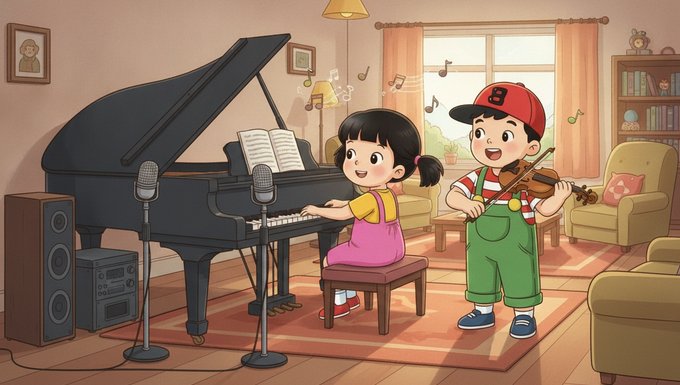
(Tíngting) 弹钢琴, (Baobao) 拉小提琴,一起 (Interpretar/Perform) 了一首 (Melodía/Melody) 优美的曲子。
(婷婷Tíngtíng) al piano y (宝宝Bǎobǎo) al violín (演奏yǎnzòu) juntos una pieza de (旋律xuánlǜ) preciosa.
(婷婷Tíngtíng) on the piano and (宝宝Bǎobǎo) on the violin (演奏yǎnzòu) a piece with a beautiful (旋律xuánlǜ) .
场景九/Chǎngjǐng jiǔ/Escena 9/Scene 9
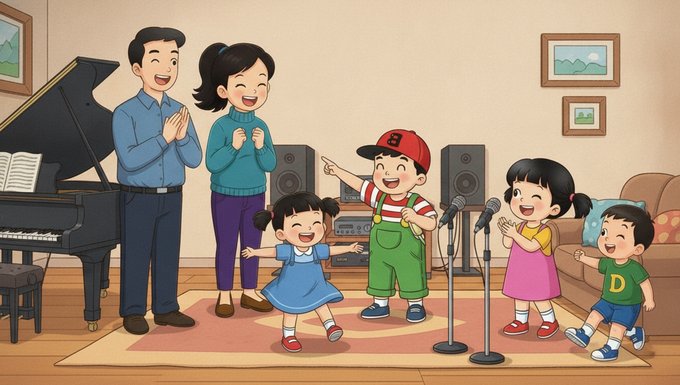
(Dudú) 和 (Prima/Cousin) (Sin poder evitarlo/Can't help oneself) 地跳起舞来, (Concierto/Concert) 到了 (Momento culminante/Climax) 。
(嘟嘟Dūdū) y la (表妹biǎomèi) se pusieron a bailar (情不自禁qíngbúzìjīn) , y el (音乐会yīnyuèhuì) llegó a su (高潮gāocháo) .
(嘟嘟Dūdū) and their (表妹biǎomèi) (情不自禁qíngbúzìjīn) dancing, and the (音乐会yīnyuèhuì) reached its (高潮gāocháo) .
场景十/Chǎngjǐng shí/Escena 10/Scene 10
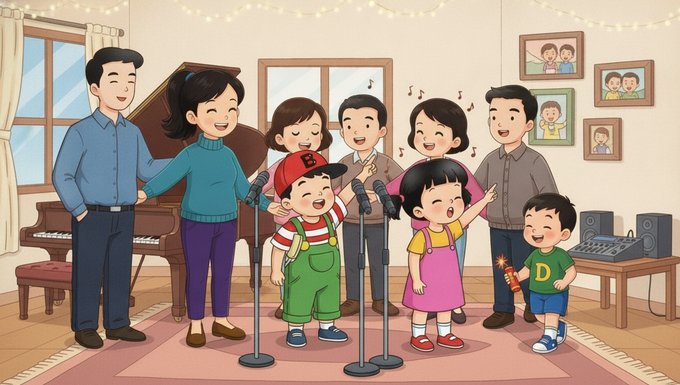
最后,大家一起唱《 (Noche inolvidable/Unforgettable Tonight) 》。家里 (Lleno de/Full of) 了 (Alegría/Joy) ,热闹 (Extraordinario/Extraordinary) ,大家都 (Sumergirse/Be immersed) 在音乐里。
Al final, todos cantaron juntos ‘ (难忘今宵Nánwàng jīnxiāo) ’. La casa estaba (充满chōngmǎn) (欢乐huānlè) , con un ambiente (非凡fēifán) , y todos estaban (沉浸chénjìn) en la música.
Finally, everyone sang ‘ (难忘今宵Nánwàng jīnxiāo) ’ together. The house was (充满chōngmǎn) (欢乐huānlè) and (非凡fēifán) lively, and everyone was (沉浸chénjìn) in the music.
@ Zhongwen 资料 (SWF, PDF, MP3 等) 的版权归属于:中国华文教育网 - Overseas Chinese Language and Culture Education Online。
@ Los materiales Zhongwen (SWF, PDF, MP3, etc.) son propiedad de: 中国华文教育网 - Overseas Chinese Language and Culture Education Online.
@ The materials Zhongwen (SWF, PDF, MP3, etc.) are the property of: 中国华文教育网 - Overseas Chinese Language and Culture Education Online.

主题/Zhǔtí/Tema/Theme

其他/Qítā/Otros/Others.

阅读/Yuèdú/Lectura/Reading.

PDF与视频/PDF,videos Y Quiz/PDF, Videos and Quiz

额外内容/Contenido adicional/Additional Content
