
** 7_古诗二首/Gǔshī èr shǒu/Dos poemas antiguos/Two Ancient Poems **
** 额外内容/Contenido adicional/Additional Content **
** 家庭/Jiātíng/FAMILIA/FAMILY **

** 词汇/Cíhuì/VOCABULARIO/VOCABULARY. **
** 历史/Lìshǐ/La historia/history **
** 慈母手中线/Címǔ shǒu zhōng xiàn/El hilo en manos de mamá/The Thread in Mother's Hand **
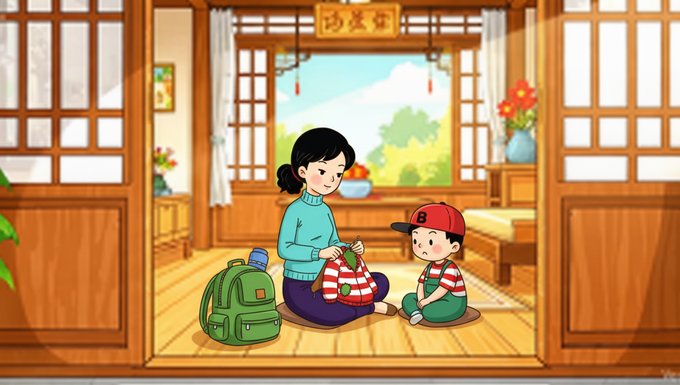
场景一/Chǎngjǐng yī/Escena 1/Scene 1
明天 (Baobao) 要去 (Campamento de verano/Summer camp) 了。晚上, (Mamá,madre/Mom,mother) 拿出 (Aguja e hilo/Needle and thread) ,给他 (Coser/Sew) (Ropa/Clothes) 。
Mañana (宝宝Bǎobǎo) se iba al (夏令营xiàlìngyíng) . Por la noche, (妈妈Māmā) sacó (针线zhēnxiàn) para (缝féng) la (衣服yīfu) .
Tomorrow (宝宝Bǎobǎo) was going to (夏令营xiàlìngyíng) . That evening, (妈妈Māmā) took out a (针线zhēnxiàn) to (缝féng) his (衣服yīfu) .
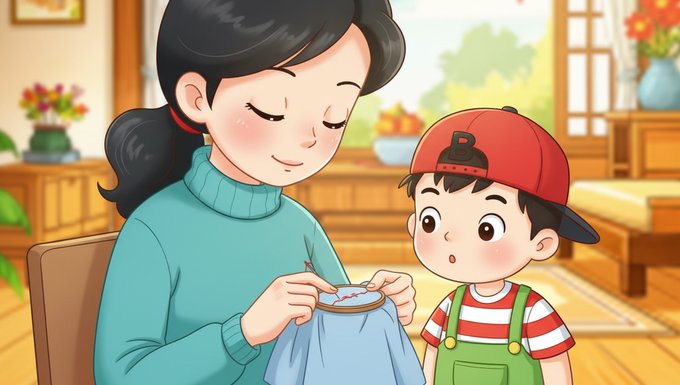
场景二/Chǎngjǐng èr/Escena 2/Scene 2
(Mamá,madre/Mom,mother) (Coser/Sew) 得 (Muy apretado/Close and tight) 的, (Baobao) 问:‘ (Mamá,madre/Mom,mother) ,为什么 (Coser/Sew) 得这么紧?’
(妈妈Māmā) (缝féng) con puntadas (密密mìmì) , y (宝宝Bǎobǎo) preguntó: ‘ (妈妈Māmā) , ¿por qué (缝féng) tan apretado?’.
(妈妈Māmā) (缝féng) with (密密mìmì) stitches, and (宝宝Bǎobǎo) asked, ‘ (妈妈Māmā) , why do you (缝féng) so tightly?’
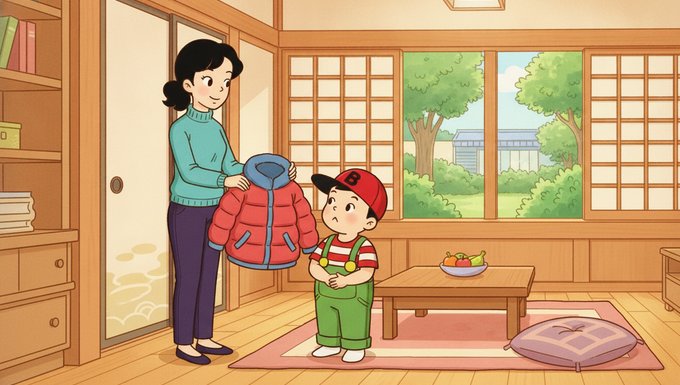
场景三/Chǎngjǐng sān/Escena 3/Scene 3
(Mamá,madre/Mom,mother) 说:‘我 (Temer que/I'm afraid) 你在外面 (Ropa/Clothes) 破了,没有人给你 (Coser/Sew) 。’
(妈妈Māmā) dijo: ‘ (恐怕kǒngpà) allí se te rompa la (衣服yīfu) y no haya nadie que te la (缝féng) ’.
(妈妈Māmā) said, ‘ (恐怕kǒngpà) your (衣服yīfu) might tear while you're away, and no one will (缝féng) them for you.’
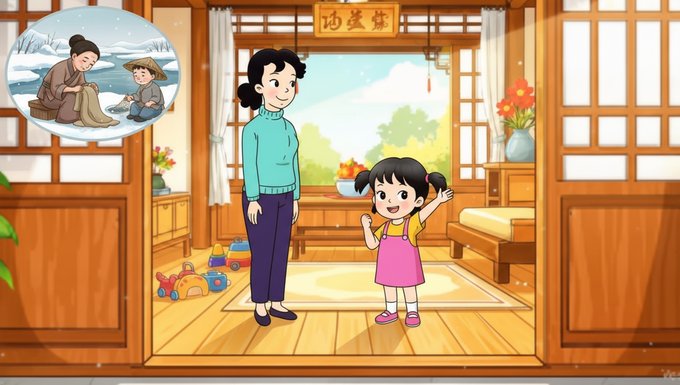
场景四/Chǎngjǐng sì/Escena 4/Scene 4
(Tíngting) 想起了 (Dinastía Tang/Tang Dynasty) 诗人 (Meng Jiao/Meng Jiao) 的《 (Canción del hijo viajero/Song of the Wandering Son) 》,背道:‘ (Madre bondadosa/Loving mother) (En la mano/In one's hand) 线, (Viajero lejos de casa/Traveler far from home) (Encima/On one's body) (Ropa (clásico)/Clothes (classical) ) 。’
(婷婷Tíngtíng) recordó la ‘ (游子吟Yóuzǐ yín) ’ de (孟郊Mèng Jiāo) , poeta de la (唐代Tángdài) , y recitó: ‘El hilo en la (手中shǒuzhōng) de la (慈母címǔ) se vuelve la (衣yī) que el (游子yóuzǐ) lleva (身上shēnshang) ’.
(婷婷Tíngtíng) remembered ‘ (游子吟Yóuzǐ yín) ’ by (孟郊Mèng Jiāo) , a poet of the (唐代Tángdài) , and recited, ‘The thread (手中shǒuzhōng) of a (慈母címǔ) becomes the (衣yī) (身上shēnshang) of her (游子yóuzǐ) .’
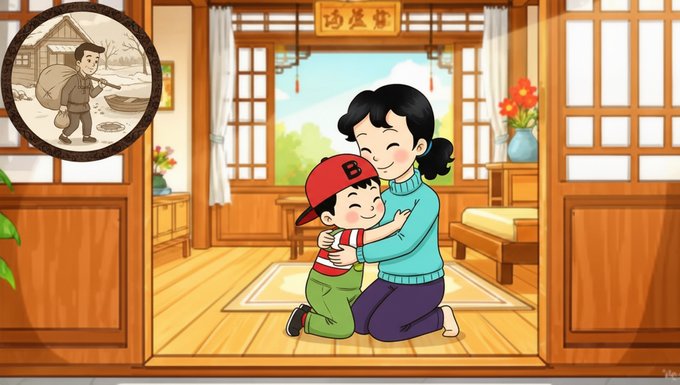
场景五/Chǎngjǐng wǔ/Escena 5/Scene 5
‘ (Al partir/Before leaving) (Muy apretado/Close and tight) (Coser/Sew) , (Temer/Fear) (Tarde/Late) (Volver/Return) 。谁言 (Hierbecita/Little blade of grass) 心,报得三 (Sol de primavera/Spring sunshine) 。’ (Baobao) 说:‘这首 (Poema clásico/Classical poem) 说的就是 (Mamá,madre/Mom,mother) !’
‘ (临行línxíng) , cose con puntadas (密密mìmì) , (意恐yìkǒng) que (迟迟chíchí) en (归guī) . ¿Quién dice que el corazón de una (寸草cùncǎo) puede pagar el (春晖chūnhuī) ?’. (宝宝Bǎobǎo) dijo: ‘¡Este (古诗gǔshī) habla de mamá!’.
‘ (临行línxíng) , she sews with (密密mìmì) stitches, (意恐yìkǒng) he'll be (迟迟chíchí) to (归guī) . Who says the heart of a (寸草cùncǎo) can repay the (春晖chūnhuī) ?’ (宝宝Bǎobǎo) said, ‘This (古诗gǔshī) is about Mom!’
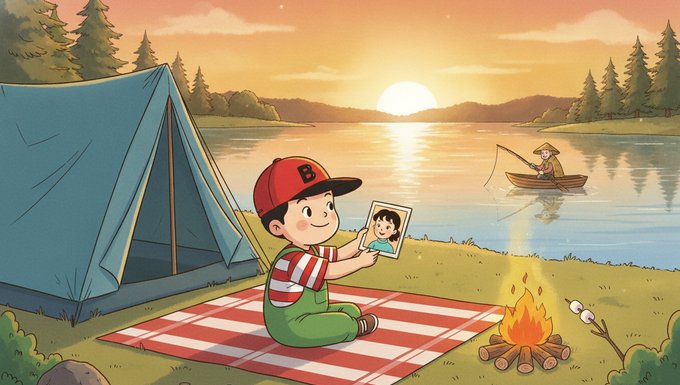
场景六/Chǎngjǐng liù/Escena 6/Scene 6
(Baobao) 在 (Campamento de verano/Summer camp) 的时候,每天都 (Echar de menos/Miss) (Mamá,madre/Mom,mother) 。
Cuando (宝宝Bǎobǎo) estaba en el (夏令营xiàlìngyíng) , (想念xiǎngniàn) a (妈妈Māmā) todos los días.
While (宝宝Bǎobǎo) was at (夏令营xiàlìngyíng) , he (想念xiǎngniàn) (妈妈Māmā) every day.
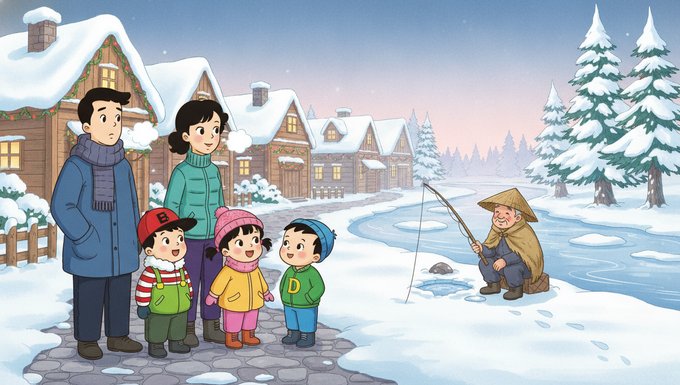
场景七/Chǎngjǐng qī/Escena 7/Scene 7
(Vacaciones de invierno/Winter vacation) 到了,全家去北方看雪。天气非常 (Frío/Cold) 。
Llegaron las (寒假hánjià) y toda la familia fue al norte a ver la nieve. Hacía muchísimo (寒冷hánlěng) .
(寒假hánjià) came, and the whole family went north to see the snow. It was very (寒冷hánlěng) .
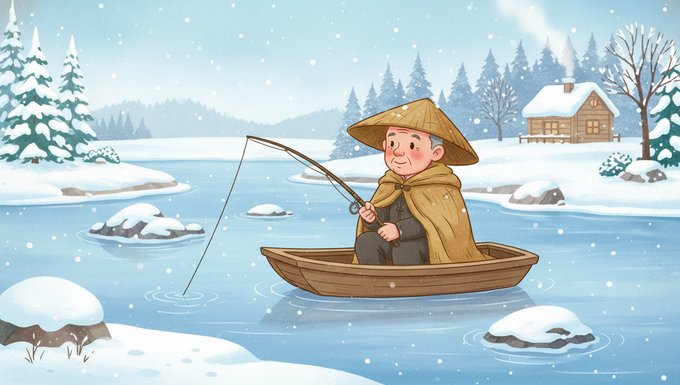
场景八/Chǎngjǐng bā/Escena 8/Scene 8
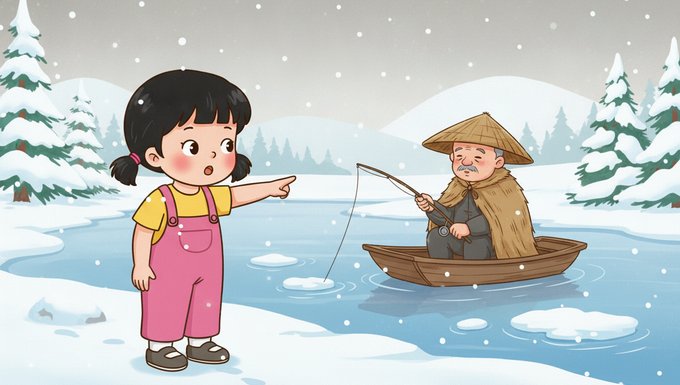
河边,一位 (Pescador anciano/Old fisherman) (Solo/Alone) 坐在小船上 (Pescar/Fish) 。
Junto al río, un (渔翁yúwēng) estaba sentado (独自dúzì) en una barca, (钓鱼diàoyú) .
By the river, an (渔翁yúwēng) sat (独自dúzì) in a little boat, (钓鱼diàoyú) .
场景九/Chǎngjǐng jiǔ/Escena 9/Scene 9
(Tíngting) 又背了 (Liu Zongyuan/Liu Zongyuan) 的《江雪》:‘千山鸟飞 (Desaparecer/Vanish) , (Mil senderos/Ten thousand paths) (Huellas humanas/Human traces) (Borrarse/Disappear) 。 (Barca solitaria/Lonely boat) (Capa de paja y sombrero/Straw cape and hat) 翁,独钓寒江雪。’
(婷婷Tíngtíng) recitó también ‘Nieve en el río’, de (柳宗元Liǔ Zōngyuán) : ‘En mil montañas los pájaros han (绝jué) ; en (万径wànjìng) las (人踪rénzōng) se han (灭miè) . En una (孤舟gūzhōu) , un anciano con (蓑笠suōlì) pesca solo en el río helado y nevado’.
(婷婷Tíngtíng) also recited ‘River Snow’ by (柳宗元Liǔ Zōngyuán) : ‘Over a thousand mountains the birds have (绝jué) ; on (万径wànjìng) all (人踪rénzōng) have (灭miè) . In a (孤舟gūzhōu) , an old man in (蓑笠suōlì) fishes alone in the cold river snow.’
场景十/Chǎngjǐng shí/Escena 10/Scene 10
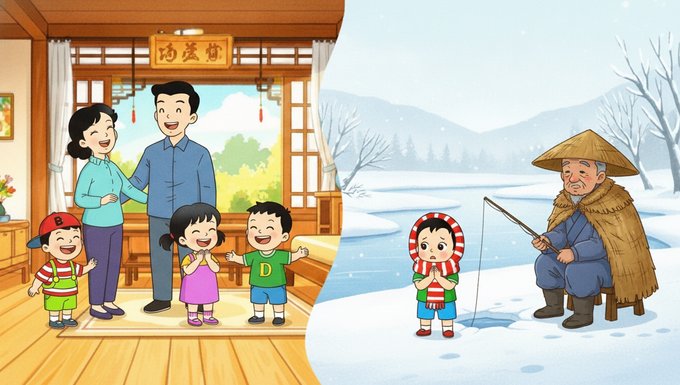
(Dudú) 说:‘那个 (Pescador anciano/Old fisherman) 不冷吗?我 (Temer que/I'm afraid) 他会感冒!’大家都笑了。
(嘟嘟Dūdū) dijo: ‘¿Ese (渔翁yúwēng) no tiene frío? ¡ (恐怕kǒngpà) se va a resfriar!’. Todos se rieron.
(嘟嘟Dūdū) said, ‘Isn't that (渔翁yúwēng) cold? (恐怕kǒngpà) he'll catch a cold!’ Everyone laughed.
@ Zhongwen 资料 (SWF, PDF, MP3 等) 的版权归属于:中国华文教育网 - Overseas Chinese Language and Culture Education Online。
@ Los materiales Zhongwen (SWF, PDF, MP3, etc.) son propiedad de: 中国华文教育网 - Overseas Chinese Language and Culture Education Online.
@ The materials Zhongwen (SWF, PDF, MP3, etc.) are the property of: 中国华文教育网 - Overseas Chinese Language and Culture Education Online.

主题/Zhǔtí/Tema/Theme

其他/Qítā/Otros/Others.

阅读/Yuèdú/Lectura/Reading.

PDF与视频/PDF,videos Y Quiz/PDF, Videos and Quiz

额外内容/Contenido adicional/Additional Content
