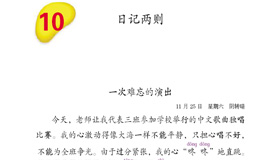
11月yuè25日rì 星期六xīngqīliù 阴转晴yīnzhuǎnqíng/25 de noviembre, sábado, nublado a despejado/November 25, Saturday, cloudy turning clear
今天jīntiān,老师lǎoshī让ràng我wǒ代表dàibiǎo三sān班bān参加cānjiā学校xuéxiào举行jǔxíng的de中文Zhōngwén歌曲gēqǔ独唱dúchàng比赛bǐsài。/Hoy, la profesora me eligió para representar a la clase 3 en el concurso de canto en solitario de canciones chinas organizado por la escuela./Today, the teacher had me represent Class 3 in the school's Chinese song solo singing competition.
我wǒ的de心xīn激动得jīdòngde像xiàng大海dàhǎi一样yíyàng不能búnéng平静píngjìng,只担心zhǐdānxīn唱不好chàngbùhǎo,不能búnéng为wèi全班quánbān争光zhēngguāng。/Mi corazón estaba tan agitado como el mar y no podía calmarse, solo me preocupaba no cantar bien y no poder traer honor a toda la clase./My heart was as agitated as the sea and could not calm down, I only worried about not singing well, about not being able to bring honor to the whole class.
由于yóuyú过分guòfèn紧张jǐnzhāng,我wǒ的de心xīn“咚咚dōngdōng”地de直跳zhítiào。/Debido a los nervios excesivos, mi corazón latía sin parar “pum pum”./Due to excessive nervousness, my heart kept pounding “thump thump.”
该gāi我wǒ上台shàngtái了le,我wǒ好像hǎoxiàng腾云驾雾téngyúnjiàwù似的shìde,两liǎng腿tuǐ轻飘飘qīngpiāopiāo,不知bùzhī是shì怎么zěnme走上zǒushàng舞台wǔtái的de。/Me tocaba subir al escenario, sentía como si cabalgara sobre las nubes, las piernas se sentían flotantes, no sé cómo llegué al escenario./It was my turn to go on stage, I felt as if riding on clouds, my legs felt light and floating, I don't know how I walked up onto the stage.
我给wǒgěi观众guānzhòng敬了个jìngle ge礼lǐ,台下táixià顿时dùnshí响起了xiǎngqǐle热烈rèliè的de掌声zhǎngshēng;我wǒ又yòu向xiàng伴奏bànzòu的de老师lǎoshī点了diǎnle点头diǎntóu,于是yúshì从cóng钢琴gāngqín里li流出了liúchūle优美yōuměi的de音乐yīnyuè。/Saludé al público con una reverencia, y de inmediato estalló un cálido aplauso; luego asentí a la profesora que me acompañaba, y de inmediato brotó del piano una hermosa música./I bowed to the audience, and warm applause immediately erupted; I then nodded to the teacher accompanying me, and beautiful music flowed from the piano.
真是zhēnshì万事俱备wànshìjùbèi,只欠zhǐqiàn我wǒ这zhè“东风dōngfēng”了le。/Verdaderamente todo estaba listo, solo me faltaba a mí ese “viento del este”./Truly everything was ready, all that was missing was me, that “east wind.”
可kě没想到méixiǎngdào,我wǒ一开口yìkāikǒu就jiù跑了pǎole调diào,跟gēn伴奏bànzòu的de音乐yīnyuè怎么zěnme也合不到yěhébudào一起yìqǐ。/Pero no esperaba que, en cuanto abrí la boca, desafiné, y no importaba cómo, no lograba encajar con la música de acompañamiento./But I didn't expect that as soon as I opened my mouth, I went off-key, and no matter what, I couldn't match the accompanying music.
这么zhème好hǎo的de机会jīhuì,却què让ràng我wǒ给gěi白白báibái丢掉了diūdiàole,我wǒ急得jíde眼泪yǎnlèi像xiàng断了duànle线xiàn的de珍珠zhēnzhū。/Esta oportunidad tan buena la perdí en vano, y estaba tan angustiada que las lágrimas caían como un collar de perlas roto./This great opportunity, I let slip away for nothing, and I was so distressed that tears fell like a broken string of pearls.
我wǒ真是zhēnshì给gěi三班sānbān的de同学tóngxué丢diū尽了jìnle脸liǎn。/De verdad hice quedar mal a los compañeros de la clase 3./I truly brought shame to the classmates of Class 3.
走下zǒuxià舞台wǔtái,我wǒ的de脸吊liǎndiào得de比bǐ平时píngshí更长gèngcháng了le。/Al bajar del escenario, mi cara estaba más larga (triste) de lo habitual./Coming down from the stage, my face was longer (sadder) than usual.
听着tīngzhe其他qítā同学tóngxué优美yōuměi的de演唱yǎnchàng,我wǒ虽然suīrán坐zuò在zài最zuì后hòu一排yìpái,但是dànshì仍然réngrán觉得juéde没méi脸liǎn见jiàn人rén,头低得tóudīde几乎jīhū要yào挨āi在zài地上dìshang了le。/Escuchando el hermoso canto de mis compañeros, aunque me senté en la última fila, aún así sentía que no tenía cara para ver a nadie, la cabeza tan baja que casi tocaba el suelo./Listening to my classmates' beautiful singing, although I sat in the last row, I still felt too ashamed to face anyone, my head hanging so low it nearly touched the ground.
回到huídào教室jiàoshì里li,同学们tóngxuémen朝cháo我wǒ蜂拥fēngyōng而ér来lái,有的yǒude怨yuàn我wǒ“不争气búzhēngqì”,有的yǒude责备zébèi我wǒ“不中用búzhòngyòng”,有的yǒude讽刺fěngcì我wǒ“本事běnshi不大búdà”。/Al regresar al salón, mis compañeros se me acercaron en tropel, algunos me culpaban de “no tener carácter”, otros me reprochaban “ser inútil”, otros se burlaban diciendo “no tienes talento”./Back in the classroom, my classmates swarmed towards me, some blamed me for “having no spirit,” some reproached me for “being useless,” some mocked me saying “you have no talent.”
这时zhèshí,老师lǎoshī来lái了le,我wǒ的de心情xīnqíng更加gèngjiā紧张jǐnzhāng了le,心想xīnxiǎng老师lǎoshī肯定kěndìng会huì狠狠hěnhěn地de批评pīpíng我wǒ一顿yídùn。/En ese momento, llegó la profesora, y mi ánimo se puso aún más nervioso, pensando que seguramente me regañaría severamente./At that moment, the teacher arrived, and I became even more nervous, thinking she would surely scold me harshly.
可kě我wǒ万万wànwàn没想到méixiǎngdào,老师lǎoshī却què抚摸着fǔmōzhe我wǒ的de头tóu,笑着xiàozhe对duì我wǒ说shuō:“这次zhècì没唱好méichànghǎo没关系méiguānxi,因为yīnwèi你nǐ没méi有受过yǒushòuguò锻炼duànliàn,下次xiàcì就jiù会唱好huìchànghǎo的de。”/Pero no esperaba en absoluto que la profesora, acariciándome la cabeza, me dijera sonriendo: “No importa que esta vez no hayas cantado bien, porque no has tenido entrenamiento antes, la próxima vez cantarás bien.”/But I never expected that the teacher, stroking my head, would say to me smiling: “It's alright that you didn't sing well this time, because you haven't had training before, next time you'll sing well.”
听到tīngdào老师lǎoshī没有méiyǒu一点儿yìdiǎnr责备zébèi的de话huà,我wǒ心里xīnli更gèng觉得juéde难受nánshòu,眼泪yǎnlèi竟jìng“刷刷shuāshuā”地de流了liúle下来xiàlai。/Al oír que la profesora no tenía ni una palabra de reproche, me sentí aún más afligida, y las lágrimas cayeron sin parar “shua shua”./Hearing that the teacher had not a single word of reproach, I felt even more distressed, and tears streamed down “swish swish.”
8月yuè7日rì 星期日xīngqīrì 晴qíng/7 de agosto, domingo, despejado/August 7, Sunday, clear
晚饭wǎnfàn后hòu,我wǒ坐zuò在zài院子yuànzi里li,仰头yǎngtóu观看guānkàn满天mǎntiān繁星fánxīng。/Después de la cena, me senté en el patio, levantando la cabeza para contemplar el cielo lleno de estrellas./After dinner, I sat in the courtyard, raising my head to gaze at the sky full of stars.
晴朗qínglǎng的de夜空yèkōng,星光xīngguāng闪闪shǎnshǎn。/El cielo nocturno despejado, con estrellas brillando./The clear night sky, with stars twinkling.
我wǒ被bèi这zhè迷人mírén的de星空xīngkōng陶醉了táozuìle。/Quedé embriagado por este fascinante cielo estrellado./I was intoxicated by this enchanting starry sky.
深shēn蓝色lánsè的de天空tiānkōng,星光xīngguāng灿烂cànlàn。/El cielo de un azul profundo, con estrellas resplandecientes./The deep blue sky, with brilliant starlight.
星星xīngxing像xiàng一个yíge巨大jùdà的de棋盘qípán里li摆满bǎimǎn的de棋子qízi。/Las estrellas parecían fichas que llenaban un enorme tablero de ajedrez./The stars looked like pieces filling a giant chessboard.
它们tāmen像xiàng一群yìqún调皮tiáopí的de孩子háizi,不时bùshí地de向xiàng我wǒ挤jǐ眼睛yǎnjing。/Parecían un grupo de niños traviesos, guiñándome el ojo de vez en cuando./They seemed like a group of mischievous children, winking at me from time to time.
乍zhà一看yíkàn,星星xīngxing显得xiǎnde很乱hěnluàn,但dàn仔细zǐxì一看yíkàn,你nǐ就jiù会huì发现fāxiàn,它们tāmen在zài天空tiānkōng各有各的gèyǒugède位置wèizhì,组成了zǔchéngle各种gèzhǒng各样gèyàng有趣yǒuqù的de图案tú'àn。/A primera vista, las estrellas parecen desordenadas, pero al mirar con atención, descubrirás que cada una tiene su propia posición en el cielo, formando varios patrones interesantes./At first glance, the stars seem disordered, but looking closely, you'll discover that they each have their own position in the sky, forming various interesting patterns.
你nǐ看kàn,北边běibiān天空tiānkōng的de那个nàge猎户星座Lièhù Xīngzuò多像duōxiàng一个yíge猎人lièrén,手举shǒujǔ棒子bàngzi,弯腿wāntuǐ弓腰gōngyāo,上身shàngshēn前qián倾qīng,领着lǐngzhe凶猛xiōngměng的de猎狗liègǒu在zài与yǔ金牛Jīnniú打架dǎjià呢ne。/Mira, la constelación de Orión en el cielo del norte se parece mucho a un cazador, sosteniendo un bastón en la mano, con las piernas dobladas y la cintura encorvada, inclinado hacia delante, guiando a un feroz perro de caza que pelea con Tauro./Look, the constellation Orion in the northern sky looks just like a hunter, holding a stick, legs bent and waist bowed, leaning forward, leading a fierce hunting dog fighting with Taurus.
你nǐ再zài看kàn,东边dōngbiān那几nàjǐ颗kē星星xīngxing组成zǔchéng的de眉清目秀méiqīngmùxiù的de姑娘gūniang,手拿shǒuná麦穗màisuì,好像hǎoxiàng正在zhèngzài享受xiǎngshòu丰收fēngshōu的de喜悦xǐyuè呢ne!/Mira otra vez, esas pocas estrellas en el este forman a una muchacha de rasgos delicados, sosteniendo espigas de trigo, como si estuviera disfrutando la alegría de la cosecha./Look again, those few stars in the east form a delicate-featured girl, holding wheat ears, as if enjoying the joy of the harvest!
还hái有yǒu许多xǔduō星座xīngzuò,它们tāmen有的yǒude像xiàng把bǎ勺子sháozi,有的yǒude像xiàng匹pǐ马mǎ,有的yǒude像xiàng只zhī狼láng……它们tāmen把bǎ天空tiānkōng装点得zhuāngdiǎnde格外géwài美丽měilì。/Y hay muchas otras constelaciones, algunas parecen una cuchara, otras un caballo, otras un lobo... y todas ellas embellecen el cielo de manera extraordinaria./And there are many other constellations, some look like a spoon, some like a horse, some like a wolf... and they all decorate the sky in an extraordinary way.
望着wàngzhe美丽měilì的de星空xīngkōng,我wǒ想起了xiǎngqǐle奶奶nǎinai说过shuōguò的de话huà:“地上dìshàng有多少yǒuduōshǎo人rén,天上tiānshang就jiù有多少yǒuduōshǎo颗kē星星xīngxing。/Mirando el hermoso cielo estrellado, recordé las palabras de mi abuela: “Hay tantas estrellas en el cielo como personas hay en la tierra./Gazing at the beautiful starry sky, I remembered what grandma had said: “There are as many stars in the sky as there are people on earth.
每个měige人rén都dōu有yǒu自己zìjǐ的de星xīng。/Cada persona tiene su propia estrella./Each person has their own star.
心地xīndì善良shànliáng的de人星亮rénxīngliàng,心眼儿xīnyǎnr坏huài的de人星rénxīng暗àn。”/La estrella de una persona de buen corazón es brillante; la estrella de alguien con mal corazón es oscura.”/The star of a kind-hearted person is bright; the star of someone with a bad heart is dim.”
我wǒ不晓得bùxiǎode人心rénxīn的de好坏hǎohuài和hé星星xīngxing的de暗àn与亮yǔliàng有没有yǒuméiyǒu关系guānxi,如果有rúguǒyǒu关系guānxi,我wǒ一定yídìng要yào做zuò一个yíge心地xīndì善良shànliáng的de好人hǎorén,让ràng我wǒ那颗nàkē星星xīngxing永远yǒngyuǎn闪闪shǎnshǎn发亮fāliàng,把bǎ光辉guānghuī无私wúsī地de献给xiàngěi人间rénjiān。/No sé si hay alguna relación entre la bondad o maldad del corazón de una persona y la oscuridad o el brillo de las estrellas, pero si la hay, definitivamente quiero ser una buena persona de corazón bondadoso, para que mi estrella brille por siempre, y ofrecer su resplandor desinteresadamente al mundo./I don't know if there's any relation between the goodness or badness of a person's heart and the dimness or brightness of the stars, but if there is, I definitely want to be a kind-hearted good person, so that my star will shine forever, offering its glow selflessly to the world.
• 欢腾huānténg/regocijarse/rejoice, be overjoyed/Fuera de HSK
• 腾云驾雾téngyúnjiàwù/montar en nubes y niebla/ride on clouds and mist/Fuera de HSK
• 听到tīngdào这zhè个好gè hǎo消息xiāoxi,大家dàjiā欢腾huānténg起来qǐlái。/Al oír esta buena noticia, todos se regocijaron./Upon hearing this good news, everyone rejoiced.
• 客厅kètīng中央zhōngyāng挂着guàzhe一盏yìzhǎn精美jīngměi的de吊灯diàodēng。/En el centro del salón cuelga una hermosa lámpara./A beautiful chandelier hangs in the center of the living room.
• 讽喻fěngyù/alegoría/allegory, parable/Fuera de HSK
• 这篇zhèpiān文章wénzhāng讽刺fěngcì了le社会shèhuì上shàng的de不良bùliáng风气fēngqì。/Este artículo satiriza las malas costumbres sociales./This article satirizes bad social trends.
• 弓腰gōngyāo/encorvar la espalda/bend one's back/Fuera de HSK
• 弓身gōngshēn/encorvar el cuerpo/bend the body/Fuera de HSK
• 弓箭gōngjiàn/arco y flecha/bow and arrow/HSK 4
• 古代gǔdài的de战士zhànshì使用shǐyòng弓箭gōngjiàn打仗dǎzhàng。/Los guerreros antiguos usaban arco y flecha para combatir./Ancient warriors used bow and arrow to fight.
真是Zhēnshì万事俱备wànshìjùbèi,只欠zhǐqiàn我wǒ这zhè“东风dōngfēng”了le。/De verdad, todo estaba listo; solo faltaba mi “viento del este”./Truly, everything was ready; all that was missing was my “east wind”.
星星Xīngxing像xiàng一个yíge巨大jùdà的de棋盘qípán里li摆满bǎimǎn的de棋子qízi。/Las estrellas son como las fichas que llenan un enorme tablero de ajedrez./The stars are like the pieces filling a huge chessboard.
@ Zhongwen 资料 (SWF, PDF, MP3 等) 的版权归属于:中国华文教育网 - Overseas Chinese Language and Culture Education Online。
@ Los materiales Zhongwen (SWF, PDF, MP3, etc.) son propiedad de: 中国华文教育网 - Overseas Chinese Language and Culture Education Online.
@ The materials Zhongwen (SWF, PDF, MP3, etc.) are the property of: 中国华文教育网 - Overseas Chinese Language and Culture Education Online.